Explore temples
Search in English or an Indian language, and filter by place, status and more. A broad style such as Dravida includes its sub-styles, such as Chola and Pallava.
 Living temple
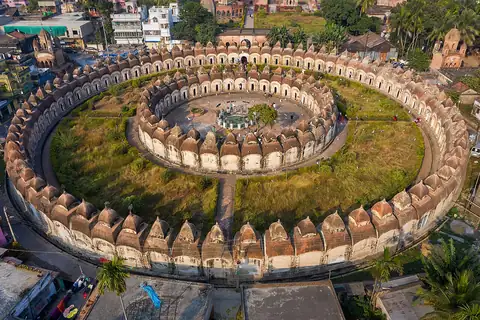
108 Shiva Temples, Kalna
A unique complex of 108 small Shiva temples in two concentric circles, built in 1809 by Maharaja Tej Chand of Bardhaman. The rings of lingas are often compared to a rosary.
Achaleshwar Mahadev Temple, Achalgarh
A Shiva temple at Achalgarh near Mount Abu where, instead of a lingam, a toe-print of Shiva is worshipped in a pit. A large Nandi of five metals stands in the courtyard.
Achleshwar Dham, Batala
A Shiva temple with a sacred tank near Batala, linked with Kartikeya. A large fair is held here in Kartika.
Adbhuta Narayana Temple, Thirukadithanam
One of the five Pandava temples around Chengannur, said to have been built by Sahadeva.
 Living temple
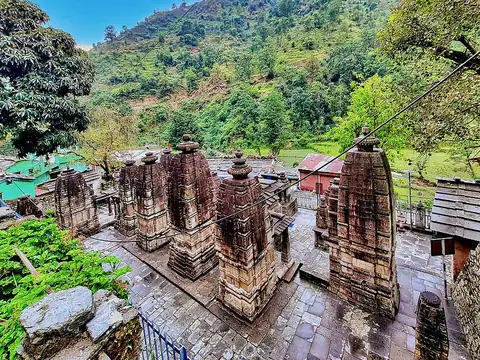
Adi Badri Temples
A group of 14 small stone temples near Karnaprayag, the first of the Panch Badri. The main temple holds a black stone image of Vishnu.
Adi Badri, Yamunanagar
A sacred place in the Shivalik foothills of Haryana, revered as the point where the Saraswati river comes down from the hills. It has temples of Adi Badrinarayan, Kedarnath and the goddess Mantra Devi, and excavations nearby have found a Buddhist stupa and monastery.
Adi Jagannatha Perumal Temple, Thirupullani
A Divya Desam near Rameswaram where Rama is said to have lain on darbha grass for three days, praying to the ocean to let his army cross to Lanka.
 Living temple
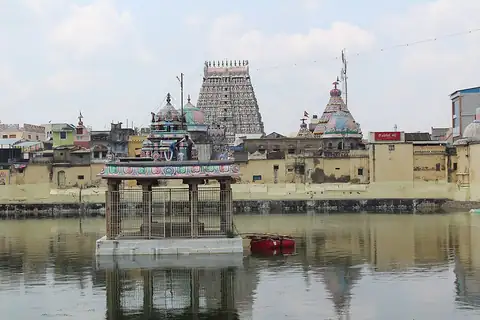
Adi Kumbeswarar Temple, Kumbakonam
The main Shiva temple of Kumbakonam, the temple town that takes its name from a pot (kumbha). Here the pot of amrita is said to have broken at the end of the great flood, and the Mahamaham festival is held every twelve years.
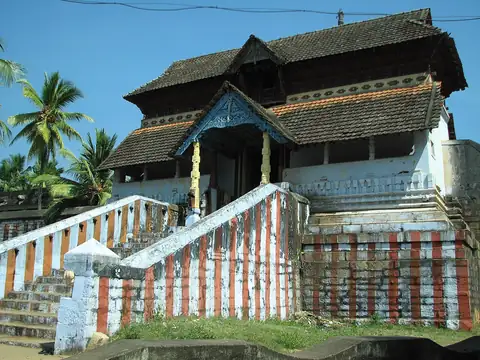
Adi Shankara Janmabhoomi, Kalady
The birthplace of Adi Shankaracharya at Kalady on the Periyar. The Sringeri math built shrines of Shankara and of Sharada here in 1910, near the Krishna temple of his family and his mother's memorial.
 Living temple
Adikesava Perumal Temple, Thiruvattar
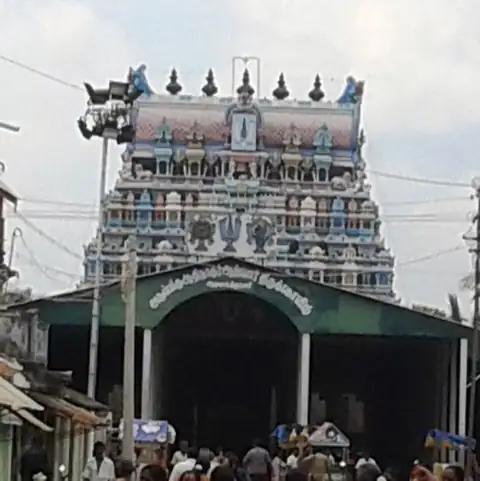
A Kerala-style Vishnu temple in Kanyakumari district, where a 22-foot image of Vishnu reclines on the serpent Adishesha. It is regarded as the elder brother of the Padmanabhaswamy temple in Thiruvananthapuram, which it closely resembles.
 Living temple
Adinatha Perumal Temple, Alwarthirunagari
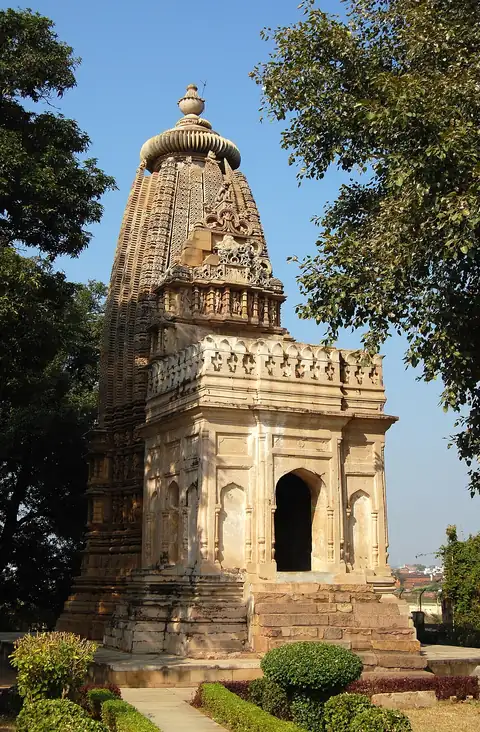
The birthplace of Nammalvar, the greatest of the Alvar poets, on the Thamirabarani river. The tamarind tree under which he is said to have sat in silence for sixteen years still grows in the temple. It is the chief of the Nava Tirupati, nine Vishnu temples nearby.
 Living temple
Adinatha Temple, Khajuraho
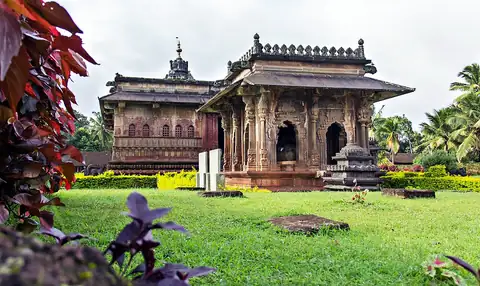
A Jain temple of the late 11th century in the Eastern group at Khajuraho, beside the Parshvanatha temple. Its walls are carved in the same style as the Hindu temples, and a modern image of Adinatha is worshipped inside.
 Living temple
Aghoreshwara Temple, Ikkeri
A large granite Shiva temple at Ikkeri, the 16th-century capital of the Keladi Nayakas. It mixes Hoysala, Vijayanagara and Kadamba features and has a large Nandi in a separate pavilion.
Agniswarar Temple, Kanjanur
A Shiva temple north-east of Kumbakonam that is the Navagraha shrine of Shukra (Venus). Unusually, Shukra is worshipped through Shiva himself here rather than in a separate image. It is a Paadal Petra Sthalam.
 Living temple
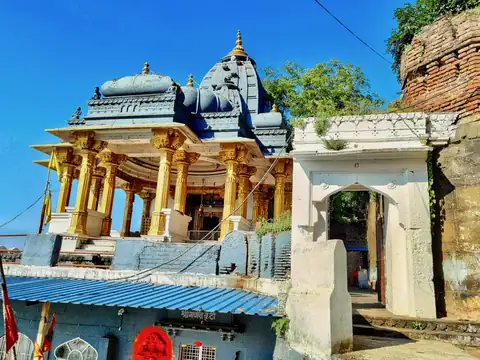
Agroha Dham
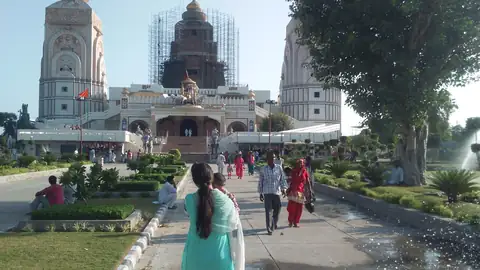
A modern temple complex at Agroha, held to be the capital of Maharaja Agrasen, ancestor of the Agrawal community. Its main shrine is of Mahalakshmi, the Agrawals' family goddess.
 Living temple
Ahilya Ghat Temples, Maheshwar
Temples on the Narmada at Maheshwar, the capital of Ahilyabai Holkar, built in her time and in her memory. The Ahilyeshwar temple stands beside her cenotaph on the fort ghats.
Ahobilam Narasimha Temples
A group of nine Narasimha shrines in the Nallamala forest of Andhra Pradesh, where Vishnu is said to have burst from a pillar as the man-lion to save the boy Prahlada. It is the seat of the Ahobila Matha.
 Living temple
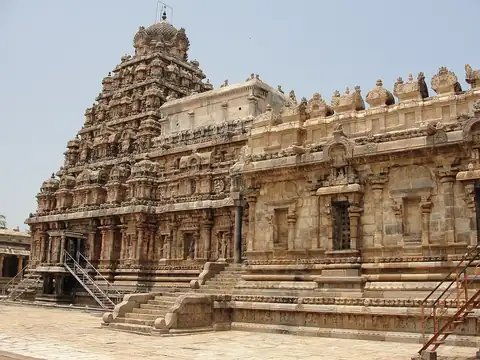
Airavatesvara Temple, Darasuram
A Chola temple of the 12th century, built by Rajaraja II, smaller than Thanjavur but crowded with fine carving. Its front hall is shaped like a chariot drawn by horses, with stone wheels. It is part of the UNESCO site 'Great Living Chola Temples'.
 Ruined / monument
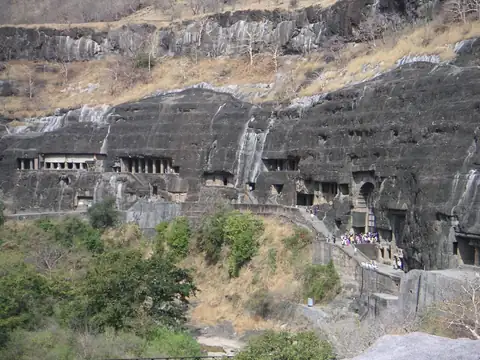
Ajanta Caves
Around 30 rock-cut Buddhist caves in a horseshoe gorge of the Waghur river, made from about the 2nd century BCE to the 480s CE. Their wall paintings of the Jataka tales are among the greatest surviving works of ancient Indian art.
Ajgaivinath Temple, Sultanganj
A Shiva temple on a granite rock in the Ganga at Sultanganj, where the river turns north. Pilgrims fill their pots with Ganga water here and walk about 105 km to the Baidyanath temple at Deoghar in the Shravani kanwar yatra.
 Living temple
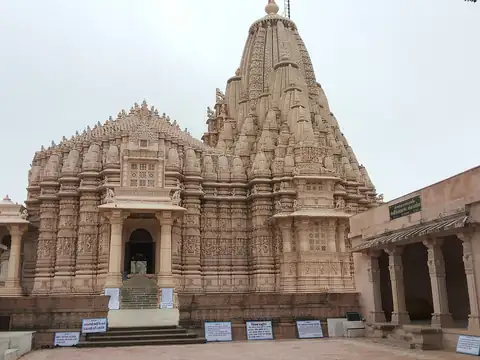
Ajitanatha Temple, Taranga
A large Jain temple of Ajitanatha, the second Tirthankara, built by the Chaulukya king Kumarapala on the advice of the scholar-monk Hemachandra. Its tall spire of many tiers is one of the finest of the Solanki period.
 Living temple
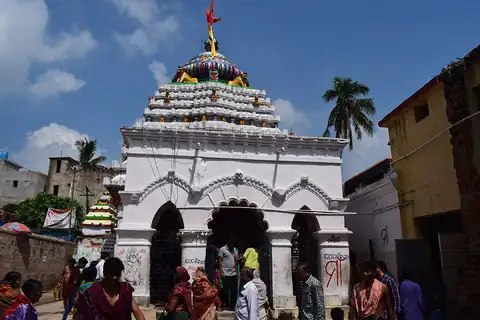
Akhandalamani Temple, Aradi
A much-visited Shiva temple on the bank of the Baitarani in Bhadrak district. The black stone linga, Akhandalamani, is said to have been found by a farmer while ploughing.
 Living temple
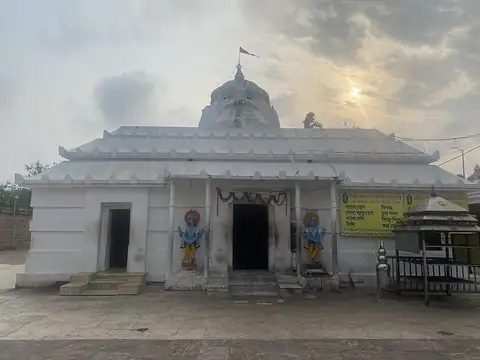
Alarnath Temple, Brahmagiri
A temple of Vishnu where pilgrims come during Anasara, the fortnight after Snana Purnima when Jagannath is hidden from view in Puri. Chaitanya is said to have stayed here and lain on a stone that melted under his devotion.
 Living temple
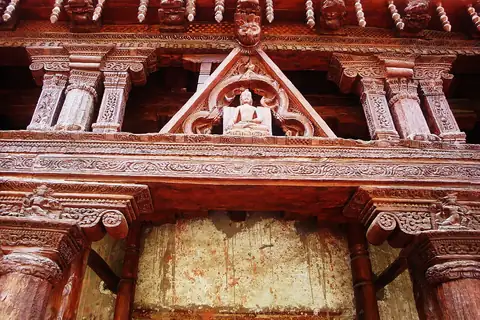
Alchi Monastery
A group of small temples of the 11th to 13th centuries on the Indus, famous for wall paintings in a style drawn from Kashmir. Tradition links it with the translator Rinchen Zangpo. It is now cared for by monks of Likir monastery.
Alopi Devi Mandir, Prayagraj
A goddess temple in Prayagraj where no image is worshipped. Devotees honour a wooden cradle (doli) instead, for the goddess is held to have vanished (alop) at this spot. Local tradition counts it as a Shakti Peetha.
 Living temple
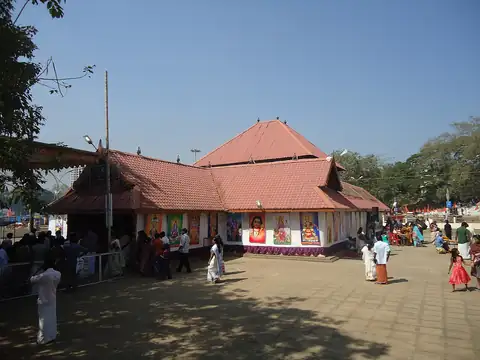
Aluva Mahadeva Temple
A Shiva shrine on a sandbank (Manappuram) of the Periyar at Aluva. On Mahashivaratri night, lakhs of people gather on the sands to offer rites (bali) for their ancestors.
 Living temple
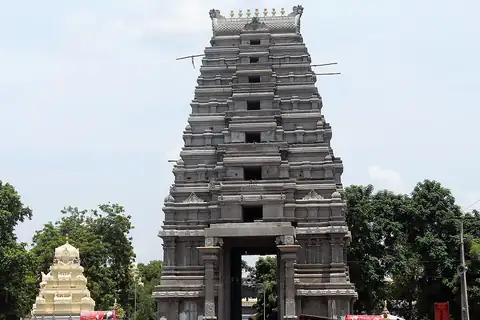
Amaralingeswara Temple, Amaravathi
The first of the five Pancharama temples, where pieces of a single linga are worshipped. The linga here is about 4.5 m tall and rises through two floors. The town was earlier the great Buddhist centre of Dhanyakataka.
Amaravati Mahachaitya
The remains of a great Buddhist stupa at Amaravathi on the Krishna, built from the 3rd century BCE and enlarged up to the 3rd century CE. Its carved limestone panels, now mostly in museums in Chennai, London and at the site, are among the finest early Indian sculpture.
 Living temple
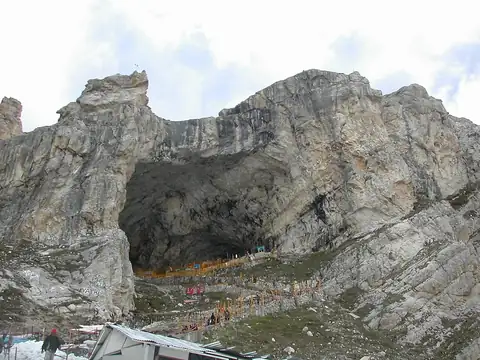
Amarnath Cave Temple
A cave shrine at about 3,900 m in the Kashmir Himalaya, where an ice stalagmite forming each summer is worshipped as a lingam of Shiva. Lakhs of pilgrims make the Amarnath Yatra in July and August.
Amaruviappan Temple, Therazhundur
A Divya Desam where Vishnu stands as a cowherd with a cow and calf beside him. The village is the birthplace of Kambar, author of the Tamil Ramayana.
 Living temple
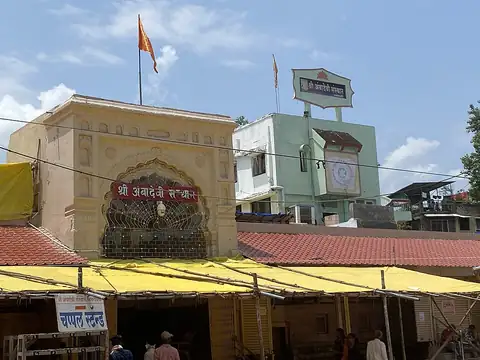
Ambadevi Temple, Amravati
The goddess temple that gives Amravati its identity, linked by tradition to the story of Rukmini, who came to worship here before Krishna carried her away. The city's name is often said to come from Ambavati.
 Living temple
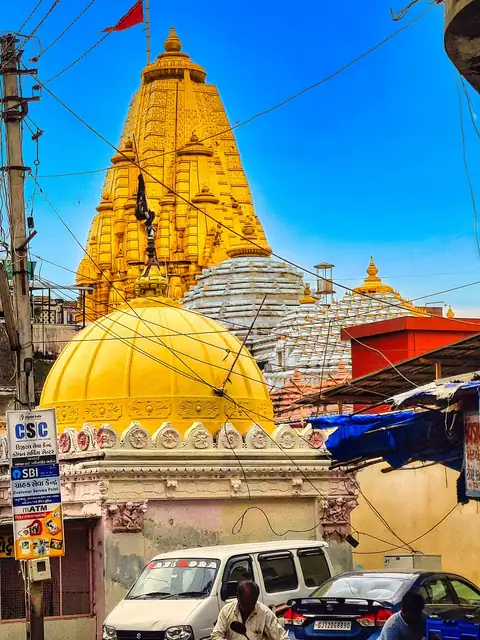
Ambaji Temple, Arasur
The chief goddess temple of Gujarat, in the Arasur hills on the Rajasthan border. There is no image in the sanctum: a sacred yantra is worshipped, dressed so that it looks like the goddess. Nearby Gabbar hill is held to be where part of Sati's heart fell.
 Living temple
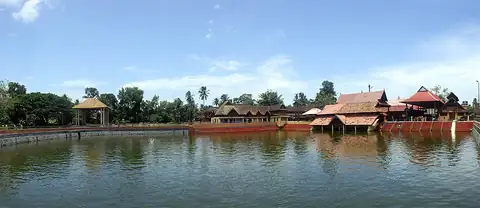
Ambalappuzha Sree Krishna Temple
A Krishna temple built by the rulers of Chembakassery, where the deity holds a whip and conch like Parthasarathy, Arjuna's charioteer. It is famous for its palpayasam, a rice and milk pudding that Guruvayurappan is believed to come and taste each day, and it sheltered the Guruvayur image during Tipu Sultan's invasion.
 Living temple
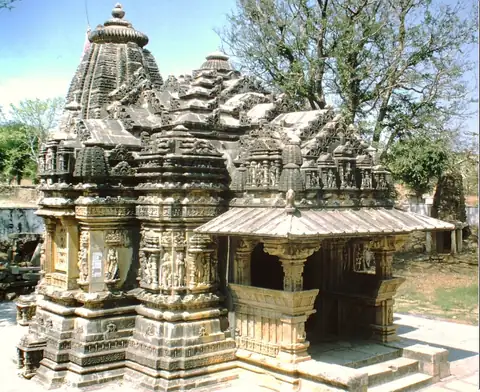
Ambika Mata Temple, Jagat
A 10th-century temple of the goddess Ambika at Jagat, known for its carvings of goddesses, musicians and celestial women. It is sometimes called the Khajuraho of Rajasthan.
 Living temple
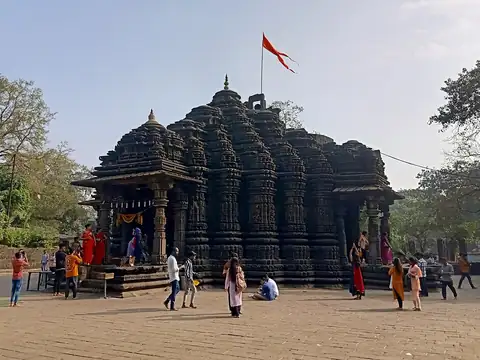
Ambreshwar Shiva Temple, Ambarnath
An 11th-century Shilahara temple of Shiva near Mumbai, with an inscription dated 1060. Its richly carved walls in the Bhumija style make it one of the finest early temples of the Konkan.
Amreshwar Dham, Angrabadi
A temple complex near Khunti, south of Ranchi, where a Shiva linga is worshipped under a mango tree. Temples of Rama and Sita, Hanuman and Ganesha stand around it, and it is a centre of the Shravan pilgrimage in the area.
Amritaghateswarar-Abirami Temple, Thirukadaiyur
A Shiva temple at Thirukadaiyur where Shiva is said to have saved the boy-sage Markandeya from Yama, the god of death. Couples come here to celebrate their 60th, 70th and 80th birthdays and pray for long life together.
 Living temple
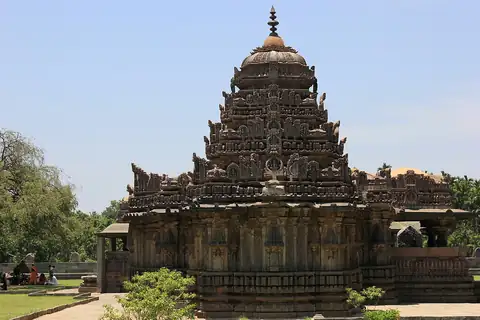
Amriteshwara Temple, Amruthapura
A Hoysala temple of Shiva built in 1196 by Amriteshwara Dandanayaka, an officer of King Veera Ballala II. Its hall has a long series of Ramayana, Mahabharata and Bhagavata panels.
Anandaprabha Kuti Vihara, Sirpur
The ruins of a brick Buddhist monastery at Sirpur, built by the monk Anandaprabha in the 7th century under the Panduvamshi king Mahashivagupta Balarjuna. A large seated Buddha still sits in its shrine.
 Living temple
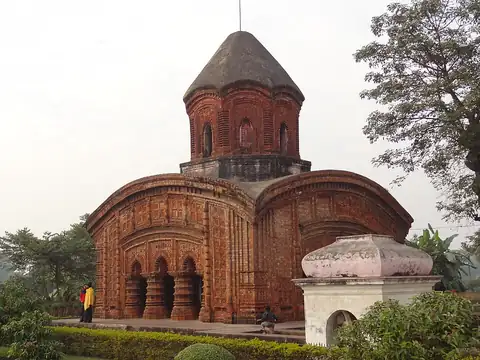
Ananta Vasudeva Temple, Bansberia
A Vishnu temple of 1679 with a single tower (eka-ratna) and walls covered in terracotta panels showing the Ramayana, Mahabharata and Krishna stories.
 Living temple
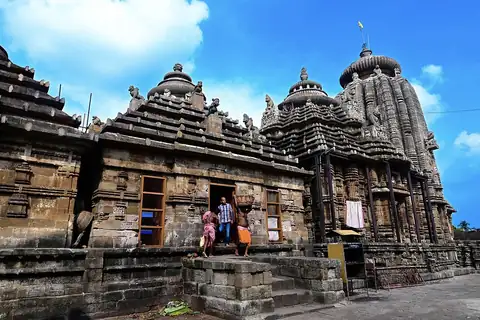
Ananta Vasudeva Temple, Bhubaneswar
The main Vaishnava temple of Bhubaneswar, a city of Shiva, built in 1278 by the Ganga princess Chandrika. It houses Krishna, Balarama and Subhadra, and its kitchen prepares a temple food offering like that of Puri.
 Living temple
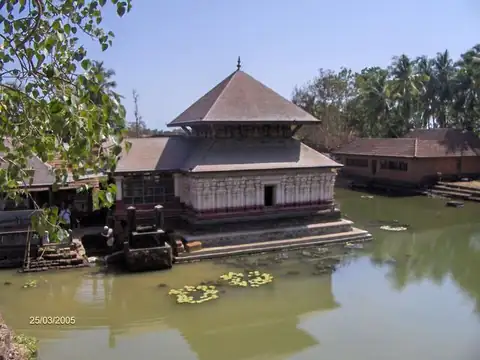
Ananthapura Lake Temple
The only lake temple in Kerala, a shrine of Vishnu as Anantha Padmanabha in the middle of a lake. It is held to be the original seat of the Padmanabhaswamy of Thiruvananthapuram. A crocodile, believed to guard the temple, lived in the lake for decades.
 Living temple
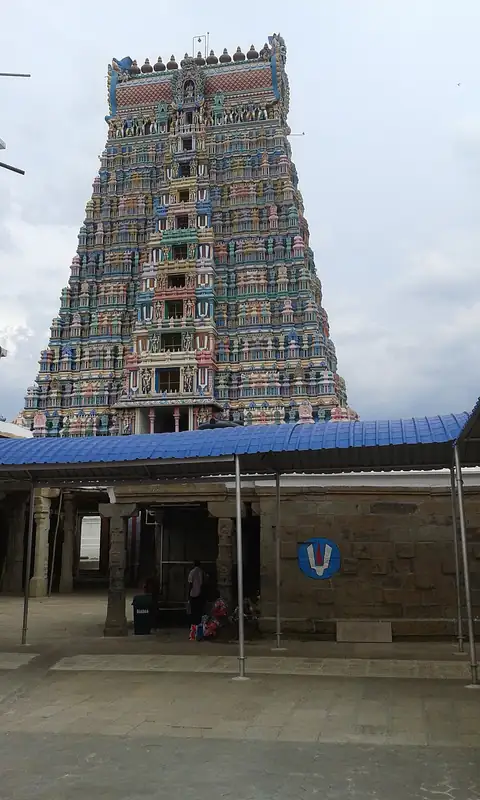
Andal Temple, Srivilliputhur
The birthplace of Andal, the only woman among the twelve Alvars, who wrote the Thiruppavai and is said to have married Vishnu. The temple has two parts: her shrine, and the shrine of Vishnu lying on a banyan leaf. Its gopuram, about 59 m high, appears on the emblem of the Tamil Nadu government.
Andalakkum Aiyan Temple, Thiruaadhanoor
A small Divya Desam near Swamimalai where Vishnu is shown holding a grain measure and a palm leaf. It is linked with Thirumangai Alvar's temple-building at Srirangam.
Anjaneya Swamy Temple, Kondagattu
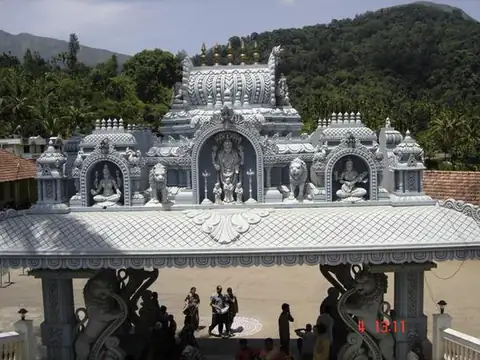
A hill temple of Hanuman in north Telangana, among the most visited Hanuman shrines in the Telugu lands. The image shows Hanuman with two faces, Anjaneya and Narasimha.
 Rebuilt / restored for worship
Annapoorneshwari Temple, Horanadu
A temple of Annapoorneshwari, the goddess of food, in the Western Ghats of Chikkamagaluru. Every visitor is given meals and a place to rest, in keeping with the goddess's nature as the giver of food.
Annapurna Devi Temple, Varanasi
The temple of Annapurna, goddess of food, beside the Kashi Vishwanath temple. Shiva himself is said to have begged for food from her. In 2021 an 18th-century Annapurna image stolen from Varanasi a century earlier was returned from Canada and installed in the Vishwanath complex.
 Living temple
Annapurna Temple, Titagarh
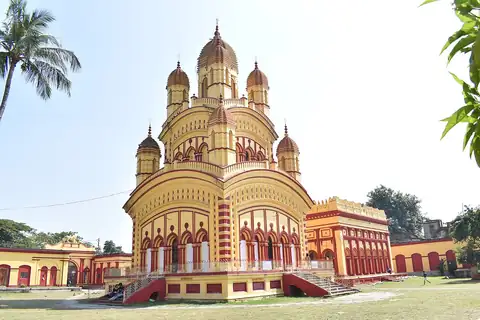
A nine-spired (navaratna) temple of the goddess Annapurna on the Hooghly, built in 1875 by Jagadamba Devi, daughter of Rani Rashmoni. It is modelled on the Dakshineswar Kali temple, which her mother built, and like it has a row of Shiva temples by the river.
Apatsahayesvarar Temple, Alangudi
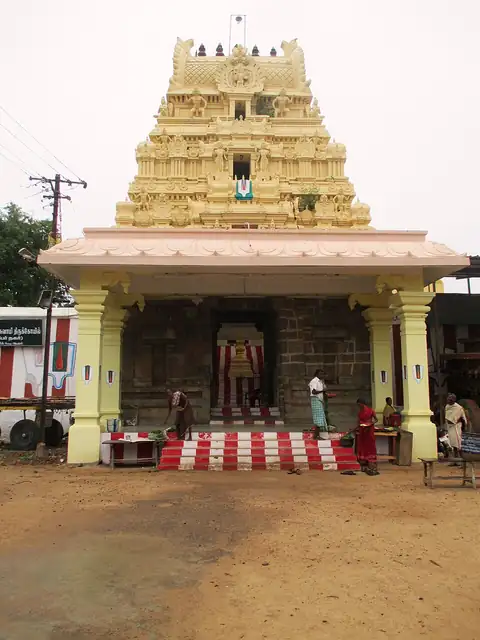
A Shiva temple south of Kumbakonam that is the Navagraha shrine of Guru (Jupiter), worshipped here in the form of Dakshinamurthy. It is a Paadal Petra Sthalam, known in the hymns as Thiru Irumpoolai.
 Living temple
Appakudathaan Perumal Temple, Koviladi
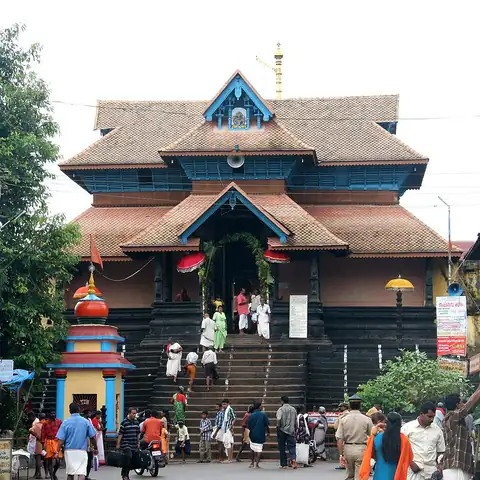
One of the five Pancharanga shrines of reclining Vishnu along the Kaveri. Vishnu here holds a pot of appam, a sweet cake, and the temple is said to be where Nammalvar sang his last hymn.
 Living temple
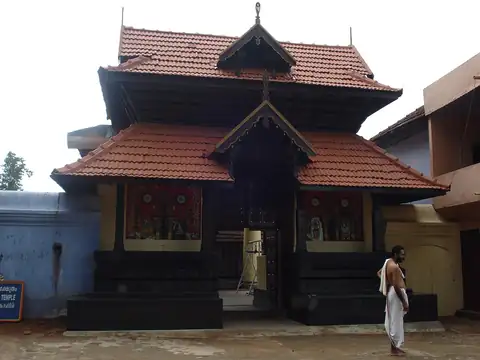
Aranmula Parthasarathy Temple
A Divya Desam on the Pamba river where Krishna is worshipped as Parthasarathy, Arjuna's charioteer, in a six-foot image said to be the tallest of Krishna in Kerala. It is the home of the Aranmula snake-boat race, the Vallasadya feast and the metal Aranmula mirror.
 Living temple
Arattupuzha Sree Dharma Sastha Temple
A temple of Sastha (Ayyappa) at Arattupuzha in Thrissur district, famous for the Arattupuzha Pooram, called the 'meeting of the gods', when the deities of many nearby temples gather here.
Arbuda Devi Temple, Mount Abu
A goddess shrine in a natural cave on a cliff at Mount Abu, reached by several hundred steps. Arbuda Devi is the patron goddess of Mount Abu, which takes its old name, Arbudachal, from her.
 Living temple
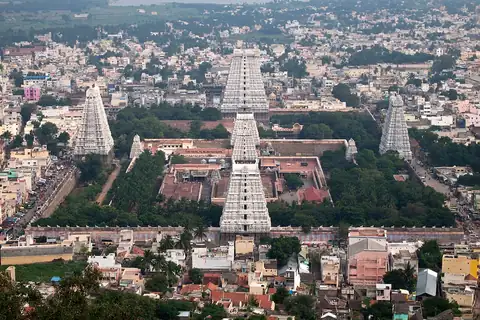
Arunachaleswarar Temple, Tiruvannamalai
One of the largest temples in India, at the foot of Arunachala hill, where Shiva is worshipped as fire (Agni Lingam). Each year at Karthigai Deepam a great flame is lit on the hilltop. Pilgrims walk the 14 km path around the hill, and the sage Ramana Maharshi lived here.
Aruvippuram Shiva Temple
The Shiva temple where Sree Narayana Guru, the social reformer, consecrated a lingam taken from the Neyyar river in 1888. By doing so as a non-Brahmin, he challenged caste rules on who could install a deity, a turning point in Kerala's social reform.
Ashapura Mata Temple, Mata no Madh
The temple of Ashapura, 'she who fulfils hopes', family goddess of the Jadeja rulers of Kutch and of many communities in western India. Pilgrims walk hundreds of kilometres to reach her at Navaratri.
Ashokdham, Lakhisarai
A Shiva temple at the place where a large linga was found in 1977 by a boy named Ashok while playing, after whom the site is named. Its Shravani fair is a major event in the region.
Ashtabhuja Perumal Temple, Kanchipuram
A Kanchipuram Divya Desam where Vishnu has eight arms, each holding a weapon. It belongs to the cycle of stories about Brahma's sacrifice and Saraswati's anger.
Ashtabhuja Temple, Vindhyachal
A hilltop cave temple of the eight-armed goddess near Vindhyachal. With Vindhyavasini and Kali Khoh it forms the Vindhya triangle walked by pilgrims.
 Living temple
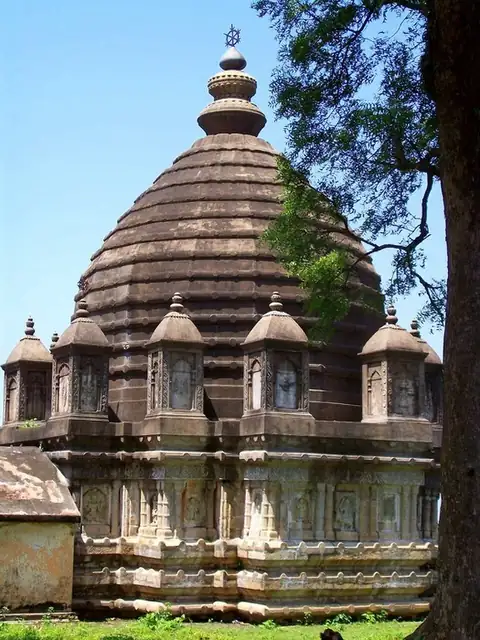
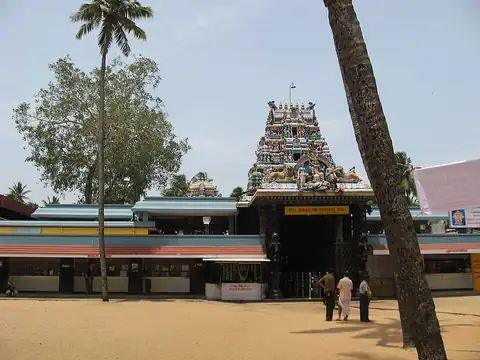
Aswaklanta Temple
A Vishnu temple on the north bank of the Brahmaputra facing Guwahati, built by the Ahom king Siva Singha in 1720. It has two shrines, of Vishnu as Anantashayi (reclining on the serpent) and as Kurma-Janardana.
 Living temple
Attukal Bhagavathy Temple
A shrine of the goddess Bhagavathy, identified with Bhadrakali and with Kannaki of the Tamil epic Silappatikaram. It is famous for the Attukal Pongala, when millions of women cook a sweet rice offering in the streets of Thiruvananthapuram, recognised by Guinness World Records as the largest gathering of women.
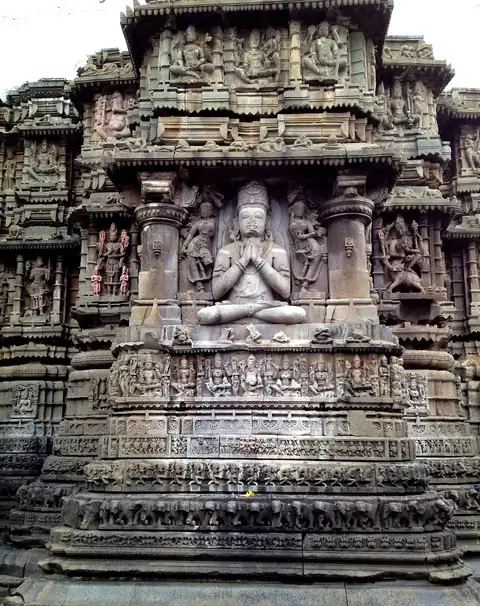 Rebuilt / restored for worship
Aundha Nagnath Temple
A 13th-century Seuna Yadava temple in Hemadpanti style, considered by many to be the Nageshwar Jyotirlinga named in Adi Shankara's Jyotirlinga hymn. Damaged by Sultanate invasions, its upper part was rebuilt later, traditionally by Ahilyabai Holkar.
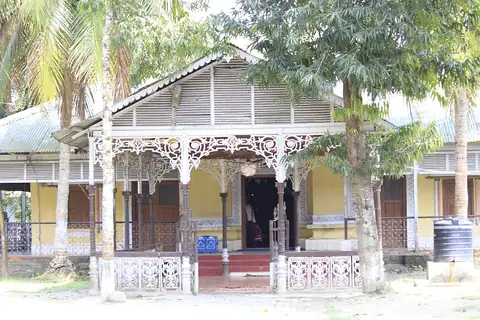 Living temple
Auniati Satra, Majuli
One of the leading Vaishnava monasteries (satras) of Majuli, the great river island of the Brahmaputra, founded in 1653 with the support of the Ahom king Jayadhvaj Singha. It is famous for its Paalnaam festival and museum.
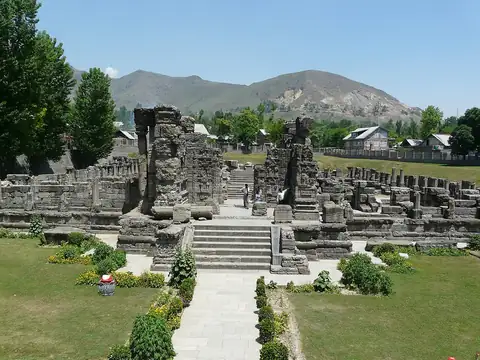 Ruined / monument
Avantiswami Temple, Avantipora
The ruins of a Vishnu temple built by the Utpala king Avantivarman, founder of Avantipura, in the 9th century. Its colonnaded court and carved gateway are among the finest remains of Kashmiri temple art.
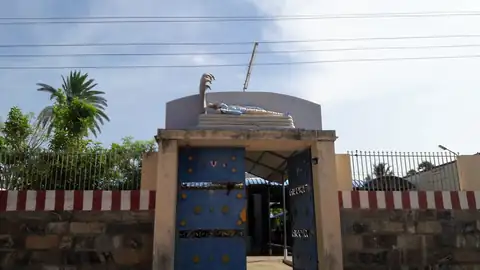 Living temple
Azhagiya Manavalan Temple, Uraiyur
The Divya Desam of Uraiyur, the early Chola capital, sacred to Kamalavalli, a Chola princess said to have married Ranganatha of Srirangam. It is the birthplace of Thiruppan Alvar.
Azhagiya Singar Temple, Thiruvelukkai
A Kanchipuram Divya Desam of Narasimha, called 'the beautiful lion'. Its name comes from vel irukkai, 'the place where he chose to stay'.
Baba Balak Nath Temple, Deotsidh
The cave shrine of Baba Balak Nath, a child ascetic revered in Himachal and Punjab and identified by devotees with Kartikeya. By custom women view the cave from a platform opposite instead of entering.
Baba Garibnath Temple, Muzaffarpur
A popular Shiva temple in Muzaffarpur, known as the Deoghar of north Bihar. In the month of Shravan, kanwariyas carry Ganga water from Pahleja ghat near Sonepur to offer to the lingam.
Baba Gorekhnath Pitha, Kerekera
A shrine of Baba Gorekhnath at Kerekera, a short way from the Sarala temple at Jhankad. It is known as a 'vibhuti kshetra', where people bitten by snakes come for the sacred ash.
Baba Ramdev Temple, Ramdevra
The samadhi shrine of Baba Ramdev, a 14th-15th century Tanwar Rajput saint revered by Hindus as an incarnation of Krishna and by Muslims as Ramdev Pir. His Bhadrapada fair is one of the largest in Rajasthan.
Baba Sodal Mandir, Jalandhar
A shrine in Jalandhar of Baba Sodal, a child saint honoured beside a sacred pond. A large fair is held here each year on Anant Chaturdashi.
 Living temple
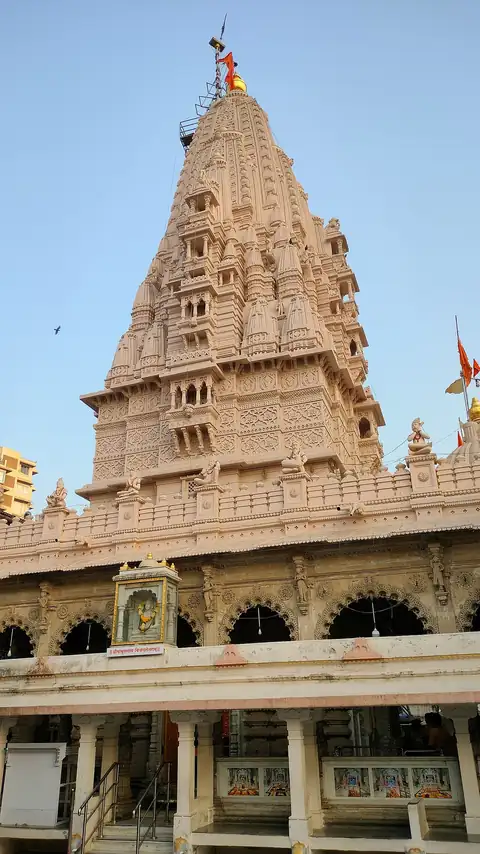
Babulnath Temple, Mumbai
One of Mumbai's oldest Shiva temples, on a hill above Girgaon Chowpatty. The linga is said to have been found in the 18th century where a cowherd named Babul grazed his cattle.
Bada Ganpati Temple, Indore
A Ganesha temple in Indore built in 1875, with a seated image about 8 metres tall, among the largest Ganesha images in the world. It was made of brick, lime, jaggery and earth mixed with water from holy rivers.
Badami Cave Temples
Four cave temples cut into a red sandstone cliff at Vatapi, the Chalukya capital: one for Shiva, two for Vishnu and one Jain. Cave 3, dated 578, is one of the earliest dated Hindu cave temples in India.
Bade Hanuman Temple, Prayagraj
A shrine of a huge reclining Hanuman near the confluence (Sangam) of the Ganga, Yamuna and Saraswati. When the Ganga rises in flood it enters the shrine, and devotees say the river has come to bathe Hanuman.
Badi Patan Devi Temple
A Shakti Peetha in old Patna, where Sati's right thigh is said to have fallen. The goddess Patan Devi is held to be the guardian of the city, which may take its name from her.
 Living temple
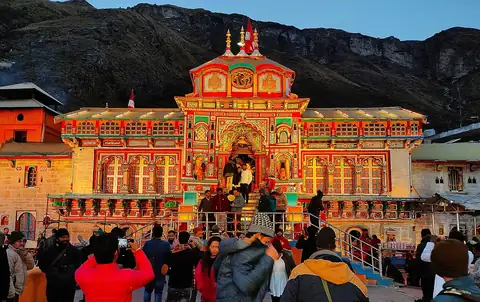
Badrinath Temple
A temple to Vishnu as Badrinarayan on the Alaknanda river at about 3,100 m, one of the Char Dham and a Divya Desam. It is open in summer only, and its chief priest (Rawal) is by tradition a Namboodiri Brahmin from Kerala.
Baglamukhi Temple, Nalkheda
A temple of Baglamukhi, one of the ten Mahavidya goddesses, on the bank of the Lakhundar at Nalkheda. It is one of the best-known Baglamukhi shrines in India, visited for rites to overcome enemies and lawsuits.
 Living temple
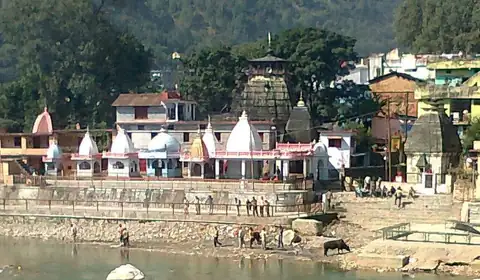
Bagnath Temple, Bageshwar
A Shiva temple at the meeting of the Saryu and Gomti rivers, whose present building dates from 1602 under the Chand king Lakshmi Chand. It is the centre of the Uttarayani fair.
Bahuchara Mata Temple, Becharaji
The temple of Bahuchara Mata, a goddess who rides a rooster, and the patron goddess of the hijra (transgender) community of western India. Families also bring children here for their first haircut.
 Living temple
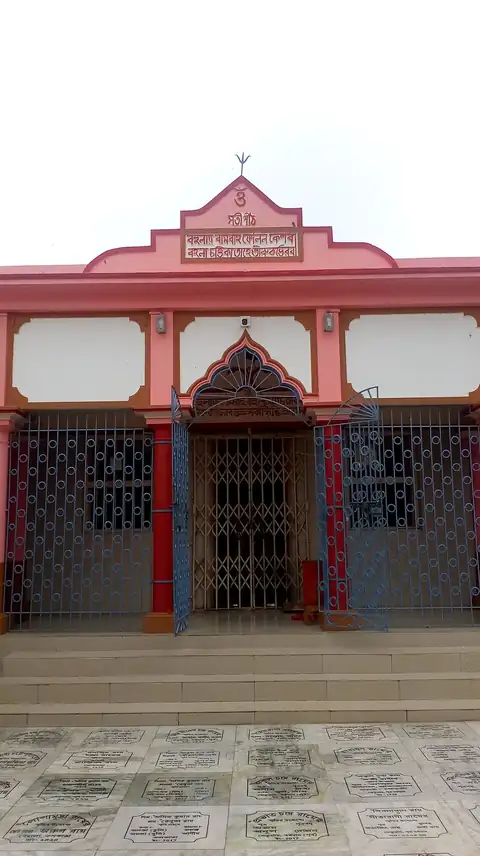
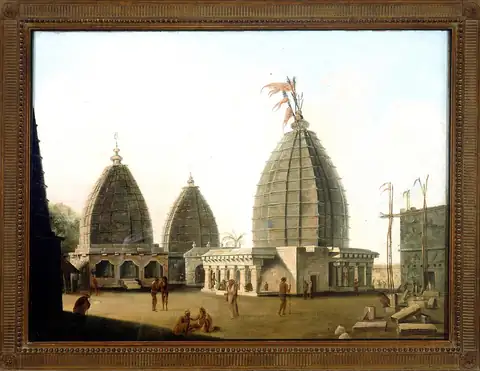
Bahula Temple, Ketugram
A Shakti Peetha at Ketugram where Sati's left arm is said to have fallen. The goddess is Bahula, with Shiva as Bhiruka.
 Living temple
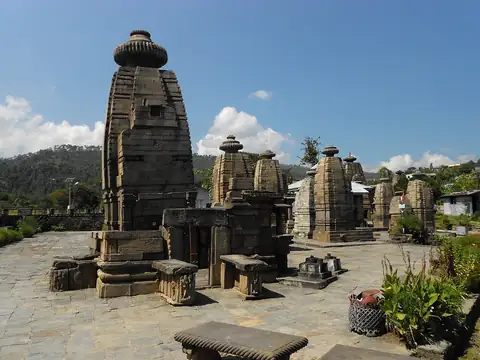
Baidyanath Temple
The temple of Baba Baidyanath in Deoghar, Jharkhand, widely regarded as the Vaidyanath Jyotirlinga, with 21 other temples in its compound. In the month of Shravan, millions of pilgrims (kanwariyas) carry Ganga water about 100 km on foot from Sultanganj to offer here. Parli Vaijnath in Maharashtra also claims this Jyotirlinga.
 Living temple
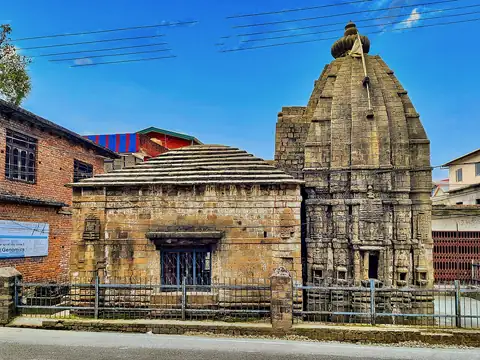
Baijnath Temple, Garur
A group of stone temples of the 12th-13th century on the Gomti river, built in the time of the Katyuri kings, whose capital Kartikeyapura was nearby. The main shrine holds a fine image of Parvati.
 Living temple
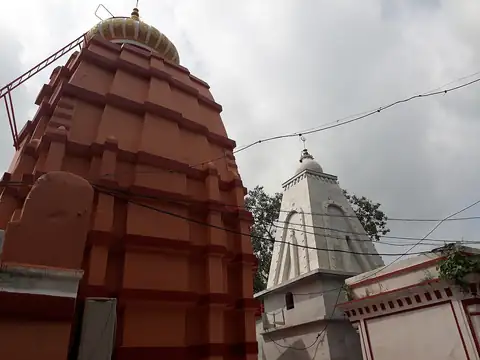
Baijnath Temple, Kangra
A stone temple of Shiva as Vaidyanath, the lord of physicians, built in 1204 by two merchants, Ahuka and Manyuka, according to its inscriptions. Some traditions count it among the twelve Jyotirlingas.
 Living temple
Bakreshwar Temple
A Shiva temple among hot springs in Birbhum, also counted a Shakti Peetha, where the point between Sati's eyebrows is said to have fallen. The goddess here is Mahishamardini.
Bakreshwar Temple, Simulia
A Shiva shrine of Baba Bakreshwar on the bank of the Kansbans river in Simulia, Balasore district. It is said to be more than five hundred years old and has been developed as a tourist site.
Baladevjew Temple, Kendrapara
The temple of Balabhadra, Jagannath's elder brother, as the presiding deity at Kendrapara, a place known as Tulasi Kshetra. Its rituals and Ratha Yatra follow those of Puri.
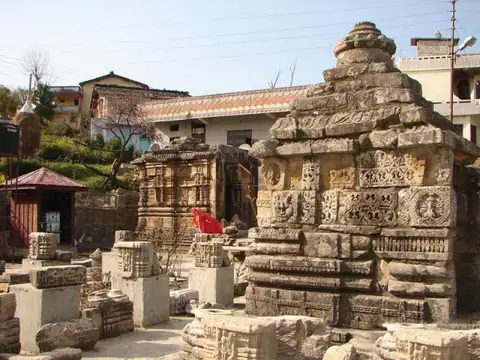 Living temple
Baleshwar Temple, Champawat
A richly carved stone temple of Shiva in Champawat, the first capital of the Chand kings of Kumaon, built about the 12th-13th century.
Balkampet Yellamma Temple
A busy temple of the goddess Yellamma in Hyderabad, whose image lies below ground level beside a spring. Her annual wedding festival, the Yellamma Kalyanam, draws huge crowds.
Ballaleshwar Temple, Pali
The only Ashtavinayak shrine named after a devotee, the boy Ballal, for whom Ganesha appeared. The temple is laid out so that the sun's rays fall on the image at the winter solstice.
Bambleshwari Temple, Dongargarh
A hilltop temple of the goddess Bambleshwari above Dongargarh, reached by about 1,100 steps or a ropeway. A second shrine, Chhoti Bambleshwari, stands at the foot of the hill.
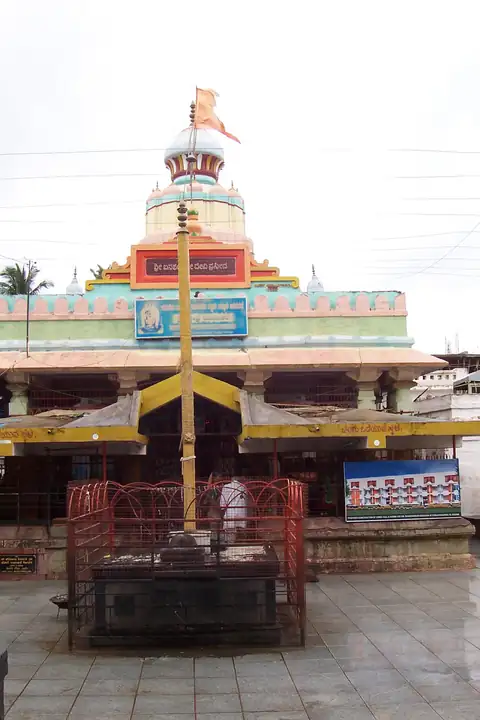 Rebuilt / restored for worship
Banashankari Temple, Badami
A temple of the goddess Banashankari (Shakambhari), family deity of the Chalukyas of Badami. Its month-long fair in the month of Pushya is one of the largest in north Karnataka.
 Ruined / monument
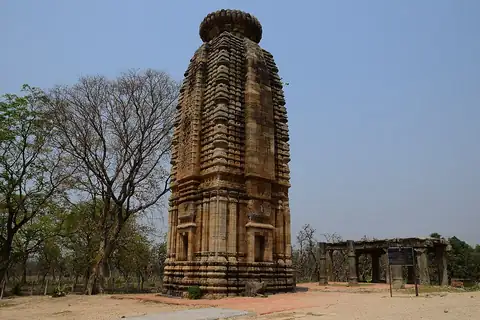
Banda Deul
A sandstone rekha deul of about the 11th century in a quiet village of Purulia, with a finely carved curved tower. It is one of the best surviving stone temples of western Bengal.
Baneshwar Dham
A Shiva shrine on a delta where the Som and Mahi rivers meet in Dungarpur district. Its fair on Magha Purnima, drawing lakhs of Bhil and other tribal pilgrims, is called the tribal Kumbh.
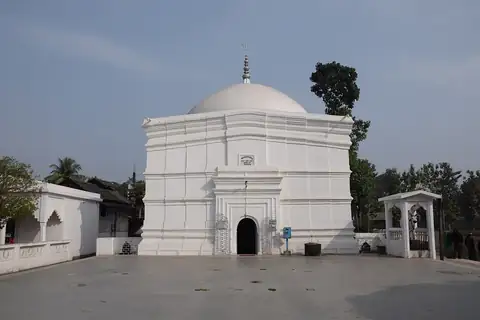 Living temple
Baneshwar Shiva Temple
A Shiva temple north of Cooch Behar where the linga sits in a pit below floor level. Its large pond is home to rare black softshell turtles, which devotees treat as sacred.
 Living temple
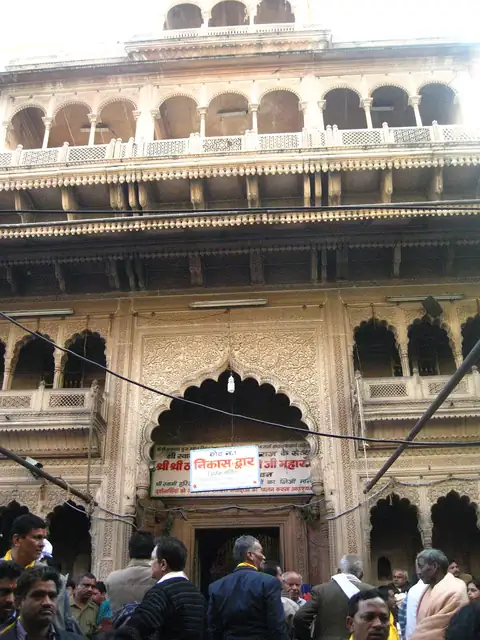
Banke Bihari Temple, Vrindavan
The most visited temple of Vrindavan, home of the image of Krishna as Banke Bihari, 'the one bent in three places', revealed to the musician-saint Swami Haridas. A curtain is drawn across the image every few minutes, so that no devotee may gaze too long.
Bannari Amman Temple
A goddess temple at the edge of the Sathyamangalam forests on the Tamil Nadu-Karnataka road. Its fire-walking festival in Panguni is one of the largest in the state.
Bara Hanuman Mandir, Amritsar
A Hanuman temple near the Durgiana temple in Amritsar, with an image of Hanuman seated. It is famous for the Langur Mela at Navaratri, when children dress as Hanuman's monkey army.
 Living temple
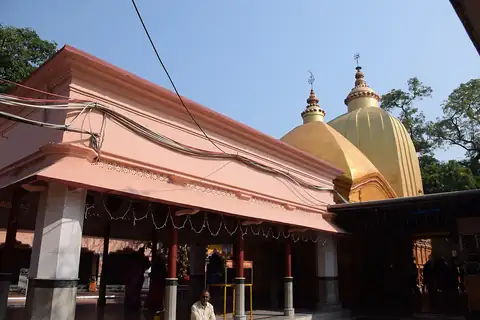
Bargabhima Temple, Tamluk
A Shakti Peetha in Tamluk, the ancient port of Tamralipta, where Sati's left ankle is said to have fallen. The goddess is worshipped as Bargabhima, a form of Kali.
 Living temple
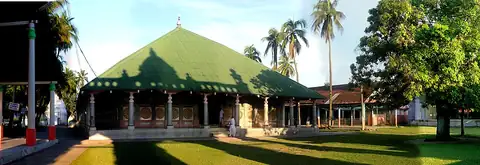
Barpeta Satra
A major Vaishnava satra founded in the late 16th century by Madhavdeva, the chief disciple of Sankardev, with Mathuradas Burha Ata as its first head. Its Doul festival is one of the biggest in Assam.
Barsur Temples
A group of 11th-century temples at Barsur, the old capital of the Chindaka Naga kings of Bastar, including the Mama-Bhanja temple, the 32-pillared Battisa temple and two large monolithic Ganesha images.
 Living temple
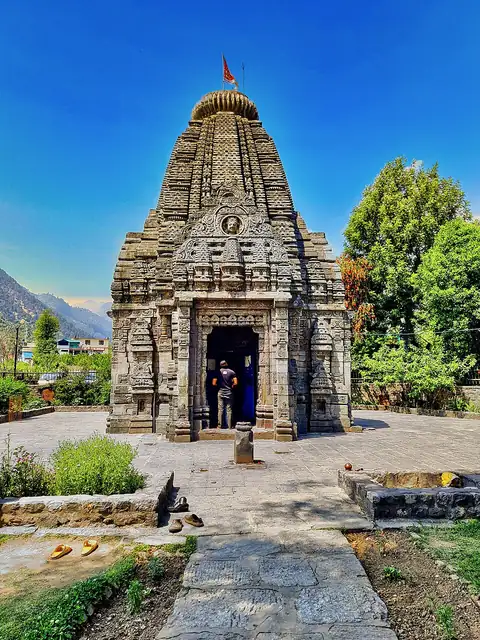
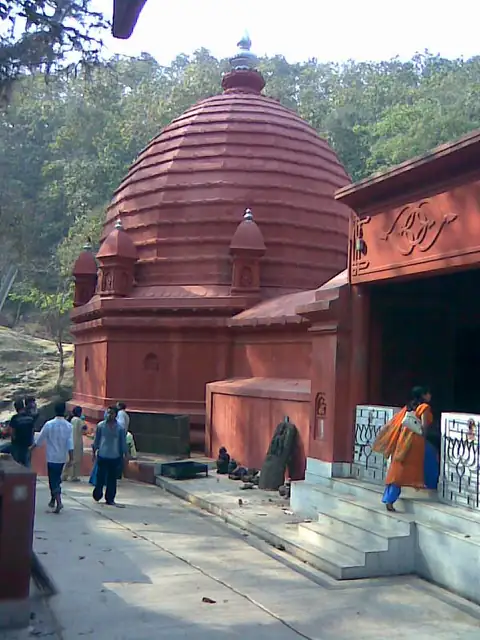
Basheshwar Mahadev Temple, Bajaura
A stone temple of Shiva near the Beas at Bajaura, one of the oldest and finest stone temples of the Kullu valley. Its outer niches hold large carved images of Vishnu, Ganesha and Durga.
 Living temple
Basistha Temple and Ashram
A Shiva temple at the foot of the Meghalaya hills in Guwahati, at the place held to be the hermitage of the sage Vasishtha. Three hill streams meet beside it. The present temple was built in 1764 by the Ahom king Rajeswar Singha.
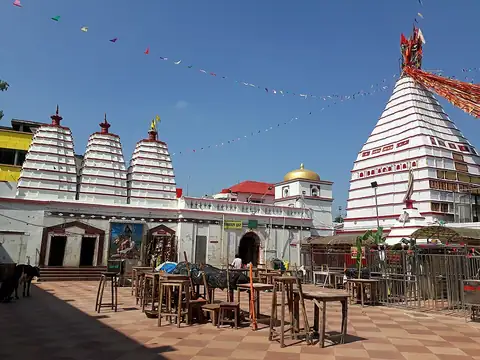
Basokund, Vaishali
A village near ancient Vaishali held by many Jains and scholars to be Kundagrama, the birthplace of Mahavira, the 24th Tirthankara. A memorial and temple mark the spot, and the Bihar government set up a Prakrit and Jain studies institute nearby.
 Living temple
Basukinath Temple
A Shiva temple in Dumka district visited by Kanwar pilgrims after Baidyanath at Deoghar. Devotees believe a visit to Deoghar is incomplete without Basukinath.
Batadrava Than
The birthplace of the saint-reformer Sankardev (1449-1568), where he set up his first prayer hall (kirtanghar). It is one of the holiest places of Assamese Vaishnavism.
 Ruined / monument
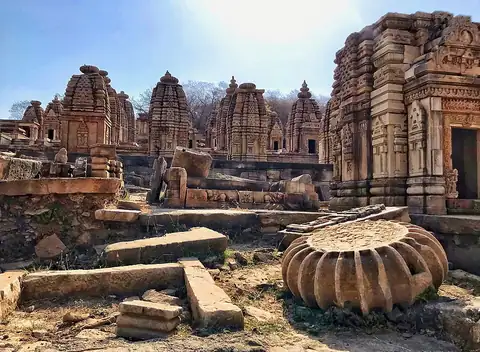
Bateshwar Temples
A group of nearly 200 small sandstone temples of Shiva, Vishnu and the goddess, built in the 8th-10th centuries. They had collapsed into rubble and were pieced together by the Archaeological Survey of India from 2005.
 Living temple
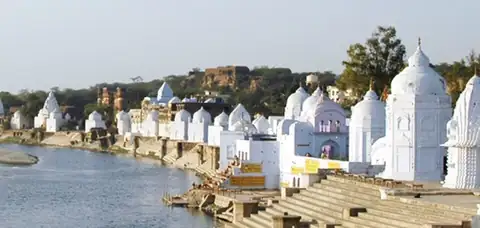
Bateshwar Temples
A long row of Shiva temples on the bank of the Yamuna at Bateshwar in Agra district. A great fair, once one of India's largest cattle fairs, is held here each Kartika.
Bawangaja
A rock-cut standing image of Rishabhanatha about 26 metres tall in the Satpura hills near Barwani, one of the largest in the world. Its name means '52 yards'.
Bawe Wali Mata Temple, Bahu Fort
A temple of Mahakali inside the old Bahu Fort above the Tawi river in Jammu, worshipped as Bawe Wali Mata. She is regarded as the guardian goddess of Jammu.
 Living temple
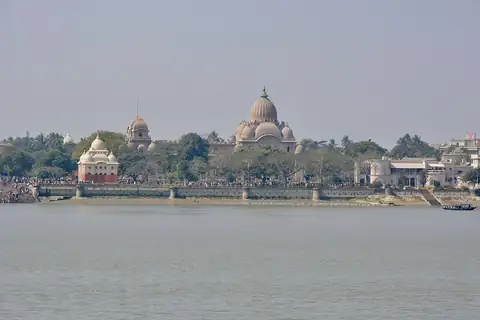
Belur Math
The headquarters of the Ramakrishna Math and Mission, founded by Swami Vivekananda in 1898. Its main temple, dedicated in 1938, blends Hindu, Buddhist, Islamic and Christian forms, reflecting Ramakrishna's teaching on the harmony of religions.
 Ruined / monument
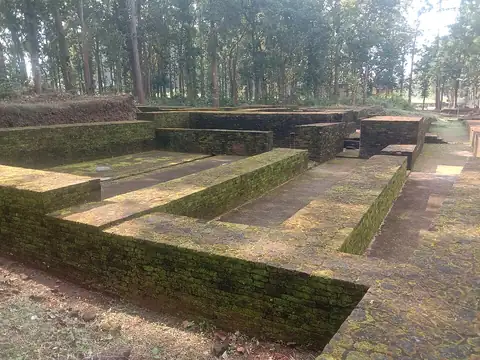
Benisagar
An archaeological site beside a large tank in West Singhbhum, with the remains of temples and sculptures spanning many centuries. Excavations by the Archaeological Survey of India uncovered shrines, Shiva lingams and images of Bhairava and other gods.
 Living temple
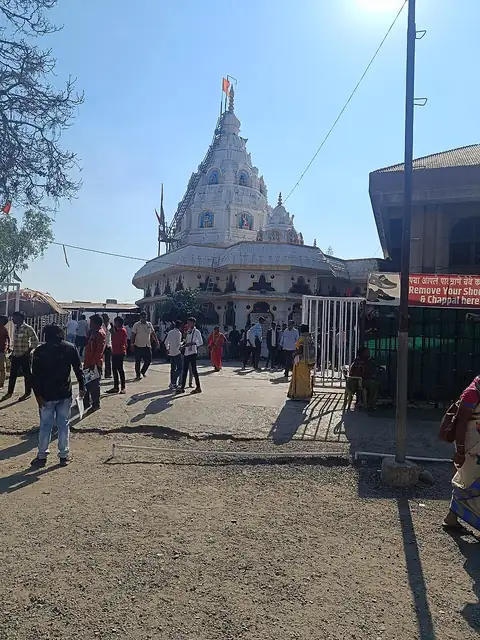
Bhadra Maruti Temple, Khuldabad
A Hanuman temple at Khuldabad, near Ellora, where Hanuman is shown lying down, one of very few such images in India. Pilgrims crowd here on Hanuman Jayanti and on Saturdays of Shravan.
Bhadrakali Temple, Ahmedabad
The temple of Bhadrakali, guardian goddess (nagar devi) of Ahmedabad, inside the 15th-century Bhadra fort. Its legend tells of Lakshmi agreeing to stay in the city for good.
Bhadrakali Temple, Itkhori
A sacred site where a goddess temple stands among Buddhist and Jain remains of the 9th-10th centuries, including a votive stupa with over a thousand small Buddha figures.
 Living temple
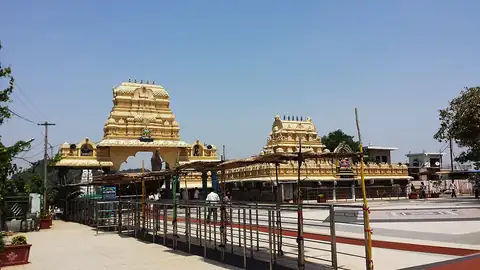
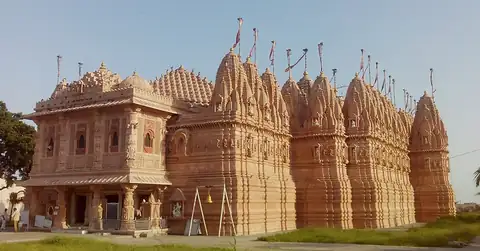
Bhadrakali Temple, Warangal
A temple of the goddess Bhadrakali beside a lake between Hanamkonda and Warangal. Tradition says it was founded by the Chalukya king Pulakeshin II in the 7th century, and the Kakatiya rulers later worshipped her. The temple was rebuilt in 1950.
 Rebuilt / restored for worship
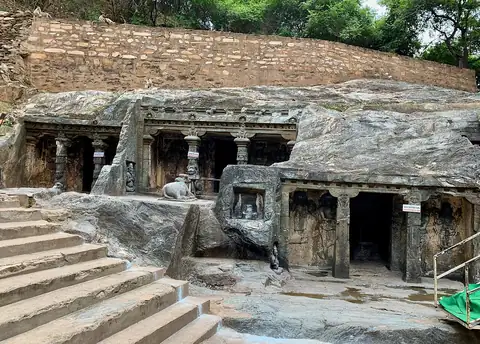
Bhadreshwar Jain Temple (Vasai)
An old Jain temple at Bhadreshwar on the Kutch coast, rebuilt in the 13th century by the merchant Jagadu Shah. Its central image is of Ajitanatha, with Shantinatha and Parshvanatha beside him, and it is surrounded by a ring of small shrines.
 Living temple
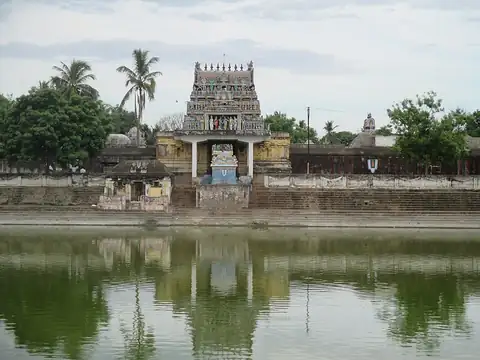
Bhairavakona Cave Temples
A group of eight rock-cut cave temples of Shiva in a forest valley of the Nallamala hills, beside a waterfall. Their pillars and doorkeepers are like those of the early Pallava caves.
 Living temple
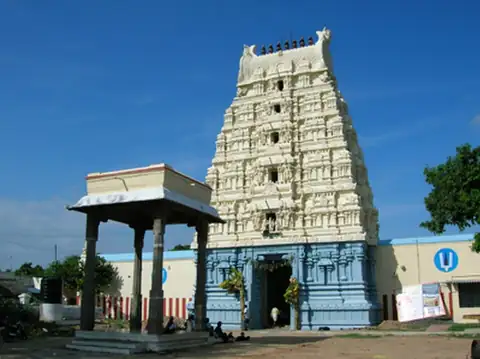
Bhaktavatsala Perumal Temple, Thirukannamangai
One of the five Pancha Krishna shrines, where Vishnu and Lakshmi are said to have married. A beehive in the goddess's shrine is believed to be the gods themselves, come to watch.
 Living temple
Bhaktavatsala Perumal Temple, Thiruninravur
A Divya Desam on the western edge of Chennai, where Lakshmi is said to have stood ('ninra') and stayed, giving the town its name.
Bhalka Tirth, Veraval
The place where Krishna is said to have been struck in the foot by the arrow of the hunter Jara, ending his life on earth. A modern temple shows the reclining Krishna under a sacred pipal tree, near Somnath.
 Living temple
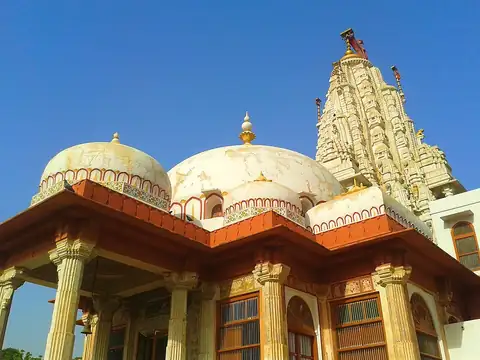
Bhandasar Jain Temple, Bikaner
A three-storeyed Jain temple of Sumatinatha in Bikaner, begun by the merchant Bhandasa Oswal in 1468. It is famous for its painted interiors and mirror work.
 Living temple
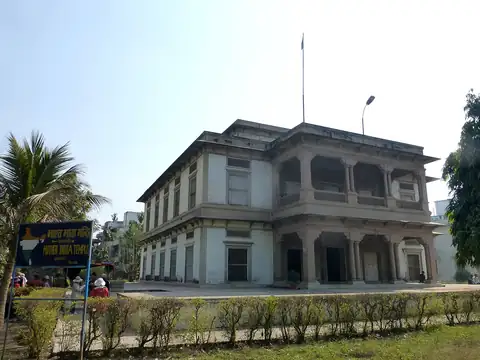
Bharat Mata Mandir, Varanasi
A temple dedicated to Mother India, with no image except a large relief map of undivided India carved in marble. It was built by the nationalist Shiv Prasad Gupt and opened by Mahatma Gandhi in 1936.
 Living temple
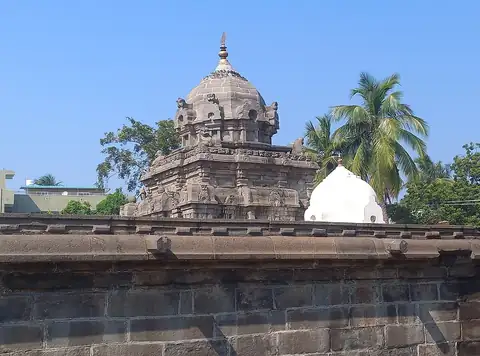
Bhavanarayana Swamy Temple, Bapatla
An old Vishnu temple at Bapatla, a town whose name is said to come from Bhavapuri, the city of Bhavanarayana. The temple has inscriptions of the Chola period.
 Living temple
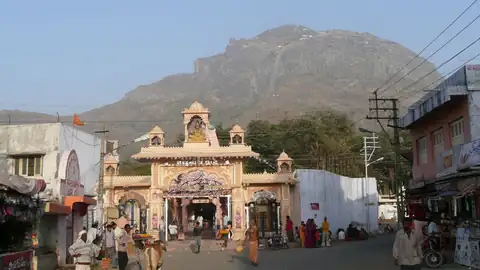
Bhavnath Mahadev Temple, Junagadh
A Shiva temple at the foot of Girnar hill, where the Mahashivaratri fair draws lakhs of pilgrims and thousands of naga sadhus. At midnight the sadhus bathe in the Mrigi Kund tank beside the temple.
Bhima Devi Temple Site, Pinjore
The ruins of a large early medieval temple at Pinjore, with finely carved sculptures of gods, goddesses and celestial figures. Excavated sculptures are shown in an open-air site museum.
 Living temple
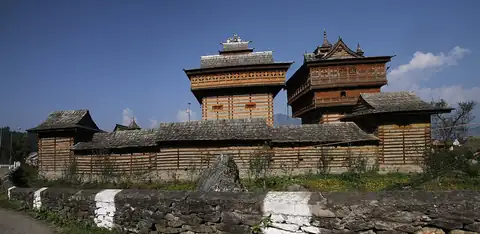
Bhimakali Temple
The family temple of the Bushahr rulers at Sarahan, a striking example of Himachal's Kath-Kuni style of layered timber and stone with pagoda-like roofs. It is revered locally as a Shakti Peetha.
 Living temple
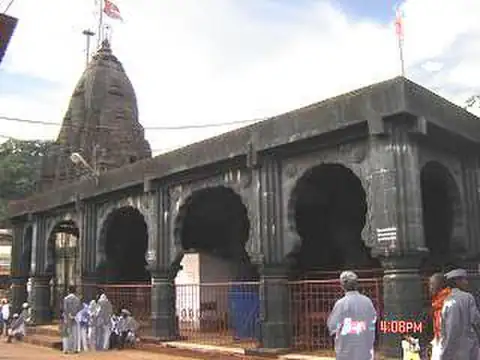
Bhimashankar Temple
A Jyotirlinga temple high in the Sahyadri hills at the source of the Bhima river, inside the Bhimashankar Wildlife Sanctuary. Its assembly hall and spire were built by Nana Phadnavis in the 18th century. Some other sites, including one in Assam, also claim to be the Bhimashankar Jyotirlinga.
Bhimeshwari Devi Temple, Beri
A goddess temple at Beri in Jhajjar district. The image is said to have been brought by Bhima from Hinglaj. It is worshipped in two temples: in the outer temple in the morning and in the inner temple in the afternoon.
 Living temple
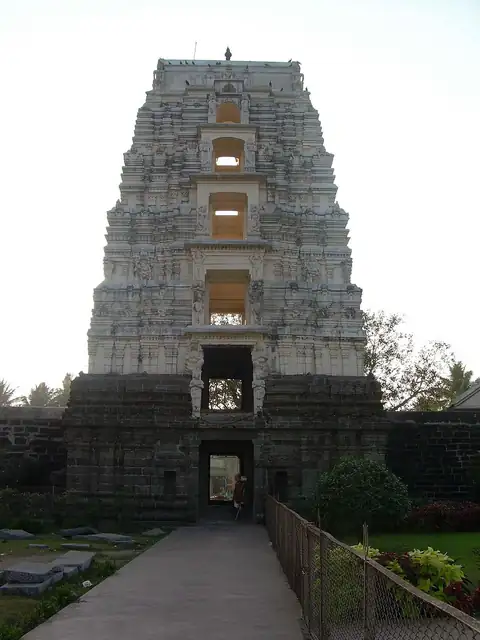
Bhimeswara Temple, Draksharama
A great Shiva temple of the Godavari delta, one of the five Pancharamas, where the goddess Manikyamba is worshipped as one of the 18 Maha Shakti Peethas. Tradition places Daksha's fateful sacrifice here, the event that began the story of the Shakti Peethas.
Bhishma Kund, Narkatari
A sacred tank at Narkatari near Thanesar, held to be the place where Bhishma lay on a bed of arrows during the Mahabharata war. Arjuna is said to have shot an arrow into the ground to bring up water for him, and the spring is called Ban Ganga.
 Ruined / monument
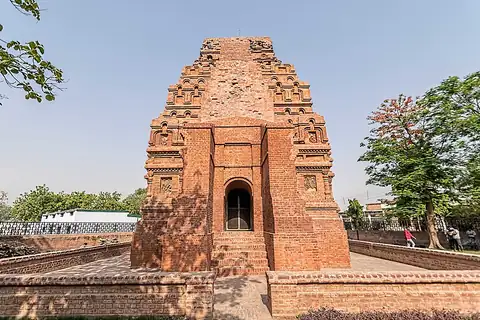
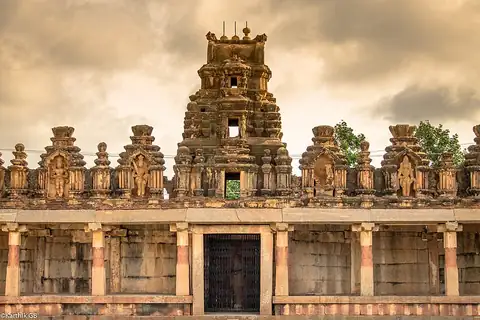
Bhitargaon Brick Temple
The oldest surviving brick temple of India with a tall spire, built in the Gupta period. Its walls once carried terracotta panels of gods, animals and scenes from myth, some now in museums.
 Living temple
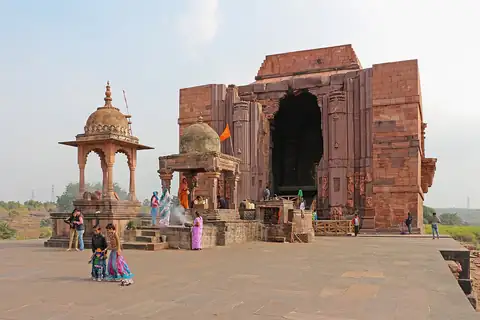
Bhoga Nandeeshwara Temple, Nandi
A twin temple of Shiva at the foot of Nandi Hills, begun in the 9th century and added to by later dynasties. One shrine is Arunachaleshwara, Shiva as an ascetic, and the other is Bhoga Nandeeshwara, Shiva as a householder.
 Unfinished
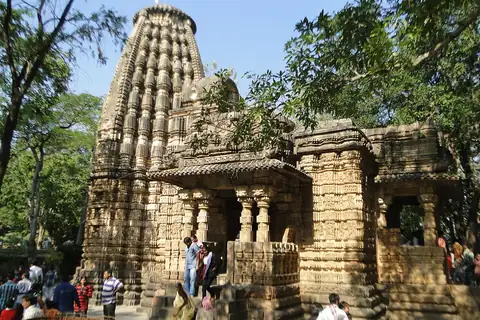
Bhojeshwar Temple
An unfinished 11th-century Shiva temple of the Paramara king Bhoja, with one of the largest stone lingas in India. Construction drawings engraved on nearby rocks and the earthen ramp used to lift stones survive, so the site shows how medieval temples were built.
Bhootnath Temple, Mandi
The main Shiva temple of Mandi town, said to have been built in 1527 by Raja Ajber Sen when he founded the town. The week-long Mandi Shivaratri fair begins with worship here.
 Living temple
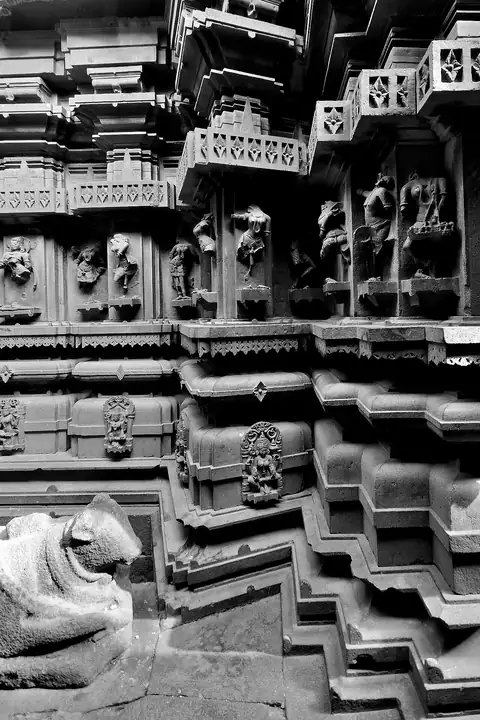
Bhoramdeo Temple
A stone Shiva temple of about the late 11th century in the Maikal hills, built under the Phani Nagavanshi kings. Its carvings of gods, dancers and couples have earned it the name 'Khajuraho of Chhattisgarh'.
Bhubaneswari Temple, Udaipur
A temple of the goddess Bhubaneswari on the Gomati river at Udaipur, the old capital of Tripura, built under Maharaja Govinda Manikya in the 17th century. Rabindranath Tagore set his novel Rajarshi and play Bisarjan here.
 Living temple
Bhuleshwar Temple
A hilltop Shiva temple near Yavat, known for its friezes of goddesses, dancers and epic scenes. It is often linked with the Yadava period and was later enclosed by a fort.
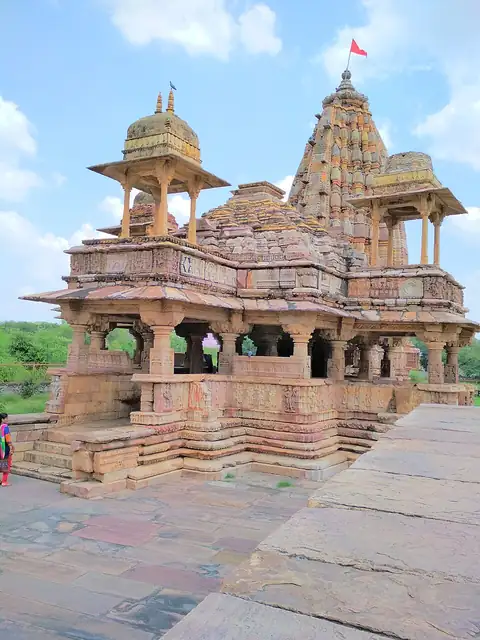
Bijli Mahadev Temple
A hilltop Shiva temple above Kullu, famous because lightning is said to strike its tall flagstaff and shatter the linga, which the priest then rejoins with butter.
 Living temple
Bijolia Temples
A group of 12th-century Hindu temples at Bijolia, led by the Undeshwar Shiva temple, with a Jain site nearby whose rock inscription of 1170 is a major source for the history of the Chahamana kings.
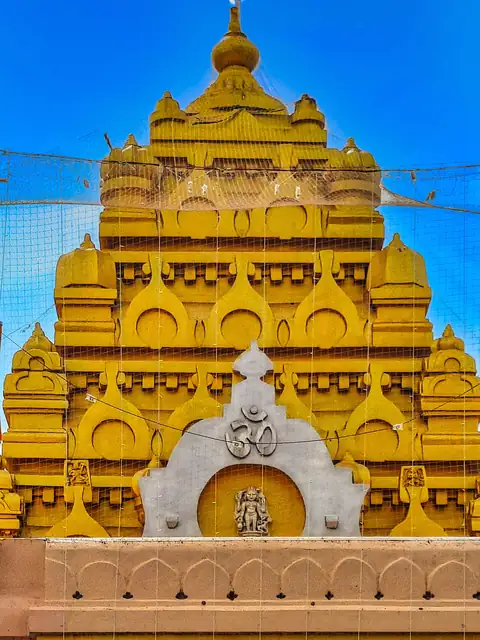
Biligiri Ranganatha Swamy Temple, BR Hills
A hilltop Vishnu temple in the Biligiri Ranganatha hills, inside a tiger reserve. The Soliga people of the forest count the god as their kinsman.
 Living temple
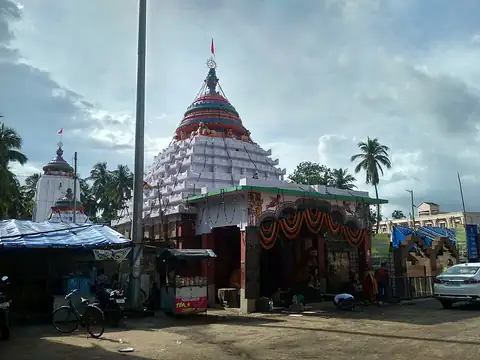
Bilnath Mahadev Temple, Bileshwar
One of the oldest standing temples in Saurashtra, a Shiva temple at Bileshwar near the Barda hills dating from about the 7th century, in the Maitraka period.
 Living temple
Biraja Temple, Jajpur
The temple of Biraja (Viraja), a two-armed form of Durga killing Mahishasura, at Jajpur in Odisha. Jajpur is the Viraja Kshetra of the Puranas, counted among the 18 Maha Shakti Peethas, and its well is the Nabhi Gaya where rites for ancestors are performed.
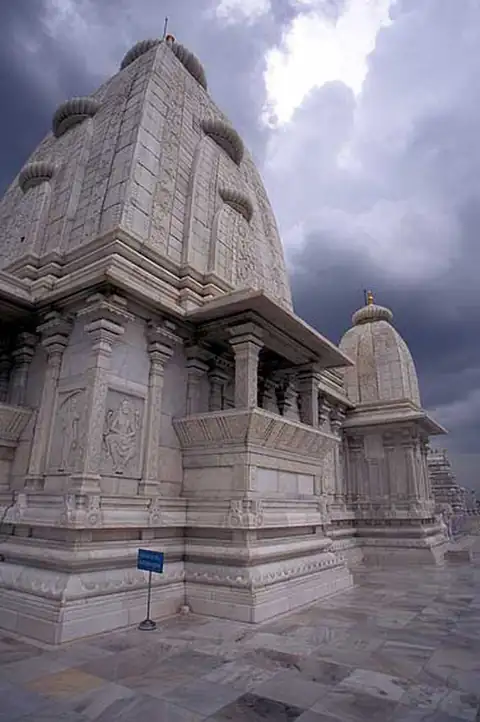
Biranchinarayan Temple, Buguda
A temple of the Sun god as Biranchinarayan at Buguda, built by the local Bhanja rulers around 1800. It is known for its painted walls, which show the Ramayana in a lively Odia folk style.
 Living temple
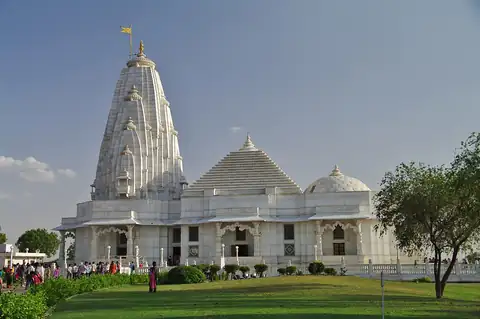
Birla Mandir, Hyderabad
A white marble temple of Venkateswara on a hill above Hussain Sagar lake, built by the Birla family and consecrated in 1976. It mixes South Indian, Rajasthani and Odia temple forms, and is known for its quiet: there are no bells.
 Living temple
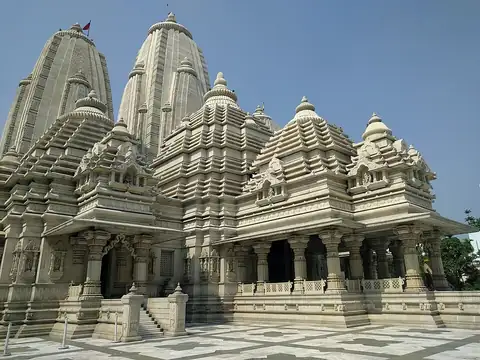
Birla Mandir, Jaipur
A white marble temple of Lakshmi and Narayan in Jaipur, completed in 1988 by the Birla family. Its walls carry images of saints and thinkers of many faiths.
 Living temple
Birla Mandir, Kolkata
A large white sandstone temple of Lakshmi Narayan in south Kolkata, built by the Birla family over about 26 years and opened in 1996. Its carving follows the style of the Lingaraja temple of Bhubaneswar.
 Living temple
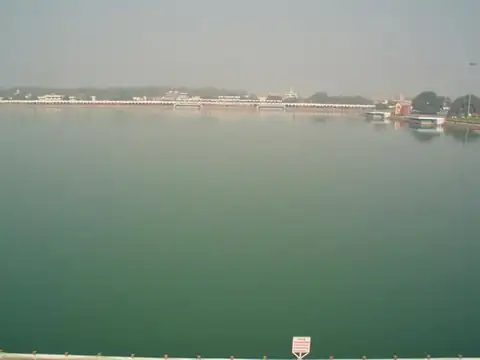
Brahma Sarovar, Kurukshetra
A very large sacred tank at Kurukshetra linked with Brahma's creation of the world. Lakhs of pilgrims bathe here during solar eclipses, and the Sarveshwar Mahadev temple stands on an island in the tank.
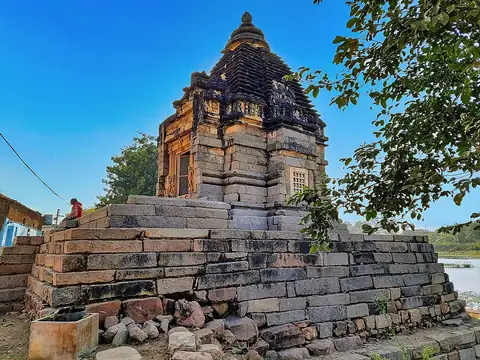
Brahma Temple, Brahma Karmali
One of the very few temples of Brahma in India, in a village of Sattari taluka. Its stone image of Brahma, of about the 12th century, is said to have been brought from Carambolim in the 16th century to escape Portuguese destruction.
 Living temple
Brahma Temple, Khajuraho
An early temple of granite and sandstone at Khajuraho, about 925. It is popularly called the Brahma temple, but its sanctum holds a four-faced Shiva linga.
 Living temple
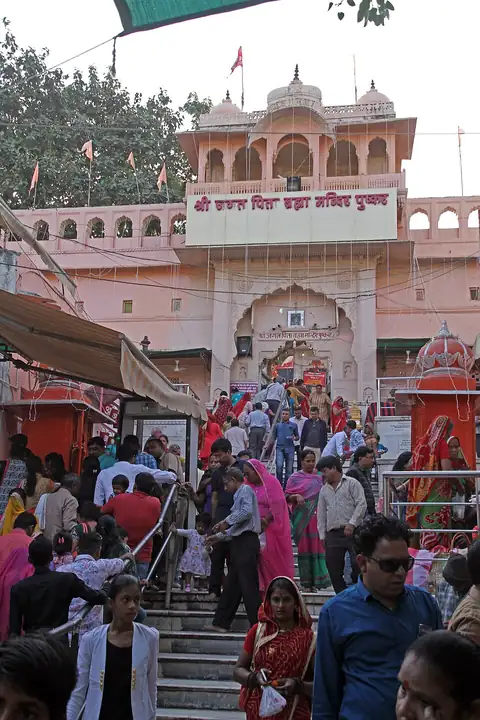
Brahma Temple, Pushkar
One of the very few temples in India dedicated to Brahma, the creator, beside the sacred lake of Pushkar. The Kartik Purnima fair at Pushkar, with its camel market, is one of the largest in Rajasthan.
 Living temple
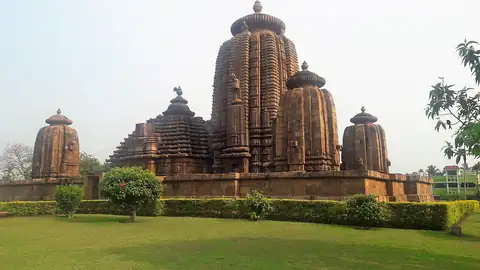
Brahmeswar Temple, Bhubaneswar
A five-shrine (panchayatana) Shiva temple built by Queen Kolavati, mother of the Somavamshi king Udyotakesari, according to an inscription. Its walls are among the first to show musicians and dancers in large numbers, linked to the temple's dancers.
 Rebuilt / restored for worship
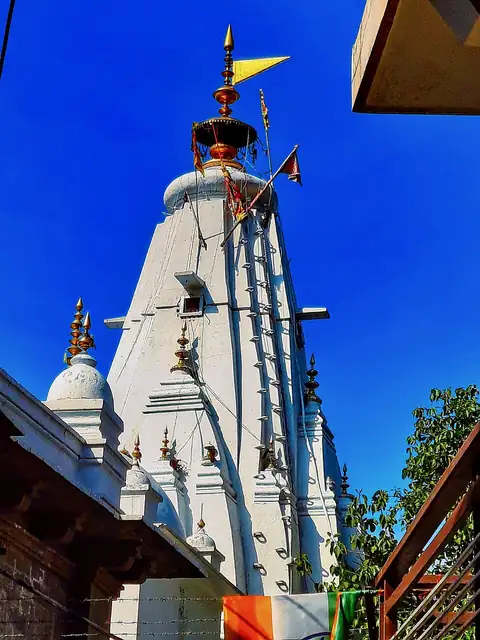
Brajeshwari Temple, Kangra
A Shakti Peetha at Kangra, where Sati's left breast is said to have fallen. The temple was famously rich, was plundered by Mahmud of Ghazni in 1009, and was rebuilt after the 1905 earthquake.
 Living temple
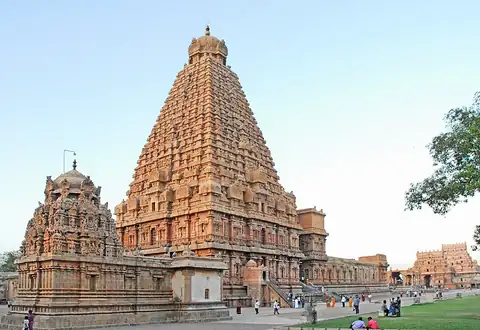
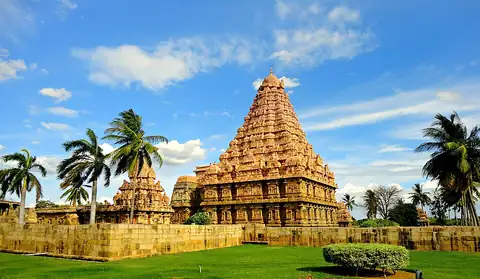
Brihadisvara Temple
Built by the Chola emperor Rajaraja I and consecrated in 1010 CE, this granite temple to Shiva has a vimana about 66 m high and is one of the largest temples of its age. It is part of the UNESCO World Heritage Site 'Great Living Chola Temples'.
 Living temple
Brihadisvara Temple, Gangaikonda Cholapuram
The great Shiva temple of the city that Rajendra I built as his capital after his armies reached the Ganges. Its vimana, about 55 m high with gently curving sides, is a counterpart to his father's temple at Thanjavur. It is part of the UNESCO site 'Great Living Chola Temples'.
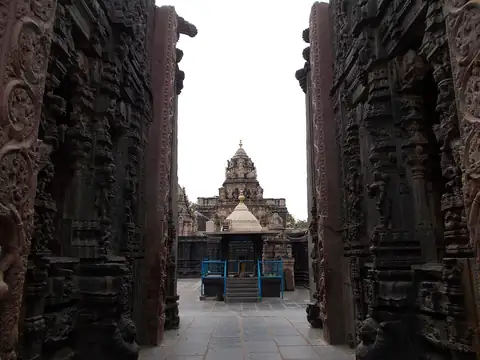
Budhi Thakurani Temple, Berhampur
The temple of Budhi Thakurani, 'the old mother goddess', protector of Berhampur. Her Thakurani Yatra, held every two years in Chaitra, fills the city with weeks of processions, music and folk dance.
 Living temple
Bugga Ramalingeswara Temple, Tadipatri
A Vijayanagara-period Shiva temple on the bank of the Penna at Tadipatri, named for the spring (bugga) that keeps its linga wet. Its unfinished gopurams carry some of the most intricate carving of the period.
Buniyar Temple
A stone temple in a walled courtyard lined with pillared cells, on the Jhelum road towards Uri. It is one of the best-preserved temple complexes of early Kashmir.
Champaran, Birthplace of Vallabhacharya
The birthplace of Vallabhacharya (1479-1531), founder of the Pushti Marg, in the forests near Raipur. Two shrines (baithaks) mark his birth and appearance, and it is a major pilgrimage for Pushti Marg Vaishnavas.
Chamunda Devi Temple, Kangra
A temple of the fierce goddess Chamunda on the Baner river below the Dhauladhar range, one of the main goddess shrines of Kangra.
Chamunda Mata Temple, Chotila
A hilltop temple of Chamunda on Chotila hill, reached by about 600 steps, by the highway between Ahmedabad and Rajkot. It is one of the most visited goddess shrines in Saurashtra.
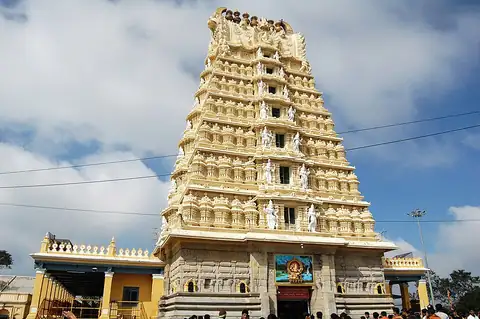
Chamunda Mata Temple, Mehrangarh
A temple of Chamunda, the family goddess of the Rathore rulers, at the southern end of Mehrangarh Fort in Jodhpur. Rao Jodha brought her image from Mandore when he founded the fort in 1460.
 Living temple
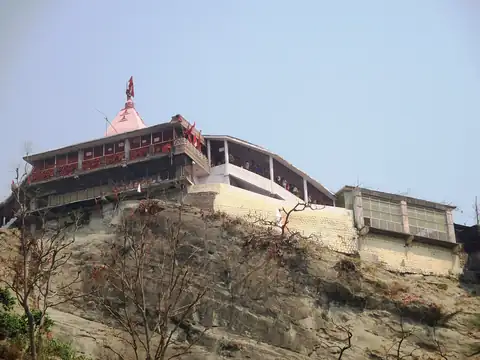
Chamundeshwari Temple, Mysuru
The hilltop temple of Chamundeshwari, the goddess who killed the buffalo demon Mahishasura, from whom Mysuru takes its name. She is the family deity of the Wodeyar kings and the 'Nada Devi' of Karnataka, at the heart of the Mysuru Dasara.
 Living temple
Chandi Devi Temple, Haridwar
A hilltop temple of the goddess Chandi on Neel Parvat across the river from Haridwar. The main image is said to have been installed by Adi Shankara; the present temple was built in 1929.
Chandi Mandir, Panchkula
A temple of the goddess Chandi in the Shivalik foothills near Panchkula. The city of Chandigarh takes its name from this temple.
Chandrabhaga Temples, Jhalrapatan
A group of early stone temples on the Chandrabhaga river at Jhalrapatan, the chief of which, Sitaleshwar Mahadev, is among the oldest temples of Rajasthan. Its carved doorway and pillars survive in fine condition.
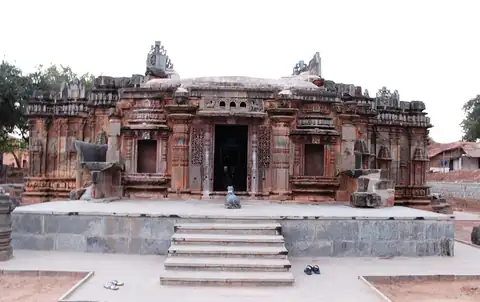
Chandrahasini Devi Temple, Chandrapur
A goddess temple at Chandrapur, where the Mand river meets the Mahanadi. Chandrahasini, a form of Durga, is the guardian goddess of the region, and her Navaratri fairs draw large crowds.
 Living temple
Chandramouleshwara Temple, Unkal
A Chalukya-period Shiva temple at Unkal in Hubli, with four entrances, one on each side, and two lingas in the sanctum. It is a protected monument.
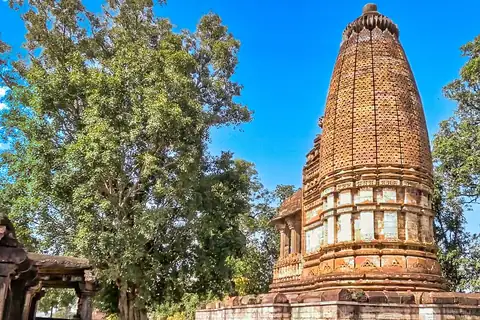
Chandrasekhar Temple, Kapilash
A Shiva temple on Kapilash hill, about 600 m high, built by the Eastern Ganga king Narasimhadeva I in 1246. Pilgrims climb about 1,350 steps through the forest, and the hill is known as the 'Kailasa of Odisha'.
 Ruined / monument
Chandrehe Shiva Temple and Monastery
A circular Shiva temple and a stone monastery of the Mattamayura Shaiva order at Chandrehe, dated by an inscription of 972-73 to the time of the Kalachuri kings. Few early monasteries of any faith survive this well in India.
Chandrika Devi Temple, Lucknow
A goddess temple on the Gomti north of Lucknow, by a sacred tank called Mahisagar Tirtha. Large fairs are held here at Navaratri and on every new-moon day.
 Living temple
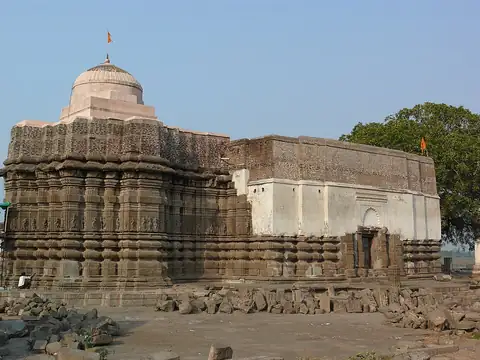
Changdev Temple
A carved stone Shiva temple of the Yadava period at Changdev, where the Tapi and Purna rivers meet. The village is named after the yogi Changdev, who is remembered for his meeting with the poet-saint Dnyaneshwar.
 Living temple
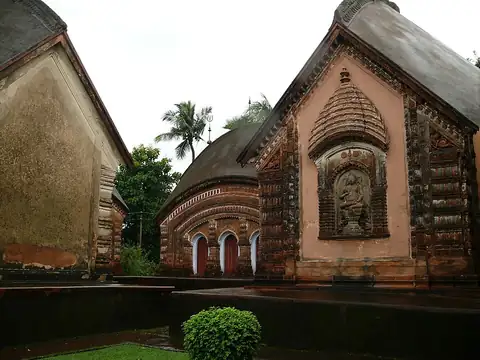
Char Bangla Temples, Baranagar
Four bangla-roofed brick temples set around a square courtyard, built in the mid-18th century under Rani Bhabani of Natore. Their walls carry some of the finest terracotta in Bengal.
Charbhuja Temple, Garhbor
A temple of Vishnu as Charbhuja, 'the four-armed', at Garhbor in Rajsamand district, one of the most revered shrines of Mewar. A great fair is held here on Jaljhulni Ekadashi.
 Living temple
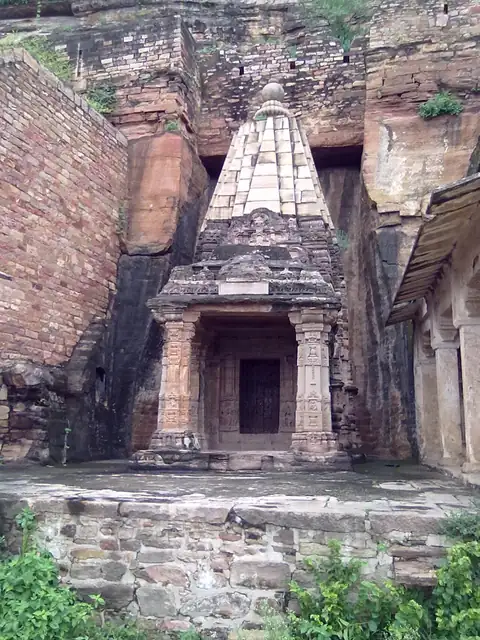
Chaturbhuj Temple, Gwalior Fort
A small temple cut into the rock of Gwalior Fort in 876 under the Pratiharas. Its inscription includes the number 270 written with a zero, among the oldest known dated uses of the zero sign in India.
 Living temple
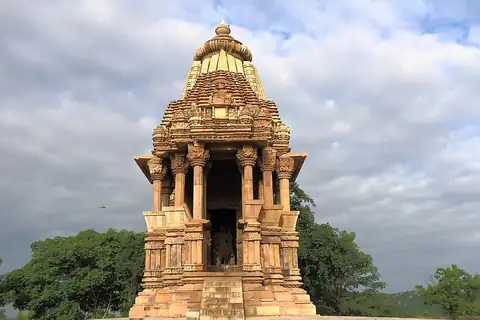
Chaturbhuj Temple, Khajuraho
The southernmost temple at Khajuraho, built about 1100, with a large four-armed image in the sanctum. It is the only major temple at Khajuraho with no erotic sculpture.
 Living temple
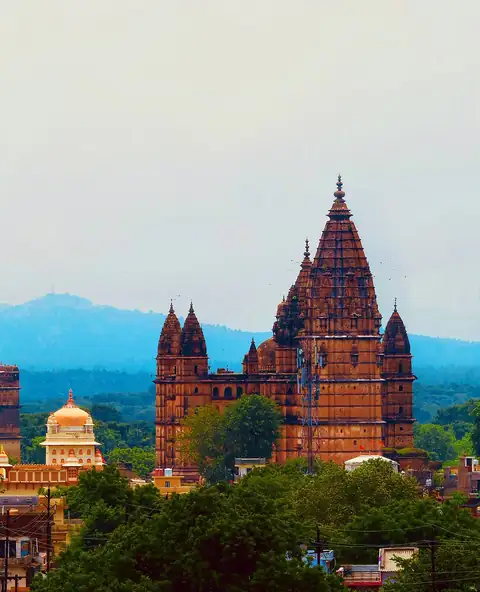
Chaturbhuj Temple, Orchha
A towering temple built on a high platform at Orchha in the late 16th century, meant for the image of Rama that stayed in the Ram Raja palace instead. It is one of the tallest temple buildings of its time, combining temple, fort and palace forms.
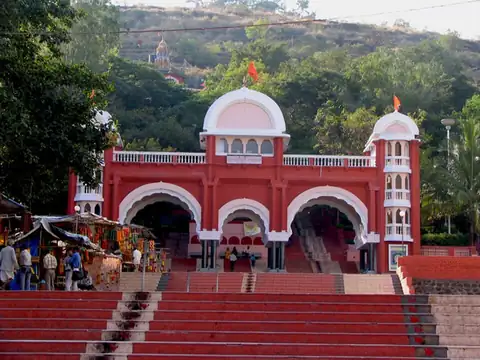
Chaturdasha Devata Temple
The temple of the fourteen deities of the Tripura royal family at Old Agartala, where the gods are worshipped as heads only. The Kharchi Puja held here each July is Tripura's main festival.
 Living temple
Chaturshringi Temple, Pune
A hillside temple of the goddess Chaturshringi, 'of the four peaks', in Pune, built in the Peshwa era. Its Navaratri fair is one of the city's largest.
 Living temple
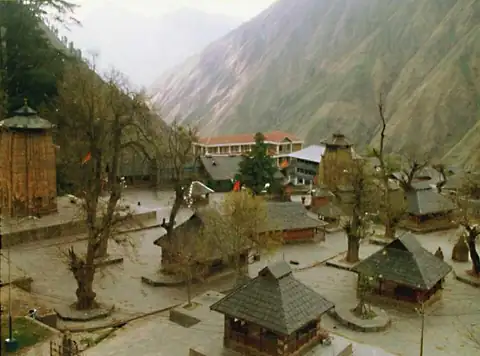
Chaurasi Temples, Bharmour
A group of 84 shrines at Bharmour, the old capital of the Chamba kings, including the wooden Lakshana Devi temple of about the 7th-8th century. Pilgrims start the Manimahesh yatra from here.
 Living temple
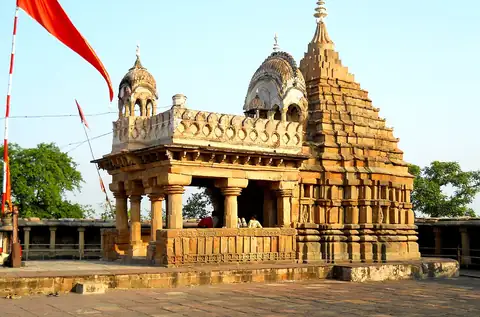
Chausath Yogini Temple, Bhedaghat
A circular yogini temple of the 10th century on a hill above the marble gorges of the Narmada, with more than 80 carved goddess images in the cloister. A shrine of Shiva and Parvati riding Nandi stands in the centre.
 Living temple
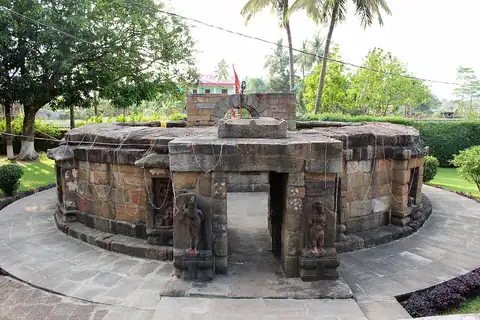
Chausath Yogini Temple, Hirapur
A small circular temple open to the sky, with 64 images of yoginis, female divinities of the tantric tradition, carved in black stone. It is one of only a few yogini temples surviving in India.
 Ruined / monument
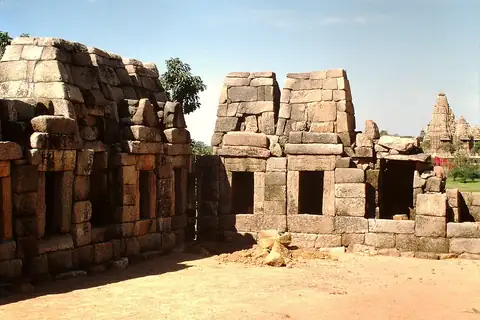
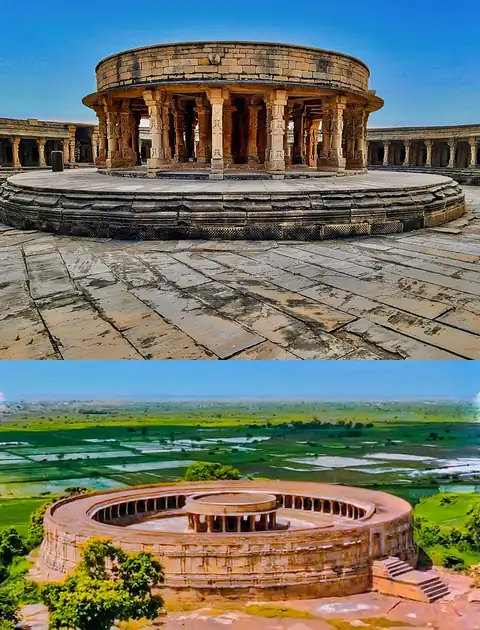
Chausath Yogini Temple, Khajuraho
The oldest surviving temple at Khajuraho, built of rough granite about the late 9th century. It is a rectangular open court lined with small cells for the sixty-four yoginis, of which many are lost.
 Ruined / monument
Chausath Yogini Temple, Mitaoli
A circular hilltop temple with 64 cells around a central Shiva shrine, built for the 64 yoginis. It is often said to have inspired the round design of India's old Parliament House, though this is not documented.
Chauth Mata Temple, Chauth ka Barwara
A hilltop goddess temple near Sawai Madhopur, reached by about 700 steps. Chauth Mata is worshipped for long married life, and her fair on Sankat Chauth draws large crowds.
 Living temple
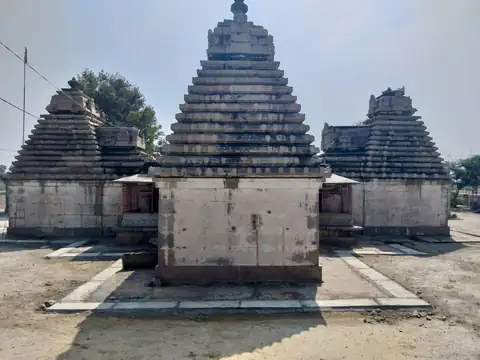
Chaya Someswara Temple, Panagal
A three-shrined Shiva temple of the 11th-12th century at Panagal, built under the Kunduru Chodas. It is famous for a shadow (chaya) that falls on the lingam through the day without any visible source.
 Living temple
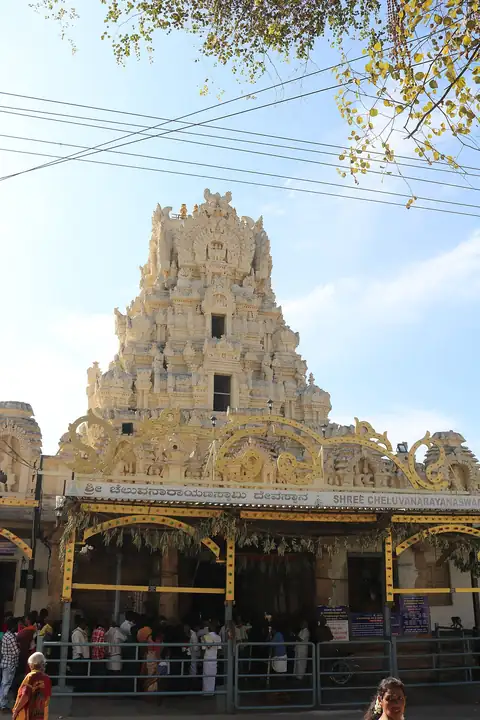
Cheluvanarayana Swamy Temple, Melukote
A hilltop temple of Vishnu as Cheluvanarayana, where the philosopher Ramanuja lived for about twelve years. Its Vairamudi festival, when the god wears a diamond crown from the Mysore palace, draws huge crowds.
 Living temple
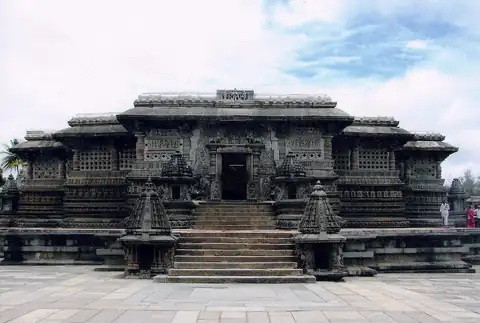
Chennakeshava Temple, Belur
A masterpiece of Hoysala sculpture on the Yagachi river, commissioned by King Vishnuvardhana in 1117 CE. Its soapstone surfaces carry thousands of figures, including the famous bracket figures of dancers (madanikas). It is part of the UNESCO site 'Sacred Ensembles of the Hoysalas' (2023).
Chennakeshava Temple, Somanathapura
The best-preserved Hoysala temple, a triple shrine on a star-shaped platform inside a cloistered courtyard. No worship takes place today; it is a protected monument and part of the UNESCO Sacred Ensembles of the Hoysalas.
 Living temple
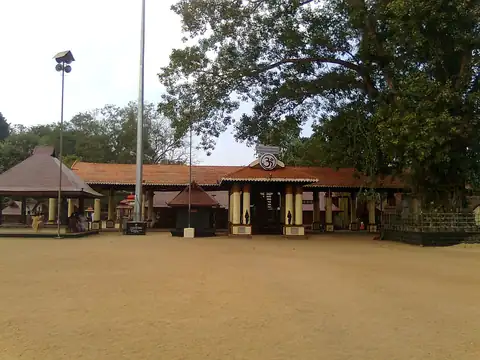
Chettikulangara Bhagavathy Temple
A goddess temple near Mavelikkara, known for its Kumbha Bharani festival, when villages bring tall decorated effigies of chariots, horses and figures (kettukazhcha) to the temple.
 Ruined / monument
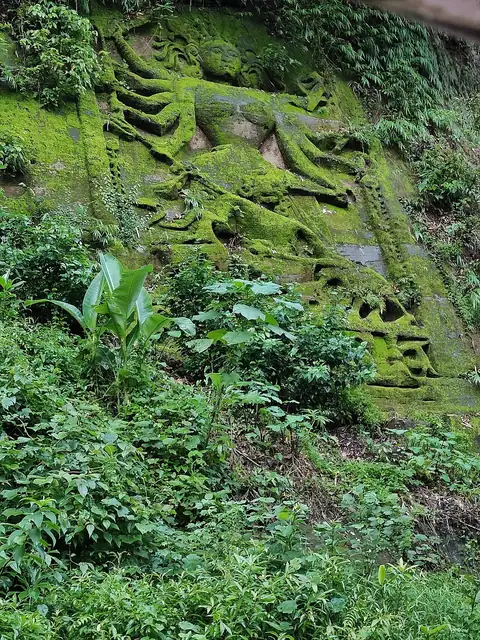
Chhabimura
A series of large rock carvings of Hindu gods on the steep cliffs of the Gomati river in southern Tripura, reached only by boat. The best known is a tall figure of the goddess Durga, locally called Chakrak-ma.
 Living temple
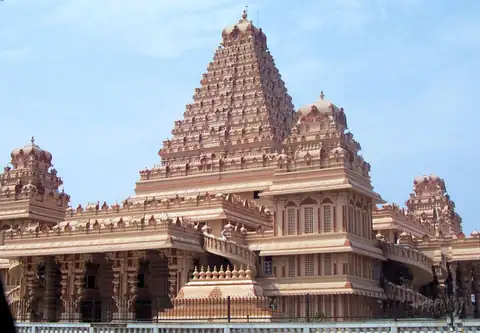
Chhatarpur Temple
A large temple complex of the goddess Katyayani in south Delhi, founded in 1974 by Baba Sant Nagpal. Its marble and lattice buildings in the South and North Indian styles spread over many acres.
Chhinnamasta Temple, Rajrappa
A temple of the headless goddess Chhinnamasta, one of the ten Mahavidyas, at the meeting of the Damodar and Bhairavi rivers. It is a major centre of tantric worship in eastern India.
 Living temple
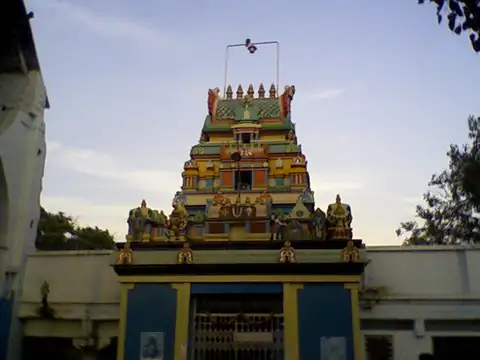
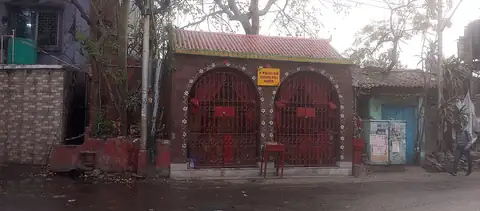
Chilkur Balaji Temple
A Venkateswara temple near Hyderabad, popularly called the 'Visa Balaji' because people seeking visas pray here. It accepts no money offerings and has no hundi, VIP queue or special tickets.
 Living temple
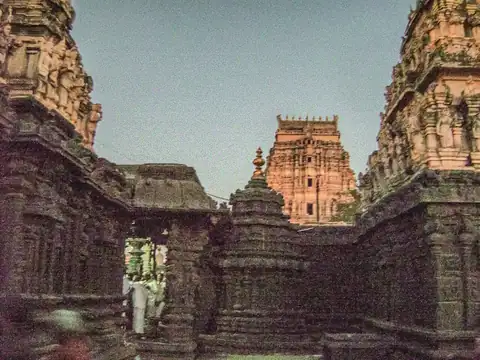
Chinese Kali Temple, Tangra
A Kali temple in Kolkata's Chinatown, worshipped by both the Chinese and Bengali people of Tangra. Noodles and chop suey are offered to the goddess, and the priest is Bengali.
 Living temple
Chintala Venkataramana Temple, Tadipatri
A Vijayanagara-period temple of Venkateswara at Tadipatri, built in the 16th century by the local chief Timmanayudu. It is known for its carved stone chariot shrine of Garuda and its walls of Ramayana and Bhagavata panels.
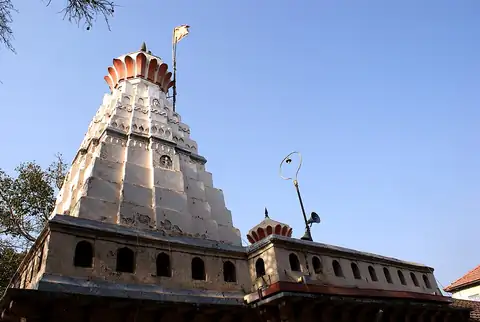
Chintaman Ganesh Temple, Ujjain
A temple of Ganesha as Chintaman, the remover of worries, with self-manifested images of Ganesha and his consorts Riddhi and Siddhi. It is the most important Ganesha temple of Ujjain.
 Living temple
Chintamani Temple, Theur
An Ashtavinayak shrine of Ganesha as Chintamani, 'the wish-fulfilling jewel'. It was the favourite of the Peshwa Madhavrao I, who died here in 1772.
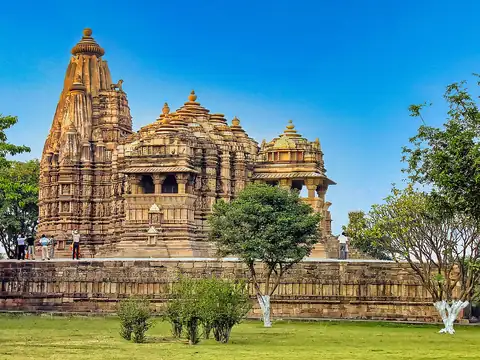
Chintpurni Temple
A Shakti Peetha in Una district where Sati's feet are said to have fallen. The goddess, Chhinnamastika, is worshipped as a pindi and is believed to remove worries (chinta).
 Ruined / monument
Chitragupta Temple, Khajuraho
The Sun temple of Khajuraho, built in the early 11th century, with an image of Surya standing in his chariot drawn by seven horses in the sanctum.
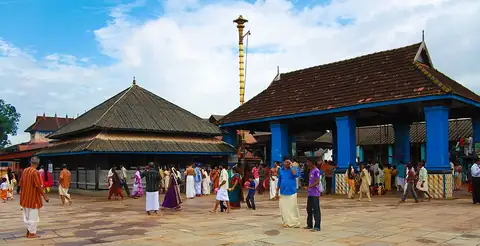 Living temple
Chottanikkara Bhagavathy Temple
A goddess temple near Kochi where the deity, a self-manifested laterite stone, is worshipped as Rajarajeswari together with Vishnu. A lower shrine, the Keezhkkavu, holds Bhadrakali in her fierce form, and many people with mental distress come here hoping for relief.
Cuttack Chandi Temple
The temple of the city goddess of Cuttack, Chandi, worshipped as a form of Durga. At Durga Puja the city's great festival begins here, and the goddess is decked as Mahishasuramardini and other forms each day.
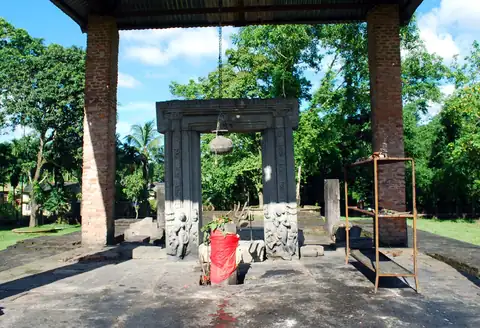 Ruined / monument
Da Parbatia Temple
The ruins of an early temple near Tezpur whose carved stone door frame, of about the 5th-6th century, is the oldest surviving temple sculpture in Assam. It shows the river goddesses Ganga and Yamuna.
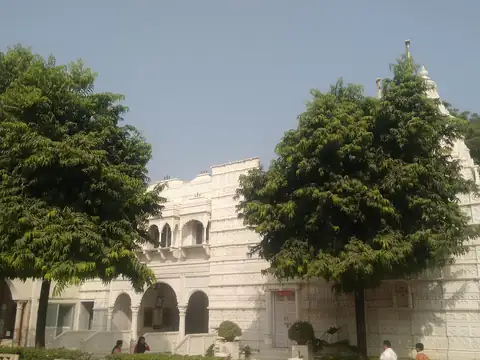 Living temple
Dada Bari Jain Temple, Mehrauli
A Shvetambara Jain shrine at Mehrauli built around the memorial of Manidhari Jinachandra Suri, a 12th-century monk of the Kharatara Gaccha. It is one of the oldest Jain sites in Delhi.
Daitya Sudan Temple, Lonar
A 12th-century temple of Vishnu as slayer of the demon Lonasura, in the town beside the Lonar crater, a lake formed by a meteor impact. Many smaller temples stand around the crater rim and inside it.
 Living temple
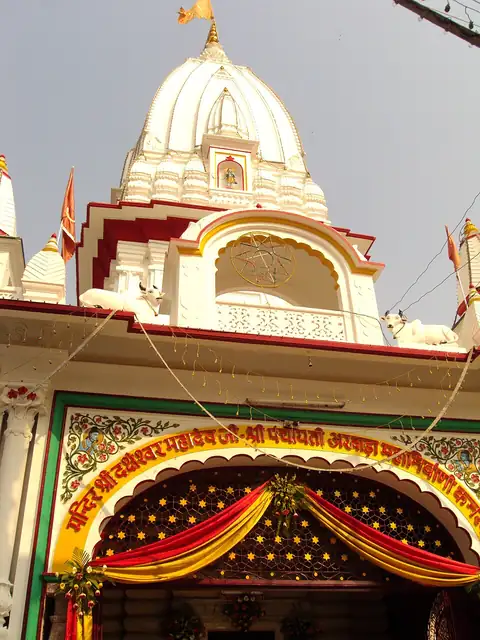
Daksheshwar Mahadev Temple, Kankhal
A temple of Shiva at Kankhal near Haridwar, built where King Daksha is said to have held the sacrifice at which his daughter Sati gave up her life. The present temple was built in 1810 by Queen Dhankaur.
 Living temple
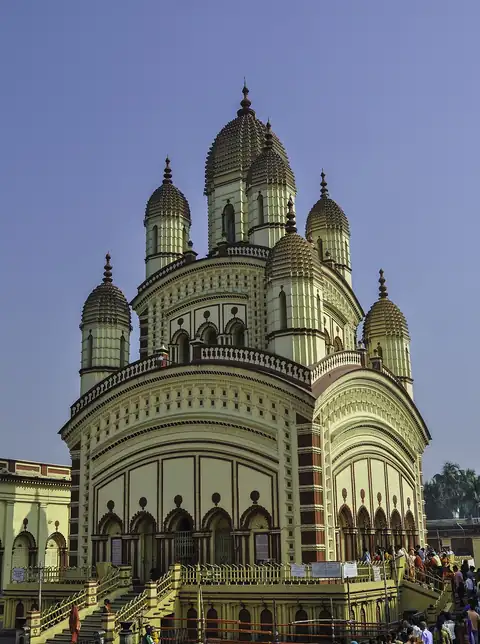
Dakshineswar Kali Temple
A nine-spired (navaratna) temple of Kali as Bhavatarini on the Hooghly river, built by Rani Rashmoni in 1855. Sri Ramakrishna Paramahamsa served here as priest, making it the birthplace of a spiritual movement that went worldwide through Swami Vivekananda.
 Living temple
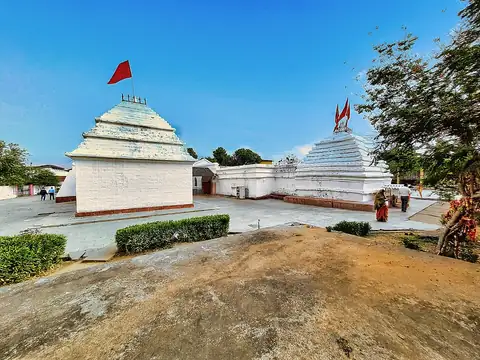
Danteshwari Temple, Dantewada
The temple of Danteshwari, family goddess of the Bastar rulers and chief goddess of Bastar, at the meeting of two rivers. It is counted by some as a Shakti Peetha where Sati's tooth (danta) fell, and is central to the 75-day Bastar Dussehra.
 Ruined / monument
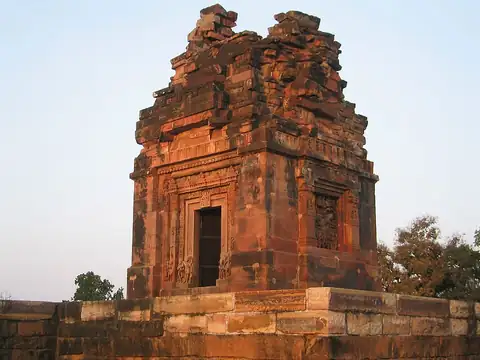
Dashavatara Temple, Deogarh
One of the earliest surviving stone temples of north India, built in the Gupta period around 500 CE. Its relief panels of Vishnu lying on the serpent, Gajendra being saved, and the sages Nara and Narayana are masterpieces of Gupta art.
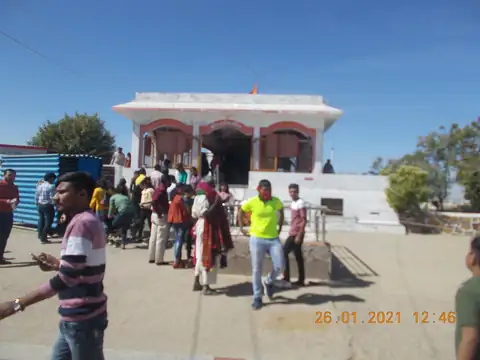
Dattatreya Temple, Ganagapur
The place where the saint Narasimha Saraswati, held to be an avatar of Dattatreya, lived for many years in the 15th century. His sandals (nirguna paduka) are worshipped in the temple, and the town is a main Datta pilgrimage.
 Living temple
Dattatreya Temple, Kalo Dungar
A temple of Dattatreya on Kalo Dungar, the highest point in Kutch, looking out over the white salt desert of the Great Rann. Its priests feed the jackals of the hill every day, a custom tied to a legend of Dattatreya.
Dauji Temple, Baldeo
The main temple of Balarama, Krishna's elder brother, in Braj, at the town of Baldeo. It is famous for the Huranga, a festival after Holi in which women playfully beat men with wet cloths.
 Living temple
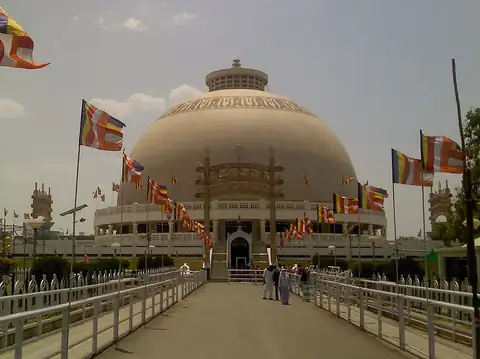
Deekshabhoomi, Nagpur
The place in Nagpur where B. R. Ambedkar embraced Buddhism with several lakh followers on 14 October 1956. A great hollow stupa now stands on the site.
Deepaprakasar Temple, Thoopul
A Kanchipuram Divya Desam where Vishnu appeared as a great light. The neighbourhood, Thoopul, is the birthplace of the teacher Vedanta Desika in 1268.
Deivanayaka Perumal Temple, Thirunangur
One of the eleven Divya Desams of Thirunangur near Sirkazhi. Its name means 'where the gods gathered'.
Deogarh Jain Temples
A group of about 31 Jain temples in the old fort on a hill above the Betwa river at Deogarh, with hundreds of carved images and many inscriptions. The largest, the Shantinatha temple, holds a tall standing image of the 16th Tirthankara.
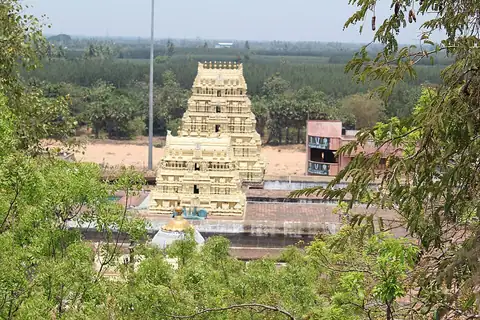
Deorani-Jethani Temples, Tala
The ruins of two temples of the 5th-6th century at Tala, known for a huge and unusual image of Rudra Shiva, its body made of animal and human forms, found here in the 1980s.
 Living temple
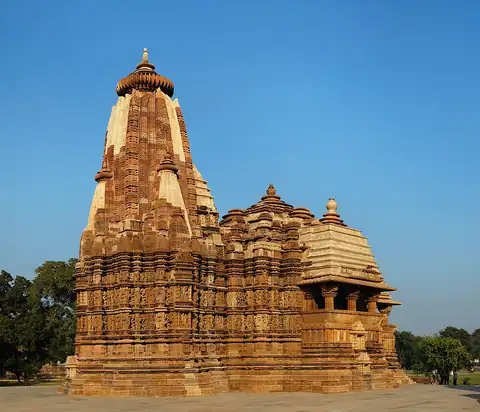
Devanathaswamy Temple, Thiruvahindrapuram
The temple of Vishnu as Devanatha, 'lord of the gods', on the Gadilam river near Cuddalore. The Sri Vaishnava teacher Vedanta Desika lived here for many years, and a hill shrine above holds Hayagriva, the horse-headed god of learning.
 Living temple
Devi Jagadambi Temple, Khajuraho
A Chandela temple of the Western group at Khajuraho, built about 1000-1025 and probably first dedicated to Vishnu. It now holds an image of the goddess worshipped as Jagadambi, and its walls carry some of Khajuraho's finest sculpture.
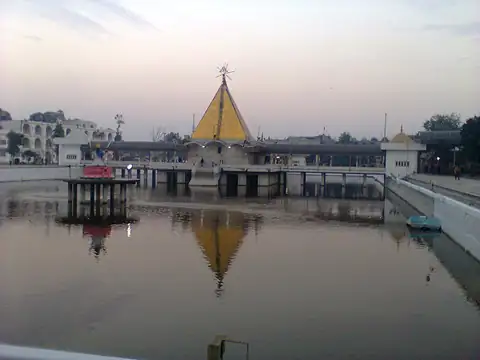
Devi Patan Temple, Tulsipur
A goddess temple near the Nepal border, counted by some lists as a Shakti Peetha where Sati's shoulder fell. It is linked to the Nath yogis, and each Chaitra the procession of Pir Ratannath comes from Dang in Nepal.
 Living temple
Devi Talab Mandir, Jalandhar
A goddess temple beside a large tank in Jalandhar, counted among the Shakti Peethas as the place where Sati's left breast fell. It also hosts the Harballabh Sangeet Sammelan, one of the oldest music festivals in India.
Devi Tekri, Dewas
A hill in the town of Dewas with shrines of two goddesses, Tulja Bhavani (Badi Mata) and Chamunda (Chhoti Mata). The town's name is often linked with the 'abode of the goddess'.
Dewri Temple, Tamar
An old stone temple of a sixteen-armed Durga near Ranchi, where tribal pahan priests serve alongside Brahmin priests. It became widely known as a temple frequented by the cricketer M. S. Dhoni.
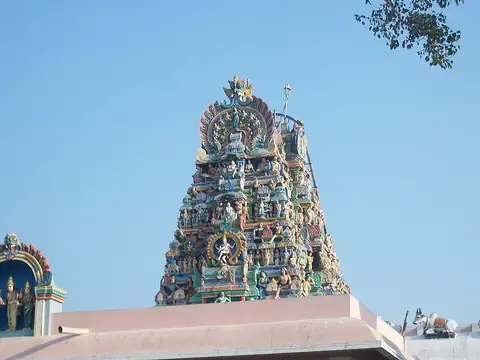
Dhabaleswar Temple, Cuttack
A Shiva temple on a rocky island in the Mahanadi, reached by a suspension footbridge. On Kartik Purnima night, the Bada Osha festival draws huge crowds who fast and offer to Shiva.
 Living temple
Dhandayuthapani Swamy Temple, Palani
The hilltop temple of Murugan as a young renunciant holding only a staff, the third of his six abodes (Arupadai Veedu). Its image is said to be made of nine poisonous herbs and minerals by the siddha Bhogar. It is among the most visited temples in South India.
Dhari Devi Temple
A temple of the goddess Dhari Devi on the Alaknanda river, held to be the guardian of the Char Dham. The image was moved for a hydroelectric dam in June 2013, just before the Kedarnath flood, which many devotees linked to the move.
 Living temple
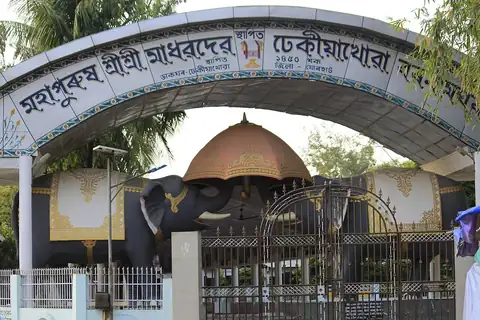
Dhekiakhowa Bornamghar
A great prayer hall (namghar) of the Ekasarana Vaishnava faith near Jorhat, said to have been founded by Madhavdeva, the chief disciple of Sankardev. An oil lamp is said to have burned in it without going out since it was founded.
Dholkal Ganesh
A stone image of Ganesha on the open summit of Dholkal hill near Dantewada, at about 900 metres, reached by a forest trek. It is dated to the Naga period of Bastar.
 Living temple
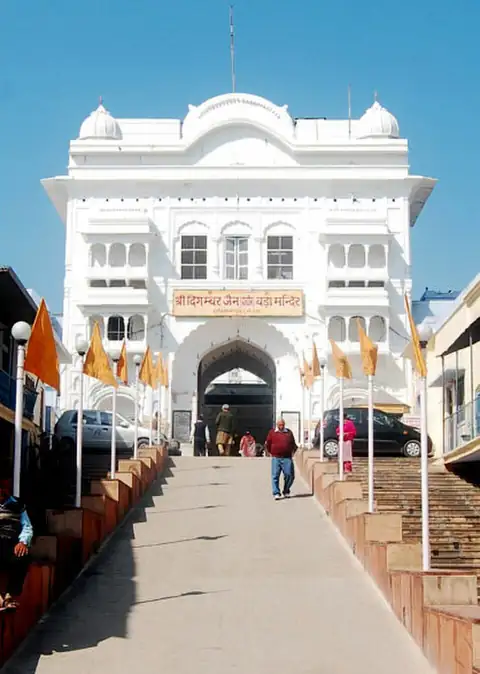
Digambar Jain Bada Mandir, Hastinapur
The oldest of the Jain temples at Hastinapur, built in 1801. Jains honour Hastinapur as the birthplace of three Tirthankaras, Shantinatha, Kunthunatha and Aranatha.
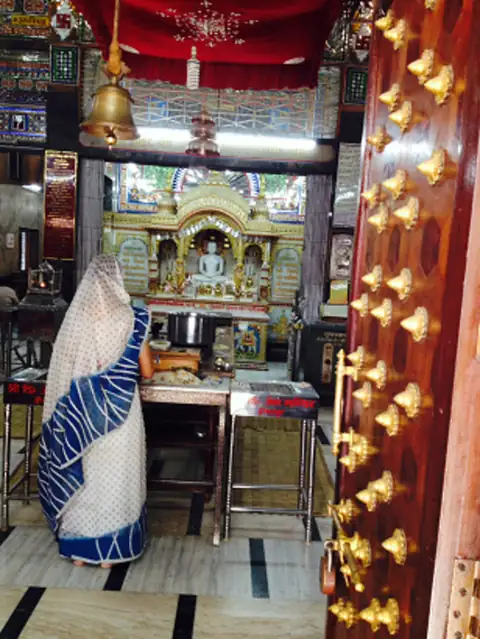
Dilwara Temples
A group of five Shvetambara Jain temples at Mount Abu, famous for some of the finest marble carving in India. The two oldest, Vimal Vasahi (1031) and Luna Vasahi (1230), were built by ministers of the Chaulukya and Vaghela rulers of Gujarat.
 Living temple
Dimapur Jain Temple
A Digambar Jain temple in Dimapur, built in 1947 by the families who left Kohima during the Second World War. Its main image is of Mahavira, and its community also founded a school and a charitable hospital in the town.
 Living temple
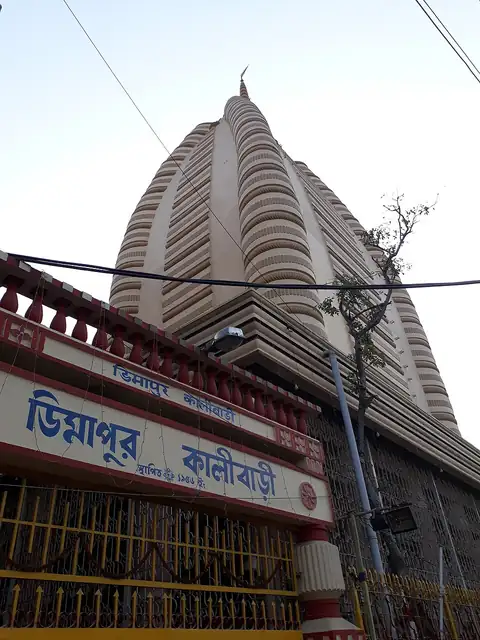
Dimapur Kalibari
A temple of the goddess Kali in Dimapur, built in 1956. It is the focus of Kali Puja and Durga Puja for the Bengali and other Hindu families of the town.
Dirgheswari Temple
A goddess temple on a hill on the north bank of the Brahmaputra near Guwahati, built under the Ahom king Siva Singha in the 18th century. The rocks around it bear old carvings of gods and goddesses.
 Living temple
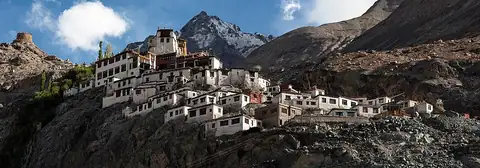
Diskit Monastery
The oldest and largest monastery of the Nubra valley, founded in the 14th century and belonging to the Gelug school. A 32-metre statue of Maitreya, consecrated in 2010, faces down the valley.
 Living temple
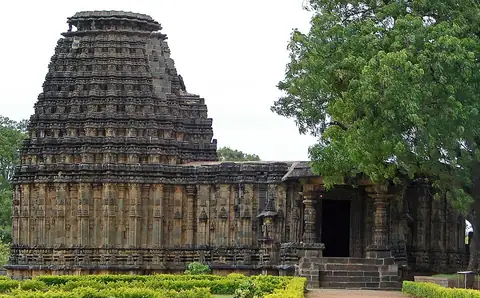
Dodda Basappa Temple, Dambal
A Western Chalukya Shiva temple at Dambal with an unusual plan: its sanctum and tower are star-shaped with 24 points, so that the walls catch light and shadow in many angles.
 Living temple
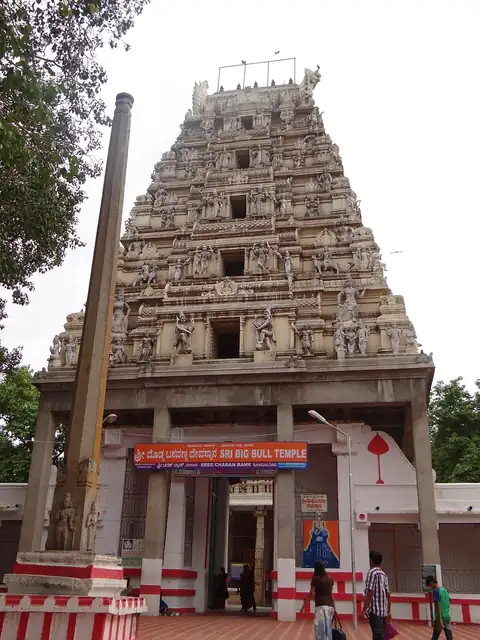
Dodda Basavanna Temple, Bengaluru
A temple of Nandi, Shiva's bull, with a monolithic image about 4.5 m high and 6 m long. It gives its name to Basavanagudi, and its groundnut fair, the Kadalekai Parishe, is one of Bengaluru's best-loved festivals.
 Living temple
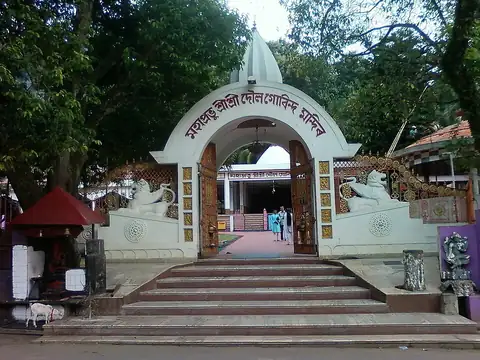
Doul Govinda Temple
A Krishna temple at the foot of Chandrabharati hill on the north bank of the Brahmaputra, facing Guwahati. Its Holi festival, the Doul Utsav, is one of the largest in the Guwahati area.
 Ruined / monument
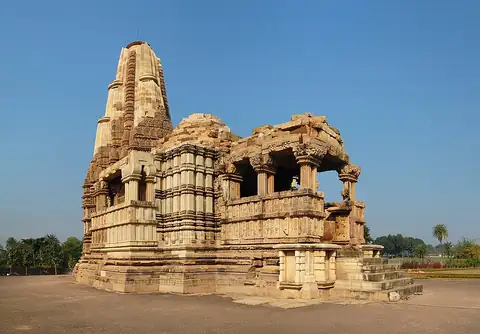
Duladeo Temple, Khajuraho
A Shiva temple of about 1130 in the Southern Group at Khajuraho, among the last great temples the Chandelas built there. Its name means 'holy bridegroom'.
 Living temple
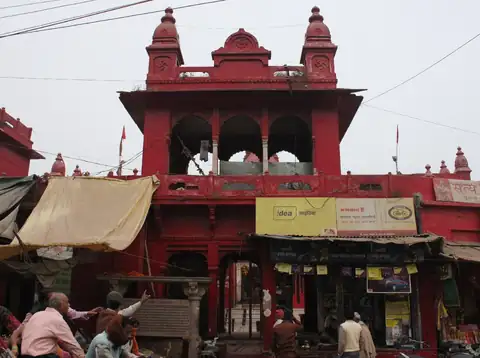
Durga Temple (Durga Kund), Varanasi
A red ochre temple of Durga beside a large tank, built in the 18th century by Rani Bhabani of Natore in Bengal. It is one of the most important goddess temples of Varanasi.
 Ruined / monument
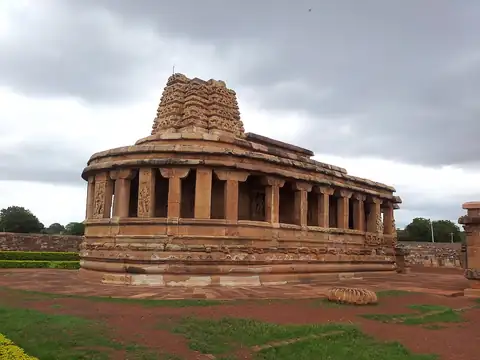
Durga Temple, Aihole
An apsidal Chalukya temple ringed by a pillared gallery, the best known of more than a hundred temples at Aihole, often called a cradle of Indian temple architecture. The name comes from a nearby fort (durga), not from the goddess.
Durgaparameshwari Temple, Kateel
A goddess temple on a rock in the middle of the Nandini river near Mangaluru. It is famous as the home of one of the oldest Yakshagana troupes, whose all-night performances are offered to the goddess as worship.
Durgiana Temple, Amritsar
Amritsar's main Hindu temple, a domed shrine in the middle of a sacred tank, built in 1921 in a style similar to the Golden Temple. Its doors are covered in silver, and it is dedicated to Lakshmi and Narayan, with a shrine of Durga.
 Living temple
Dwarahat Temples
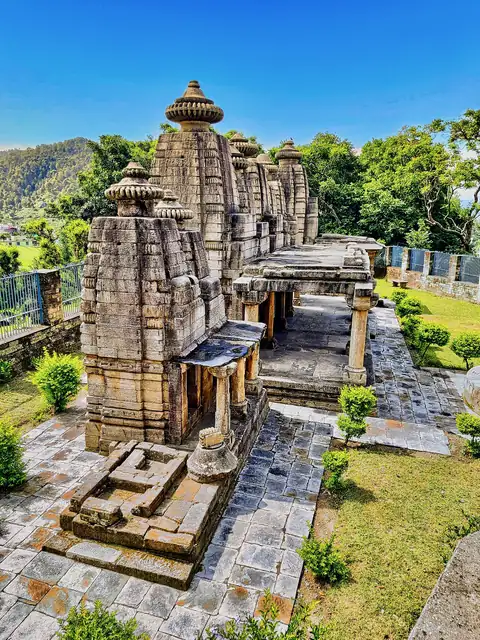
Eight groups of stone temples, built in the Katyuri period, at Dwarahat in the Kumaon hills. The town is sometimes called the Dwarka of the hills.
Dwarkadhish Temple, Bet Dwarka
A temple of Krishna on the island of Bet Dwarka, held to be his residence while Dwarka was his court. The island, reached by ferry and since 2024 by a cable-stayed bridge, has also yielded remains of a Late Harappan settlement.
 Living temple
Dwarkadhish Temple, Dwarka
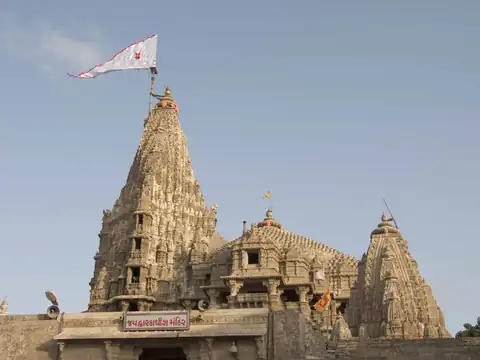
The temple of Krishna as king of Dwarka, on the western shore of Gujarat. It is one of the four Char Dham and one of the seven sacred cities, and its tall spire flies a flag that is changed several times a day.
Dwarkadhish Temple, Kankroli
A Pushtimarg temple of Krishna as Dwarkadhish on the bank of Rajsamand lake. The image was brought from Mathura to escape Aurangzeb's attacks on temples and installed here in 1676 under Maharana Raj Singh of Mewar.
Dwarkadhish Temple, Mathura
A temple of Krishna as king of Dwarka near the Yamuna in old Mathura, built in 1814 and served by priests of the Pushti Marg. Its swing festival (jhula) in the monsoon month of Shravan is the most famous in Mathura.
 Living temple
Ekambareswarar Temple, Kanchipuram
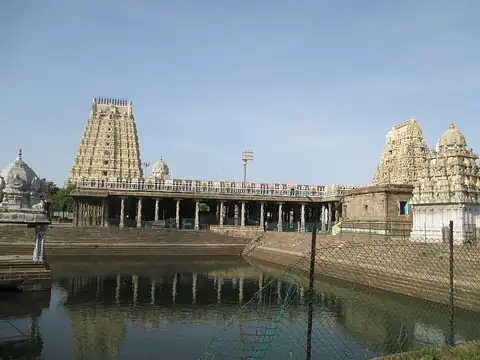
The largest temple in Kanchipuram, where Shiva is worshipped as a linga of earth (Prithvi Lingam), one of the five Pancha Bhoota Sthalams. An ancient mango tree in its courtyard marks where Parvati is said to have worshipped him and won him in marriage.
Eklingji Temple, Kailashpuri
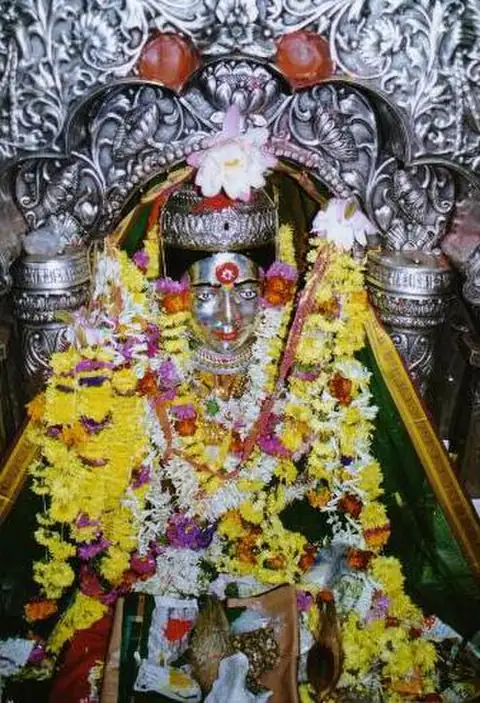
The family temple of the rulers of Mewar, dedicated to Shiva as Eklingji, the true ruler of the state. The Maharanas ruled as his diwan (minister). The walled complex holds more than a hundred shrines.
 Living temple
Ekvira Devi Temple, Karla
A goddess temple beside the Karla caves near Lonavala, the family goddess of the Koli and Agri communities of the Konkan coast and of many other Maharashtrian families.
 Ruined / monument
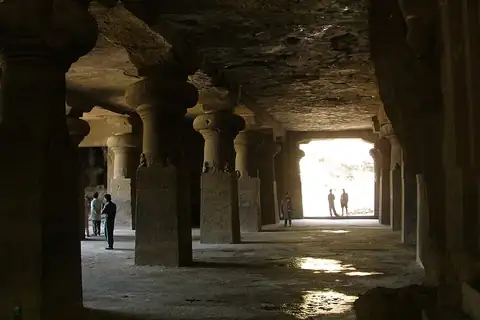
Elephanta Caves
Rock-cut Shiva cave temples on an island in Mumbai harbour, carved mainly in the 5th-6th centuries. The great three-headed Sadashiva (Maheshamurti) is one of the masterpieces of Indian sculpture. The caves are a World Heritage Site.
 Living temple
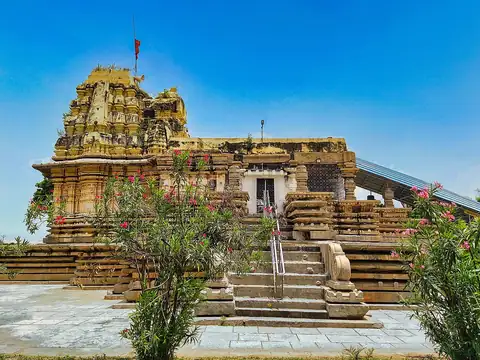
Erakeswara Temple, Pillalamarri
A Kakatiya-period Shiva temple at Pillalamarri near Suryapet, built by the Recherla chiefs who served the Kakatiyas. Its pillars and ceilings carry fine carving and its inscriptions date from around 1200.
 Living temple
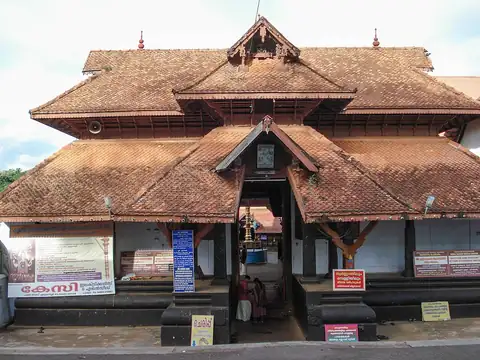
Ettumanoor Mahadeva Temple
One of Kerala's major Shiva temples, rebuilt in 1542, with a copper-roofed sanctum and a celebrated mural of Shiva's Pradosha dance. It owns the Ezharaponnana, seven and a half gold-plated elephants shown to devotees once a year at midnight during the festival.
 Living temple
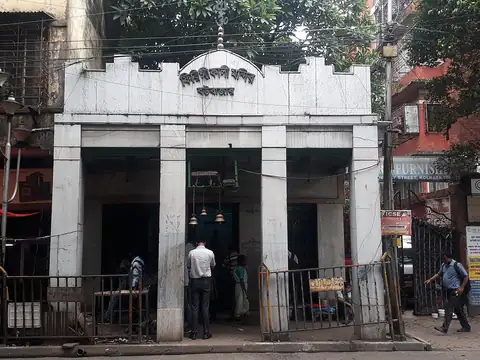
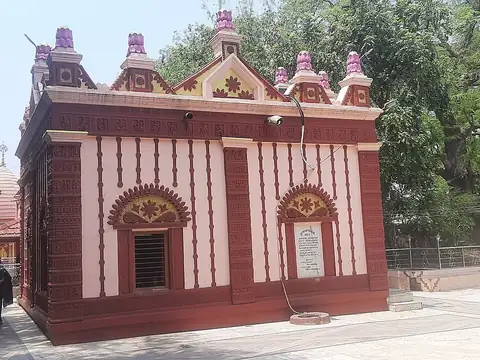
Firingi Kalibari, Kolkata
A small Kali and Shiva shrine in Bowbazar, named after Antony Firingee, a 19th-century poet of Portuguese descent who composed songs to Kali and is said to have worshipped here.
 Living temple
Fullara Temple, Labhpur
A Shakti Peetha in Birbhum where Sati's lips are said to have fallen. The goddess Phullara is worshipped in a large stone, with Shiva as Vishvesha.
Gadkalika Temple, Ujjain
A temple of Kali in Ujjain, whom tradition makes the goddess of the poet Kalidasa. Local tradition also counts it as a Shakti Peetha.
Gajanan Maharaj Temple, Shegaon
The samadhi temple of the saint Gajanan Maharaj at Shegaon in Vidarbha. The temple trust is known across India for its cleanliness, order and service work.
Gajendra Varadha Perumal Temple, Kapisthalam
A Divya Desam on the Kaveri where Vishnu is said to have saved the elephant king Gajendra from a crocodile. It is one of the Pancha Krishnaranya shrines.
 Living temple
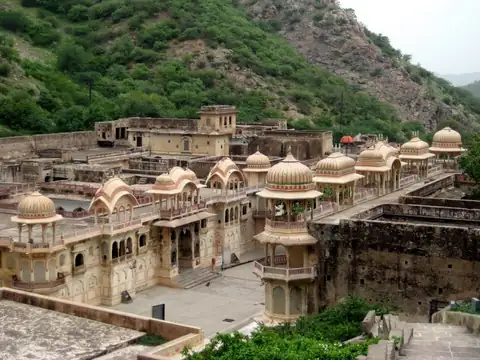
Galtaji Temple
A complex of temples, pavilions and sacred tanks fed by a natural spring in a rocky gorge east of Jaipur. It has been a seat (peeth) of the Ramanandi order since the 16th century and is famous for its many monkeys.
 Ruined / monument
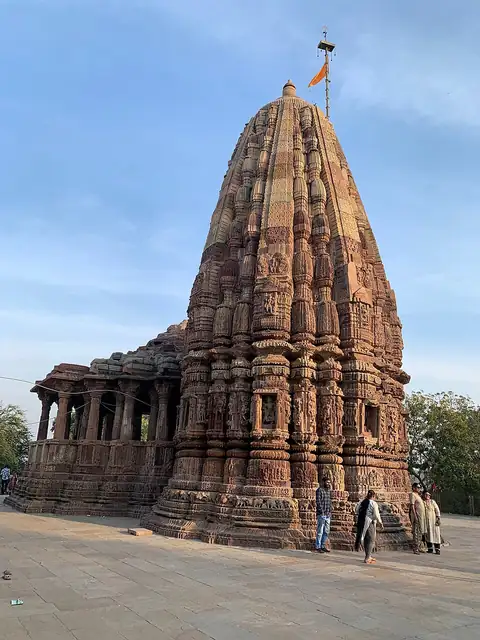
Galteshwar Temple, Sarnal
A 12th-century Shiva temple of the Chaulukya period at the meeting of the Mahi and Galti rivers. Its spire is lost, but its plinth and walls carry some of the finest Solanki carving in central Gujarat.
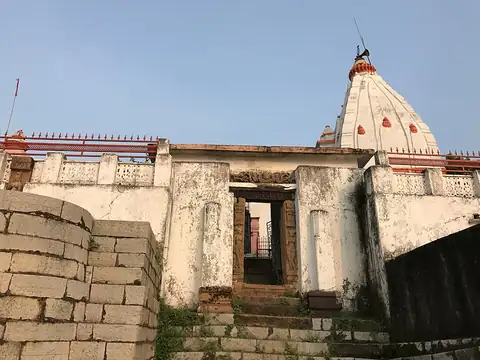
 Living temple
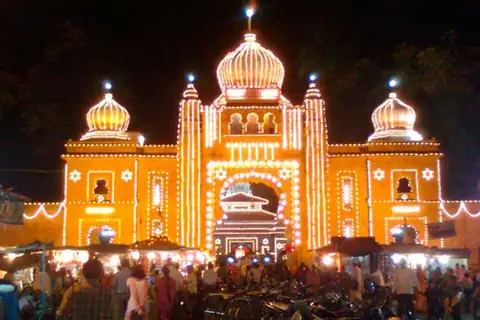
Ganapati Temple, Sangli
A black-stone Ganapati temple on the bank of the Krishna, built by the Patwardhan chiefs of Sangli and completed in 1844. It is a panchayatan temple, with Ganesha in the centre and shrines of four other gods at the corners.
 Living temple
Gandheshwar Temple, Sirpur
A living Shiva temple on the bank of the Mahanadi at Sirpur, rebuilt in later centuries using carved stones from older temples of the 7th-8th century, when Sirpur was the capital of Dakshina Kosala.
Gangeshwar Mahadev Temple, Diu
A cave shrine on the seashore at Fudam near Diu, with five Shiva lingams set among the rocks that are washed by the waves at high tide. The Pandavas are said to have worshipped them during their exile.
Gangotri Temple
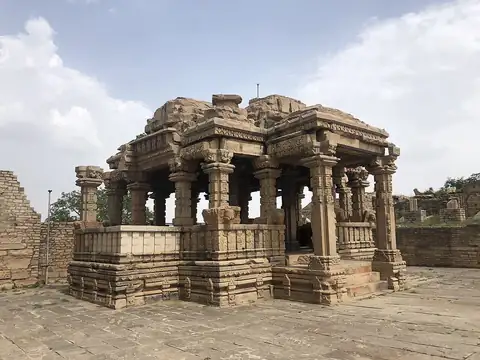
The temple of the goddess Ganga at Gangotri, one of the four shrines of the Chota Char Dham. The source of the Bhagirathi, at the Gaumukh glacier, lies about 18 km beyond. The temple is open from Akshaya Tritiya to Diwali.
 Ruined / monument
Garhi Padhavali Temple
The richly carved hall of a 10th-century temple, preserved inside a small fort built around it in the 19th century, near Mitaoli and Bateshwar. Its pillars and ceiling are among the finest carving of the period.
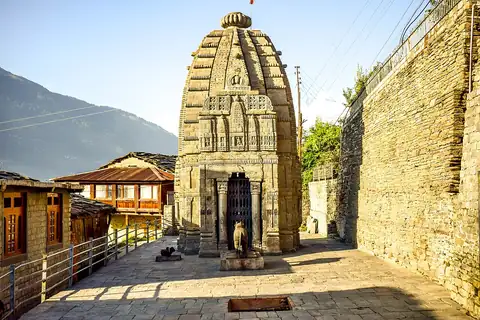
Gauri Shankar Temple, Chandni Chowk
A Shiva temple in Chandni Chowk built about 1761 by Apa Gangadhar, a Maratha officer. Its lingam is believed by devotees to be far older than the building.
 Living temple
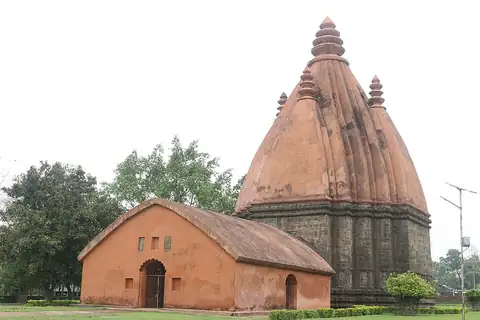
Gauri Shankar Temple, Naggar
A small stone temple of Shiva below Naggar castle, the old capital of the Kullu kings, built about the 11th-12th century.
 Living temple
Gaurisagar Devi Dol
A goddess temple on the bank of the Gaurisagar tank near Sivasagar, built by the Ahom queen Phuleswari. It stands with a Shiva temple and a Vishnu temple, all three facing the water.
Gavi Gangadhareshwara Temple, Bengaluru
A cave temple of Shiva in the heart of Bengaluru, developed by the city's founder Kempe Gowda I. On Makara Sankranti the setting sun shines through a window, between the horns of the Nandi, onto the linga.
 Ruined / monument
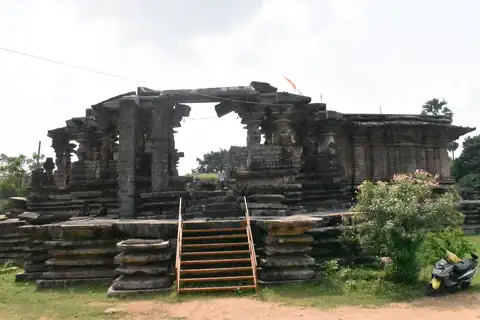
Ghanpur Group of Temples (Kota Gullu)
A walled group of about twenty Kakatiya temples at Ghanpur near Ramappa, built in the 13th century. The main Shiva temple stands on a star-shaped platform with bracket figures of dancers like those at Ramappa.
 Ruined / monument
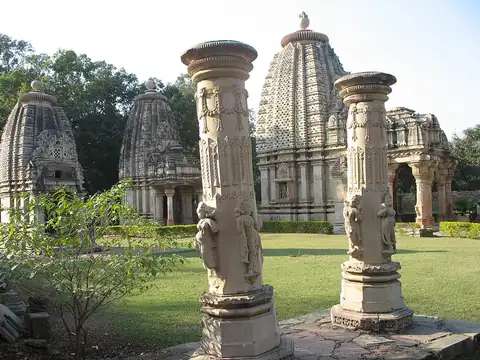
Ghateshwar Temple, Baroli
The largest of a group of eight 10th-century temples at Baroli near the Chambal river, named for its pot-shaped (ghata) linga. Its carved spire and porch are among the best preserved Pratihara-period work.
 Living temple
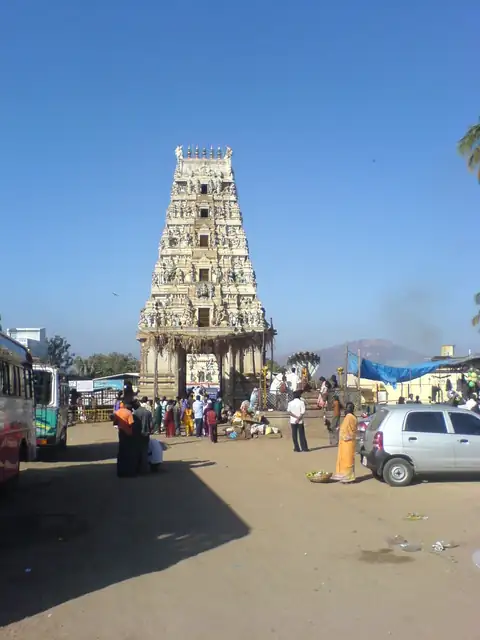
Ghati Subramanya Temple
A temple of Subramanya as a seven-hooded serpent, with Narasimha on the back of the same stone facing the other way. A mirror lets devotees see Narasimha, who cannot be seen directly.
 Living temple
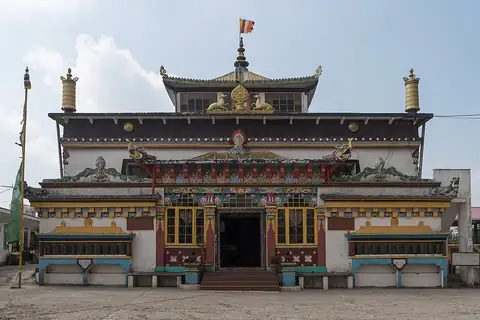
Ghoom Monastery
A Tibetan Buddhist monastery at Ghoom, founded in 1850 by the Mongolian lama Sokpo Sherab Gyatso. It houses a 15-foot image of Maitreya, the future Buddha.
Giraudpuri Dham
The birthplace of Guru Ghasidas (born 1756), founder of the Satnami panth, which rejects caste and image worship. The Jaitkham, a white tower about 77 m high completed in 2015, stands here.
 Living temple
Girijatmaj Temple, Lenyadri
The only Ashtavinayak shrine in a cave, inside an early Buddhist rock-cut vihara on Lenyadri hill. Ganesha is worshipped here as Girijatmaj, son of Parvati (Girija), who is said to have done penance in the cave.
Girnar Jain Temples (Neminatha)
A group of Jain temples on Mount Girnar, where Neminatha, the 22nd Tirthankara, is believed to have renounced the world and attained liberation. The same mountain holds Hindu shrines to Amba and Dattatreya, and an edict of Ashoka stands at its foot.
 Living temple
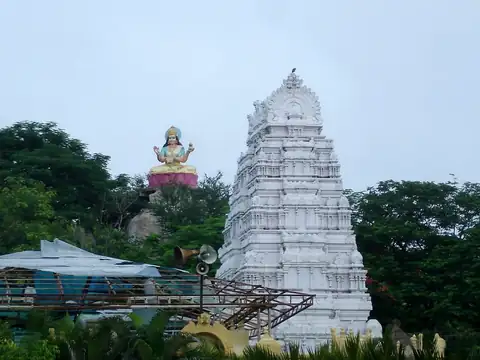
Gnana Saraswati Temple, Basara
One of the few major temples of Saraswati, the goddess of learning, on the bank of the Godavari. Parents bring young children here for Akshara Abhyasam, the ceremony of writing their first letters.
Gokul (Thiruvaipadi)
The cowherd village across the Yamuna where Krishna grew up in the house of Nanda and Yashoda. The Alvars sang of it as Thiruvaipadi, the holy settlement of the cowherds.
Golu Devta Temple, Chitai
A temple of Golu Devta, the Kumaoni god of justice, near Almora. Its walls are hung with thousands of bells and written petitions left by devotees asking him to settle their troubles.
 Living temple
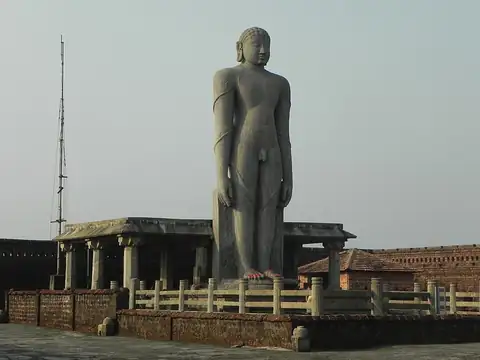
Gommateshwara Statue, Karkala
A 42-foot monolithic statue of Bahubali on a rock hill at Karkala, installed in 1432. It is the second tallest such statue in Karnataka after Shravanabelagola.
 Living temple
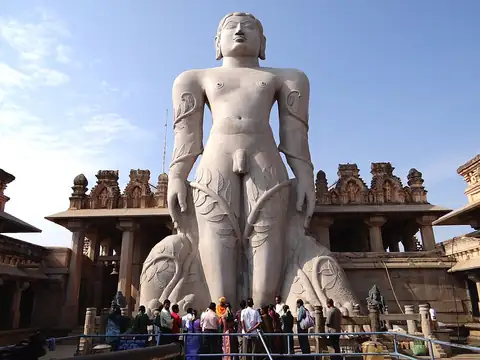
Gommateshwara, Shravanabelagola
A 57-foot (17.4 m) monolithic statue of Bahubali, carved from the granite of Vindhyagiri hill in the 10th century. Every twelve years it is anointed in the Mahamastakabhisheka, one of the great Jain festivals.
 Living temple
Gondeshwar Temple, Sinnar
A 12th-century five-shrine (panchayatana) temple of Shiva built under the Seuna Yadavas, with shrines to Vishnu, Surya, Ganesha and Parvati at the corners. It is one of the best-preserved Bhumija-style temples in Maharashtra.
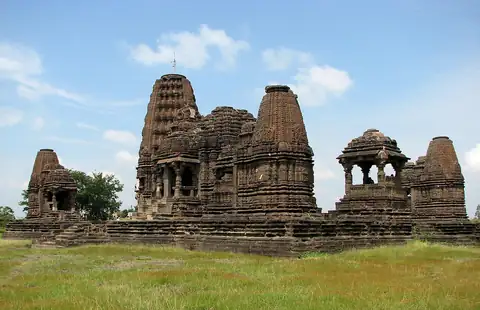
Gop Temple
The oldest standing stone temple in Gujarat, built about the 6th century. Its tall square shrine on a high plinth has a stepped pyramidal roof with horseshoe-arch windows.
 Living temple
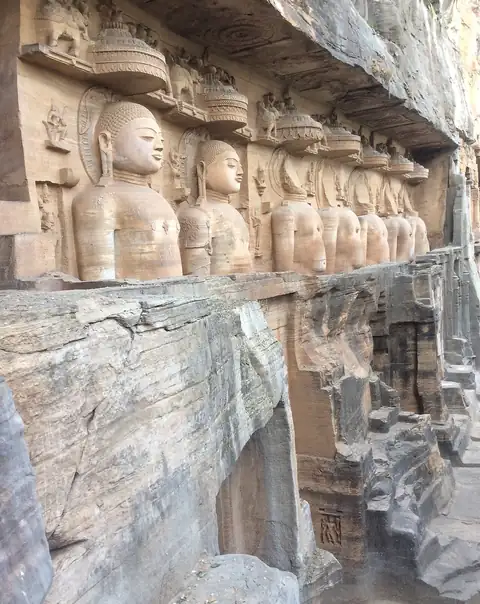
Gopachal Jain Rock Sculptures, Gwalior
Groups of colossal Jain Tirthankara images carved into the cliffs of Gwalior Fort in the 15th century under the Tomara kings. The largest, a standing Rishabhanatha, is about 17 metres tall.
Gopalakrishna Temple, Thirukkavalampadi
One of the eleven Divya Desams of Thirunangur near Sirkazhi. Krishna is said to have rested here with Satyabhama after bringing the parijata tree from heaven.
 Living temple
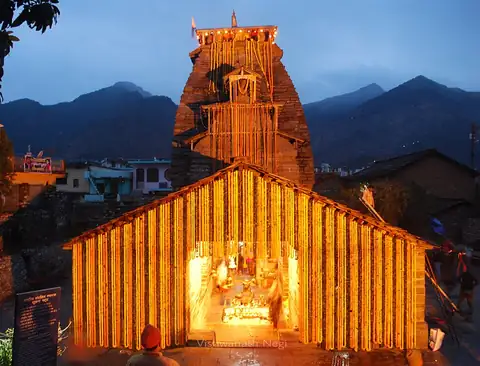
Gopinath Temple, Gopeshwar
A tall stone temple of Shiva at Gopeshwar, built in the Katyuri period. In its courtyard stands a metal trident about 5 metres tall, with old inscriptions. It is the winter seat of Rudranath.
Gopinathji Temple, Gadhada
A Swaminarayan temple at Gadhada, where Swaminarayan lived for many years at the home of his devotee Dada Khachar. He took part in building the temple and installed the images in 1828.
 Living temple
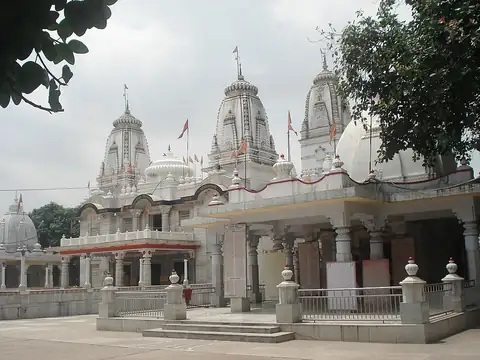
Gorakhnath Math, Gorakhpur
The chief monastery-temple of the Nath yogis, built over the meditation seat of Guru Gorakhnath, the yogi who gave the city its name. At Makar Sankranti lakhs of people offer khichdi to Gorakhnath here.
Govardhan Hill (Giriraj), Govardhan
The low sandstone hill that Krishna is said to have lifted on one finger to shelter the people of Braj from Indra's storm. The hill itself is worshipped as Krishna, and pilgrims walk the 21 km parikrama around it, some prostrating the whole way.
 Living temple
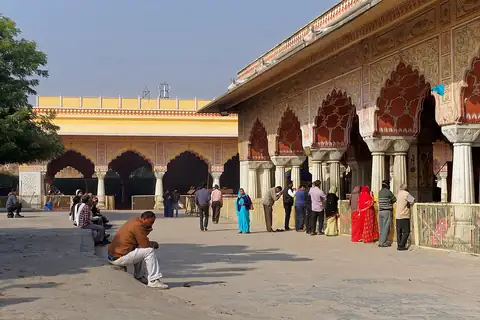
Govind Dev Ji Temple, Jaipur
The most visited temple of Jaipur, inside the City Palace gardens, holding the image of Krishna as Govinda that was brought from Vrindavan. The Kachwaha rulers regarded Govind Dev as the true king of Jaipur and themselves as his ministers.
 Living temple
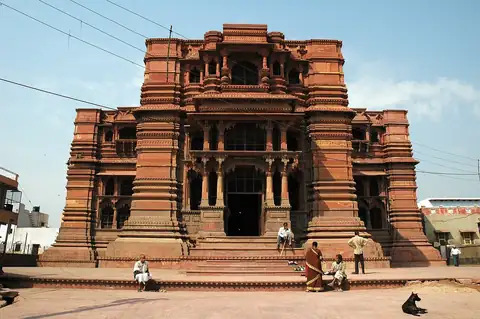
Govind Dev Temple, Vrindavan
A great red sandstone temple built in 1590 by Raja Man Singh of Amber, for the image of Krishna found by Rupa Goswami. Its upper storeys were destroyed in the 17th century and the image was taken to Jaipur, but worship goes on in the old building with a new image.
 Living temple
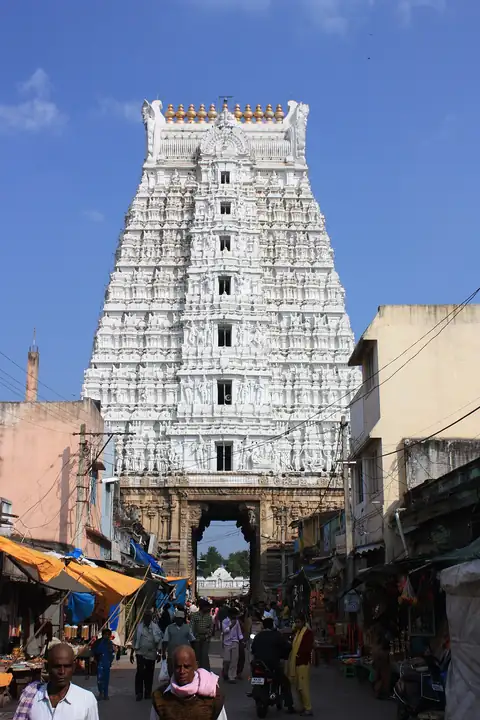
Govindaraja Swamy Temple, Tirupati
The main temple of Tirupati town, with Vishnu as Govindaraja reclining on the serpent. Tradition holds that Ramanuja consecrated it in the 12th century, and the town grew around it. Its tall east gopuram is a landmark of Tirupati.
Grameshwar Temple, Panchapalli
A well-known Shiva temple at Panchapalli in Erasama block, with a temple of Grameshwar about 75 feet tall and a Jagannath temple about 40 feet tall. Its linga is said to have been found buried in the sand.
 Living temple
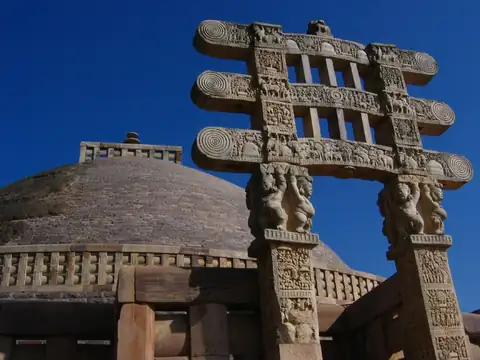
Great Stupa, Sanchi
The oldest stone structure in India still standing, a great Buddhist stupa begun by the emperor Ashoka in the 3rd century BCE. Its four carved gateways (toranas) are masterpieces of early Indian art. Sanchi is a UNESCO World Heritage Site.
 Ruined / monument
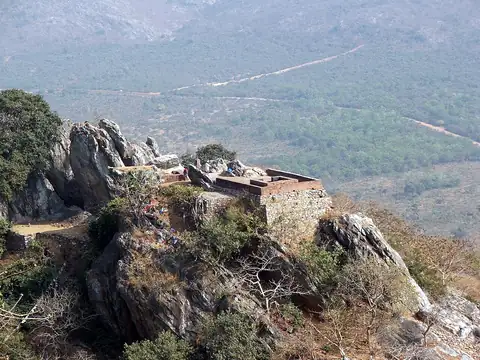
Gridhrakuta (Vulture Peak), Rajgir
A rocky hill at Rajgir where the Buddha often stayed and taught, and where Mahayana tradition places the teaching of the Lotus Sutra and the Heart Sutra. Pilgrims climb the old path to brick terraces at the top.
 Rebuilt / restored for worship
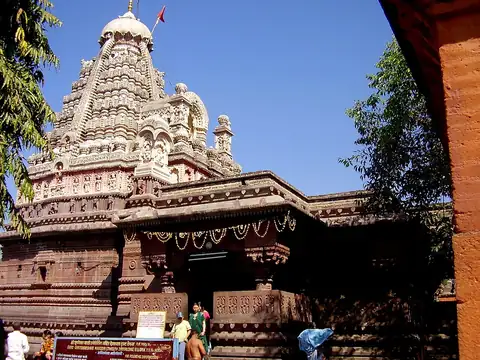
Grishneshwar Temple
The smallest of the Jyotirlinga temples, at Verul next to the Ellora Caves. Destroyed under the Delhi Sultanate and again during the Mughal-Maratha wars, it was restored by Maloji Bhosale, Shivaji's grandfather, and rebuilt in its present form by the Holkars in the 18th century.
 Living temple
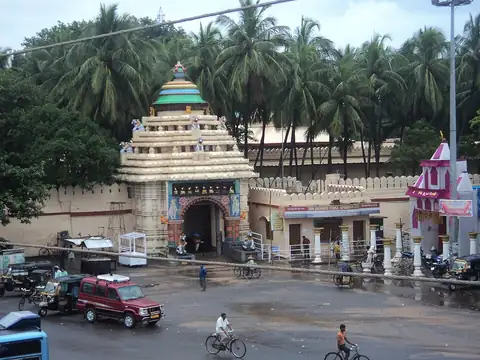
Gundicha Temple, Puri
The garden temple at the end of the Grand Road (Bada Danda) of Puri, where Jagannath, Balabhadra and Subhadra stay for seven days during the Rath Yatra. For the rest of the year it stands empty.
Gupteswar Cave Temple, Koraput
A limestone cave on a forested hill above the Sabari river, on the Chhattisgarh border, with a large natural linga worshipped as Gupteswar, 'the hidden lord'. Thousands come in Shravana and at Shivaratri.
 Living temple
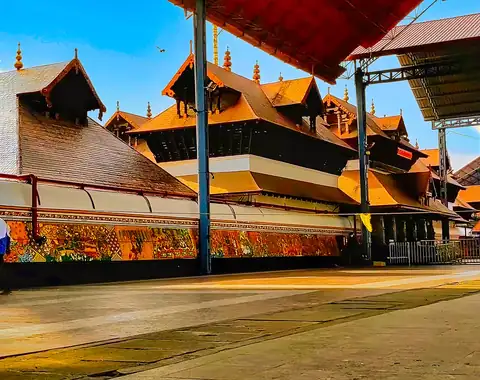
Guruvayur Sri Krishna Temple
One of Kerala's most visited temples, dedicated to Krishna as Guruvayurappan, a four-armed Vishnu form. It is central to Kerala devotional literature, the Narayaneeyam and Jnanappana, and was the site of the 1931-32 Guruvayur Satyagraha for temple entry.
Haat Kalika Temple, Gangolihat
A goddess temple in a deodar forest at Gangolihat, worshipped as a form of Kali. She is held as the guardian goddess of the Kumaon Regiment of the Indian Army.
 Living temple
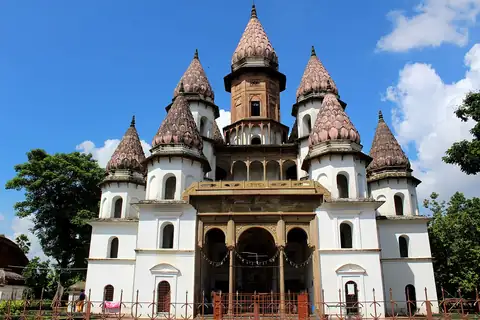
Hangseshwari Temple, Bansberia
A temple of the goddess Hangseshwari with 13 lotus-bud towers, designed, by tradition, after the channels of the body in tantric yoga. It was begun by Raja Nrisinghadeb Roy and completed by his widow Rani Shankari in 1814.
 Living temple
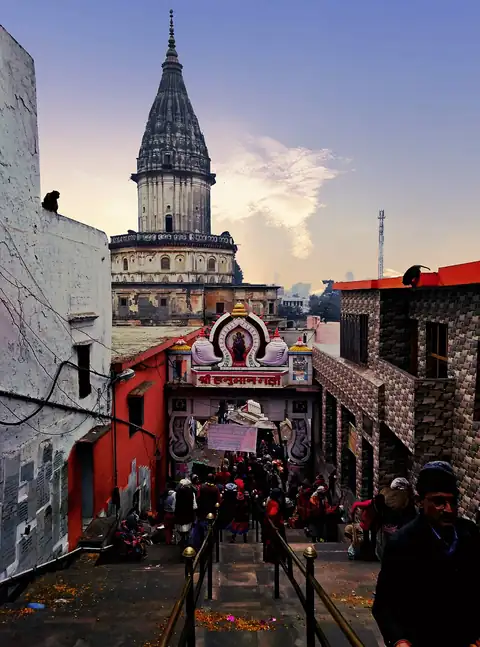
Hanuman Garhi, Ayodhya
A fortress-like temple of Hanuman on a mound in Ayodhya, reached by 76 steps. By custom pilgrims visit Hanuman here before going to the Rama temple, as he is the guardian of Rama's city.
 Living temple
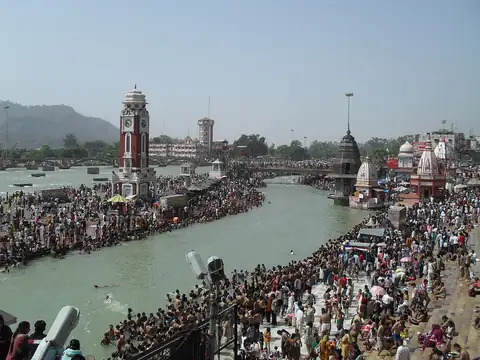
Har Ki Pauri, Haridwar
The most sacred ghat of Haridwar, where the Ganga leaves the mountains. Its evening Ganga aarti draws thousands every day, and it is the centre of the Kumbh Mela held here every twelve years.
 Living temple
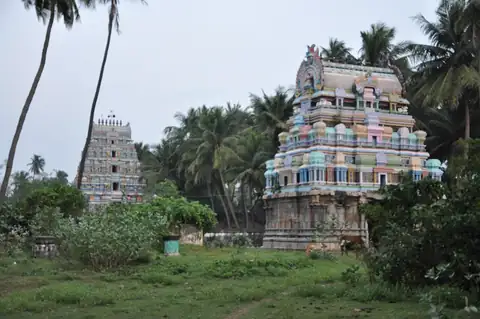
Harasaabavimochana Perumal Temple, Thirukandiyur
A Divya Desam near Thiruvaiyaru whose name means 'the lord who freed Hara from his curse'. It stands close to the Shiva temple where Brahma's head is said to have been cut off.
 Living temple
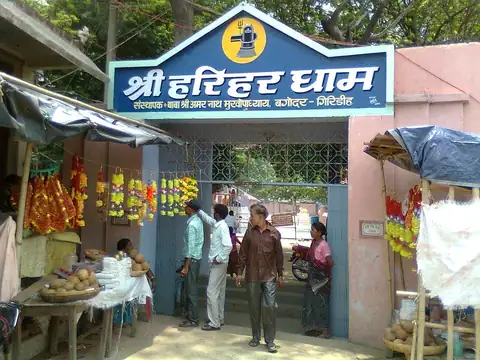
Harihar Dham, Bagodar
A temple at Bagodar in Giridih district built in the shape of a giant Shiva linga, about 52 feet tall, surrounded by a moat. It is a popular place for weddings in the month of Shravan.
Harihar Nath Temple, Sonepur
A temple of Harihar, Vishnu and Shiva in one, at the meeting of the Ganga and Gandak. The Sonepur fair at Kartik Purnima, once famous for elephant trading, is held around it.
 Ruined / monument
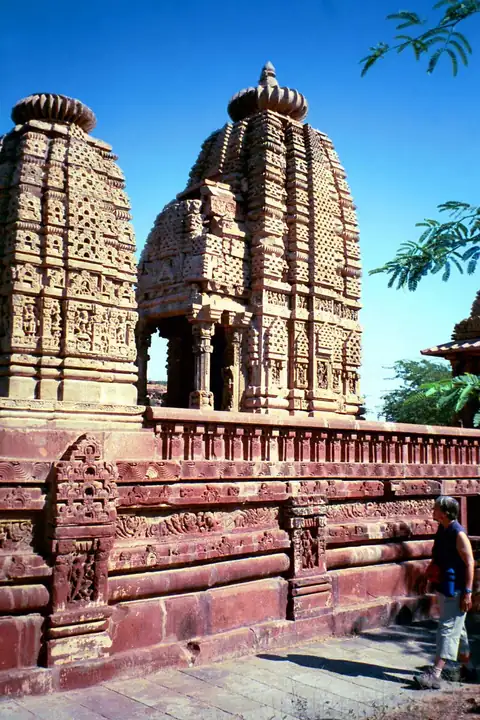
Harihara Temples, Osian
Three 8th-century temples at Osian dedicated to Harihara, the joined form of Vishnu and Shiva. They are among the finest of the early Pratihara temples of the Osian group.
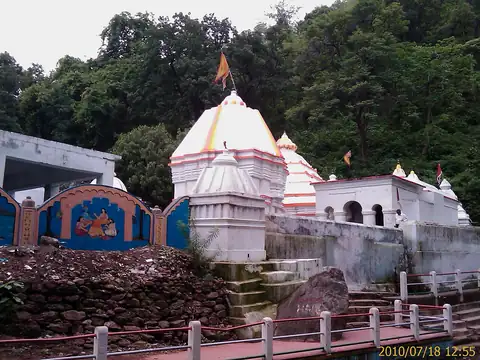
Harihareshwar Temple
A temple by the sea at Harihareshwar, where Shiva and Vishnu (Hari and Hara) are worshipped together. Pilgrims walk the rocky shore around the hill as a pradakshina, and the place is called the Kashi of the south.
 Living temple
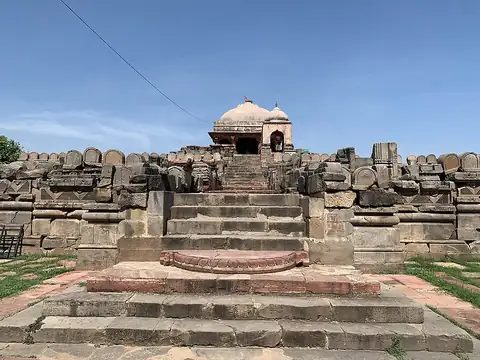
Harishankar Temple, Balangir
A temple of Vishnu and Shiva together (Hari-Shankar) on the slopes of the Gandhamardan hills, beside a stream that falls in steps over granite rocks. Across the hills stands the Nrusinghanath temple, and pilgrims often visit both.
 Living temple
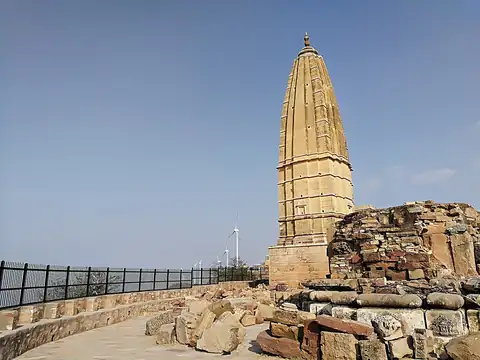
Harshat Mata Temple, Abhaneri
A partly ruined 8th-9th century temple of Harshat Mata, the goddess of joy, beside the famous Chand Baori stepwell. Its scattered sculptures are among the finest of the Pratihara period.
 Living temple
Harshnath Temple, Sikar
A hilltop Shiva temple near Sikar, built under the Chahamanas (Chauhans) of Shakambhari, with an inscription of 973. Much of the old temple lies in ruins, and a later temple beside it is still in worship.
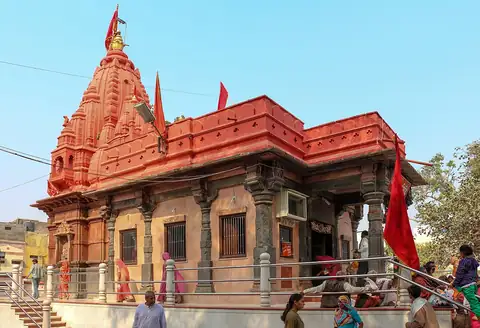
Harsiddhi Mata Temple, Harshad
A goddess temple on Koyla hill above the sea and a lower temple at its foot near Harshad. Harsiddhi is held to be the family goddess of many Gujarati communities and is linked with the Harsiddhi of Ujjain.
 Living temple
Harsiddhi Temple, Ujjain
The goddess temple near Mahakaleshwar in Ujjain, known for two tall lamp pillars that blaze with lamps during Navaratri. It is commonly identified with the Ujjain seat among the 18 Maha Shakti Peethas, though some traditions give that place to Gadkalika.
 Living temple
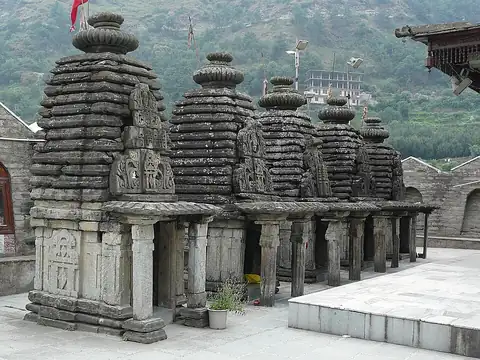
Hateshwari Temple, Hatkoti
A temple complex on the Pabbar river in Shimla district, with a fine metal image of Mahishasuramardini and a row of small early stone shrines. Hateshwari is the family goddess of many villages of the upper Shimla hills.
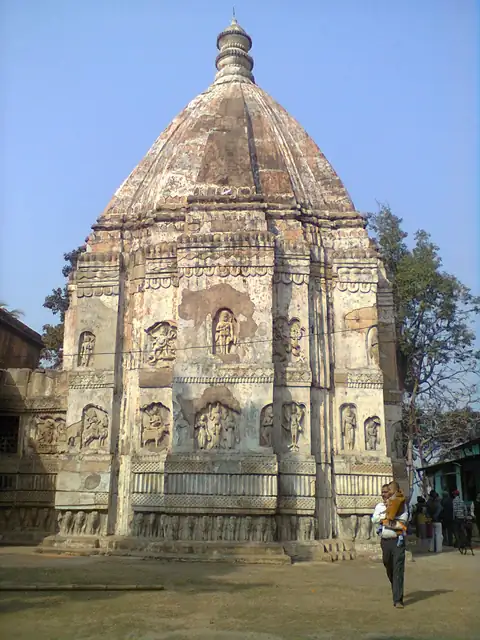
Hatimura Temple, Silghat
A Durga temple on a hill at Silghat on the south bank of the Brahmaputra, built under the Ahom king Pramatta Singha. It was once an important centre of Shakta worship in central Assam.
Hatkeshwar Mahadev Temple, Vadnagar
A richly carved Shiva temple in Vadnagar, the family deity (kuldevta) of the Nagar Brahmins. Vadnagar itself is one of the oldest continuously inhabited towns of Gujarat.
 Living temple
Hayagriva Madhava Temple, Hajo
A Vishnu temple on Monikut hill at Hajo, rebuilt in 1583 by the Koch king Raghudev Narayan. Some Buddhists, especially from Bhutan, hold that the Buddha attained parinirvana here.
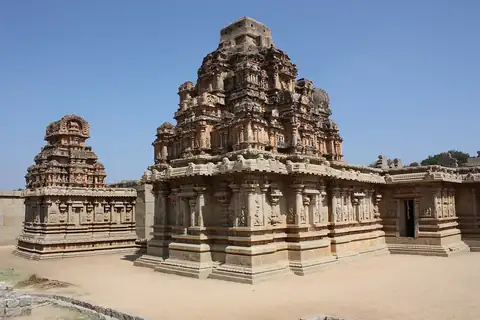 Ruined / monument
Hazara Rama Temple, Hampi
The royal chapel of the Vijayanagara kings in the heart of the royal centre at Hampi. Its walls carry long friezes of the Ramayana, and parades of horses, elephants, soldiers and dancers, which give it the name 'thousand Ramas'.
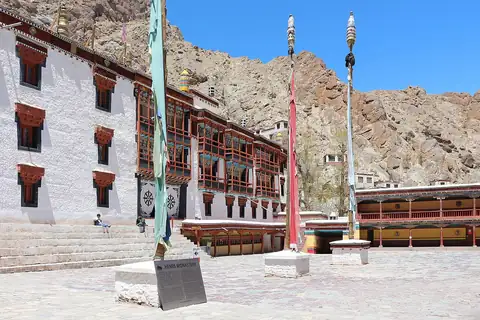 Living temple
Hemis Monastery
The largest and wealthiest monastery of Ladakh, of the Drukpa Kagyu order, re-established in 1672 under King Sengge Namgyal. Its masked dance festival, Hemis Tsechu, honours Padmasambhava.
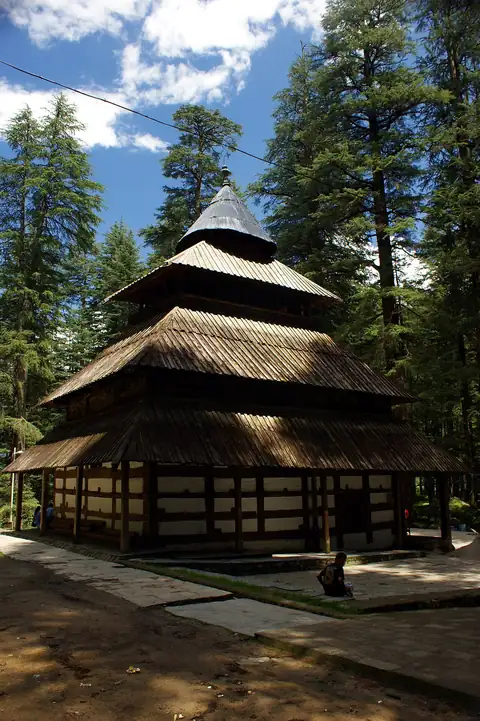 Living temple
Hidimba Devi Temple, Manali
A wooden temple with a four-tiered pagoda roof in a cedar forest at Manali, built in 1553 around a rock where Hidimba, wife of Bhima, is said to have meditated.
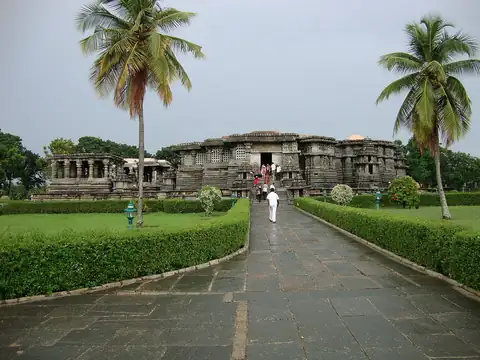 Living temple
Hoysaleswara Temple, Halebidu
A twin Shiva temple in the old Hoysala capital, Dorasamudra, carved in soapstone with friezes of elephants, lions, horsemen and epic scenes. The capital was sacked in the 14th century, and the temple is now part of the UNESCO Sacred Ensembles of the Hoysalas.
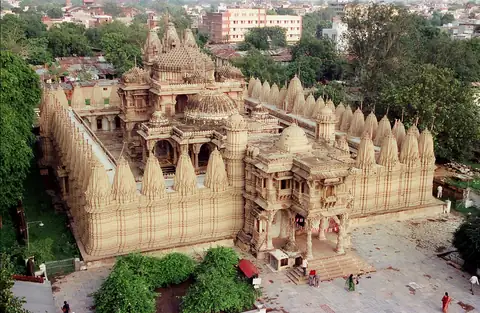 Living temple
Hutheesing Jain Temple, Ahmedabad
A white marble Jain temple of Dharmanatha in Ahmedabad, completed in 1848. It was begun by the merchant Hutheesing Kesarisinh and finished by his widow Harkunvar after his death.
Idagunji Mahaganapati Temple
A much-visited Ganesha temple near the coast at Idagunji, where Ganesha is shown standing with two arms. It is one of the six Ganesha shrines of the coastal region.
Imayavarappan Temple, Thiruchengunrur
One of the five Pandava temples around Chengannur, said to have been built by Yudhishthira.
Irattai Tirupati, Thirutholaivillimangalam
One of the Nava Tirupati, nine Vishnu temples on the Thamirabarani river, linked with Rahu and Ketu, one for each of the twin temples.
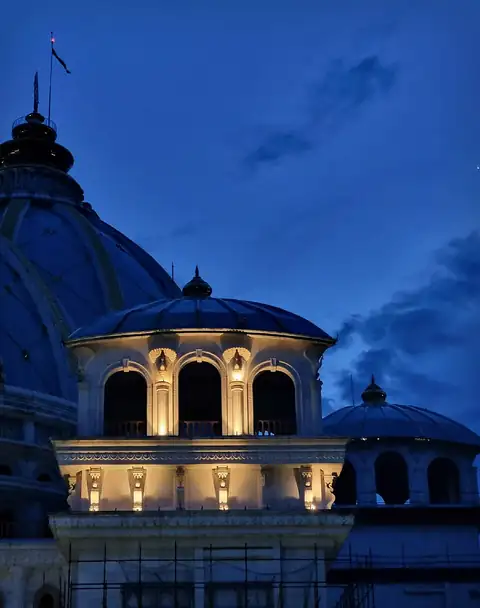 Living temple
ISKCON Mayapur
The world headquarters of ISKCON at Mayapur, held to be the birthplace of Chaitanya Mahaprabhu. The very large Temple of the Vedic Planetarium is being built here.
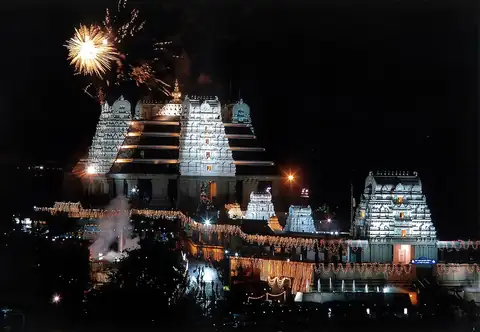 Living temple
ISKCON Temple, Bengaluru
A large modern temple of Radha and Krishna on a hill in north-west Bengaluru, opened in 1997. It combines a traditional gopuram with a glass-clad tower and is one of the most visited temples in the city.
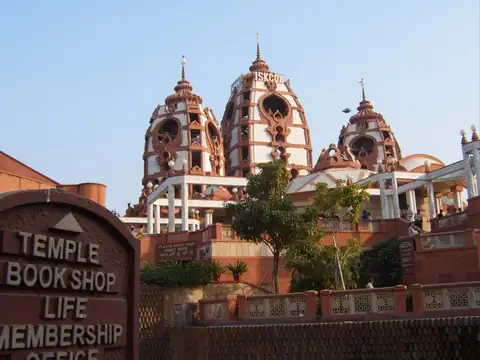 Living temple
ISKCON Temple, Delhi
The Delhi temple of the International Society for Krishna Consciousness, opened in 1998 on a hill in south Delhi. It is dedicated to Radha and Krishna as Parthasarathi, Arjuna's charioteer.
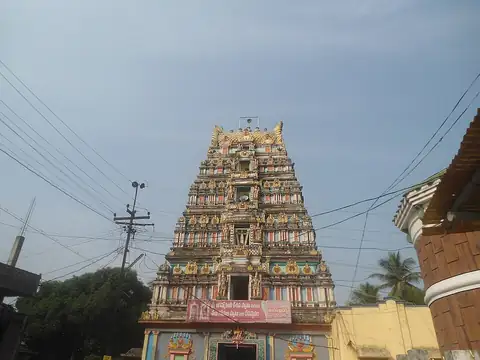 Living temple
Jaganmohini Kesava Temple, Ryali
A Vishnu temple at Ryali in the Godavari delta whose single black stone image shows Kesava (Vishnu) in front and Mohini, his enchantress form, at the back.
Jagannath Dham, Digha
A large new temple of Jagannath at the seaside town of Digha, built by the West Bengal government on the model of the Puri temple and opened in 2025.
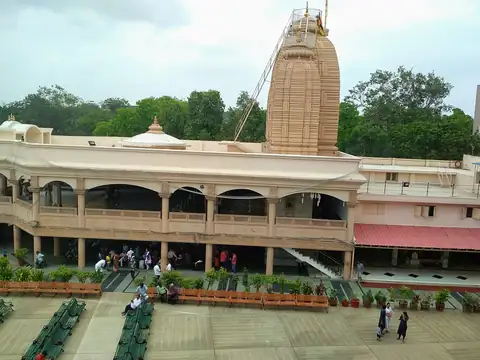 Living temple
Jagannath Temple, Ahmedabad
A temple of Jagannath, Balabhadra and Subhadra in the old city of Ahmedabad, starting point of the city's annual Rath Yatra on Ashadhi Bij, one of the largest chariot festivals in India after Puri.
Jagannath Temple, Mahesh
A Jagannath temple at Mahesh near Serampore whose chariot festival, said to date from 1396, is the oldest in Bengal and the second oldest in India after Puri.
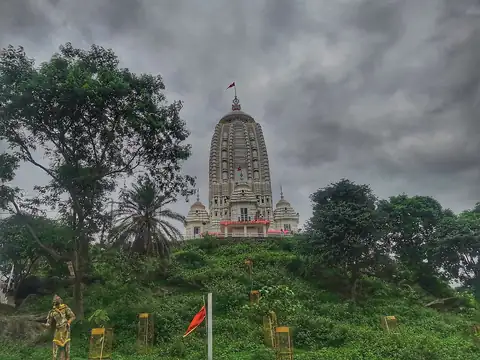 Living temple
Jagannath Temple, Ranchi
A hilltop Jagannath temple at Ranchi built in 1691 by Thakur Ani Nath Shahdeo, a Nagvanshi chief of Barkagarh, in the style of Puri. Its Rath Yatra is a major festival of Jharkhand.
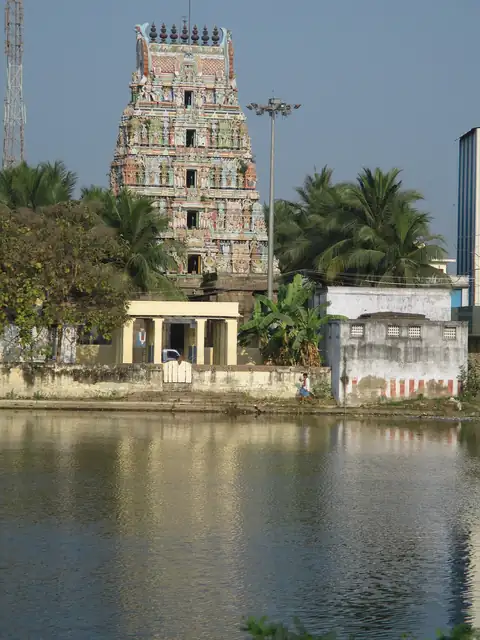 Living temple
Jagannatha Perumal Temple, Nathan Kovil
A Divya Desam near Kumbakonam where Shiva's bull Nandi is said to have worshipped Vishnu to be freed from a curse.
Jagat Shiromani Temple, Amer
A carved stone temple of Krishna at Amer, built in 1599-1608 by Rani Kanakavati, wife of Raja Man Singh I, in memory of her son Jagat Singh. Its Krishna image is said to be the one worshipped by Meera Bai.
Jagathrakshaka Perumal Temple, Thirukoodalur
A Divya Desam on the Kaveri where Vishnu, as Varaha, is said to have rescued the earth. Its name Koodalur, 'meeting place', recalls the gods who gathered here.
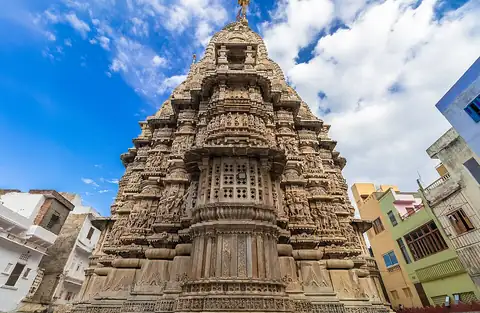 Living temple
Jagdish Temple, Udaipur
A large temple of Vishnu as Jagannath built in 1651 by Maharana Jagat Singh I, next to the City Palace of Udaipur. It is the main temple of the old city.
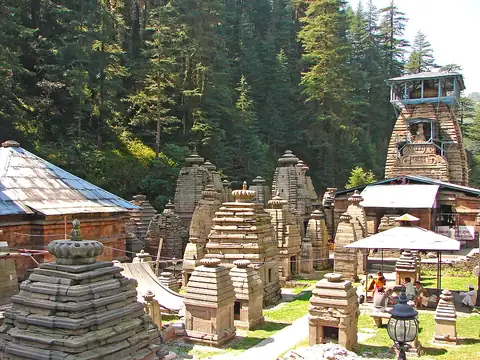 Living temple
Jageshwar Temples
A valley of more than 100 stone temples in a deodar forest in Kumaon, built between the 7th and 14th centuries and protected by the ASI. Some traditions identify Jageshwar with Darukavana, the deodar forest of the Nageshwar Jyotirlinga story.
Jain Temples, Jaisalmer Fort
A group of seven interconnected Jain temples of yellow sandstone inside the living fort of Jaisalmer, built in the 15th and 16th centuries. The chief temple is of Parshvanatha. The fort is part of the Hill Forts of Rajasthan World Heritage Site.
 Living temple
Jakhu Temple, Shimla
A temple of Hanuman on Jakhu hill, the highest point of Shimla, with a 33 m statue of Hanuman added in 2010. The hill is known for its monkeys.
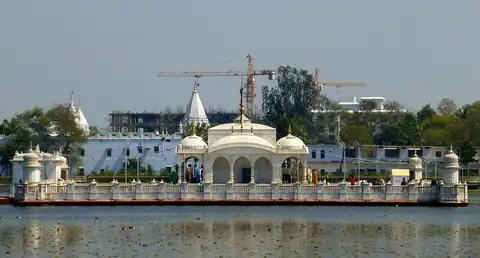 Living temple
Jal Mandir, Pawapuri
A white marble Jain temple in the middle of a lotus pond at Pawapuri, marking the place where Mahavira's body was cremated after his nirvana. It is one of the holiest places for Jains.
Jalaram Bapa Temple, Virpur
The home and shrine of Jalaram Bapa (1799-1881), a Rama devotee who fed every visitor at his free kitchen. The kitchen still serves anyone who comes, and the temple has refused all donations since 2000.
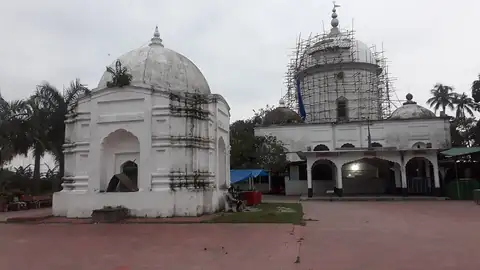 Living temple
Jalpesh Temple
A Shiva temple near Jalpaiguri, the most important in north Bengal, whose linga sits in a pit below the floor. The present temple is linked with the Koch kings of Cooch Behar.
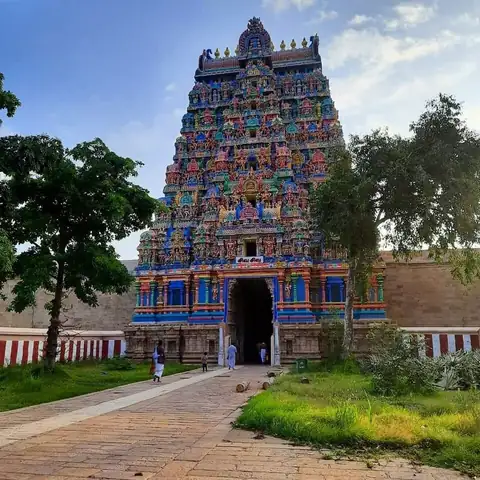 Living temple
Jambukeswarar Temple, Thiruvanaikaval
The water temple of the Pancha Bhoota Sthalams, on Srirangam island near Tiruchirappalli. Its linga sits over an underground spring and is always partly under water. The goddess Akhilandeswari, said to have been calmed by Adi Shankara, is the temple's other great focus.
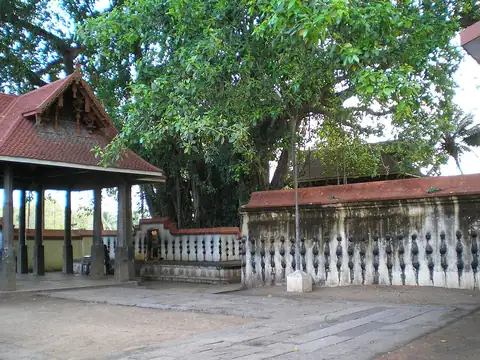 Living temple
Janardana Swamy Temple, Varkala
A Vishnu temple on a hill above the sea at Varkala, called the Dakshina Kashi. Pilgrims offer rites for their ancestors at Papanasam beach below.
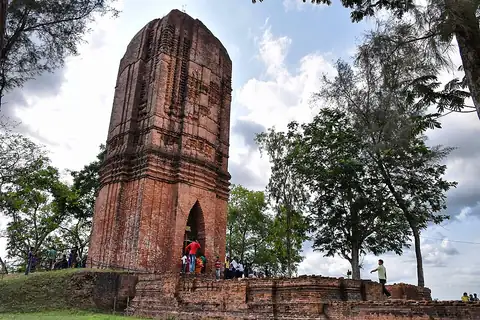 Ruined / monument
Jatar Deul
A tall brick rekha deul standing alone at the edge of the Sundarbans, one of the oldest surviving temples in southern Bengal. It no longer has an image, and its date is still argued over.
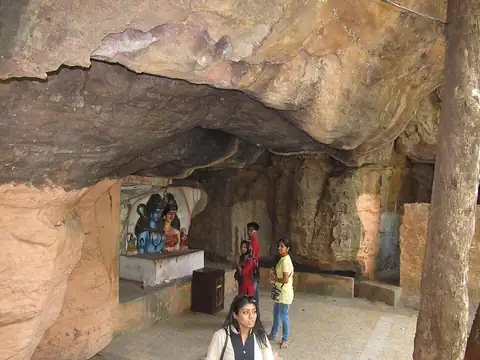 Living temple
Jatashankar Cave, Pachmarhi
A cave shrine of Shiva in a ravine near Pachmarhi, where rock formations under a great overhang are worshipped as a natural lingam and Shiva's matted hair (jata).
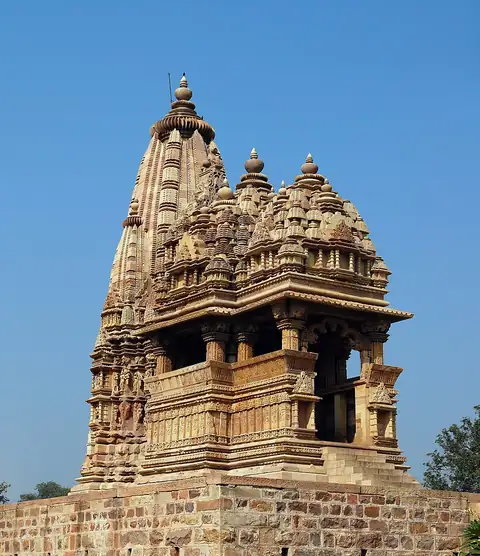 Ruined / monument
Javari Temple, Khajuraho
A small, finely proportioned Vishnu temple in the Eastern group at Khajuraho, with an elaborate entrance arch (makara torana). The image in the sanctum, a form of Vishnu, has lost its head.
 Living temple
Jeen Mata Temple
An old goddess temple in the Aravalli hills south of Sikar, dedicated to Jeen Mata (Jayanti), said to be about a thousand years old. Her fairs at Navaratri draw huge crowds from Shekhawati.
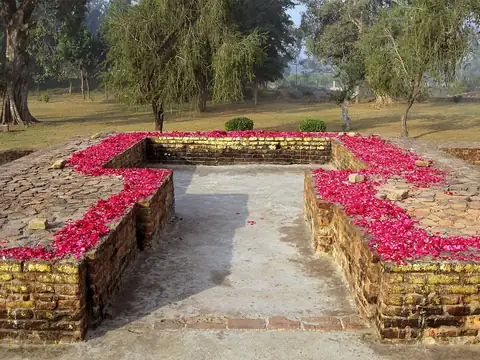 Ruined / monument
Jetavana, Sravasti
The ruins of the Jetavana monastery at Sravasti, given to the Buddha by the merchant Anathapindika, where the Buddha spent many rainy seasons. Pilgrims meditate beside its brick foundations and the Anandabodhi tree.
Jhandewalan Devi Temple
A goddess temple in central Delhi linked to the discovery of an old image by a cloth merchant, Badri Bhagat, in the 18th century. A flag (jhanda) raised over the spot gave the area its name.
Jogadya Temple, Kshirgram
A Shakti Peetha at Kshirgram where Sati's right big toe is said to have fallen. The image of the goddess Jogadya is kept under the water of a pond and brought out only on a few days of the year.
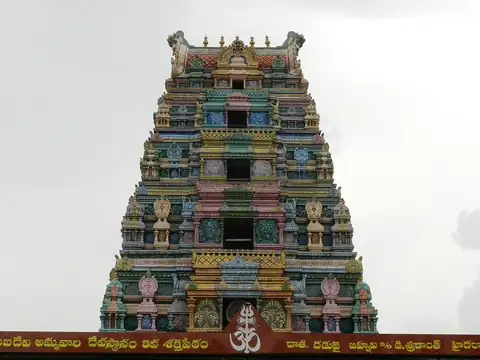 Rebuilt / restored for worship
Jogulamba Temple, Alampur
The goddess temple at Alampur, beside the Chalukya-era Navabrahma temples, where Jogulamba is shown seated on a corpse with a scorpion, frog and lizard on her head. Destroyed in 1390, it was rebuilt on its old site in 2005 and the original image reinstalled.
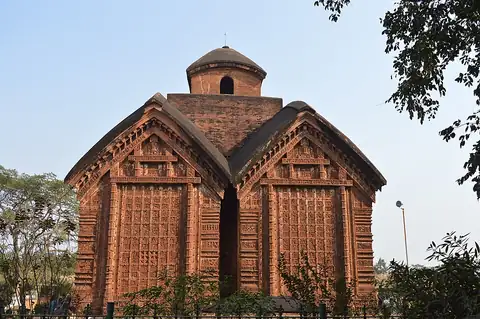 Ruined / monument
Jor Bangla Temple (Keshta Raya)
A brick temple of 1655 in the Malla capital Bishnupur, shaped as two joined Bengali thatched huts (jor-bangla) and covered in terracotta panels of the Ramayana, Mahabharata and Krishna's life. It is an ASI monument.
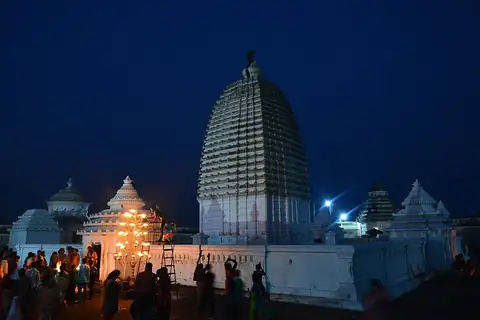 Living temple
Joranda Mahima Gadi
The holiest centre of Mahima Dharma, built over the samadhi of its founder, Mahima Swami, at Joranda near Dhenkanal. Mahima Dharma worships the formless Alekh, and its main shrine, the Gadi Mandir, famously has no face.
Joy Dol, Sivasagar
A Vishnu temple on the bank of Joysagar, one of the largest man-made tanks in India. The Ahom king Rudra Singha built the tank and the temple in memory of his mother, Joymoti, who died under torture rather than reveal where her husband was hiding.
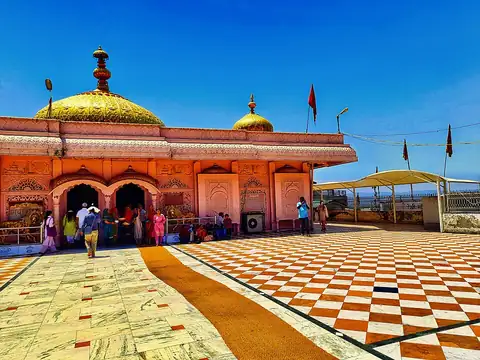 Living temple
Jwalamukhi Temple, Kangra
A temple with no image, where the goddess is worshipped as natural gas flames burning from fissures in the rock. Counted among the 18 Maha Shakti Peethas as the seat where Sati's tongue fell, it has a gilded dome and silver doors from the Sikh period.
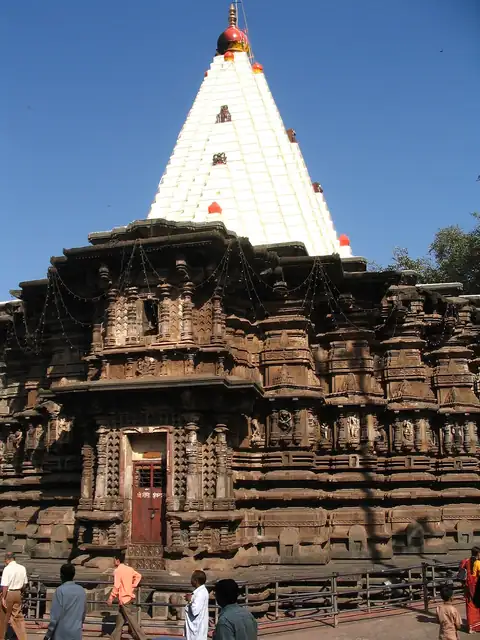 Living temple
Jyotiba Temple, Wadi Ratnagiri
A hilltop temple of Jyotiba, a form of Shiva honoured as Kedarnath, near Kolhapur. At the Chaitra Purnima yatra the hill turns pink with gulal thrown by lakhs of pilgrims.
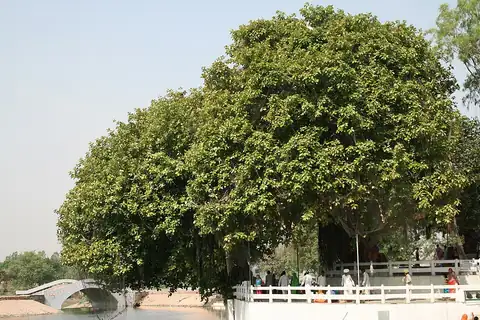 Living temple
Jyotisar, Kurukshetra
The place at Kurukshetra where, by tradition, Krishna taught the Bhagavad Gita to Arjuna before the Mahabharata war. An old banyan tree on a raised platform is honoured as a witness of the teaching.
Kabir Math, Damakheda
The main seat of the Dharamdasi branch of the Kabir Panth, at Damakheda near Simga. Followers of Kabir from across central India gather here for its annual festival.
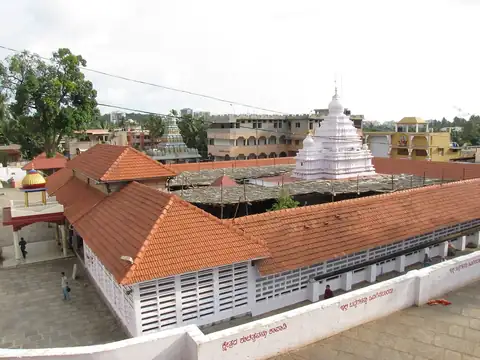 Living temple
Kadri Manjunatha Temple, Mangaluru
A Shiva temple on Kadri hill in Mangaluru, with spring-fed tanks and, above it, caves and a monastery of the Nath yogis. A bronze Lokeshvara in the temple carries an inscription of 968 CE.
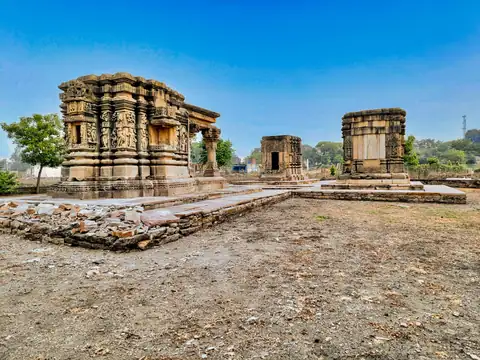 Ruined / monument
Kadwaha Temples
A village with about fifteen stone temples of the 10th-11th centuries, several inside a later fort, and a large Shaiva monastery. Few of them have been studied in detail.
Kaila Devi Temple
The temple of Kaila Devi, family goddess of the Yadav rulers of Karauli, on the edge of the Kaila Devi wildlife sanctuary. Its Chaitra fair draws lakhs of pilgrims, many singing the langurias songs.
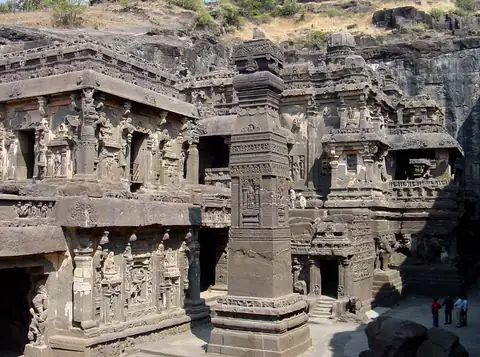 Ruined / monument
Kailasa Temple, Ellora (Cave 16)
The largest monolithic rock-cut temple in the world, carved downward out of a single basalt hill in the 8th century under the Rashtrakuta king Krishna I. It represents Mount Kailasa, Shiva's home, and is part of the Ellora Caves UNESCO site with Buddhist and Jain caves.
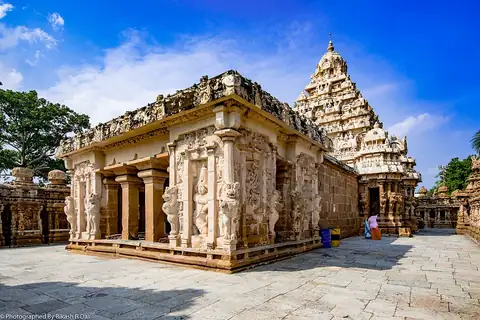 Living temple
Kailasanathar Temple, Kanchipuram
The oldest structural temple in Kanchipuram, built in sandstone by the Pallava king Rajasimha around 700-728. Its walls are lined with small shrines and lively sculptures of Shiva in many forms, and it set the pattern for later Tamil temples.
Kailasanathar Temple, Thingalur
A Shiva temple near Thiruvaiyaru that is the Navagraha shrine of Chandra, the moon. It is also linked with the Nayanar saint Appudhi Adigal, a devotee of Appar.
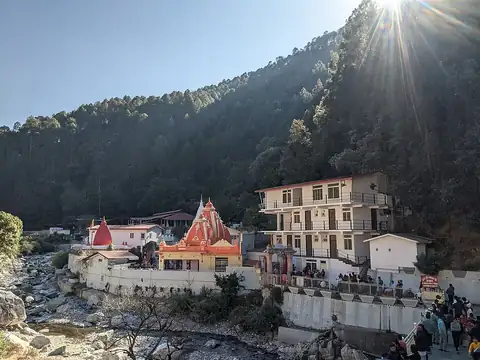 Living temple
Kainchi Dham
The ashram and Hanuman temple founded by the saint Neem Karoli Baba in the 1960s in a bend of the Kosi valley. Its foundation day on 15 June draws very large crowds, and it is known for its foreign visitors.
Kaisina Vendhan Temple, Thirupuliangudi
One of the Nava Tirupati, nine Vishnu temples on the Thamirabarani river, linked with Mercury (Budha).
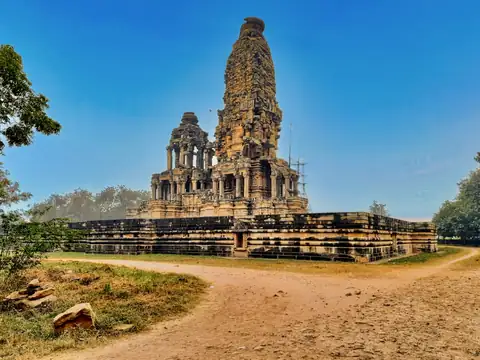 Ruined / monument
Kakanmath Temple, Sihonia
A tall ruined Shiva temple at Sihonia in Morena district, built under the Kachchhapaghata king Kirtiraja in the 11th century. Its bare stone tower stands balanced without mortar.
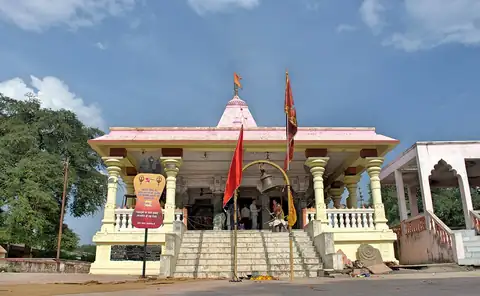 Living temple
Kal Bhairav Temple, Ujjain
A temple of Kal Bhairav, the guardian of Ujjain, famous because liquor is offered to the deity and appears to be drunk from the saucer held to his lips.
Kal Bhairav Temple, Varanasi
The temple of Kal Bhairav, the fierce form of Shiva who is the 'kotwal' (police chief) of Kashi. Pilgrims visit him to seek permission to stay in the city, and receive a black thread for protection.
Kalamegha Perumal Temple, Thirumogur
A Divya Desam near Madurai linked with Vishnu's form as Mohini, the enchantress who shared out the nectar of immortality. Its sixteen-armed image of the discus Sudarshana is famous.
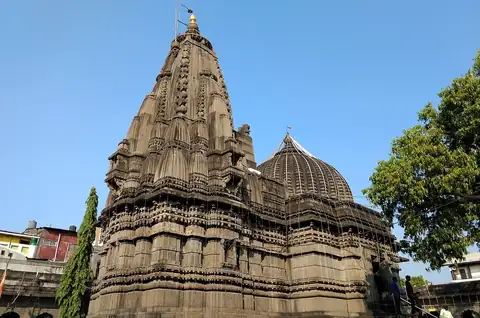 Living temple
Kalaram Temple, Nashik
A black-stone temple of Rama at Panchavati, where Rama, Sita and Lakshmana are said to have lived in exile. In 1930 B. R. Ambedkar led a satyagraha here for the right of Dalits to enter the temple.
Kaleshwar Shiv Mandir, Kalanaur
An old Shiva temple at Kalanaur in Gurdaspur district, where the linga is said to lean to one side. Kalanaur is also the town where Akbar was crowned in 1556.
Kaleshwara Mukteswara Swamy Temple, Kaleshwaram
A Shiva temple at the meeting of the Godavari and Pranahita rivers, with two lingams on one pedestal: Mukteswara (Shiva) and Kaleshwara (Yama). It is counted among the three lingas that are said to give Telangana (Trilinga) its name.
Kali Devi Temple, Patiala
A temple of the goddess Kali in Patiala, built in 1936 by Maharaja Bhupinder Singh, who is said to have brought the image from Bengal. A much older Raj Rajeshwari temple stands in the same compound.
Kali Mata Mandir, Kalka
A temple of the goddess Kali in Kalka, at the foot of the road to Shimla. The town is said to take its name from the goddess.
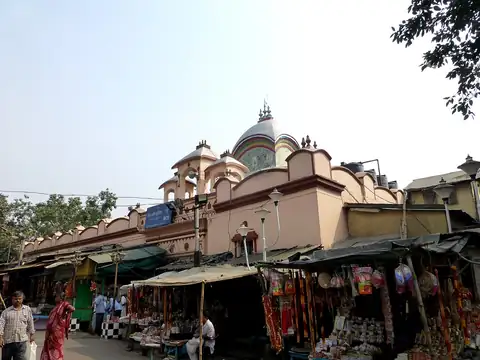 Living temple
Kalighat Kali Temple
The most famous Kali temple of Kolkata and a Shakti Peetha, where the toes of Sati's right foot are said to have fallen. The city's name is often linked with Kalighat. The present temple was completed in 1809.
Kalijai Temple, Chilika
A shrine of the goddess Kalijai on a small island in Chilika lake, Asia's largest brackish-water lagoon. Her story, of a bride drowned in a storm on the way to her wedding, is one of the best-known folk tales of Odisha.
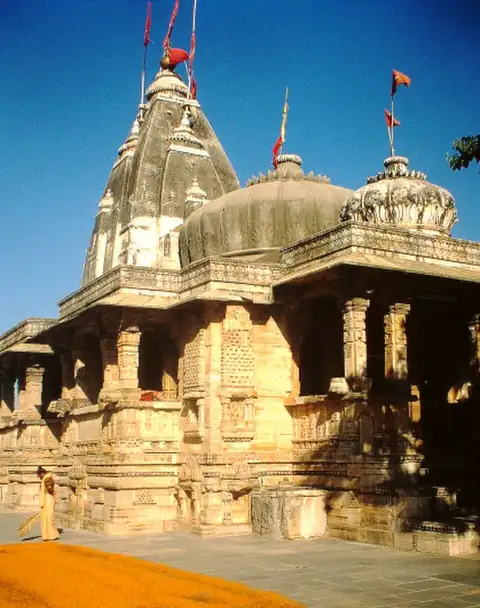 Living temple
Kalika Mata Temple, Chittorgarh
A temple in Chittorgarh fort built in the 8th century as a sun temple and rededicated to the goddess Kalika in the 14th century. The fort is part of the Hill Forts of Rajasthan World Heritage Site.
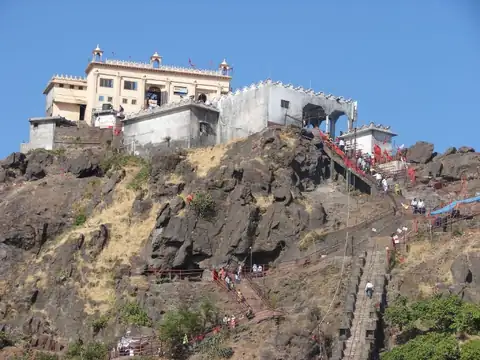 Living temple
Kalika Mata Temple, Pavagadh
A hilltop temple of the goddess Kalika on Pavagadh, about 800 m high, above the ruined Sultanate city of Champaner. The hill is part of the Champaner-Pavagadh UNESCO World Heritage Site, and the temple received a new spire in 2022.
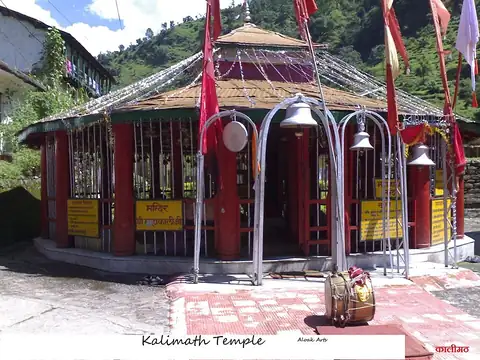 Living temple
Kalimath Temple
A goddess shrine on the Saraswati river near Guptkashi, where Kali is worshipped without an image. A silver-covered pit in the sanctum is said to mark where she slew the demon Raktabija and went into the earth.
Kalkaji Mandir
An old temple of the goddess Kalka (Kali) on a low hill in south Delhi. The shrine is believed to be very old, but the present building dates mainly from the 18th and 19th centuries.
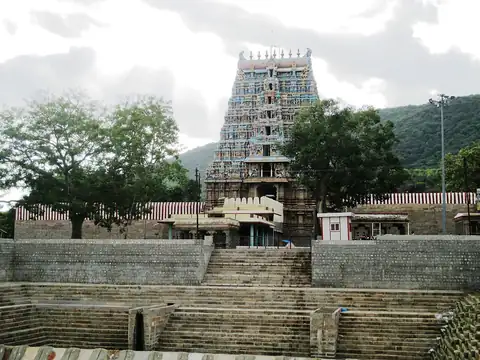 Living temple
Kallalagar Temple, Alagar Kovil
The temple of Vishnu as Kallalagar, 'the beautiful one', at the foot of the wooded Alagar hills near Madurai. Each Chithirai, Kallalagar travels to Madurai for his sister Meenakshi's wedding and enters the Vaigai river before a vast crowd.
Kalpathy Viswanatha Swamy Temple
A Shiva temple on the bank of the Kalpathy river in Palakkad, said to have been built in 1425 for a widow who brought a linga from Kashi. It is the centre of Kalpathy, an old Tamil Brahmin village, and its chariot festival.
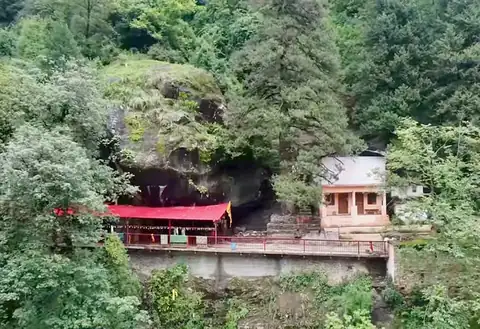 Living temple
Kalpeshwar Temple
A small cave temple in the Urgam valley where Shiva's matted hair (jata) is worshipped. It is the only Panch Kedar shrine open all year.
Kalubai Temple, Mandhardevi
A hilltop temple of the goddess Kalubai near Wai, a family deity of many Maharashtrian families. Its annual fair is remembered for the stampede of 2005, one of the worst at an Indian temple.
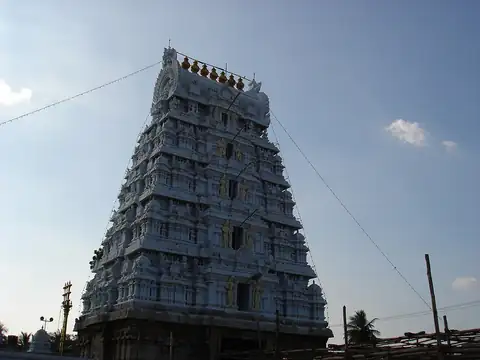 Living temple
Kalyana Venkateswara Temple, Srinivasa Mangapuram
A temple of Venkateswara as the newly married bridegroom (Kalyana Venkateswara), west of Tirupati. Tradition says he stayed here with Padmavati after their wedding, before going up the Tirumala hills.
Kamadgiri, Chitrakoot
The sacred hill at Chitrakoot, worshipped as Kamtanath, the lord who grants all wishes. Rama, Sita and Lakshmana are believed to have lived at Chitrakoot for much of their exile, and pilgrims walk the 5 km path around the hill.
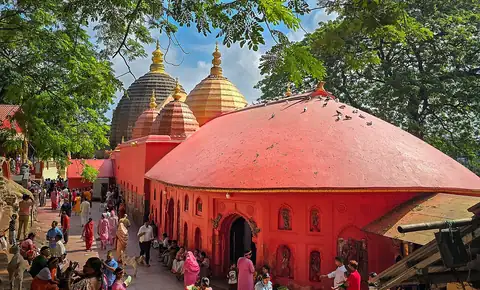 Rebuilt / restored for worship
Kamakhya Temple
One of the most important Shakti Peethas and a major centre of Tantra, on Nilachal hill above the Brahmaputra. The goddess is worshipped as a yoni-shaped stone in a cave, kept wet by a spring. It was rebuilt in 1565 by the Koch king Nara Narayan after destruction earlier in the century.
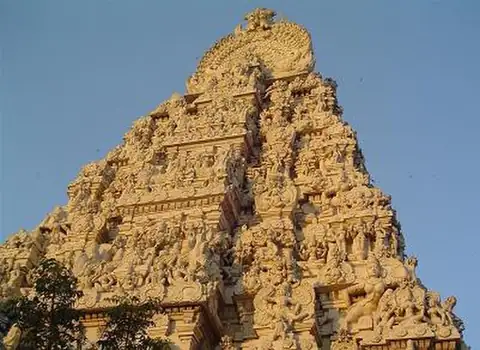 Living temple
Kamakshi Amman Temple, Kanchipuram
The great goddess temple of Kanchipuram, where Kamakshi sits in yogic posture holding a noose, goad, sugarcane bow and flower arrows, with a Sri Chakra before her. It is counted among the 18 Maha Shakti Peethas and is closely tied to the Kanchi Kamakoti Peetham.
Kamalabari Satra
A Vaishnava monastery (satra) on Majuli island in the Brahmaputra, founded in 1673 by Badula Ata. It is a centre of the Sattriya dance, music and the teachings of Srimanta Sankardeva.
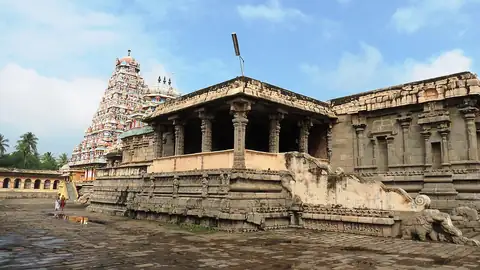 Living temple
Kampaharesvarar Temple, Thirubuvanam
A late Chola temple built by Kulottunga III, one of the last great temples of the dynasty, in the style of Thanjavur and Darasuram. It is best known for its shrine of Sarabha, Shiva's half-bird, half-lion form.
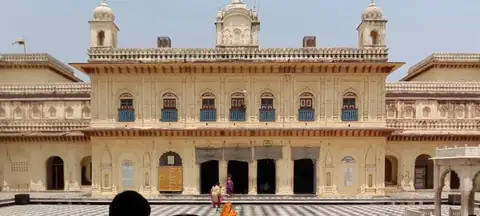 Living temple
Kanak Bhawan, Ayodhya
A palace temple of Sita and Rama, said to be the 'golden house' that Kaikeyi gave Sita as a wedding gift. The present building was put up in 1891 by the queen of Tikamgarh.
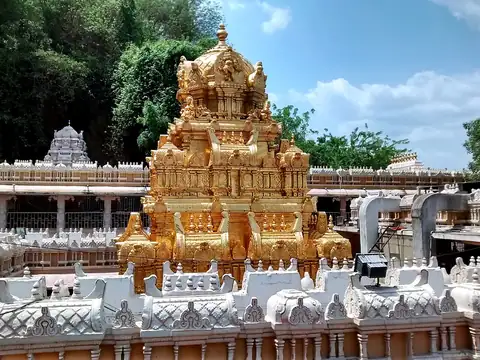 Living temple
Kanaka Durga Temple, Vijayawada
A hill temple of the goddess Kanaka Durga on Indrakeeladri above the Krishna river in Vijayawada. Its Dasara festival, when the goddess takes a different form each day, is one of the largest in Andhra Pradesh.
Kanaka Mahalakshmi Temple, Visakhapatnam
The guardian goddess of Visakhapatnam, worshipped in a shrine without a roof. Devotees offer worship to the image themselves, without a priest, and the month of Margashira is her great festival.
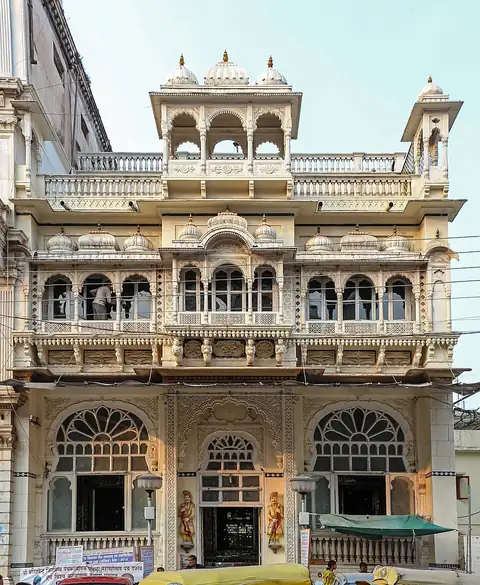 Living temple
Kanch Mandir, Indore
A Digambar Jain temple in Indore whose walls, pillars and ceilings are covered entirely with glass mosaic and mirror work. It was built by the cotton merchant Sir Seth Hukumchand from 1903.
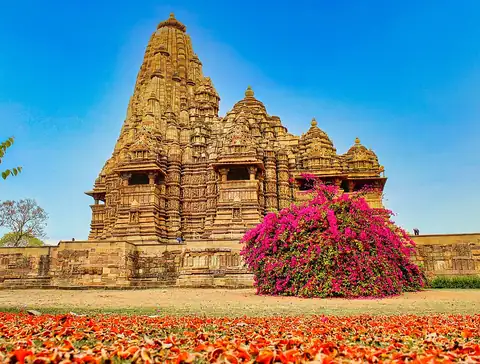 Ruined / monument
Kandariya Mahadeva Temple
The largest and finest of the Khajuraho temples, a Chandela masterpiece of about 1030 CE. Its central spire about 31 m high is surrounded by 84 smaller spires, and its walls carry some 870 sculptures. It is intact but no longer in regular worship, and is part of a UNESCO site.
Kankaleshwar Temple, Beed
A carved stone Shiva temple standing in the middle of a water tank in Beed town, reached by a causeway. It is the finest old monument of the district.
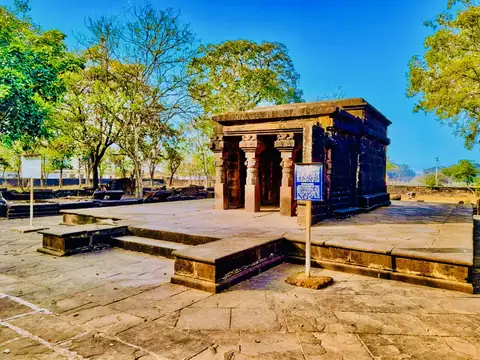 Living temple
Kankali Devi Temple, Tigawa
A small flat-roofed stone temple of the Gupta period at Tigawa, one of the earliest of its kind. It was first a Vishnu shrine, with Narasimha in the sanctum; local people now worship a goddess here as Kankali Devi.
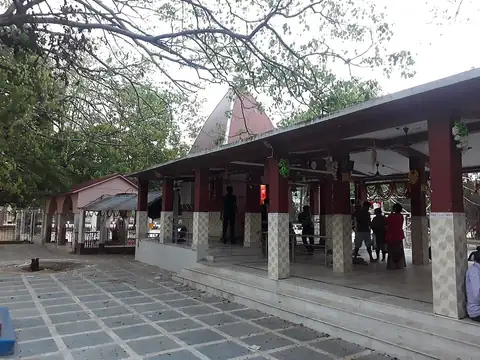 Living temple
Kankalitala Temple
A Shakti Peetha near Santiniketan where Sati's waist (kankal) is said to have fallen into a pool. There is no image; the goddess is worshipped in a painting and the sacred pool.
Kansua Temple, Kota
A Shiva temple at Kansua on the edge of Kota, known for its four-faced linga and for an inscription of 738 found here, one of the oldest records of the region.
Kapal Mochan
A sacred group of tanks and temples near Bilaspur in Haryana, where Shiva is said to have been freed from the skull of Brahma that stuck to his hand. A large fair is held on Kartik Purnima.
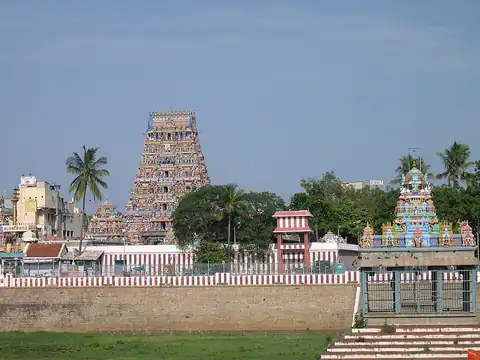 Living temple
Kapaleeshwarar Temple, Mylapore
The best-known Shiva temple of Chennai, in the old quarter of Mylapore. Its name recalls Parvati, who worshipped Shiva here in the form of a peahen. The 37 m eastern tower faces a large temple tank, and its Arupathu Moovar festival is the city's great procession.
Kapaleshwar Temple, Nashik
A Shiva temple on the steps above Ramkund in Panchavati, known for having no Nandi in front of the linga, which pilgrims explain with a story of Shiva and Nandi.
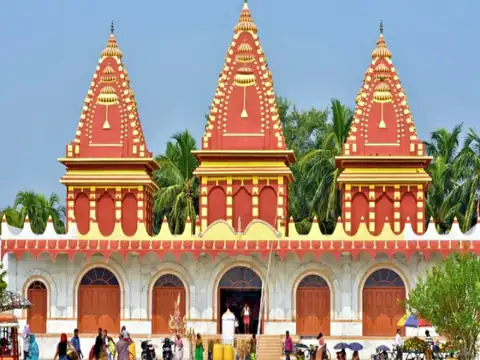 Living temple
Kapil Muni Temple, Gangasagar
The temple of the sage Kapila on Sagar island, where the Ganga meets the Bay of Bengal. The Gangasagar Mela at Makar Sankranti is one of the largest gatherings in India.
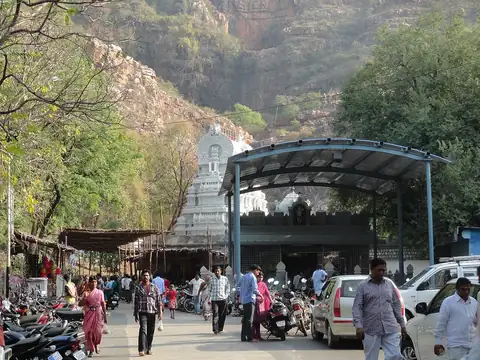 Living temple
Kapileswara Swamy Temple, Tirupati
The main Shiva temple of Tirupati, at the foot of the Tirumala hills beside the Kapila Theertham waterfall. The linga is said to have been installed by the sage Kapila.
Karaikal Ammaiyar Temple
A temple to Karaikal Ammaiyar, a woman saint and poet of the 6th century counted among the 63 Nayanmars, in her home town of Karaikal. Its Mangani (mango) festival re-enacts the story of her life.
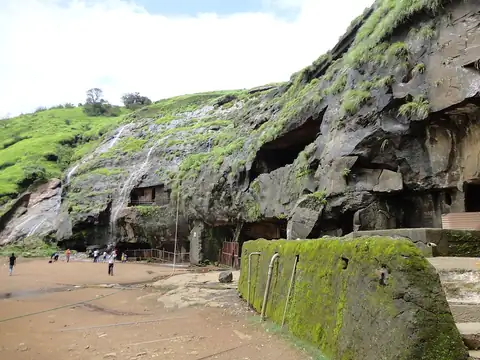 Ruined / monument
Karla Caves
A group of rock-cut Buddhist caves near Lonavala, whose Great Chaitya is one of the largest and finest rock-cut prayer halls in India. Its pillars are crowned with carved elephants and riders.
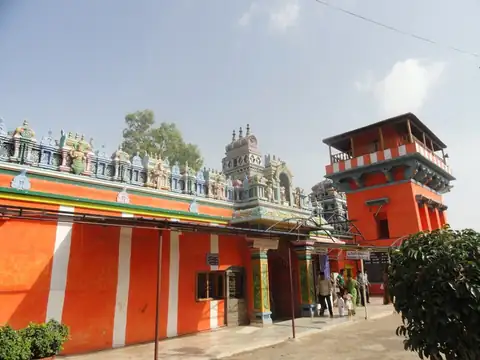 Living temple
Karmanghat Hanuman Temple, Hyderabad
A well-known Hanuman temple at Karmanghat in Hyderabad, where Hanuman is worshipped in meditation (Dhyana Anjaneya). Tradition dates it to the Kakatiya king Prola II in the 12th century.
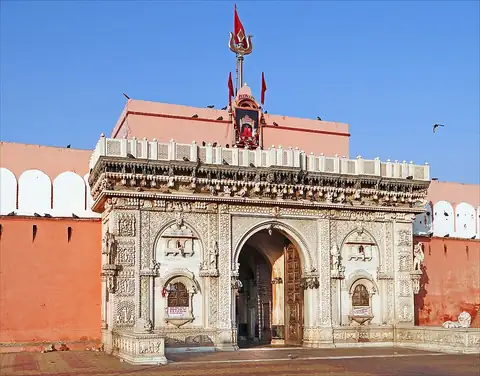 Living temple
Karni Mata Temple, Deshnoke
The temple of Karni Mata, a 15th-century woman sage of the Charan community revered as an incarnation of Durga, famous for the thousands of rats (kabbas) that live and are fed in it. She is the family goddess of the Rathore rulers of Bikaner and Jodhpur.
Karpaga Vinayagar Temple, Pillaiyarpatti
A rock-cut cave temple of Ganesha at Pillaiyarpatti, one of the oldest Ganesha images in Tamil Nadu. The six-foot image has only two arms and a trunk curling to the right, and it is cut from the living rock.
Kartik Swami Temple
A temple of Kartikeya on a narrow ridge at about 3,000 metres in Rudraprayag district, reached by a 3 km walk. It is one of the few Kartikeya temples in the north.
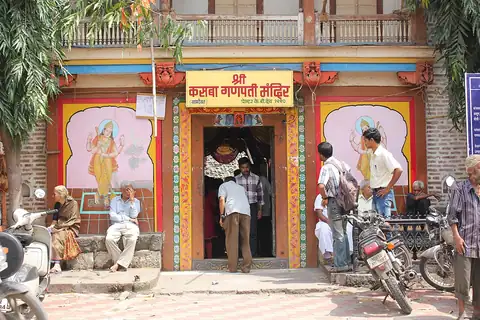 Living temple
Kasba Ganapati, Pune
The guardian Ganesha (gramadevata) of Pune, in its oldest quarter. The temple was built in the time of Jijabai, Shivaji's mother, in the 1630s.
Kasba Kali Temple, Kamalasagar
A Kali temple on a hillock above the Kamalasagar lake, right on the border with Bangladesh. It is said to have been built by Maharaja Dhanya Manikya of Tripura, and its ten-armed goddess is carved in stone as Mahishamardini.
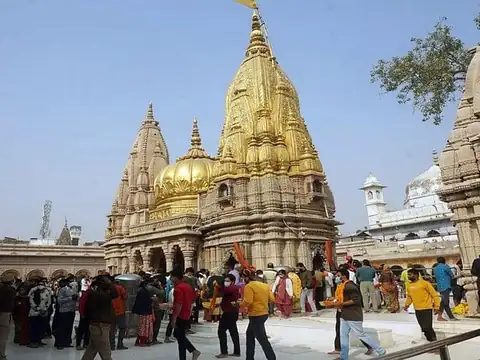 Rebuilt / restored for worship
Kashi Vishwanath Temple
One of the twelve Jyotirlingas, in the heart of Varanasi (Kashi), the city of Shiva. Earlier temples were destroyed in the 12th, 15th and 17th centuries; the present temple was built by Ahilyabai Holkar of Indore in 1780 next to the Gyanvapi Mosque, which stands on the site of the temple demolished in 1669.
Kashi Vishweshwara Temple, Lakkundi
A Western Chalukya temple famous for its intricately carved doorways, among more than fifty temples and many stepwells at Lakkundi. Lakkundi was a royal mint town and a patron centre of the Jain noblewoman Attimabbe.
 Living temple
Kashtabhanjan Hanuman Temple, Sarangpur
A temple of Hanuman as Kashtabhanjan, 'remover of troubles', installed in 1850 by Gopalanand Swami of the Swaminarayan tradition. People come for relief from troubles of every kind, and many believe the god frees people from evil spirits.
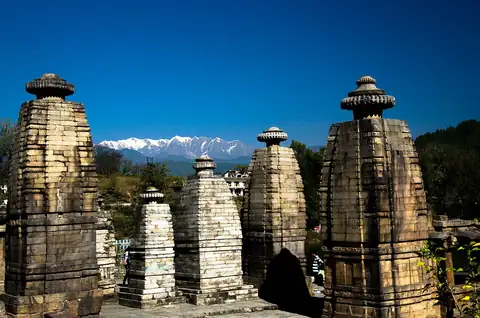 Ruined / monument
Katarmal Sun Temple
A sun temple of about the 9th century in the hills near Almora, attributed to the Katyuri king Katarmalla, with a main shrine and 44 smaller shrines. Its carved wooden doors are now in the National Museum, Delhi.
Kathgarh Mahadev Temple
A Shiva temple near Indora in Kangra district, whose linga is in two parts worshipped as Shiva and Parvati. The gap between the two stones is said to widen and narrow with the seasons.
Kauleshwari Hill
A hill in Chatra district sacred to Hindus, Jains and Buddhists. The goddess Kauleshwari is worshipped at the top, Jains revere footprints of the Tirthankaras, and there are Buddhist images and rock carvings.
Kedar Gouri Temples, Bhubaneswar
A pair of temples in Bhubaneswar's old town, one of Shiva as Kedareswar and one of the goddess Gouri, beside a sacred tank whose water is believed to heal. The Gouri temple has the vaulted khakhara roof used for goddess shrines.
Kedareshwar Temple, Varanasi
A Shiva temple on Kedar Ghat in Varanasi, held to be the Kashi form of Kedarnath. Its lingam is a natural rock with a line down the middle, and many South Indian pilgrims worship here.
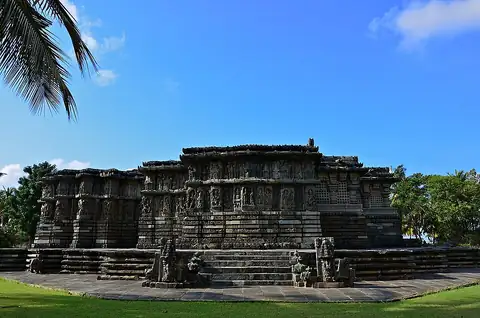 Living temple
Kedareshwara Temple, Halebidu
A Hoysala Shiva temple at Halebidu, the old Hoysala capital, built on a star-shaped plan around 1219. Its outer walls carry friezes of elephants, lions, horsemen and epic scenes, and some consider its sculpture among the finest of the Hoysala period.
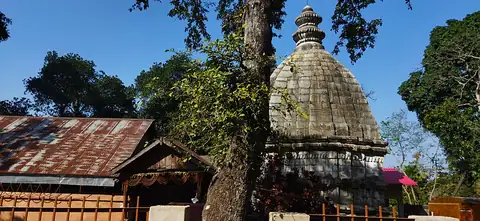 Living temple
Kedareswara Temple, Hajo
A Shiva temple on Madanachal hill at Hajo, the pilgrim town of Hindus, Buddhists and Muslims near Guwahati. An inscription records that it was built under the Ahom king Rajeswar Singha in 1753.
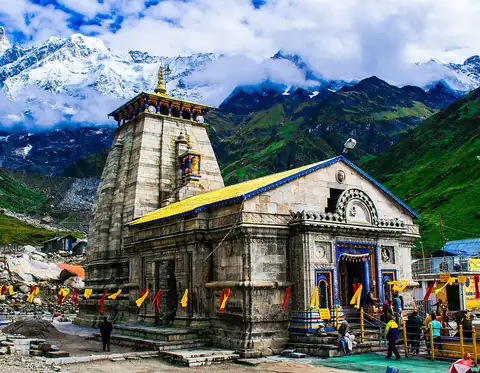 Living temple
Kedarnath Temple
A Jyotirlinga temple at about 3,583 m in the Garhwal Himalaya, open only from about April-May to November. It is part of the Chota Char Dham and Panch Kedar. The stone temple survived the 2013 Uttarakhand floods that devastated the town.
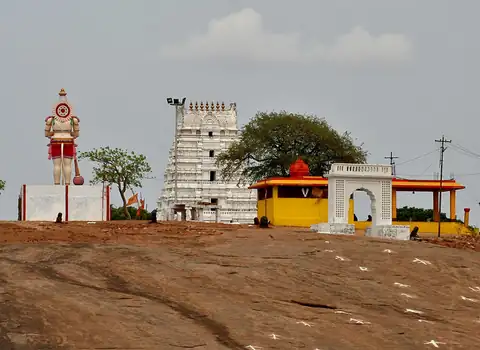 Living temple
Keesaragutta Ramalingeswara Temple
A Shiva temple on Keesaragutta hill near Hyderabad, whose lingam is said to have been installed by Rama. Many lingams lie scattered across the hill, and the remains of a Vishnukundina-period settlement have been found nearby.
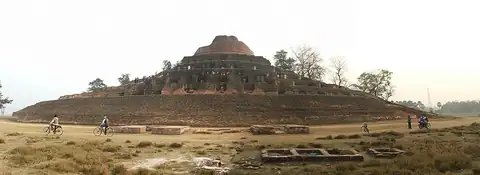 Ruined / monument
Kesariya Stupa
One of the tallest Buddhist stupas in the world, a terraced brick mound in East Champaran excavated by the ASI from 1998. It marks where the Buddha is said to have given his begging bowl to the people of Vaishali.
Keshavrai Temple, Keshoraipatan
A tall temple of Vishnu as Keshavrai on the bank of the Chambal, built in 1641 by Rao Chhatrasal of Bundi. The town takes its name from the temple.
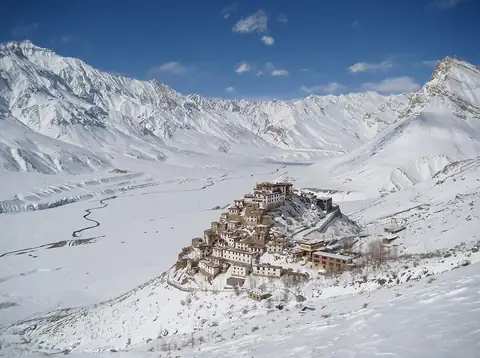 Living temple
Key Monastery
The largest monastery of the Spiti valley, a cluster of whitewashed buildings on a conical hill above the Spiti river. It belongs to the Gelug school and trains young monks.
Khajrana Ganesh Temple, Indore
The best-known temple of Indore, dedicated to Ganesha, said to have been built by Ahilyabai Holkar after the image was recovered from a well where it had been hidden for safety.
Khallari Mata Temple
A hilltop goddess temple near Bagbahara in Mahasamund district, reached by a long flight of steps. A large fair is held here at Chaitra Navaratri.
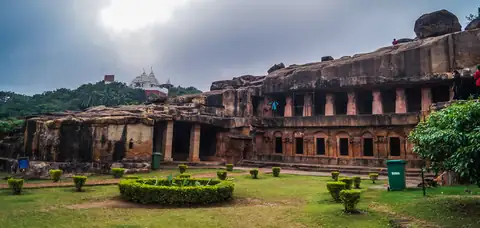 Living temple
Khandagiri and Udayagiri Jain Caves
Twin hills with rock-cut caves made for Jain monks in the 2nd-1st century BCE, under the Kalinga king Kharavela, whose Hathigumpha inscription is a key source for early Indian history. A Digambara Jain temple on the summit of Khandagiri is still in worship.
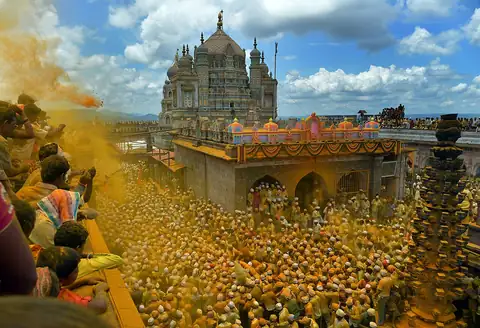 Living temple
Khandoba Temple, Jejuri
The hill temple of Khandoba, a warrior form of Shiva and family god of many communities across Maharashtra and the Deccan. Devotees shower one another with turmeric (bhandara), turning the hill yellow.
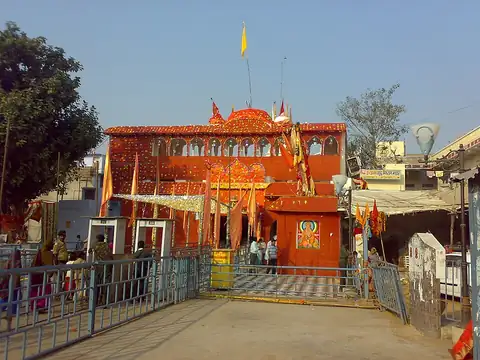 Living temple
Khatu Shyam Temple
A temple of Shyam, the head of Barbarika, grandson of Bhima, who gave his head to Krishna before the Mahabharata war and was blessed to be worshipped as Krishna himself. The Phalgun fair draws millions.
Kheer Bhawani Temple, Tulmul
A marble shrine of the goddess Ragnya (Kheer Bhawani) standing in a sacred spring at Tulmul. Devotees offer kheer, rice pudding, which gives the goddess her popular name, and believe the colour of the spring water foretells the future.
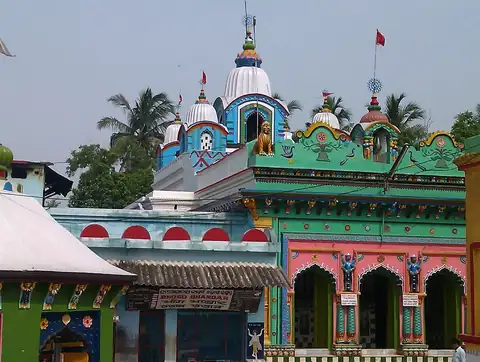 Living temple
Khirachora Gopinath Temple, Remuna
A Krishna temple at Remuna, known for the story of the 'Gopinath who stole sweet rice'. It is an important stop for Gaudiya Vaishnavas, since Chaitanya Mahaprabhu visited it.
Khodiyar Mata Temple, Rajpara
A temple of Khodiyar Mata, family goddess of the Bhavnagar royal family and of many Gujarati communities, beside a lake at Rajpara near Bhavnagar.
Kichakeswari Temple, Khiching
A temple of the goddess Kichakeswari at Khiching, the old capital of the Bhanja kings. It was rebuilt from its own fallen stones in the early 20th century, and is the family goddess of the rulers of Mayurbhanj.
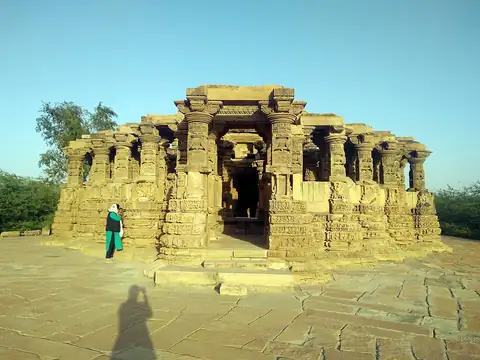 Ruined / monument
Kiradu Temples
A group of five ruined temples in the Thar desert near Barmer, the best preserved being the Someshwara temple of Shiva. Their richly carved walls make them among the finest Maru-Gurjara work in western Rajasthan.
Kirateshwar Mahadev Temple, Legship
A Shiva temple on the bank of the Rangit river at Legship in West Sikkim, held to be the place where Shiva appeared to Arjuna as a hunter (Kirata). It is one of the most important Hindu shrines in Sikkim.
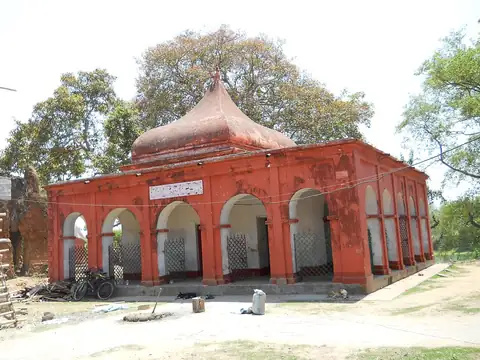 Living temple
Kiriteswari Temple
A Shakti Peetha in Murshidabad where Sati's crown (kirit) is said to have fallen. It is said to be one of the oldest temple sites of the district.
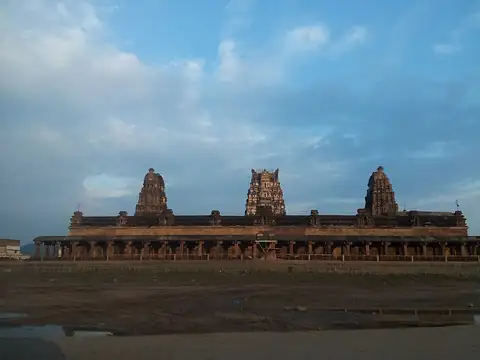 Living temple
Kodandarama Temple, Vontimitta
A large Vijayanagara-era temple of Rama, Sita and Lakshmana carved from a single stone, without the usual Hanuman. Since 2015 Andhra Pradesh holds its official Sri Rama Navami celebrations here.
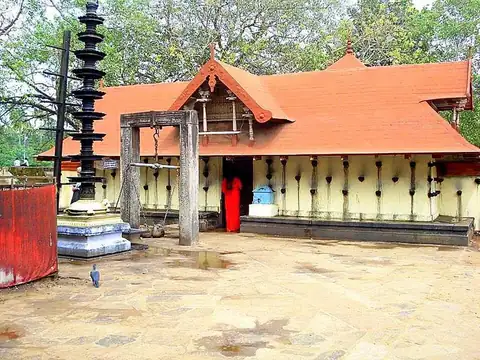 Living temple
Kodungallur Sree Kurumba Bhagavathy Temple
One of Kerala's oldest goddess shrines, in the old Chera capital near Muziris. The fierce eight-armed Bhadrakali, also identified with Kannaki, is head of 64 Bhadrakali shrines of Malabar. Its Bharani festival, with the Kavu Theendal rush of oracles, is among the most intense in Kerala.
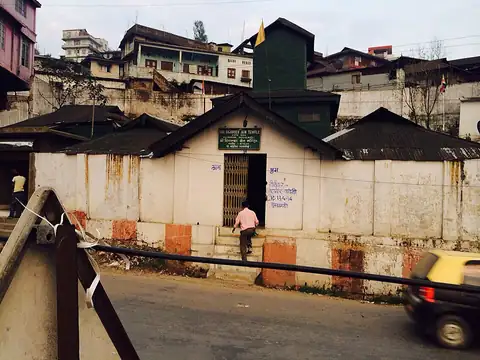 Living temple
Kohima Jain Temple
The first Jain temple in Nagaland, built in Kohima in 1920 by Marwari Jain trading families. It belongs to the Digambar tradition and its main image is of Mahavira.
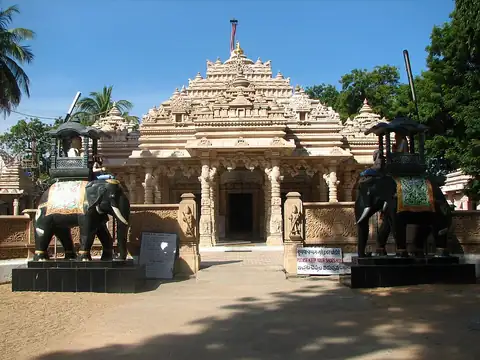 Living temple
Kolanupaka Jain Temple
A Svetambara Jain temple at Kolanupaka, a Jain centre since the medieval period. Its main image is of the first Tirthankara, Rishabhanatha, carved in green stone and called Manikya Swami.
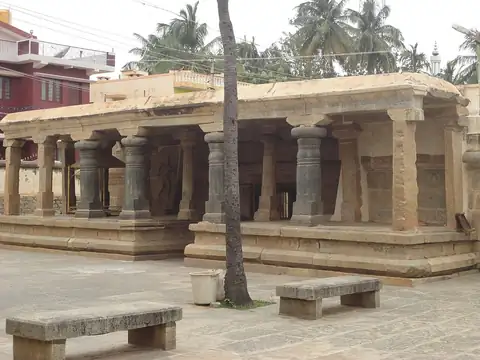 Living temple
Kolaramma Temple, Kolar
A Chola-period temple of the goddess Kolaramma, protector of Kolar. It also has a shrine of Chelamma, the scorpion goddess, whom people pray to for protection from scorpion stings.
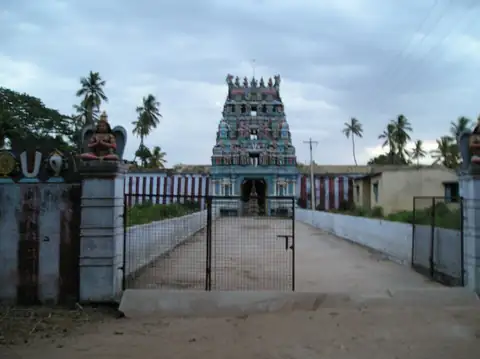 Living temple
Kolavilli Ramar Temple, Thiruvelliyangudi
A Divya Desam where the planet Venus (Shukra) is said to have regained his lost eye. Devotees pray here for relief from Shukra's ill effects.
Komuravelli Mallanna Temple
A popular temple of Mallanna, a folk form of Shiva, set in a cave on a hillock in Siddipet district. He is worshipped with his two wives, Golla Ketamma and Medalamma, and his festival season runs from Sankranti to Ugadi.
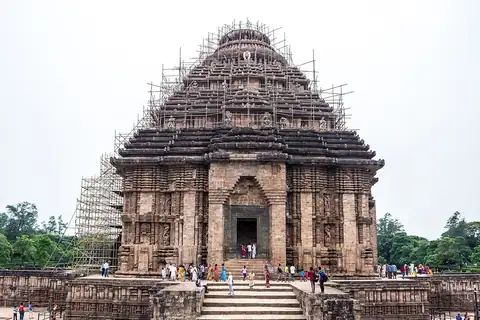 Ruined / monument
Konark Sun Temple
A 13th-century Sun temple of the Eastern Ganga king Narasimhadeva I, built as a colossal stone chariot of Surya with 24 carved wheels drawn by seven horses. The main tower has collapsed; the surviving assembly hall (jagamohana) is a UNESCO World Heritage Site.
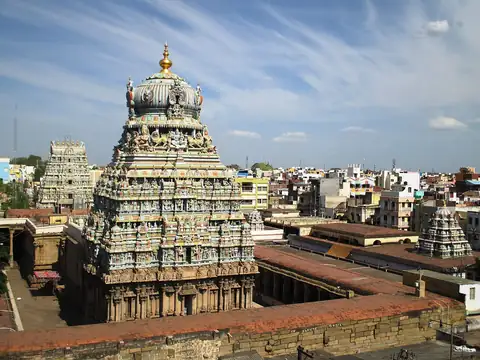 Living temple
Koodal Azhagar Temple, Madurai
The main Vishnu temple in the heart of Madurai. Its three-storeyed vimana shows Vishnu seated, standing and reclining, one above the other. Here Periyalvar is said to have sung the Thiruppallandu, the blessing that opens the Divya Prabandham.
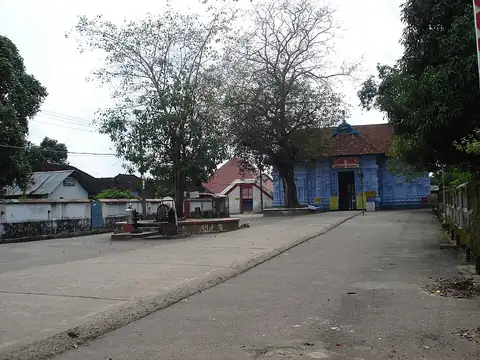 Living temple
Koodalmanikyam Temple, Irinjalakuda
A large temple at Irinjalakuda, one of the very few in India dedicated to Bharata, Rama's brother. It has a single deity with no subsidiary shrines, and garlands of lotus flowers are its chief offering.
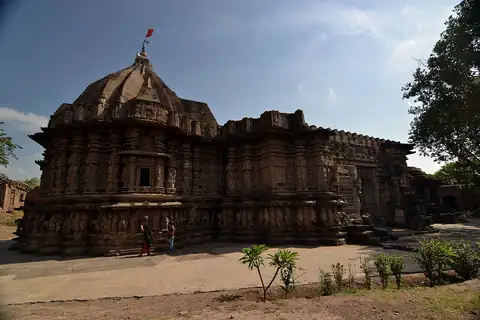 Living temple
Kopeshwar Temple, Khidrapur
A richly carved Shiva temple on the Krishna river at Khidrapur, built under the Shilaharas in the 12th century. Its Svarga Mandapa has an open circle in the roof, and its plinth is carried on a row of carved elephants.
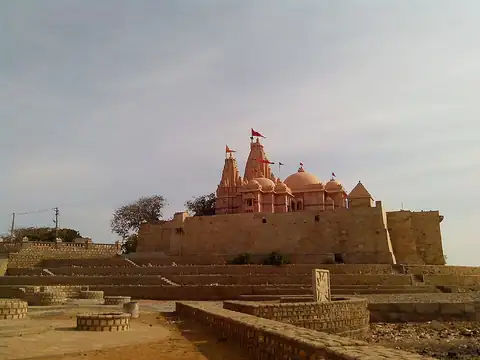 Living temple
Koteshwar Mahadev, Kutch
A Shiva temple on the far western edge of India, where the Kori creek meets the Arabian Sea. A legend says the linga Ravana carried from Kailasa was multiplied here into a crore (koti) lingas.
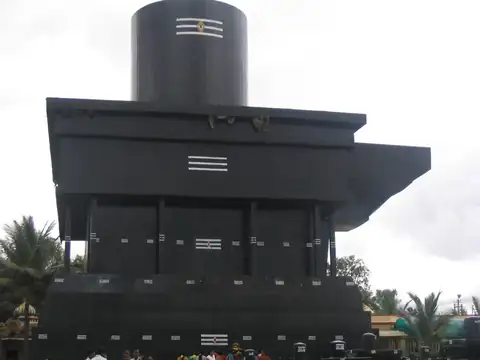 Living temple
Kotilingeshwara Temple, Kammasandra
A modern temple near Kolar with a giant Shiva linga, about 33 metres tall, and a Nandi about 11 metres tall, surrounded by lakhs of smaller lingas installed by devotees. The aim is to reach a crore (ten million) lingas.
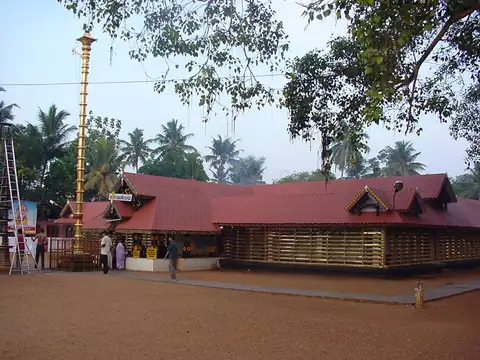 Living temple
Kottarakkara Sree Mahaganapathi Temple
A temple at Kottarakkara where the main deity is Shiva, but which is famous across Kerala for its Ganapathi shrine. Unniyappam, a sweet fried in ghee, is the favourite offering.
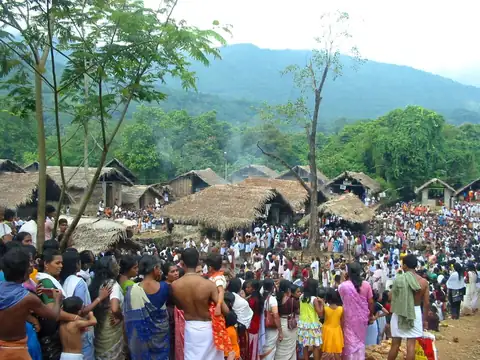 Living temple
Kottiyoor Shiva Temples
A pair of Shiva shrines in the forest at Kottiyoor, on the two banks of the Bavali river. The Akkare shrine, a lingam on a heap of stones in the river, is open only during the 28-day Vysakha Mahotsavam.
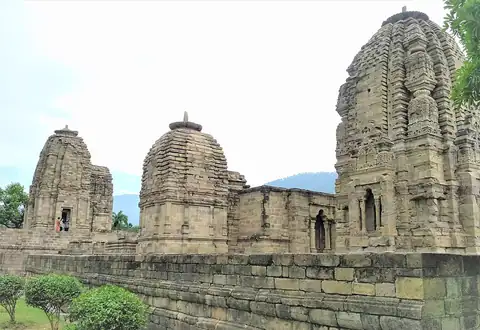 Ruined / monument
Krimchi Temples
A group of stone temples at Krimchi near Udhampur, with tall curved spires in a style that blends Kashmiri and north Indian features. Local tradition links them with the Pandavas.
Krishna Balaram Mandir (ISKCON), Vrindavan
The first temple built in India by the International Society for Krishna Consciousness (ISKCON), opened in 1975 by its founder A. C. Bhaktivedanta Swami Prabhupada, whose memorial (samadhi) stands beside it. It draws devotees from all over the world.
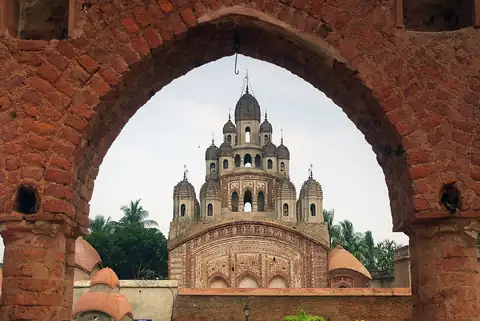 Living temple
Krishnachandra Temple, Kalna
A brick temple with twenty-five spires in the Rajbari complex at Kalna, built in 1751-52 by Lakshmikumari Devi, mother of Maharaja Tilakchand of Bardhaman. Its walls are covered with terracotta.
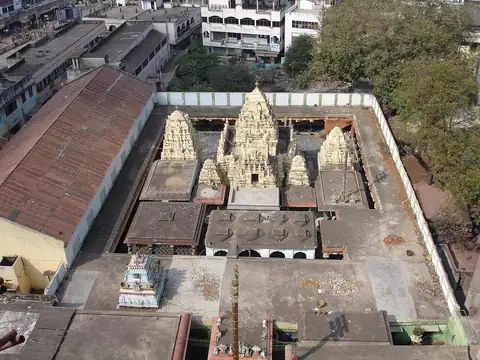 Living temple
Ksheera Ramalingeswara Temple, Palakollu
One of the five Pancharama temples, known for its milky-white linga and a nine-storey gopuram about 37 m high. The name means the garden where milk sprang from the ground.
Kuber Bhandari Temple, Karnali
A Shiva temple on the Narmada at Karnali, where Kubera, god of wealth, is said to have worshipped Shiva. People come on new-moon days to pray for prosperity.
Kudamadukoothan Temple, Thirunangur
One of the eleven Divya Desams of Thirunangur near Sirkazhi. The god is named after Krishna's dance with pots.
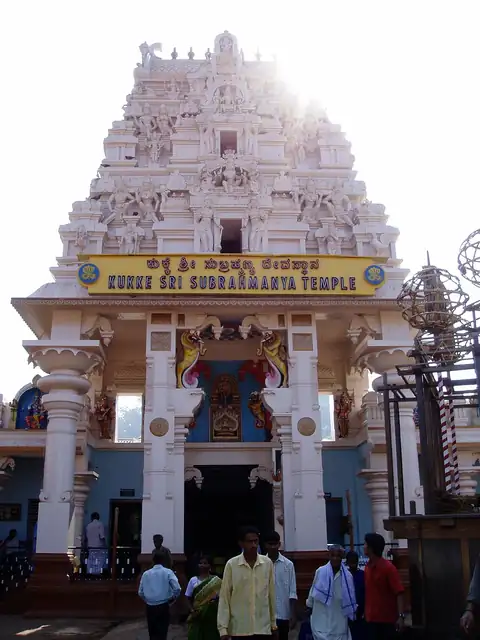 Living temple
Kukke Subramanya Temple
A Western Ghats shrine where Subrahmanya is worshipped together with the serpent king Vasuki, who took refuge under him. It is the main place in Karnataka for rites against sarpa dosha, the affliction believed to follow harm done to snakes.
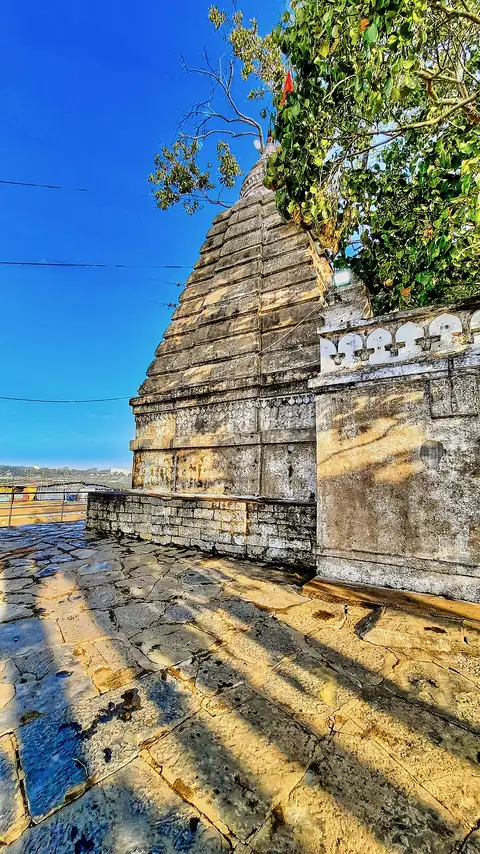 Living temple
Kuleshwar Mahadev Temple, Rajim
A Shiva temple on a rock island where the Pairi and Sondur meet the Mahanadi at Rajim. Its high stone platform has withstood centuries of floods.
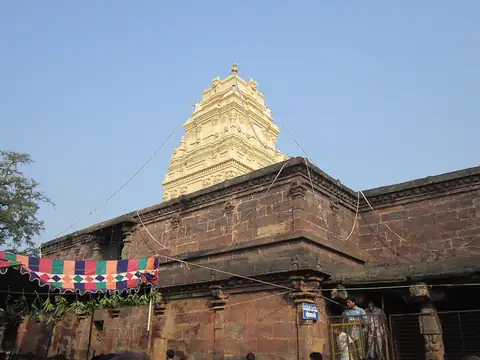 Living temple
Kumara Bhimeswara Temple, Samalkot
One of the five Pancharama temples, built by the Eastern Chalukya king Bhima I and almost a twin of Draksharama. A tall linga of limestone rises through two storeys.
Kumari Amman Temple, Kanyakumari
The temple of the virgin goddess Kanyakumari at the southern tip of India, where three seas meet. She stands with a rosary, waiting for Shiva who never came to marry her. Some traditions count it among the Shakti Peethas.
Kumbha Shyam and Meera Temples, Chittorgarh
A Vishnu temple in Chittorgarh Fort built under Rana Kumbha of Mewar in the 15th century, with the smaller temple linked with the poet-saint Meerabai beside it. The fort is part of the Hill Forts of Rajasthan World Heritage Site.
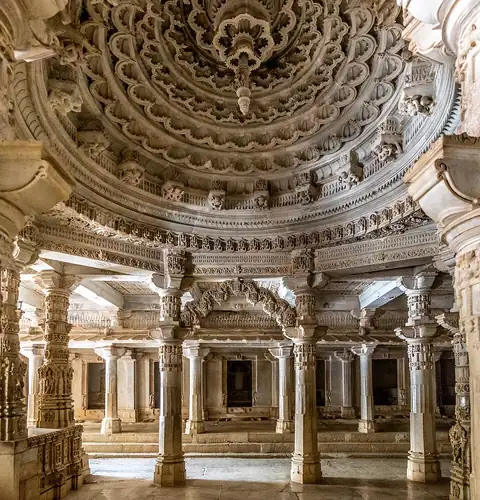 Living temple
Kumbhariya Jain Temples
A group of five white marble Jain temples near Ambaji, built from 1062 to 1231 under the Chaulukya kings. Their carved ceilings rival those of Dilwara at Mount Abu.
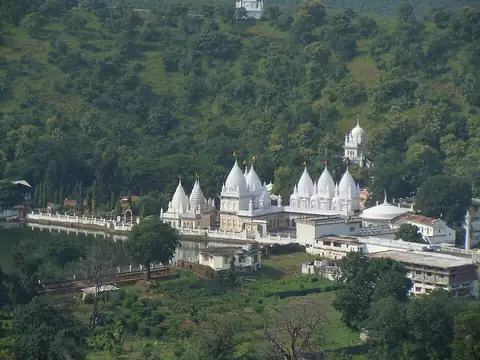 Living temple
Kundalpur Jain Temples
A Digambar Jain pilgrimage centre near Damoh with dozens of temples on a crescent hill. Its main image, the seated Bade Baba (Rishabhanatha), is about 4.5 metres tall, and a vast new stone temple for it was consecrated in 2022.
Kunkeshwar Temple, Devgad
A Shiva temple on the beach at Kunkeshwar near Devgad, often called the Kashi of the Konkan. Its white spire stands just above the sea.
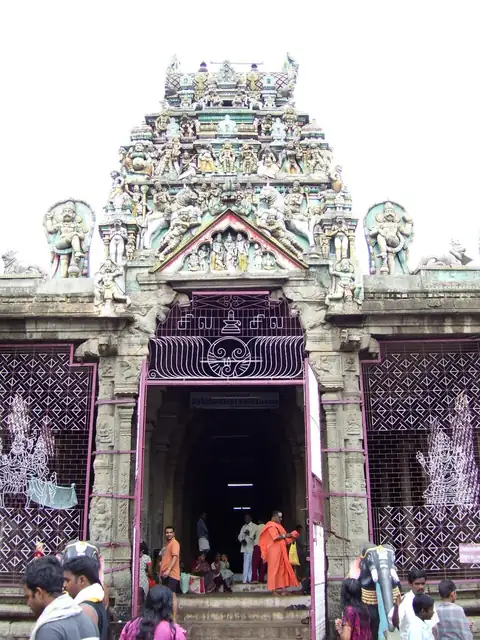 Living temple
Kutralanathar Temple, Courtallam
A Shiva temple at the foot of the Courtallam waterfalls. It is a Paadal Petra Sthalam, and its Chitra Sabha, a hall of painted walls, is one of the five halls of Nataraja.
Lad Khan Temple, Aihole
One of the oldest temples at Aihole, with a flat roof and a pillared hall like a village assembly house. It takes its name from Lad Khan, a man who is said to have lived in it in the 19th century.
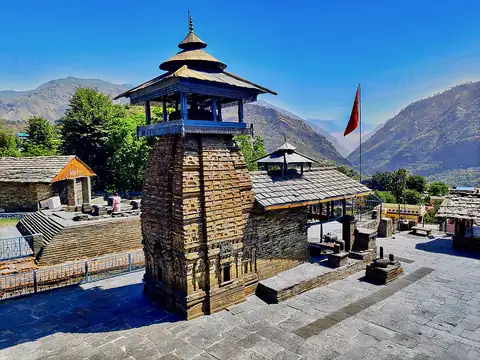 Living temple
Lakhamandal Temple
A stone Shiva temple on the Yamuna, surrounded by hundreds of old lingas and sculptures. An inscription found here records that Princess Ishvara of the Singhapura dynasty built a Shiva temple at the site.
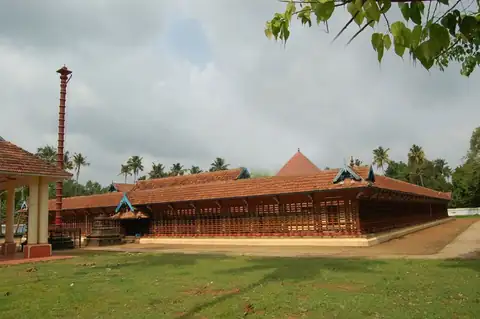 Living temple
Lakshmana Perumal Temple, Thirumoozhikkulam
A riverside temple dedicated to Lakshmana, one of the four Nalambalam temples of Rama and his brothers visited in a single day during the monsoon month of Karkidakam.
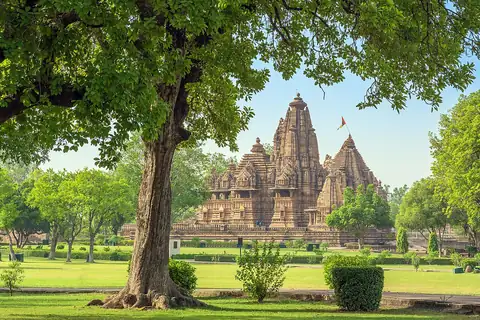 Ruined / monument
Lakshmana Temple, Khajuraho
The earliest of the great Chandela temples of Khajuraho, dedicated to Vishnu as Vaikuntha and completed by 954. It is the best preserved of the western group, with all four corner shrines intact, and is part of the Khajuraho World Heritage Site.
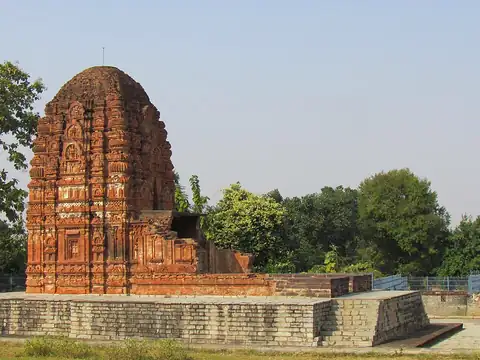 Ruined / monument
Lakshmana Temple, Sirpur
One of the finest brick temples of India, built about 650 at Sirpur by Queen Vasata in memory of her husband, the Panduvamshi king Harshagupta. Its brick tower and carved stone doorway are remarkably well preserved.
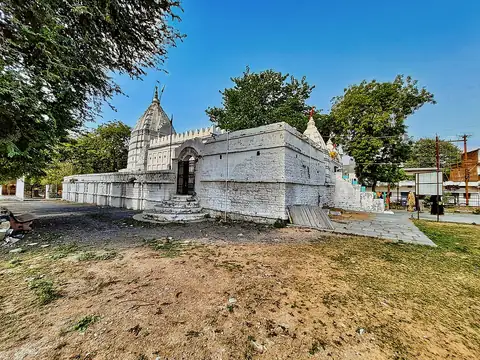 Living temple
Lakshmaneshwar Temple, Kharod
An early brick temple of Shiva at Kharod, whose linga is pierced with many small holes and called the Lakshalinga, the linga of a hundred thousand. It is said to have been founded by Lakshmana.
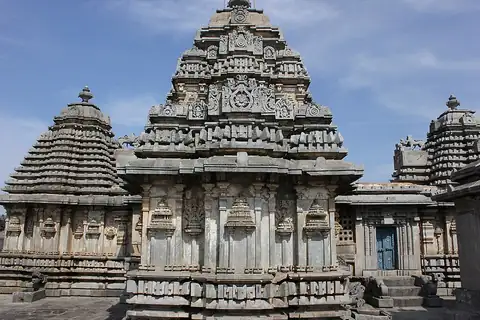 Living temple
Lakshmi Devi Temple, Doddagaddavalli
One of the earliest Hoysala temples, built in 1114 by a wealthy merchant and his wife. It has four shrines around a common hall, an unusual plan, and the main one is dedicated to the goddess Lakshmi.
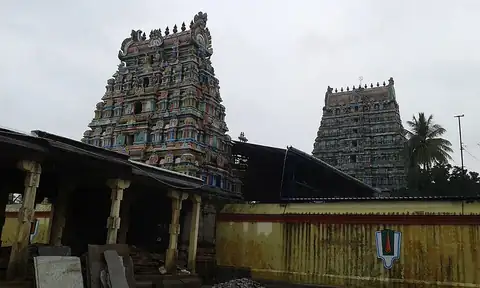 Living temple
Lakshmi Narasimha and Vedarajan Temples, Thiruvali-Thirunagari
A pair of temples counted as one Divya Desam, at the home of Thirumangai Alvar. The Alvar, once a chieftain, is said to have turned to God here through his love for Kumudavalli.
Lakshmi Narasimha Temple, Antarvedi
A Narasimha temple near the point where the Vasishta branch of the Godavari meets the Bay of Bengal. Its Kalyanam festival in Magha, with a chariot procession, is the biggest event of the Konaseema delta.
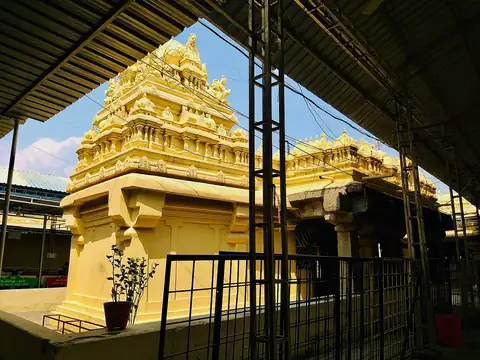 Living temple
Lakshmi Narasimha Temple, Dharmapuri
A Narasimha temple at Dharmapuri on the Godavari, with separate shrines of the calm Yoga Narasimha and the fierce Ugra Narasimha. The town is an important bathing place during the Godavari Pushkaram.
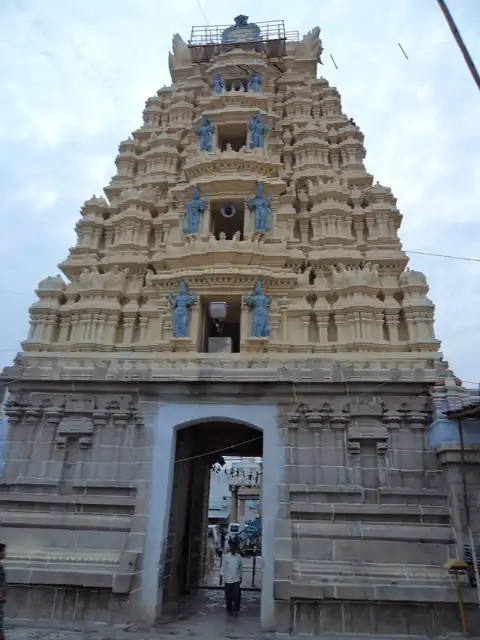 Living temple
Lakshmi Narasimha Temple, Kadiri
A major Narasimha temple at Kadiri, where the image is believed to have emerged on its own from the roots of a khadri tree, giving the town its name. It shows Narasimha in the act of slaying Hiranyakashipu, with Prahlada beside him.
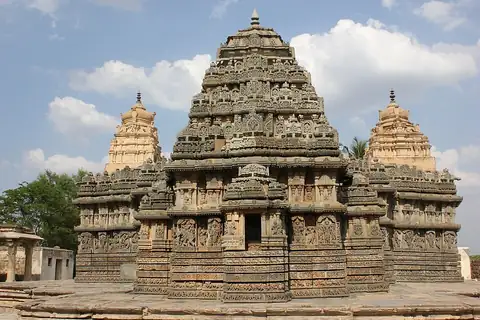 Living temple
Lakshmi Narasimha Temple, Nuggehalli
A Hoysala Vishnu temple at Nuggehalli built in 1246 by Bommanna Dandanayaka, a commander under King Vira Someshwara. It has three shrines and carved outer walls signed by the famous sculptor Mallitamma.
Lakshmi Narasimha Temple, Penchalakona
A forest temple of Narasimha in the Velikonda hills of Nellore district, beside a waterfall. Tradition says Narasimha rested here after slaying Hiranyakashipu and married the Chenchu tribal girl Chenchu Lakshmi.
Lakshmi Narasimha Temple, Yadagirigutta
A hill cave shrine of Narasimha that the Telangana government rebuilt between 2016 and 2022 as a vast temple of carved black granite. It is the state's most important Vaishnava pilgrimage.
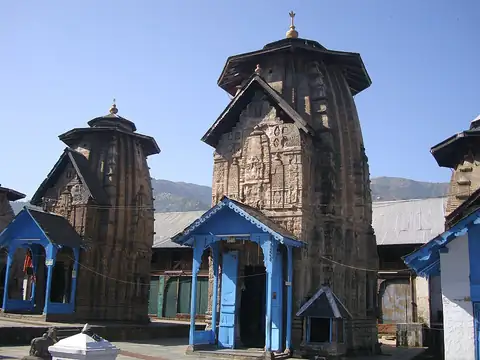 Living temple
Lakshmi Narayan Temple, Chamba
The main temple complex of Chamba, founded in the 10th century by Raja Sahil Varman, with six stone temples of Vishnu and Shiva. The towers carry wooden canopies to shed snow.
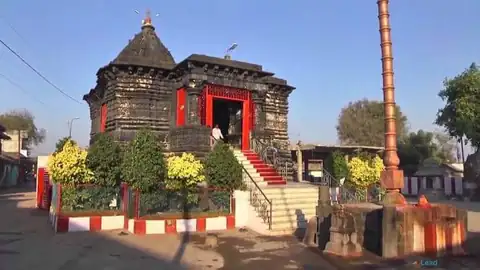 Living temple
Lakshmi Narayana Temple, Jainath
An old stone temple of Lakshmi Narayana at Jainath in Adilabad district. Its name and a Prakrit inscription in the temple suggest it may once have been a Jain shrine.
Lalita Devi Temple, Prayagraj
The goddess temple at Meerapur in Prayagraj, near the meeting of the Ganga and Yamuna, regarded as the Prayag Shakti Peetha where Sati's fingers fell. The Ashtadasha hymn calls the goddess here Madhaveshwari; the nearby Alopi Devi temple also claims the seat.
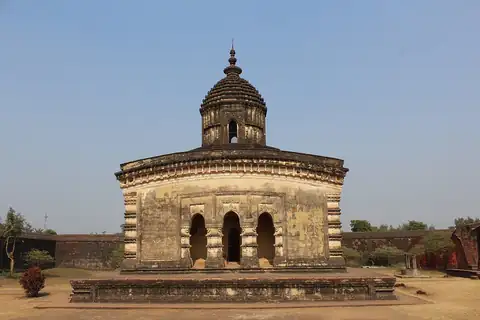 Ruined / monument
Lalji Temple, Bishnupur
A laterite ekaratna (single-spired) temple built in 1658 by the Malla king Bir Singha II, dedicated to Radha and Krishna. It stands in a walled court in the old fort area of Bishnupur.
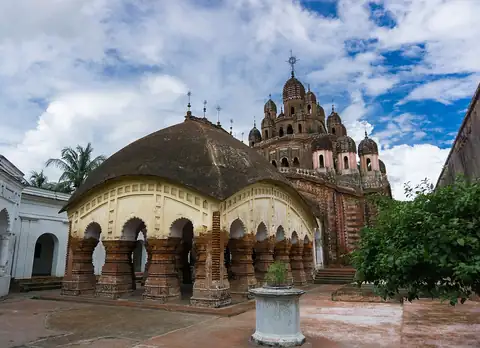 Living temple
Lalji Temple, Kalna
A temple of Radha-Krishna built in 1739 for the Bardhaman royal family, with 25 pinnacles (pancha-vimsati ratna) and rich terracotta panels.
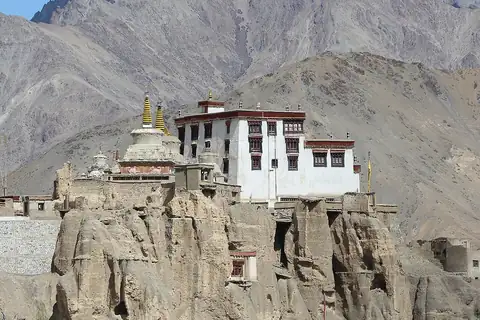 Living temple
Lamayuru Monastery
One of the oldest monasteries in Ladakh, of the Drikung Kagyu order, set above a dramatic eroded landscape called the moonland. It hosts the Yuru Kabgyat masked dance festival.
Laxminarayan Temple (Birla Mandir), Delhi
A large temple of Lakshmi and Narayan built by the industrialist Birla family between 1933 and 1939. Mahatma Gandhi opened it in 1939 on the condition that people of all castes be allowed to enter.
Leaning Temple of Huma
A Shiva temple on the bank of the Mahanadi that leans at an angle, with its smaller shrines leaning in different directions. It was built or rebuilt by the Chauhan king Baliar Singh of Sambalpur in the late 17th century.
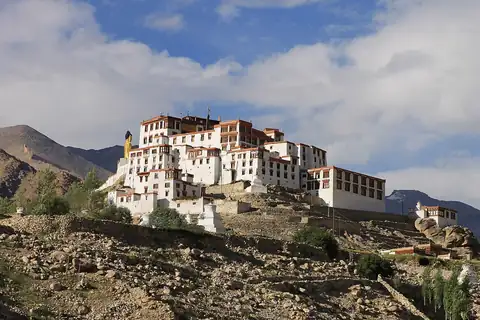 Living temple
Likir Monastery
A Gelug monastery west of Leh, said to have been founded in 1065 under King Lhachen Gyalpo. A large gilded statue of Maitreya sits in its courtyard.
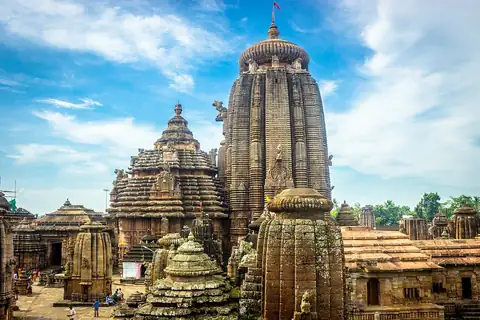 Living temple
Lingaraja Temple
The largest temple of Bhubaneswar, the 'temple city', dedicated to Harihara, a joint form of Shiva and Vishnu. Its spire is about 55 m high, and it is the mature masterpiece of the Kalinga style.
Loganatha Perumal Temple, Thirukannangudi
One of the five Pancha Krishna shrines, near Nagapattinam, linked with stories of Thirumangai Alvar.
Lokanath Temple, Puri
A Shiva temple in Puri whose linga stays under water fed by a spring all year. Once a year, before Shivaratri, the water is drained so that pilgrims can see the linga.
Maa Barunei Temple, Khordha
A hillside shrine of the twin goddesses Barunei and Karunei at the foot of Barunei hill, next to the old fort of the Khurda kings. The goddess was the family deity of the Khurda kings, and the shrine is remembered as the birthplace of the Paika uprising against British rule.
Maa Bhagabati Temple, Banpur
A major goddess shrine at Banpur, between Ghantasila hill and the Salia river, with an eight-armed stone image of the goddess about five feet tall. Its Dussehra festival draws over a lakh devotees.
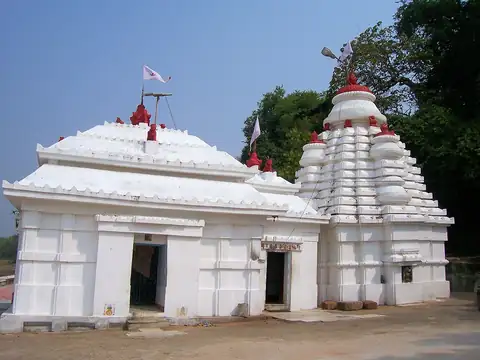 Living temple
Maa Bhattarika Temple, Baramba
A goddess shrine on a rocky bank of the Mahanadi near Baramba, sacred to Bhattarika, a form of Durga. Its riverside setting among hills makes it a popular pilgrimage and picnic spot.
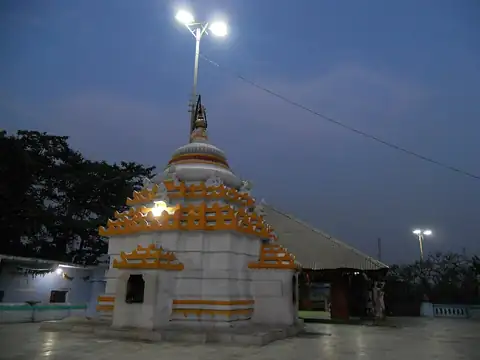 Living temple
Maa Charchika Temple, Banki
A hilltop temple of the goddess Charchika, a fierce eight-armed form of Chamunda, at Banki. The image is an early medieval black stone sculpture, and the temple is the chief shrine of the Banki area.
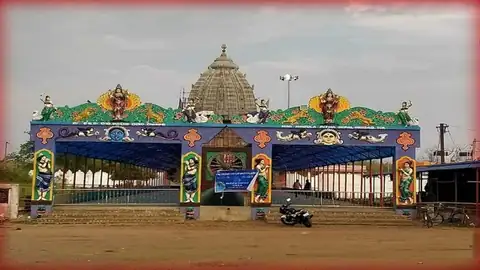 Living temple
Maa Hingula Temple, Gopalprasad
A shrine of the goddess Hingula, worshipped as fire (Agnirupa), on the bank of the Singada river west of Talcher. It is one of the best-known Shakti shrines of Odisha, and its nine-day festival in Chaitra draws pilgrims from across the state.
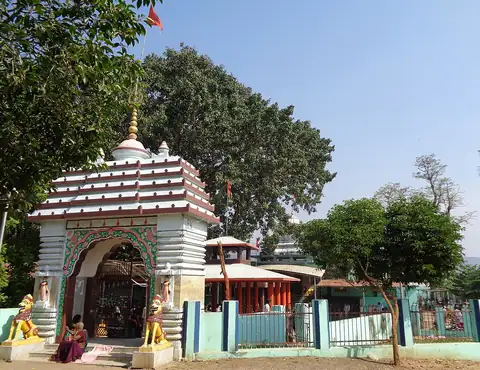 Living temple
Maa Majhighariani Temple, Rayagada
The shrine of Maa Majhighariani, the presiding goddess of Rayagada town in southern Odisha, and a centre of Shakti worship and sadhana.
Maa Mangala Temple, Kakatpur
A goddess temple on the Prachi river with a special role in the Nabakalebara of Puri. When new wooden images of Jagannath are to be made, the goddess Mangala is said to show the priests in a dream where the sacred trees stand.
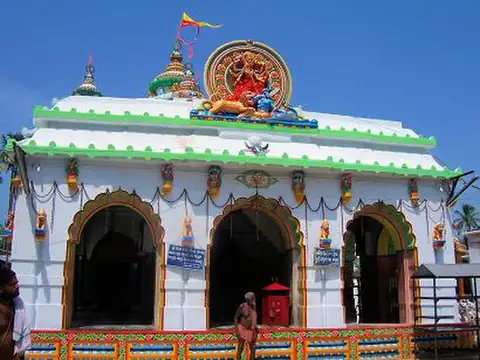 Living temple
Maa Sarala Temple, Jhankad
The temple of the goddess Sarala at Jhankad, worshipped as both Saraswati and Durga. The 15th-century poet Sarala Das, who wrote the Odia Mahabharata, is said to have been her devotee.
Maa Tarachandi Temple, Sasaram
A goddess shrine in a cave in the Kaimur hills near Sasaram, counted by local tradition among the Shakti Peethas. A rock inscription of 1169 by the local chief Pratapadhavala is carved nearby.
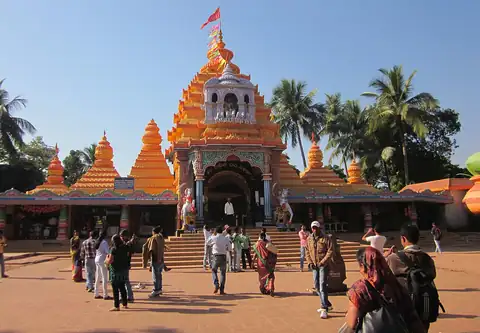 Living temple
Maa Tarini Temple, Ghatagaon
A forest goddess shrine in Kendujhar district, famous for the millions of coconuts offered to the goddess. Travellers on the road stop here to pray for a safe journey.
Maa Ugratara Temple, Bhusandpur
A shrine of the goddess Tara in her fierce form, Ugratara, at Bhusandpur near Chilika lake. Tara is the second of the ten Mahavidyas, and the shrine is known as a centre of Tantric worship.
 Living temple
Machail Mata Temple
A goddess temple at Machail in the high Paddar valley of Kishtwar, where Durga is worshipped as Chandi. An annual yatra on foot brings large numbers of pilgrims each summer.
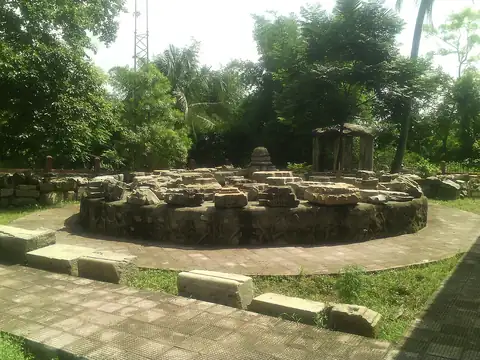 Ruined / monument
Madan Kamdev
The ruins of a group of 10th-12th century stone temples near Guwahati, associated with the Pala kings of Kamarupa and known for sculptures of gods, dancers and couples. It is sometimes called the Khajuraho of the Northeast.
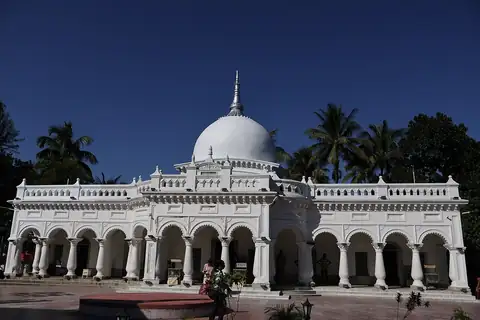 Living temple
Madan Mohan Bari, Cooch Behar
The royal temple of Cooch Behar, built in the 1880s by Maharaja Nripendra Narayan for the family deity Madan Mohan, a form of Krishna. Its Rash Mela is the biggest fair of north Bengal.
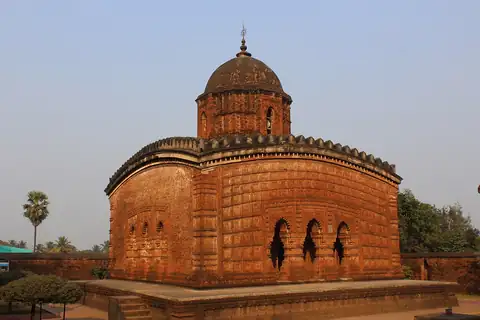 Living temple
Madan Mohan Temple, Bishnupur
A brick temple of Krishna built in 1694 by the Malla king Durjan Singh, with a single tower and walls covered with fine terracotta panels. It is still in worship.
Madan Mohan Temple, Karauli
A Krishna temple in the palace of Karauli, holding the image of Madan Mohan that once stood in Vrindavan. It is one of the three great Krishna images of the Gaudiya tradition kept in Rajasthan.
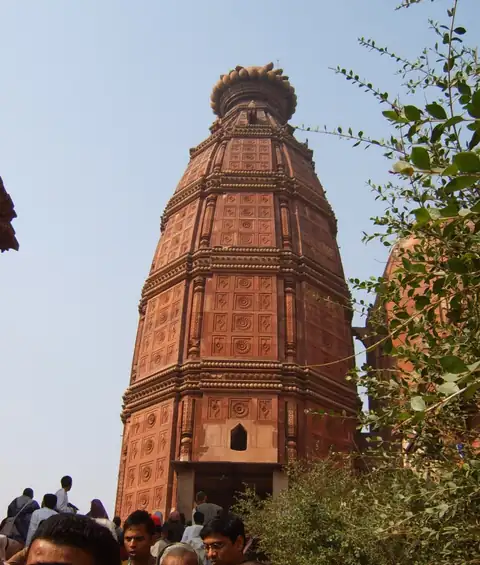 Living temple
Madan Mohan Temple, Vrindavan
The oldest surviving temple of the Gaudiya Vaishnavas in Vrindavan, on a hill above the old course of the Yamuna. Its tall sandstone spire was built for the Krishna image of Sanatana Goswami, which was later moved to Karauli in Rajasthan.
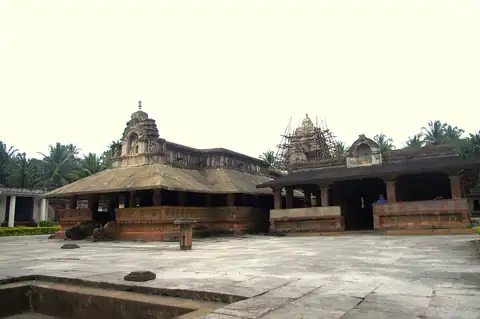 Living temple
Madhukeshwara Temple, Banavasi
A Shiva temple at Banavasi, the ancient capital of the Kadambas, one of the first Kannada kingdoms. The linga is honey-coloured, which gives the god his name, 'lord of honey'.
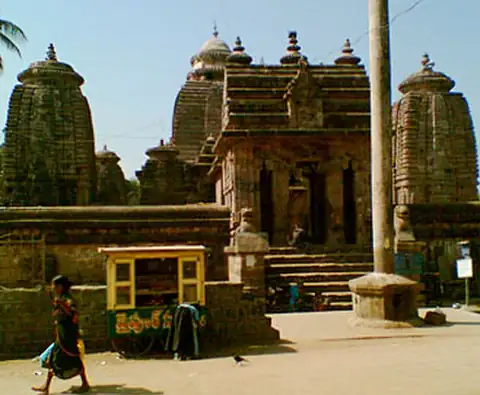 Living temple
Madhukeswara Temple, Mukhalingam
A group of early temples at Mukhalingam, once Kalinganagara, the capital of the Eastern Gangas. The main Madhukeswara temple, in the Kalinga style, has a linga with a face of Shiva.
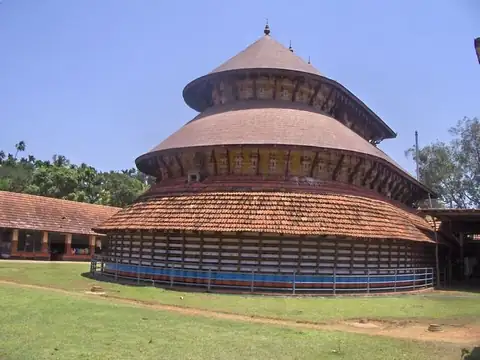 Living temple
Madhur Madanantheshwara Siddhivinayaka Temple
A temple on the Madhuvahini river near Kasaragod, with a three-tiered roof shaped like the back of an elephant. Shiva is the main deity, but its Ganapathi image is the most famous.
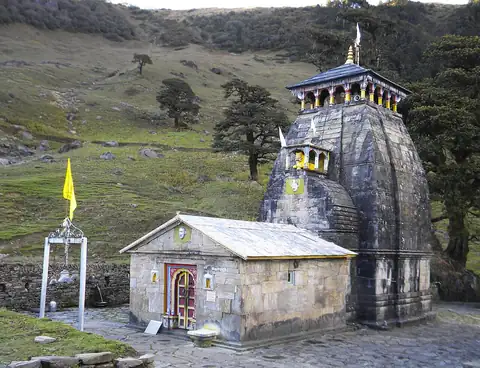 Living temple
Madhyamaheshwar Temple
A temple of Shiva where his navel (nabhi) is worshipped, one of the Panch Kedar, in a high meadow below the Chaukhamba peaks.
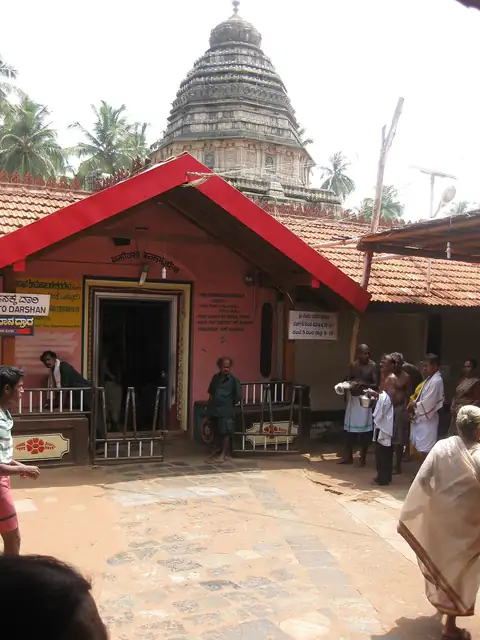 Living temple
Mahabaleshwar Temple, Gokarna
The shrine of the Atmalinga that Ravana carried from Kailasa and Ganesha set down on the beach at Gokarna. One of the seven Mukti Sthalas of the coast, it is a major place for ancestral rites and is called the Kashi of the south.
Mahabaleshwar Temple, Kshetra Mahabaleshwar
A black-stone Shiva temple in the old village of Mahabaleshwar, near the Panchganga shrine where the Krishna and four other rivers are said to rise. It is the oldest temple of the hill station.
Mahabhairab Temple, Tezpur
A Shiva temple in Tezpur, linked by tradition with the demon king Banasura, whose capital Sonitpur is identified with Tezpur. Its stone base is old, while the upper part was rebuilt after the 1897 earthquake.
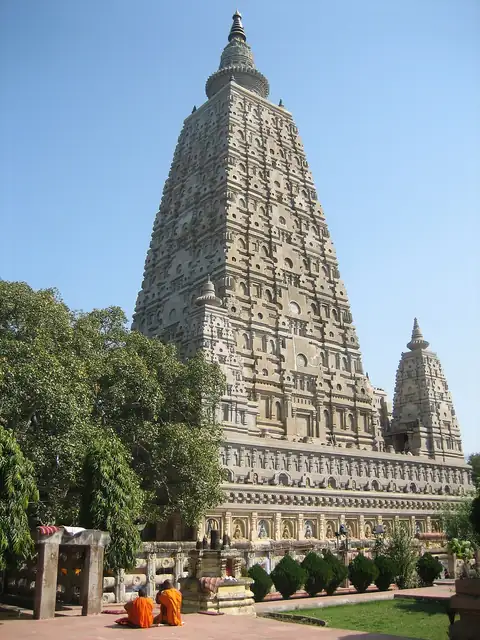 Living temple
Mahabodhi Temple
The temple marks the place where Siddhartha Gautama attained enlightenment under the Bodhi tree, the holiest site in Buddhism. Its present 55 m brick tower dates from the Gupta period, and it is a UNESCO World Heritage Site.
Mahadev Khola Dham, Shillong
A Shiva shrine beside a stream in a wooded valley of Shillong, revered especially by the Gorkha and Nepali communities. A natural stone in a small cave is worshipped as the linga.
Mahadev Temple, Curdi
A small stone Shiva temple of the Kadamba period that was taken apart and rebuilt on higher ground when the Salaulim dam flooded the village of Curdi. Every summer, when the reservoir falls, the old village reappears.
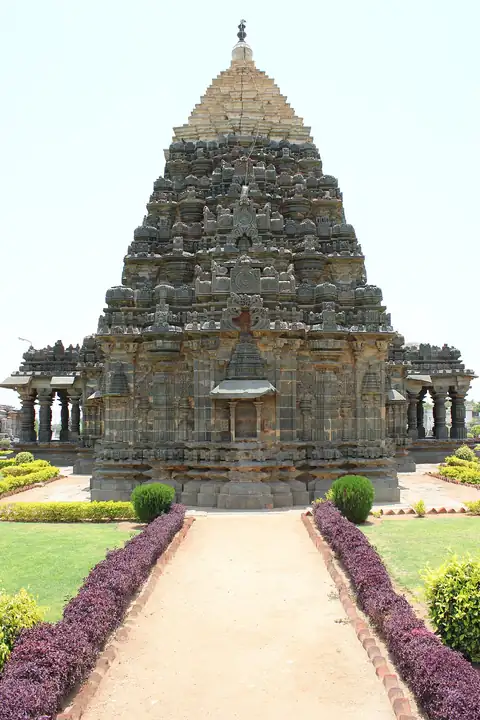 Living temple
Mahadeva Temple, Itagi
A richly carved Western Chalukya temple of 1112, called in its own inscription 'Devalaya Chakravarti', the emperor among temples. It is one of the finest examples of the later Chalukya style that led on to Hoysala art.
Mahaganapati Temple, Ranjangaon
An Ashtavinayak shrine of Ganesha as Mahaganapati, invoked by Shiva before he destroyed the three demon cities (Tripura). The east-facing temple is built so that the sun's rays fall on the image at certain times of the year.
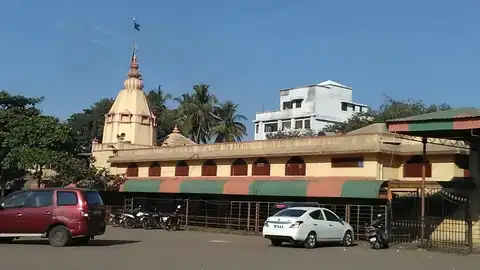 Living temple
Mahaganapati Temple, Titwala
A Ganapati temple at Titwala beside a lake, much visited from Mumbai. Couples pray here to settle quarrels and for marriages to be arranged.
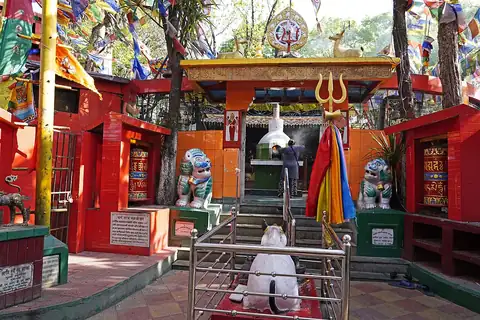 Living temple
Mahakal Temple, Darjeeling
A shrine on Observatory Hill in Darjeeling where Shiva as Mahakal is worshipped by Hindu priests and Buddhist lamas side by side. The hilltop is covered with prayer flags.
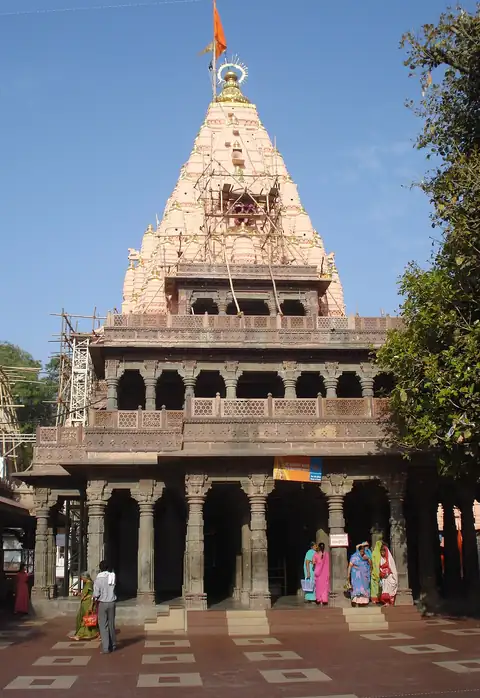 Rebuilt / restored for worship
Mahakaleshwar Jyotirlinga
One of the twelve Jyotirlingas, in the ancient city of Ujjain (Avantika). Its south-facing linga and pre-dawn Bhasma Aarti are unique. Destroyed by Iltutmish in 1234-35, it was rebuilt under Maratha rule in the 18th century, and the Mahakal Lok corridor opened in 2022.
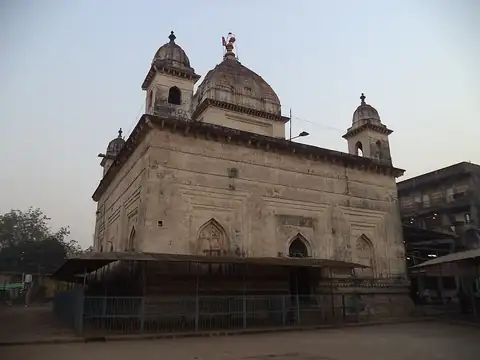 Living temple
Mahakali Temple, Chandrapur
A stone temple of Mahakali in Chandrapur, built under the Gond kings of Chanda. The goddess has a shrine below the main hall, reached down steps, as well as the main image above.
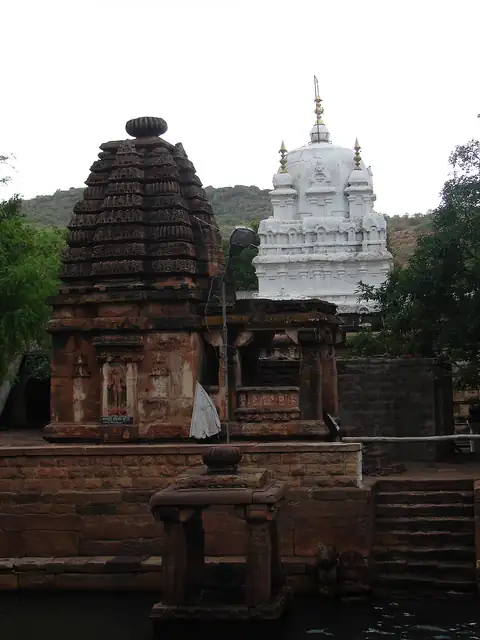 Living temple
Mahakuta Group of Temples
A group of early Chalukya temples around a sacred spring-fed tank near Badami, still in worship. The main temple is of Shiva as Mahakuteshwara, and a pillar found here carries an inscription of the Chalukya king Mangalesha from about 602.
Mahalakshmi Jagdamba Temple, Koradi
A goddess temple at Koradi near Nagpur, rebuilt on a large scale by its trust. Navaratri at Koradi draws lakhs of devotees from Vidarbha.
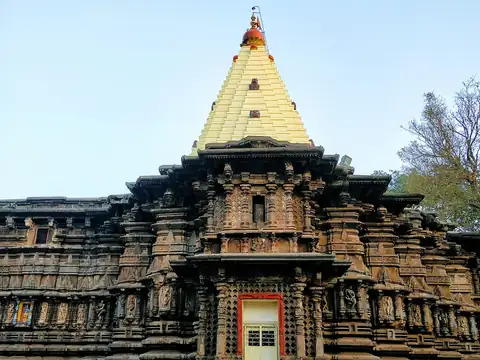 Living temple
Mahalakshmi Temple, Kolhapur
The temple of Mahalakshmi, known locally as Ambabai, in the old city of Karaveer (Kolhapur). Her gemstone image wears a crown with a five-hooded serpent. It is one of the 18 Maha Shakti Peethas and one of Maharashtra's 'three and a half' Shakti Peethas.
Mahalakshmi Temple, Mumbai
A seaside temple of the goddesses Mahalakshmi, Mahakali and Mahasaraswati, founded when images were found in the sea during the building of a causeway joining Bombay's islands. It gave its name to the Mahalakshmi area of the city.
Mahamaya Temple, Ambikapur
The chief goddess temple of Surguja, worshipped by the former royal family. The town of Ambikapur is named after the goddess Amba.
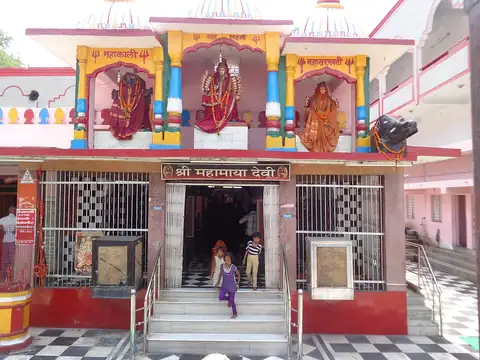 Living temple
Mahamaya Temple, Raipur
An old goddess temple in Raipur's Purani Basti, said to have been founded by the Haihaya kings. Mahamaya and Samleshwari are worshipped here, and thousands of oil lamps are lit at Navaratri.
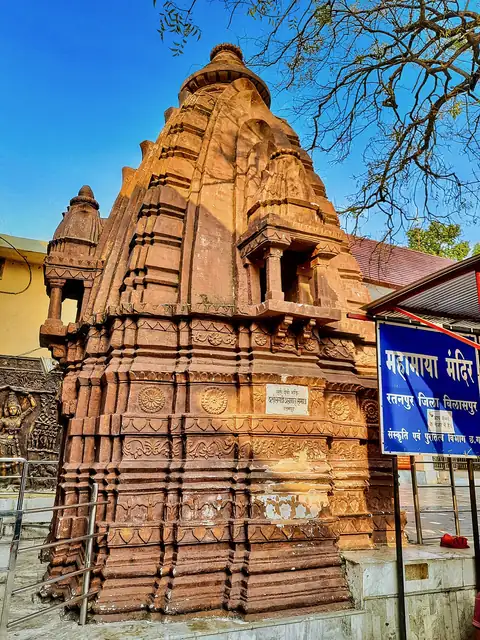 Living temple
Mahamaya Temple, Ratanpur
A temple of the goddess Mahamaya at Ratanpur, the old capital of the Kalachuri kings of Chhattisgarh. It is one of the most important goddess temples of the state, busy at both Navaratris.
Mahamrityunjay Temple, Puranigudam
A modern temple at Puranigudam in Nagaon district whose building is shaped like a giant Shiva linga, about 126 feet tall. It was opened in 2021.
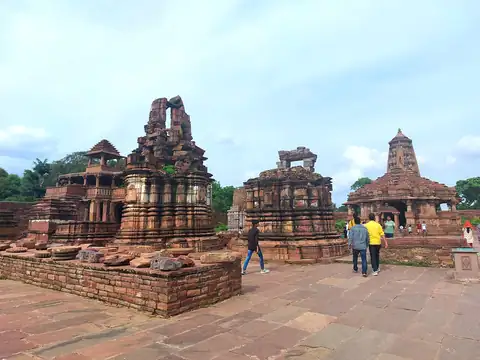 Living temple
Mahanaleshwar Temple, Menal
A carved Shiva temple of the Chahamana (Chauhan) period beside the Menal waterfall and gorge, with a monastery and smaller shrines around it.
 Living temple
Mahanandeeswara Temple, Mahanandi
A Shiva temple at the foot of the Nallamala hills, known for its tanks fed by a spring of clear water that stays at the same temperature all year. It is the chief of the nine Nandi shrines around Nandyal.
Mahaparinirvana Temple, Kushinagar
The temple at Kushinagar that marks the place where the Buddha passed into parinirvana. It holds a 5th-century reclining image of the Buddha, over 6 metres long, carved from Mathura sandstone.
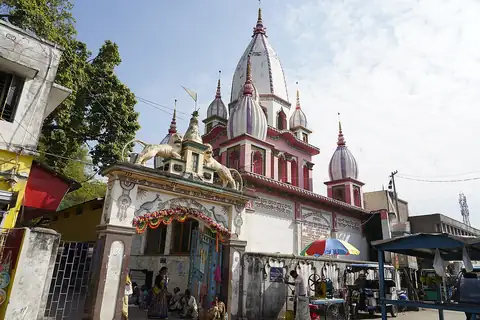 Living temple
Mahaprabhu Temple, Navadwip
A temple of Chaitanya Mahaprabhu in Navadwip town, honoured by many as his birthplace. The birthplace is disputed: others place it at Mayapur across the Ganga, where the ISKCON headquarters stand.
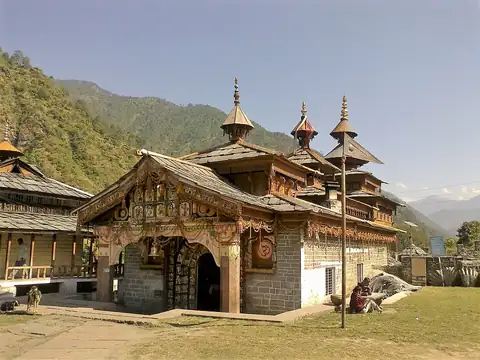 Living temple
Mahasu Devta Temple, Hanol
The chief temple of Mahasu Devta, the ruling god of the Jaunsar-Bawar and upper Tons region, at Hanol. Mahasu, worshipped as four brothers, is seen as a form of Shiva and settles disputes for the villages around.
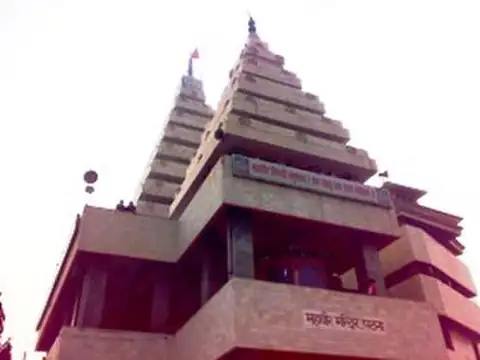 Living temple
Mahavir Mandir, Patna
A Hanuman temple outside Patna Junction, one of the most visited and richest temples of north India. Its trust uses temple income to run hospitals, including a large cancer centre, and its naivedyam laddus are famous.
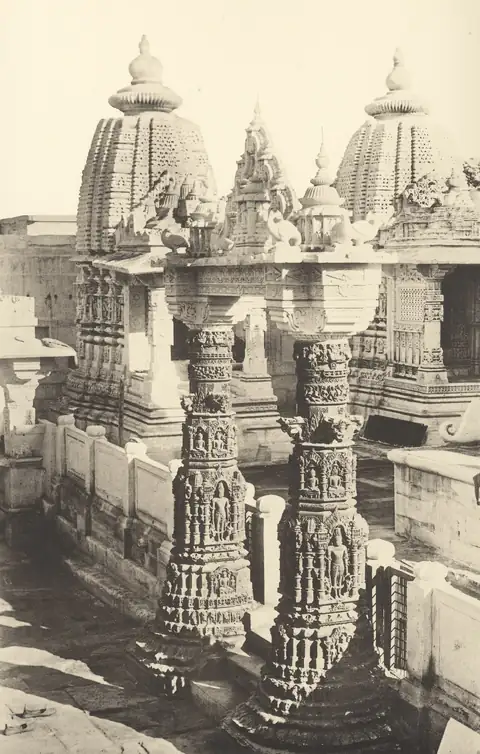 Living temple
Mahavira Jain Temple, Osian
One of the oldest surviving Jain temples of western India, dedicated to Mahavira. An inscription of 956 says it was built in the reign of the Pratihara king Vatsaraja.
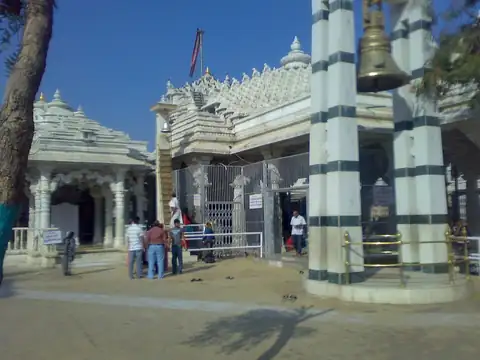 Living temple
Mahudi Jain Temple
A Jain temple at Mahudi founded in 1917 by the monk Buddhisagarsuri, with a main image of Padmaprabha and a much-visited shrine of Ghantakarna Mahavir, a protector deity worshipped by Jains and Hindus alike.
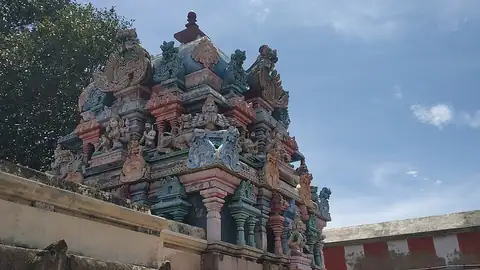 Living temple
Makara Nedunkuzhaikathar Temple, Thentirupperai
One of the Nava Tirupati, nine Vishnu temples on the Thamirabarani river, linked with Venus (Shukra).
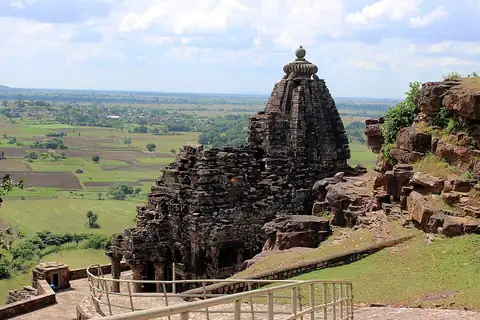 Ruined / monument
Maladevi Temple, Gyaraspur
A 9th-century temple built partly into a hillside above Gyaraspur, overlooking the valley. It has a tall spire and a carved porch, and its sanctum now holds Jain images.
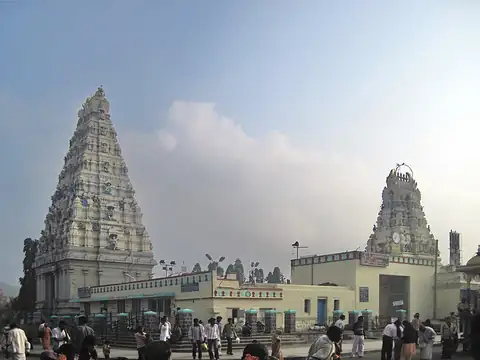 Living temple
Male Mahadeshwara Temple
A forest hill shrine of Male Mahadeshwara, a Veerashaiva saint of the 15th century worshipped as a form of Shiva. Pilgrims walk long distances through the forests of the Karnataka-Tamil Nadu border to reach him.
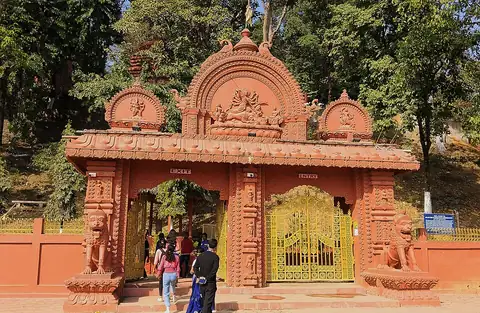 Ruined / monument
Malinithan
The ruins of a stone temple complex on a hill near Likabali, with fine sculptures including Indra on Airavata and Surya. Tradition says Krishna and Rukmini rested here on their way from Bhishmaknagar to Dwarka.
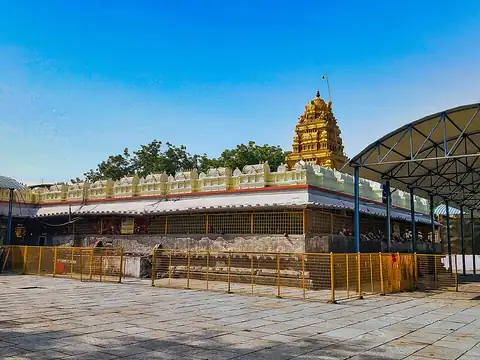 Living temple
Mallikarjuna Swamy Temple, Ainavolu
A Kakatiya-period temple of Mallanna, a folk form of Shiva, at Ainavolu near Warangal. Its jatara at Sankranti and Ugadi draws shepherd and farming communities from across Telangana.
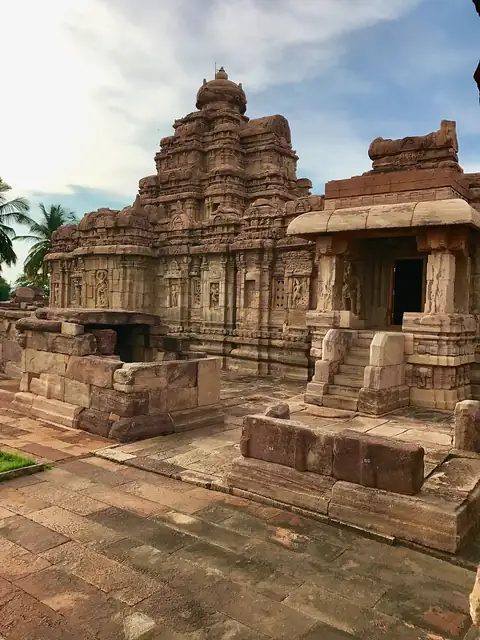 Ruined / monument
Mallikarjuna Temple, Pattadakal
A Shiva temple in the Pattadakal group, built about 745 by Queen Trailokyamahadevi to mark her husband Vikramaditya II's victory over the Pallavas of Kanchipuram. It stands beside the Virupaksha temple, built at the same time by her sister.
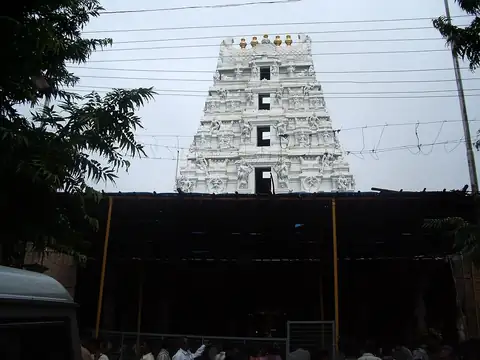 Living temple
Mallikarjuna Temple, Srisailam
A hilltop temple above the Krishna river where Shiva is worshipped as Mallikarjuna and the goddess as Bhramaramba. It is unusual in being both one of the twelve Jyotirlingas and one of the Shakti Peethas, and inscriptions show it was already a sacred site in the 2nd century.
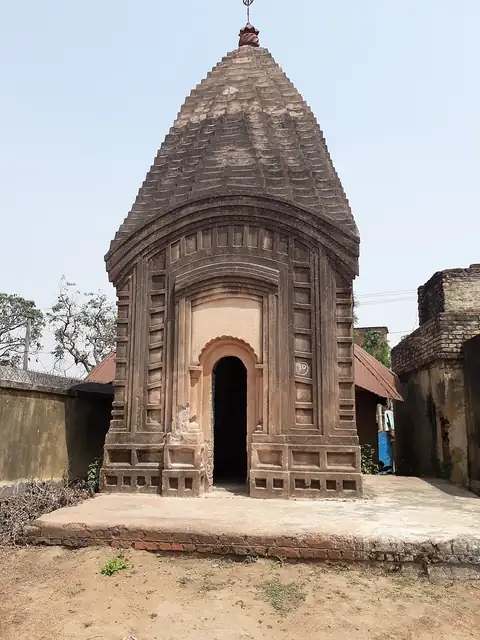 Living temple
Maluti Temples
A village of about 72 surviving terracotta temples, built in the 17th-19th centuries by the Baj Basanta rulers and their families. The group has been named among endangered heritage sites.
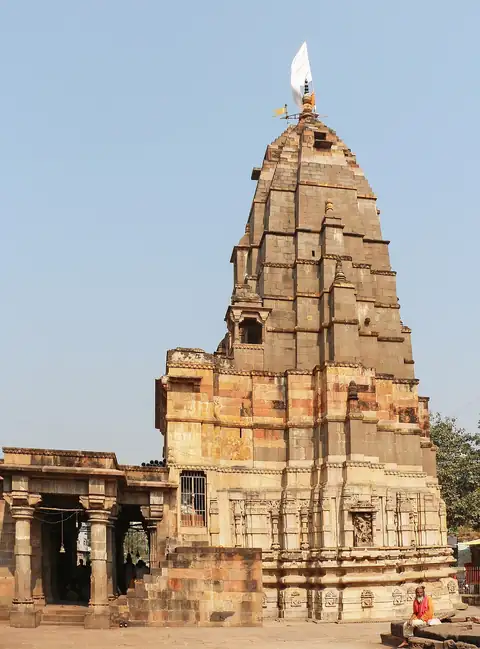 Living temple
Mamleshwar Temple, Omkareshwar
A Shiva temple on the south bank of the Narmada facing the island of Omkareshwar. Many pilgrims count Mamleshwar together with Omkareshwar as one Jyotirlinga, and visit both.
Mamleshwar Temple, Pahalgam
A small stone temple of Shiva beside a spring across the Lidder river from Pahalgam. It is counted among the oldest temples of Kashmir that are still in worship.
Manakula Vinayagar Temple
The best-known temple of Puducherry, dedicated to Ganesha, standing in the old French quarter near the sea. The shrine is older than French rule, and the temple has since been enlarged with a gilded tower and painted halls.
 Living temple
Mangaladevi Temple, Mangaluru
The temple of the goddess Mangaladevi, from whom the city of Mangaluru takes its name. Tradition credits an Alupa king, Kundavarma, with building the first temple.
Mangalnath Temple, Ujjain
A Shiva temple on the Shipra in Ujjain, held to be the birthplace of Mangala, the planet Mars. Pilgrims come here for rites to ease the influence of Mars in their horoscopes.
Mangla Gauri Temple, Gaya
A hilltop goddess temple in Gaya, the city of ancestral rites, where Sati is worshipped as Mangala Gauri. It is counted among the 18 Maha Shakti Peethas as the seat where Sati's breast fell, and is mentioned in the Vayu, Padma and Agni Puranas.
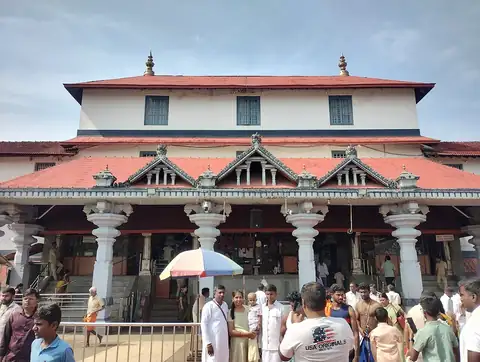 Living temple
Manjunatha Temple, Dharmasthala
A Shiva temple in which Madhva Vaishnava priests serve the linga and a Jain family, the Heggades, holds hereditary charge. It is known for free meals for every visitor, for settling disputes, and for the welfare work of the Dharmasthala trusts.
Mankameshwar Temple, Lucknow
A Shiva temple on the bank of the Gomti in Lucknow, one of the oldest shrines of the city. Tradition links it with Lakshmana, after whom Lucknow is said to be named.
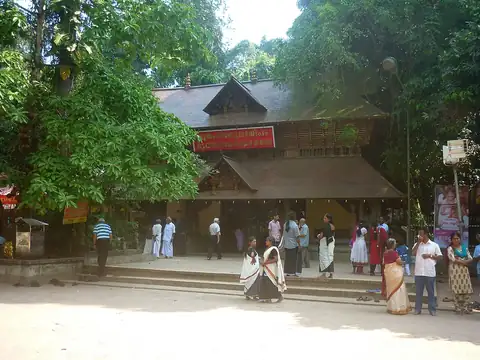 Living temple
Mannarasala Sree Nagaraja Temple
Kerala's best-known serpent temple, set in a sacred grove at Haripad with over 100,000 snake images along its paths. It is run by the Mannarasala Illam family, and its matriarch, the Amma, leads worship, a rare tradition of a woman as chief priest. Childless couples come to pray here.
Mansa Devi Temple, Haridwar
A hilltop temple of the goddess Mansa, who grants wishes, above Haridwar. With Chandi Devi and Maya Devi it is one of the three Siddha Peethas of the city, and is reached by steps or ropeway.
Marghat Wale Baba Hanuman Mandir
An old Hanuman shrine on the Yamuna bank near the Nigambodh Ghat cremation ground. The image sits below the level of the road, and when the Yamuna floods, the water is said to rise to touch the deity's feet before it goes down.
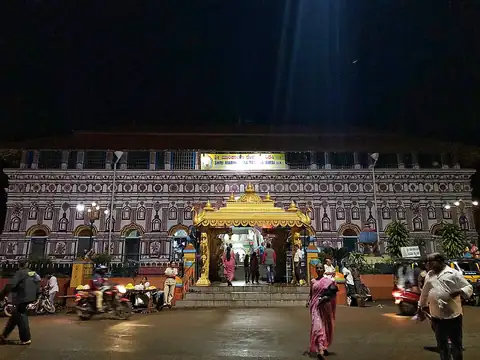 Living temple
Marikamba Temple, Sirsi
The temple of the goddess Marikamba at Sirsi, founded in 1688. Her festival (jatre), held every two years, is one of the largest in Karnataka, and the temple's walls are painted in the local kavi art style.
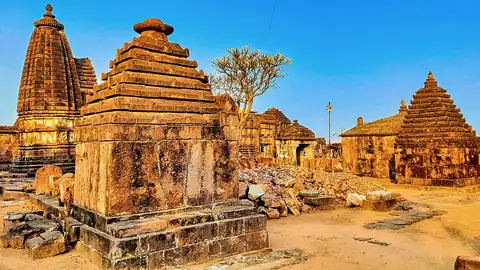 Living temple
Markandadeo Temples
A group of early medieval temples on the Wainganga at Markanda in Gadchiroli district, often called the Khajuraho of Vidarbha for their carving. The main temple is dedicated to Shiva as Markandeshwar.
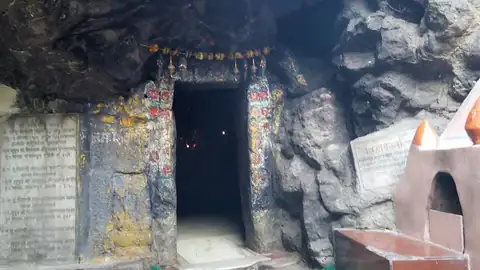 Living temple
Marleshwar Temple
A Shiva shrine in a cave high in the Sahyadri cliffs near Devrukh, beside the Dhareshwar waterfall. Shiva's wedding to the goddess Girijadevi is celebrated here every Makar Sankranti.
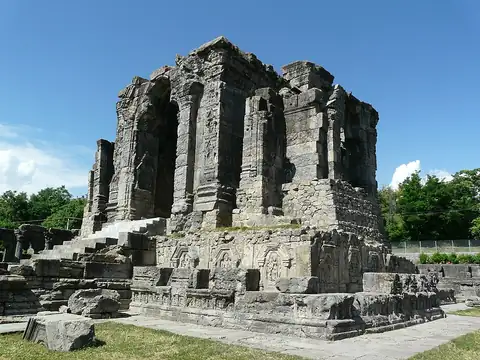 Destroyed
Martand Sun Temple
Built by the Karkota king Lalitaditya Muktapida in the 8th century, this Sun temple on a plateau above the Kashmir valley was the grandest example of Kashmiri temple architecture. It was destroyed in the early 15th century under Sultan Sikandar Shah Miri, and its ruins are an ASI monument.
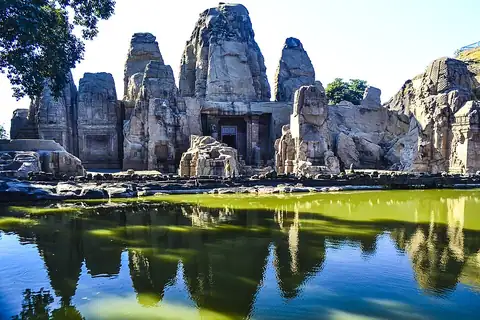 Ruined / monument
Masrur Rock-cut Temples
A group of 15 monolithic temples cut from a single sandstone ridge in the 8th century, facing a tank that reflects them. They were never finished and were damaged in the 1905 earthquake.
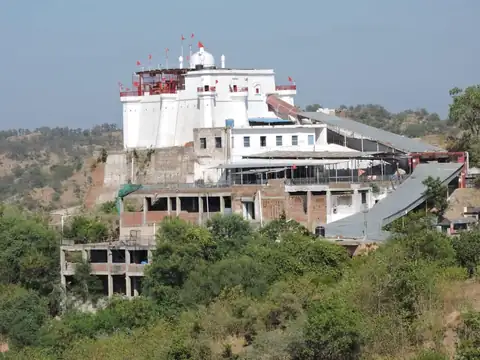 Living temple
Mata Jayanti Devi Temple, Mohali
A goddess temple on a hilltop in the Shivalik foothills near Mohali. A fair is held here at Navaratri.
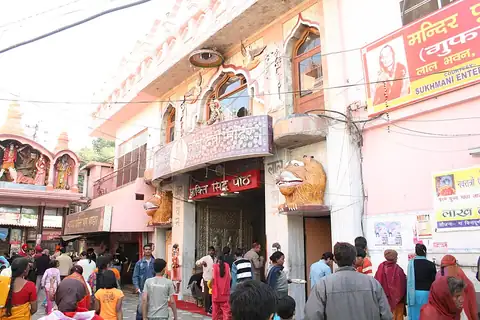 Living temple
Mata Lal Devi Mandir, Amritsar
A temple in Amritsar built in honour of Lal Devi, a 20th-century woman saint revered as a form of the goddess. Its winding passages, caves and water channels imitate the pilgrimage to Vaishno Devi, and it is known as a place where couples pray for children.
Mata Mansa Devi Temple, Panchkula
A goddess temple in the Shivalik foothills near Chandigarh, built between 1811 and 1815 by Raja Gopal Singh of Mani Majra. It is one of the most important goddess temples of north India, and a shrine board has run it since 1991.
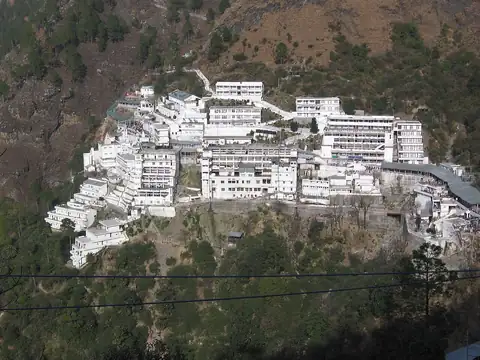 Living temple
Mata Vaishno Devi Temple
A cave shrine of the goddess in the Trikuta hills, reached by a trek of about 12-13 km from Katra. The goddess is worshipped as three natural rock forms (pindis) of Mahakali, Mahalakshmi and Mahasaraswati. It is one of India's most visited pilgrimages.
Matangeshwar Temple, Khajuraho
The only temple of the Khajuraho group still in regular worship, a plain square shrine holding a linga about 2.5 m high. Its Mahashivaratri fair draws large crowds. It is part of the Khajuraho World Heritage Site.
Mathuradhish Temple, Kota
A haveli temple of Krishna as Mathuradhish in old Kota, the first of the seven principal seats of the Pushti Marg of Vallabhacharya.
Maya Devi Temple, Haridwar
The temple of Maya Devi, the guardian goddess of Haridwar, which was once called Mayapuri after her. It is counted among the Shakti Peethas, where the heart and navel of Sati are said to have fallen.
Mayakoothan Temple, Thirukulandai
One of the Nava Tirupati, nine Vishnu temples on the Thamirabarani river, linked with Saturn (Sani).
Mayappiran Temple, Thiruppuliyur
One of the five Pandava temples around Chengannur, said to have been built by Bhima.
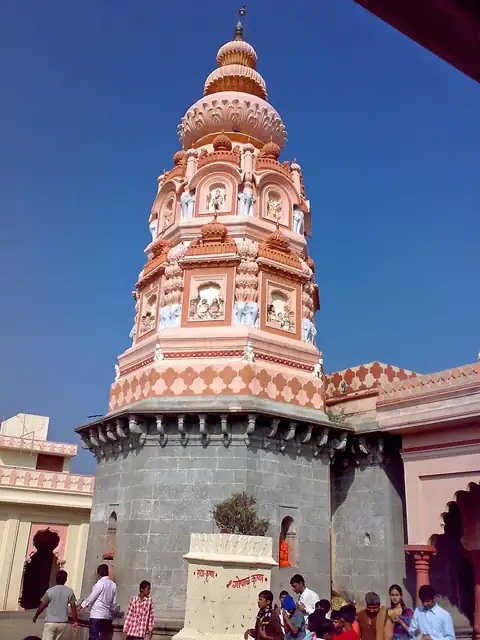 Living temple
Mayureshwar Temple, Morgaon
The first and chief of the eight Ashtavinayak shrines of Ganesha around Pune, where he is worshipped riding a peacock. It is the centre of the Ganapatya tradition, the sect that worships Ganesha as the supreme god.
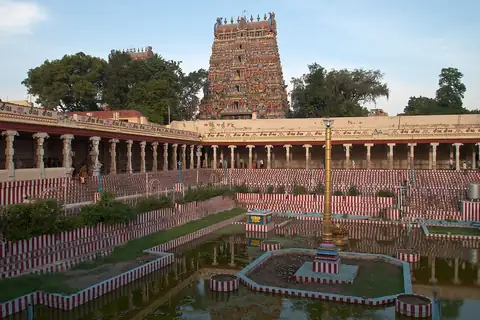 Rebuilt / restored for worship
Meenakshi Amman Temple
The temple of Meenakshi (Parvati) and Sundareswarar (Shiva) stands at the centre of Madurai, which was laid out around it. Damaged during the Delhi Sultanate raids of the early 14th century, it was rebuilt by the Madurai Nayakas into the vast complex of 14 gopurams seen today.
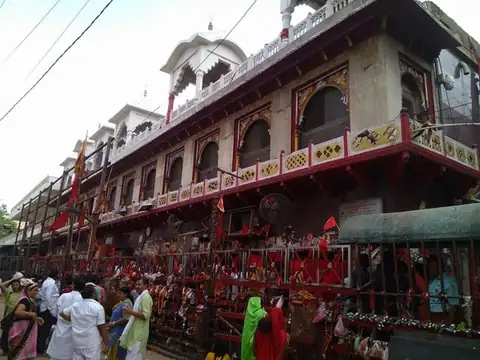 Living temple
Mehandipur Balaji Temple
A temple of Hanuman known across north India for rituals to free people believed to be possessed by spirits. Alongside Balaji, Pretraj Sarkar (king of spirits) and Bhairav are worshipped.
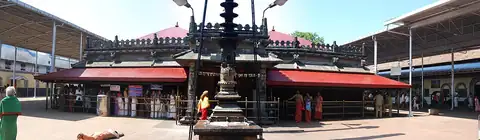 Living temple
Mookambika Temple, Kollur
A shrine of the goddess Mookambika on the Souparnika river below Kodachadri hill. Her emblem is a self-formed linga split by a golden line into Shiva and Shakti, and Adi Shankara is said to have installed her image. It draws large numbers of pilgrims from Kerala.
Moolanathar Temple, Bahour
A Chola-period Shiva temple at Bahour, a village with a long history of learning. Copper plates of the Pallava king Nripatunga, found here, record grants to a Vedic college at Bahur in the 9th century.
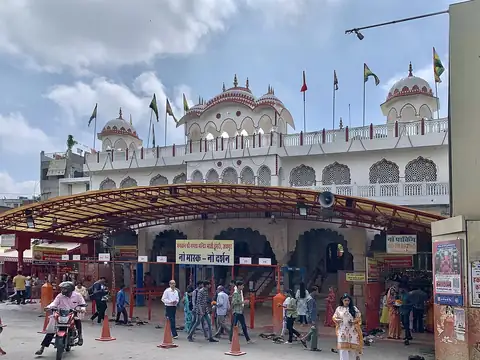 Living temple
Moti Dungri Ganesh Temple, Jaipur
The best-loved Ganesha temple of Jaipur, built in 1761 at the foot of Moti Dungri hill. Families come here to begin weddings, businesses and new vehicles with Ganesha's blessing.
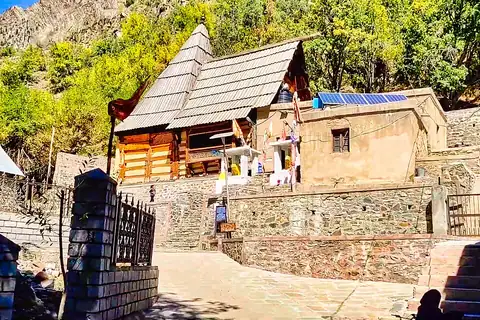 Living temple
Mrikula Devi Temple, Udaipur
A plain-looking wooden temple at Udaipur in Lahaul whose interior is covered with fine wood carving of scenes from the Ramayana and Mahabharata. The goddess is worshipped as Mahishasuramardini.
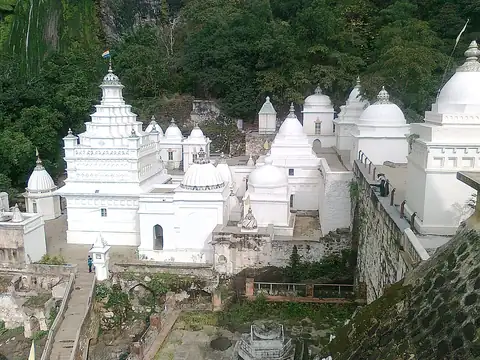 Living temple
Muktagiri Jain Temples
A Digambar Jain pilgrimage centre of fifty-two temples on a forested hill with a waterfall, on the border of Madhya Pradesh and Maharashtra. Jains hold that many sages attained liberation here.
Mukteshwar Mahadev Caves, Pathankot
A group of rock-cut caves on a cliff above the Ravi near Pathankot, with a Shiva shrine. Tradition says the Pandavas stayed here during their exile. The caves have been at risk from the reservoir of the Shahpur Kandi dam.
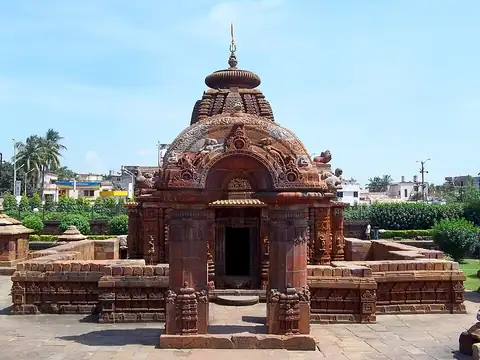 Living temple
Mukteshwar Temple, Bhubaneswar
A small 10th-century Shiva temple of the Somavamshi period, known as the 'gem of Odishan architecture' for its carving and its free-standing arched gateway (torana). It marks the change from the early to the mature Kalinga style.
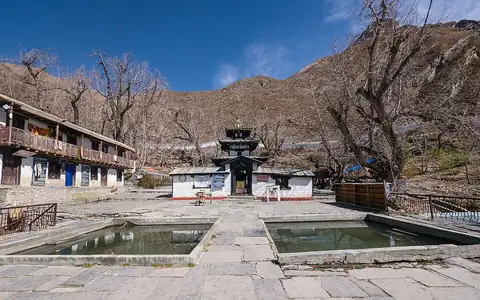 Living temple
Muktinath Temple
A Vishnu shrine at about 3,700 metres in the Mustang district of Nepal, sacred to both Hindus and Buddhists. In the Divya Desam tradition it stands for Saligramam, the land of the Kali Gandaki, whose fossil stones are worshipped as Vishnu.
Mulagandhakuti Vihara, Sarnath
A modern Buddhist temple at Sarnath, where the Buddha gave his first sermon in the Deer Park. Built by Anagarika Dharmapala's Maha Bodhi Society and opened in 1931, it holds relics of the Buddha and murals by the Japanese painter Kosetsu Nosu.
 Living temple
Mulbekh Maitreya
A standing figure of Maitreya, about 9 metres tall, carved in relief on a rock beside the Srinagar-Leh road at Mulbekh. It is one of the oldest Buddhist images in Ladakh.
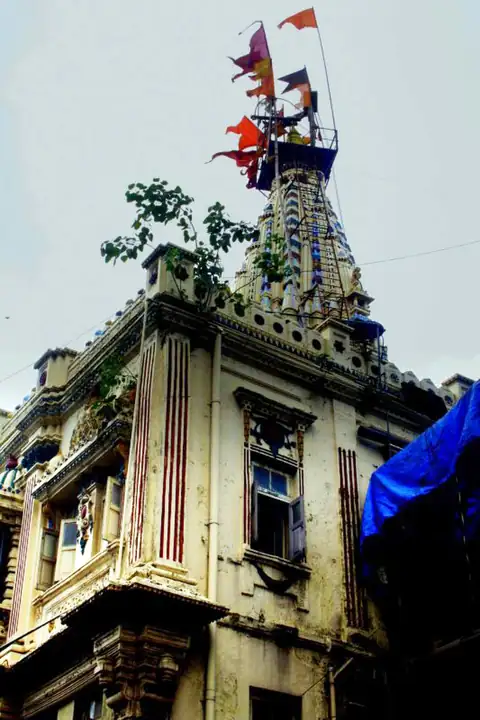 Relocated
Mumba Devi Temple, Mumbai
The temple of Mumba Devi, the goddess of the Koli fisherfolk from whom the city of Mumbai takes its name. The old shrine at Bori Bunder was moved to Bhuleshwar in the 18th century.
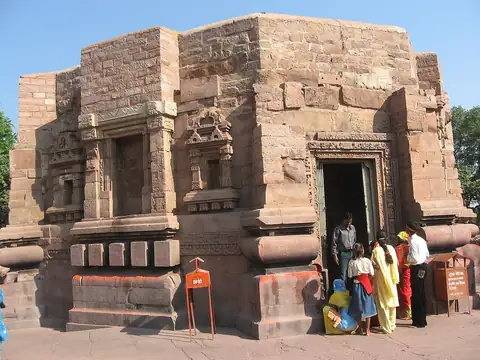 Living temple
Mundeshwari Temple
An octagonal stone temple on a hill in Kaimur, held to be one of the oldest temples in India still in worship. The goddess Mundeshwari and a four-faced linga are worshipped here.
Murudeshwar Temple
A seaside Shiva temple on Kandukagiri hill, tied to the story of Ravana and the Atmalinga. It is known for a very tall rajagopura and a giant seated Shiva statue facing the Arabian Sea, both built in recent decades.
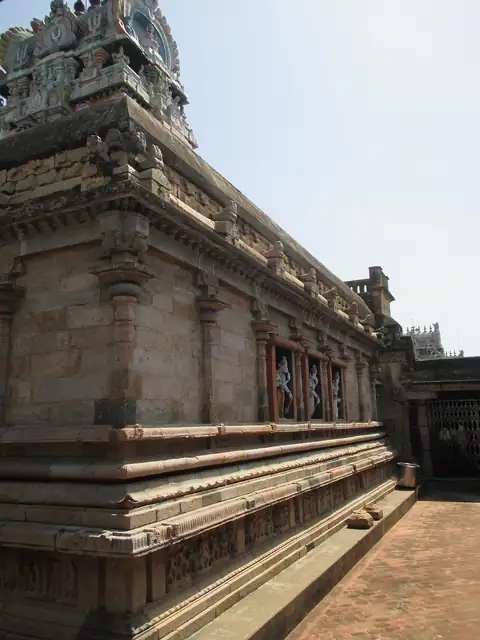 Living temple
Nachiyar Kovil, Thirunaraiyur
A temple where the goddess takes first place: in procession Vanjulavalli walks ahead of Vishnu. Its stone Garuda is famous for seeming to grow heavier as it is carried out of the temple.
Nag Vasuki Temple, Prayagraj
A temple of Vasuki, king of serpents, on a high bank of the Ganga at Daraganj in Prayagraj. Kumbh pilgrims traditionally visit it after bathing at the Sangam.
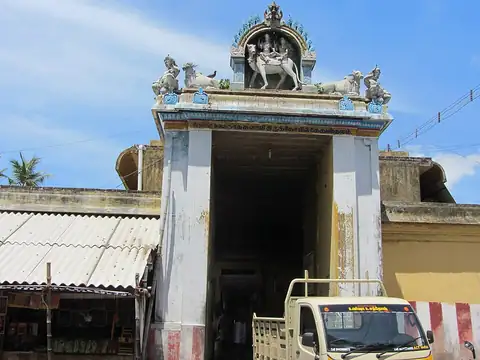 Living temple
Naganathaswamy Temple, Keezhaperumpallam
A Shiva temple near Poompuhar that is the Navagraha shrine of Ketu, worshipped here in a shrine of his own with folded hands facing Shiva.
Naganathaswamy Temple, Thirunageswaram
A large Shiva temple just east of Kumbakonam that is the Navagraha shrine of Rahu, worshipped here with his two consorts. It is a Paadal Petra Sthalam, and the Oppiliappan Vishnu temple stands nearby.
Nagarjunakonda
The site of Vijayapuri, the 3rd-century capital of the Ikshvaku kings, with many Buddhist monasteries and stupas. When the Nagarjuna Sagar dam flooded the valley, the main monuments were moved to an island and to the shore.
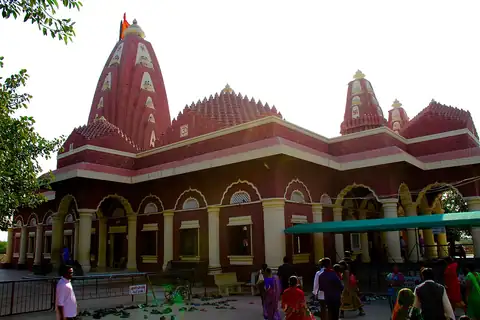 Living temple
Nageshwar Jyotirlinga Temple
A Jyotirlinga temple on the Saurashtra coast about 16 km from Dwarka, with an underground sanctum and a 25 m seated statue of Shiva. Tradition places the Darukavana forest of the Shiva Purana story here, although Aundha Nagnath in Maharashtra and Jageshwar in Uttarakhand also claim this Jyotirlinga.
Nageshwarnath Temple, Ayodhya
A Shiva temple at Ram ki Paidi in Ayodhya, said to have been founded by Kusha, Rama's son. The present temple was built in about 1750 under Naval Rai, a minister of the Nawab of Awadh.
Nageswaran Temple, Kumbakonam
One of the oldest Chola temples, in the centre of Kumbakonam, known for its finely carved early Chola sculptures and for the sun's rays falling on the linga for three days each year. It is a Paadal Petra Sthalam.
Nagoba Temple, Keslapur
The shrine of Nagoba, the serpent god of the Mesram clan of the Gond people, at Keslapur in Adilabad. Its Nagoba Jatara, held at the new moon of Pushya, is one of the largest tribal festivals in Telangana.
Naimisharanya
The sacred forest on the Gomti where, in the Puranas, the sage Suta recited the epics and Puranas to the assembled rishis. In the Divya Desam tradition Vishnu is present here as the forest itself.
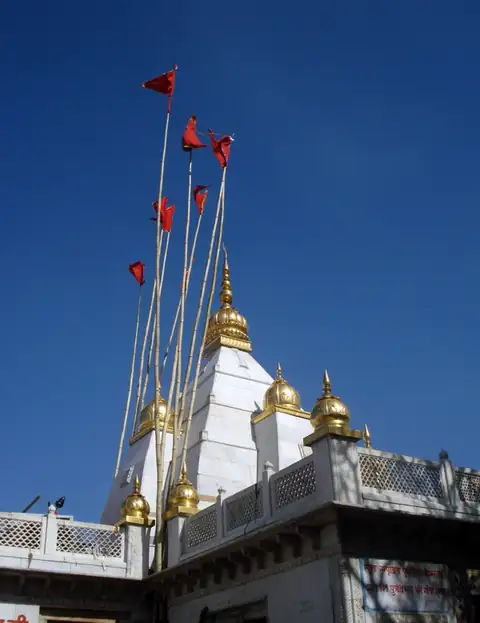 Living temple
Naina Devi Temple, Bilaspur
A hilltop Shakti Peetha above the Gobind Sagar lake, where Sati's eyes are said to have fallen. A stampede here in 2008 killed about 146 people.
Naina Devi Temple, Nainital
A temple of the goddess Naina on the shore of Naini lake, counted a Shakti Peetha where Sati's eyes are said to have fallen. The old temple was destroyed in the landslide of 1880 and rebuilt.
Nakoda Parshvanath Temple
A Jain temple of Parshvanatha in the hills near Balotra in western Rajasthan, also famous for its shrine of the guardian Nakoda Bhairav, whom Jains and Hindus alike approach with vows.
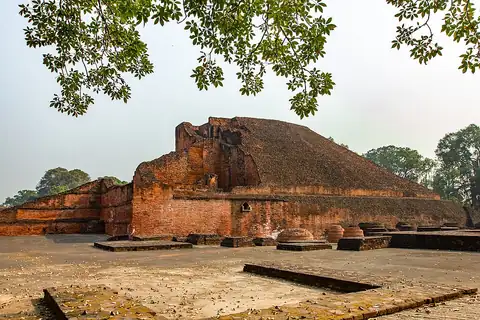 Ruined / monument
Nalanda Mahavihara
The ruins of Nalanda, the great Buddhist monastery and university of ancient India, founded under the Guptas in the 5th century and supported by the Palas. Its temples, stupas and monasteries are a UNESCO World Heritage Site.
Nalateshwari Temple, Nalhati
A Shakti Peetha on a hill at Nalhati in Birbhum, where Sati's throat (nala) is said to have fallen. The goddess is worshipped as Nalateshwari, a form of Kali.
Nambi Temple, Thirukurungudi
A Divya Desam at the foot of the Western Ghats, famous for the story of Nampaduvan, a singer of low birth who kept his promise to a demon, retold each year on Kaisika Ekadasi.
Nandikeshwari Temple, Sainthia
A Shakti Peetha in the town of Sainthia where Sati's necklace is said to have fallen. The goddess is Nandini, with Shiva as Nandikeshwar.
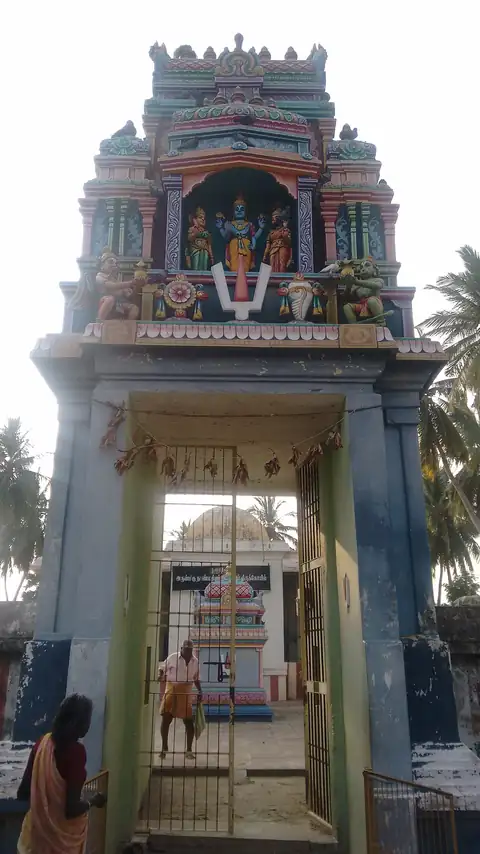 Living temple
Nanmathiya Perumal Temple, Thalaichanga Nanmathiyam
A Divya Desam near the old port of Poompuhar where the Moon (Chandra) is said to have been cured of a wasting curse.
Naranag Temples
Two groups of ruined stone temples to Shiva in a Himalayan valley above the Sind river, linked with the Karkota king Lalitaditya in the 8th century. The site was an important Shaiva pilgrimage on the way to the sacred lake Gangabal.
Narasimha Temple, Joshimath
The Narasimha temple of Joshimath, the town where the Badrinath image spends the winter. It is the usual identification of the Divya Desam Thiruppiruthi, though some place that shrine elsewhere in the Himalaya.
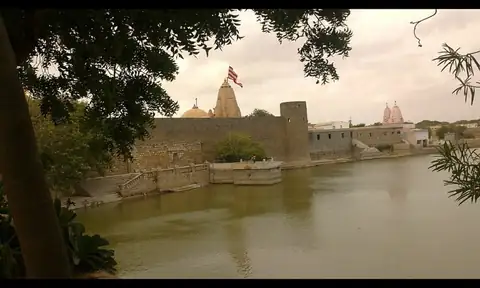 Living temple
Narayan Sarovar, Kutch
One of the five sacred lakes (Pancha Sarovar) of Hindu tradition, at the far western edge of Kutch. Temples of Trikamraiji (Vishnu) and Lakshmi Narayan stand on its bank, said to have been built by the queens of the Kutch rulers.
Narayan Temple, Shivrinarayan
A Vishnu temple of about the 12th century at the meeting of three rivers, linked by local tradition with Shabari, who fed Rama berries. Its Magh Purnima fair is one of the oldest in Chhattisgarh.
Narayana Perumal Temple (Manimadakoil), Thirunangur
One of the eleven Divya Desams of Thirunangur near Sirkazhi. It is the chief of the eleven, where the joint Garuda Sevai begins.
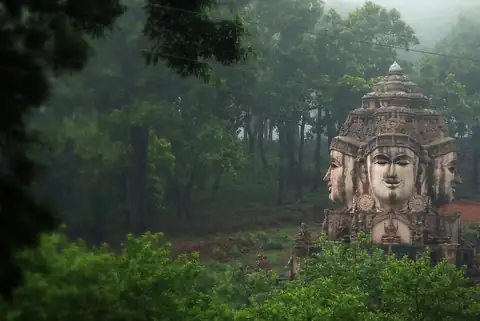 Living temple
Narmada Udgam Temple, Amarkantak
The temple complex at the source of the Narmada, one of India's holiest rivers, on the Maikal plateau. Nearby stand the 11th-century temples built under the Kalachuri king Karna.
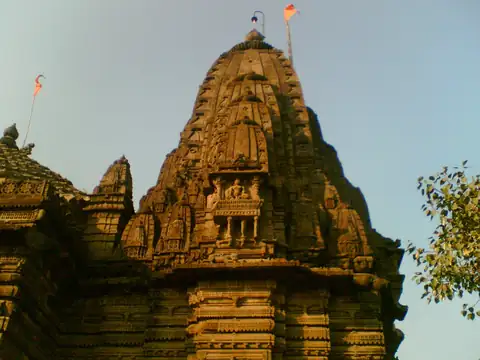 Living temple
Naroshankar Temple, Nashik
A richly carved stone Shiva temple on the Godavari built in 1747 by the Maratha general Naro Shankar Rajebahadur. Its great bell, said to have been taken from a Portuguese church in Vasai, gives it the name Naroshankar's bell.
Narsobawadi
A Datta shrine at the meeting of the Krishna and Panchganga rivers, where the saint Narasimha Saraswati, held to be an incarnation of Dattatreya, lived for twelve years. His padukas (sandals) are worshipped here.
Nartiang Durga Temple
A temple of the goddess Durga at Nartiang, built by the Jaintia kings, near the tallest of the famous Nartiang monoliths. Some traditions count it a Shakti Peetha, Jayanti, where Sati's left thigh fell.
Naulakha Mandir, Deoghar
A Radha-Krishna temple near Deoghar, built in the 1940s by Rani Charushila of the Pathuriaghata family of Kolkata. It is named for its cost of nine lakh rupees (naulakha), and its tall tower resembles the Ramakrishna temple at Belur.
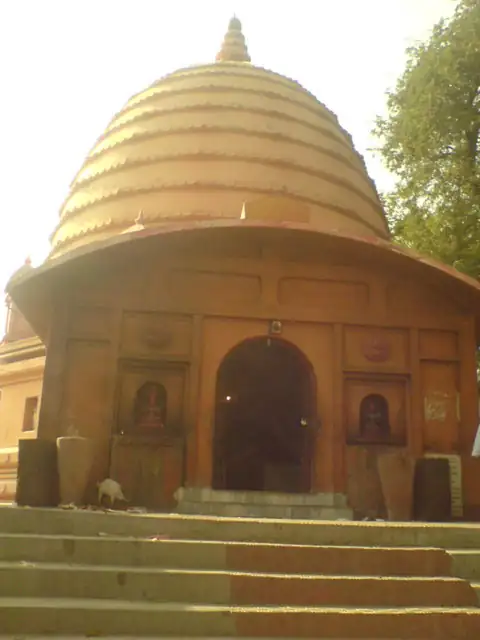 Living temple
Navagraha Temple, Guwahati
A temple of the nine planets on Chitrachal hill in Guwahati, built in the 18th century by the Ahom king Rajeswar Singha. Nine lingas, each for a planet, surround a central one for the sun.
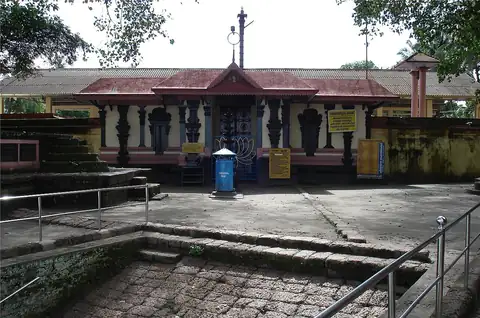 Living temple
Navamukunda Temple, Thirunavaya
A temple on the Bharathapuzha river, where the great Mamankam festival was held every twelve years under the Zamorins of Kozhikode until 1755.
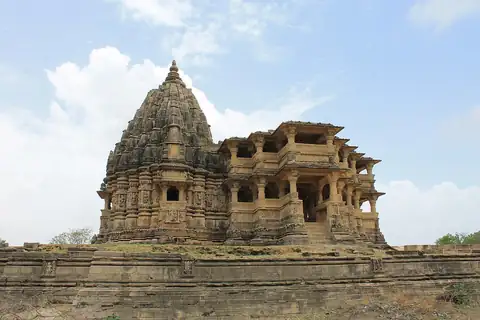 Ruined / monument
Navlakha Temple, Ghumli
A ruined 12th-century temple at Ghumli, once capital of the Jethwa rulers. It stands on one of the largest temple platforms in Gujarat, and is thought to have been a Sun temple.
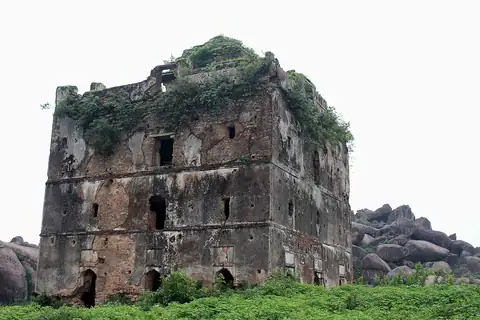 Ruined / monument
Navratangarh Temples, Doisa
The ruins of the 17th-century fort-palace of the Nagvanshi kings at Doisa in Gumla district, with several temples around it. The palace, called Navratangarh ('fort of nine jewels'), was built by King Durjan Sal.
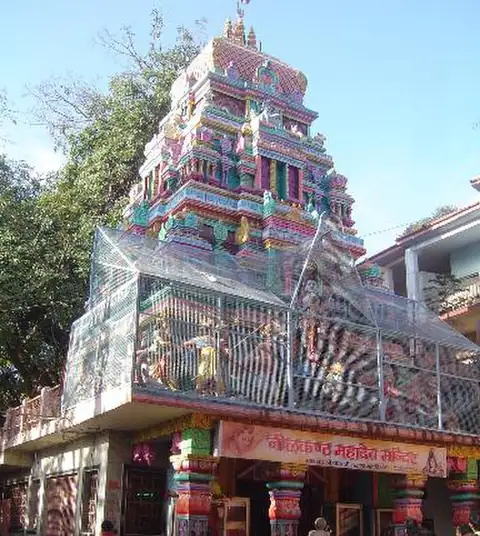 Living temple
Neelkanth Mahadev Temple
A Shiva temple in the forested hills above Rishikesh, where Shiva is said to have swallowed the poison from the churning of the ocean, turning his throat blue. It is a main goal of the Kanwar Yatra in Shravan.
Neelkanth Mahadev Temple, Rajorgarh
A 10th-century Shiva temple inside the Sariska tiger reserve, the main surviving shrine of an old town called Rajorgarh, surrounded by ruined temples and scattered sculpture.
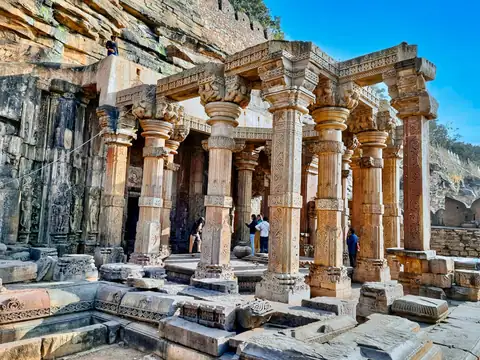 Living temple
Neelkanth Temple, Kalinjar Fort
A Shiva temple inside the hilltop fort of Kalinjar, built under the Chandelas. A great carved image of Kala Bhairava stands on the rock nearby, and a spring fills a pool beside the shrine.
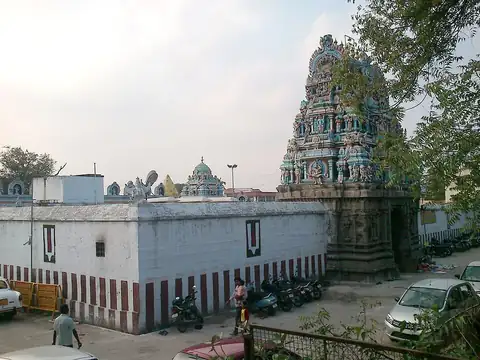 Living temple
Neervannar Temple, Thiruneermalai
A hill temple near Chennai with Vishnu in four forms: standing at the foot of the hill as Neervannar, and on the hilltop reclining as Ranganatha, seated as Narasimha and striding as Trivikrama.
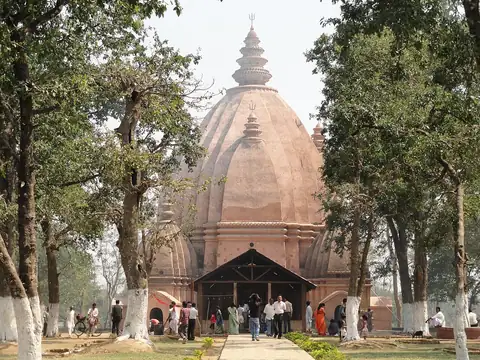 Living temple
Negheriting Shiva Doul
A Shiva temple on a hillock near Dergaon in Golaghat district, built in the Ahom period. It is known for the deer that live in the woods around it.
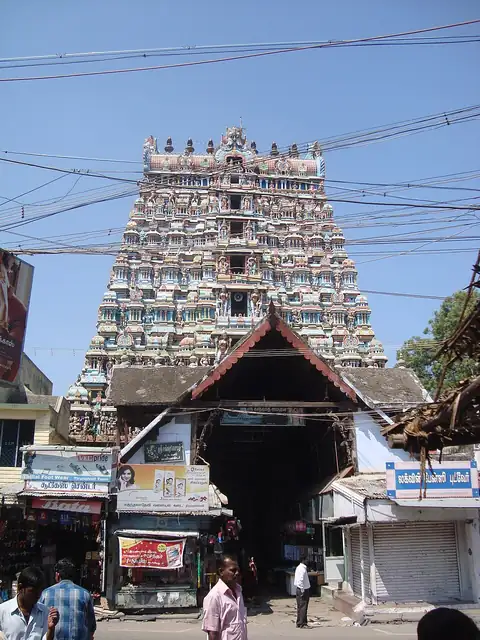 Living temple
Nellaiappar Temple, Tirunelveli
A twin temple in the heart of Tirunelveli, one for Shiva as Nellaiappar and one for the goddess Kanthimathi, joined by a long hall. It is famous for its musical stone pillars and for the Copper Hall of Nataraja, one of his five dance halls.
New Delhi Kalibari
A Kali temple on Mandir Marg founded in 1931 by Bengalis who came to work in the new capital. The image of the goddess is modelled on that of Dakshineswar in Kolkata.
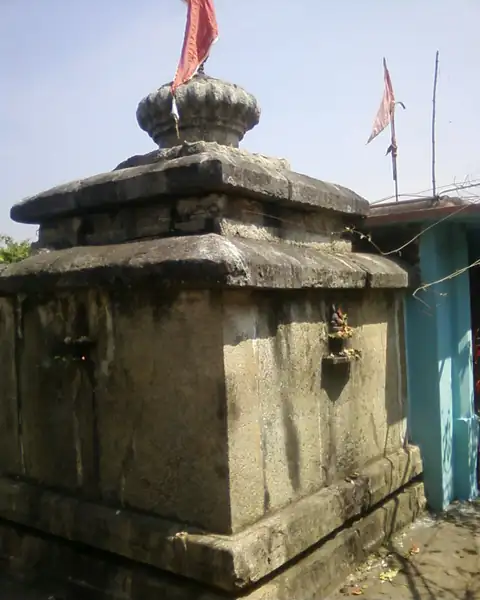 Living temple
Nilakantheswar Temple, Padmapur
An old Shiva temple at Padmapur in Rayagada district, said to be built of only seven huge stones. Padmapur is called a 'temple town', with shrines of almost every Hindu deity.
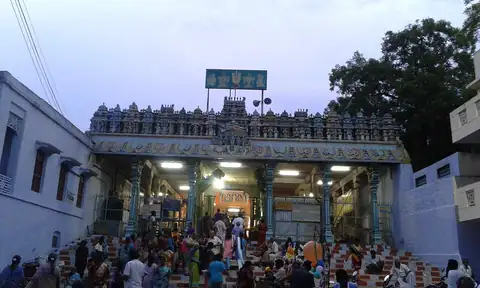 Living temple
Ninra Narayana Perumal Temple, Thiruthangal
A hill temple near Sivakasi, linked with the love story of Usha and Aniruddha, Krishna's grandson.
Nishkalank Mahadev, Koliyak
Five Shiva lingas on a rock in the sea, reachable on foot only at low tide; at high tide only the flagpole shows above the water. The shrine is linked to the Pandavas, who are said to have been cleansed of their sins here after the Mahabharata war.
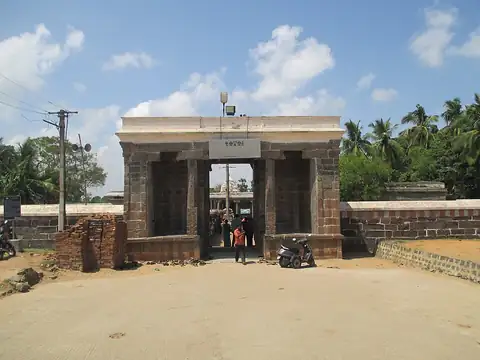 Living temple
Nithyakalyana Perumal Temple, Thiruvidanthai
A Divya Desam on the coast south of Chennai where Vishnu as Varaha holds the goddess on his arm. He is called Nithyakalyana, 'the one married every day', and many come here praying for marriage.
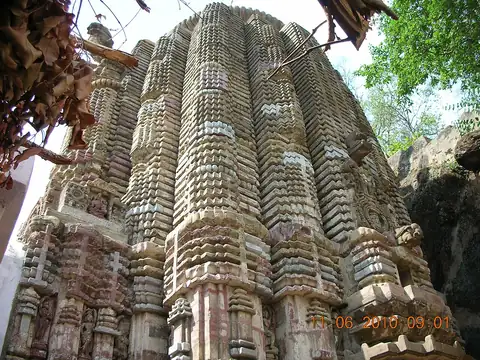 Living temple
Nrusinghanath Temple, Bargarh
A Narasimha temple at the foot of the Gandhamardan hills in western Odisha, beside a stream that falls through a chain of waterfalls. An inscription records the building of the present temple in 1413 by Vaijal Singh Deo.
Oachira Parabrahma Temple
An unusual shrine at Oachira in Kollam district with no temple building and no image. Parabrahma, the formless Absolute, is worshipped in an open ground shaded by banyan trees, and people of all castes and faiths take part in its festivals.
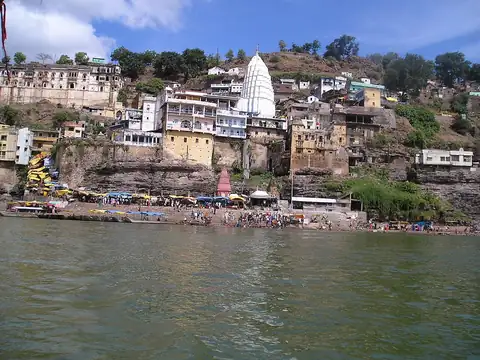 Rebuilt / restored for worship
Omkareshwar Temple
A Jyotirlinga temple on Mandhata island in the Narmada, which tradition says is shaped like the sacred syllable Om. Built by the Paramaras, damaged in later invasions and rebuilt by the Holkar queens in the 18th century, it is paired with the Mamleshwar temple on the river's south bank.
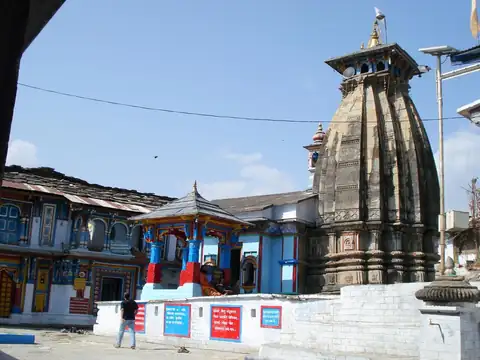 Living temple
Omkareshwar Temple, Ukhimath
The winter seat of Kedarnath and Madhyamaheshwar. When snow closes the high temples, their festival images are carried down to Ukhimath and worshipped here until spring.
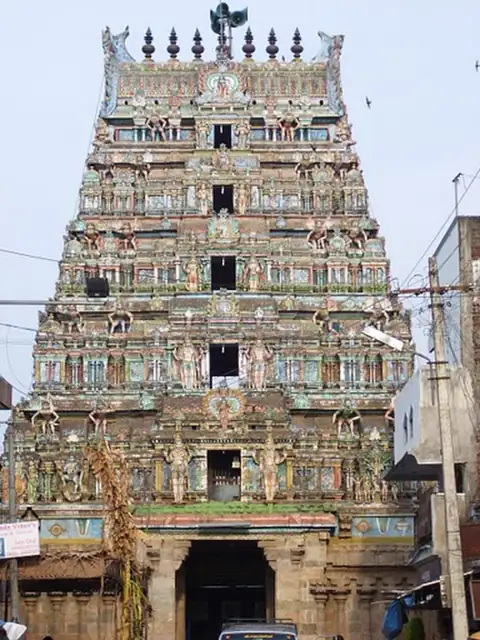 Living temple
Oppiliappan Temple, Thirunageswaram
The temple of Oppiliappan, 'the lord without equal', near Kumbakonam. He is regarded as the elder brother of Venkateswara of Tirumala, and vows made to Tirumala may be fulfilled here. Offerings are cooked without salt.
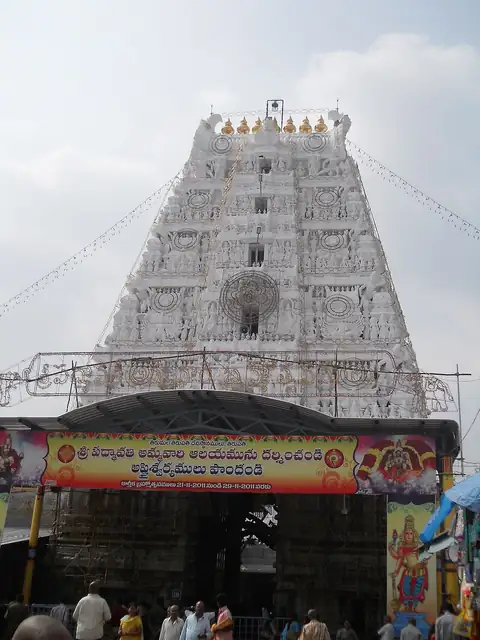 Living temple
Padmavati Ammavari Temple, Tiruchanur
The temple of Padmavati, consort of Venkateswara, at Tiruchanur near Tirupati. Pilgrims to Tirumala visit her as well, since a pilgrimage there is held to be complete only after seeing the goddess.
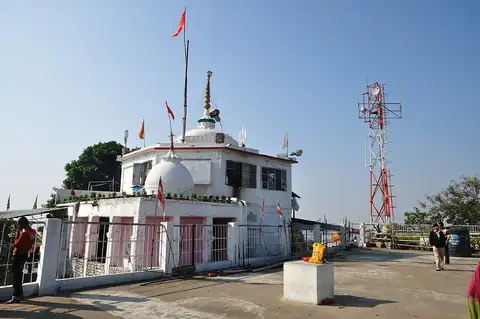 Living temple
Pahari Mandir, Ranchi
A Shiva temple on Ranchi hill, where the British once hanged freedom fighters. The national flag is raised here on Independence Day, a rare joining of a temple with the memory of the freedom struggle.
Paidithalli Ammavari Temple, Vizianagaram
The temple of Paidithalli, the guardian goddess of Vizianagaram. Her Sirimanu festival, when the priest is carried on the end of a long wooden pole through the town, draws lakhs of people each autumn.
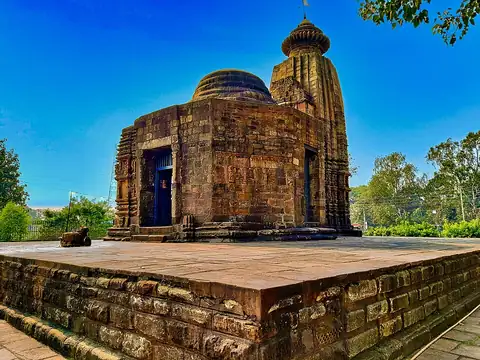 Living temple
Pali Mahadev Temple
A stone temple of Shiva beside a lake at Pali, built about 870 by the Bana king Vikramaditya I and later repaired by the Kalachuris. Its walls are covered with fine sculpture.
Pallikonda Ranganatha Temple, Thirunangur
One of the eleven Divya Desams of Thirunangur near Sirkazhi. It is the only reclining image among the eleven.
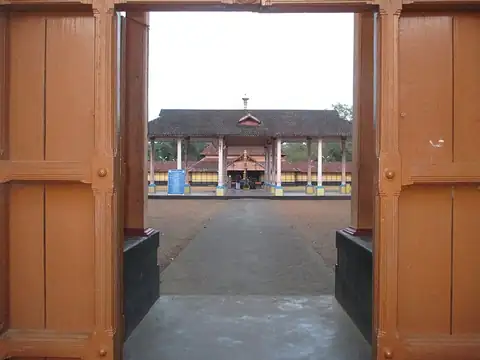 Living temple
Pambanaiappan Temple, Thiruvanvandoor
One of the five Pandava temples around Chengannur, said to have been built by Nakula.
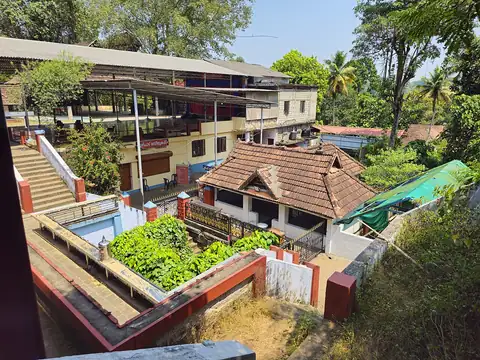 Living temple
Panachikkad Saraswathy Temple
A temple near Kottayam called the Dakshina Mookambika, the Mookambika of the south. Its main deity is Vishnu, but it is best known for its shrine of Saraswati, where children are initiated into letters at Navaratri.
Panakala Narasimha Temple, Mangalagiri
A cave shrine of Narasimha halfway up Mangalagiri hill, where the god is offered panakam, a jaggery drink. Half of whatever is poured into his mouth is said to be swallowed and half returned, whatever the amount.
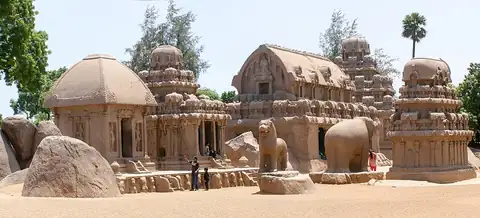 Unfinished
Pancha Rathas, Mamallapuram
Five monolithic temples carved from single granite outcrops at Mamallapuram in the 7th century, each in a different shape. They were never consecrated, and are part of the Group of Monuments at Mahabalipuram, a UNESCO World Heritage Site.
Panchalingeswar, Balasore
Five lingas in a forest stream on Devagiri hill, worshipped by reaching into the running water. The site is a pilgrimage and a nature spot in the hills of Balasore district.
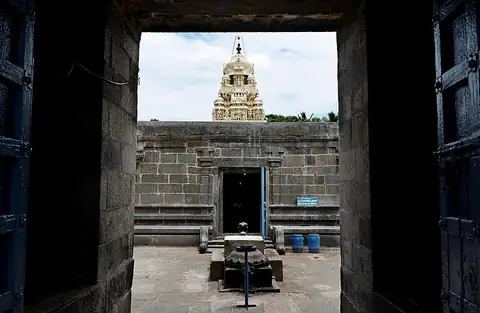 Living temple
Panchanatheeswarar Temple, Thiruvandarkoil
A Shiva temple at Thiruvandarkoil in Puducherry, praised in the Tevaram hymns of Thirugnana Sambandar. It is one of the Paadal Petra Sthalams, the 275 Shiva temples sung by the Nayanmars.
Panchavatee Panchamukha Anjaneyar Temple
A modern temple near Puducherry with a 36-foot statue of Hanuman with five faces, carved from a single block of granite.
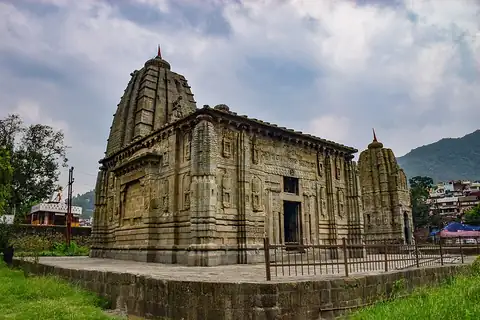 Living temple
Panchvaktra Temple, Mandi
A stone temple of Shiva where the Suketi meets the Beas in Mandi town, named after its five-faced (panchavaktra) image of Shiva. It stood firm when floods surrounded it in July 2023.
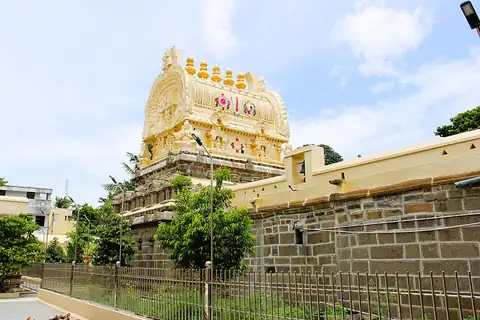 Living temple
Pandavadhoothar Temple, Kanchipuram
A Kanchipuram Divya Desam where Krishna sits as the messenger of the Pandavas. Its seated image, about 7.5 m high, is one of the largest in the region.
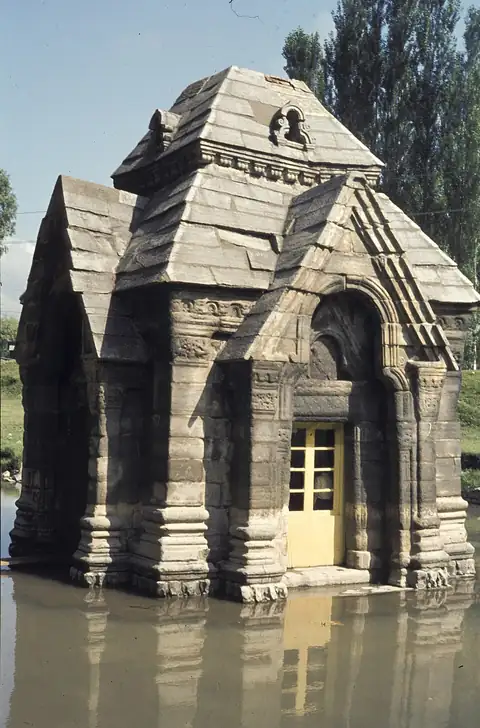 Ruined / monument
Pandrethan Temple
A small, well-preserved stone temple standing in a pool of water at Pandrethan, the site of the ancient capital Puranadhishthana. It is usually identified with the temple built by Meruvardhana, a minister of King Partha, in the early 10th century.
Pandupol Hanuman Temple
A temple of Hanuman shown lying down, deep in the Sariska forest beside a waterfall, linked by tradition to the Pandavas' years of exile.
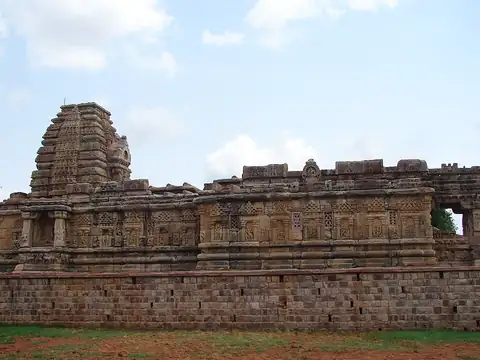 Ruined / monument
Papanatha Temple, Pattadakal
A Shiva temple at Pattadakal that mixes the northern (nagara) and southern (dravida) ways of building. Its walls carry some of the finest Ramayana panels of the Chalukya period.
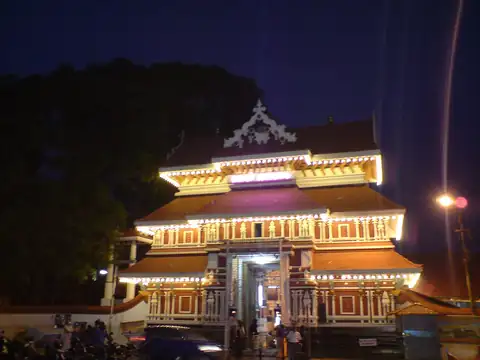 Living temple
Paramekkavu Bhagavathy Temple
A temple of the goddess in Thrissur, one of the two main participants in the Thrissur Pooram. Tradition holds that the goddess was worshipped here even before the Vadakkunnathan temple became prominent.
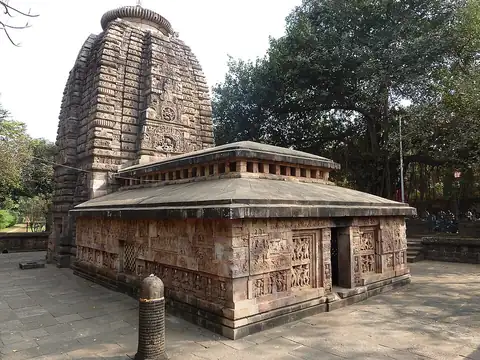 Living temple
Parashurameswar Temple, Bhubaneswar
The best-preserved of the early temples of Bhubaneswar, built under the Shailodbhava kings about 650 CE. Its short curved tower and flat-roofed hall show the Kalinga temple style in its first form.
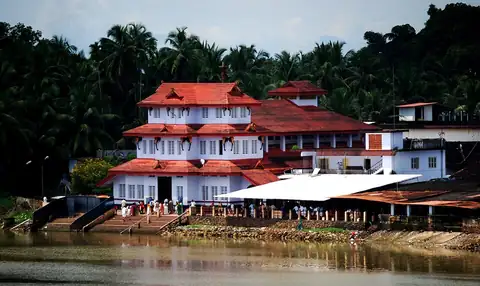 Living temple
Parassinikadavu Muthappan Temple
A riverside temple of Muthappan, a folk deity of north Kerala seen as a union of Shiva and Vishnu. Muthappan is performed as a theyyam every day, and all visitors are given tea and boiled pulses.
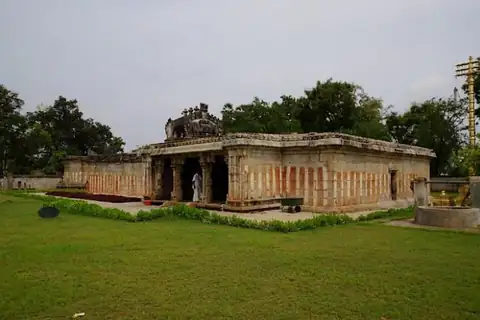 Living temple
Parasurameswara Temple, Gudimallam
A temple with one of the oldest known lingas, carved about the 2nd or 1st century BCE with a standing figure of Shiva on its front. The temple itself was rebuilt in later centuries.
Pareshnath Jain Temple, Kolkata
A richly decorated Shvetambara Jain temple of 1867, built by the jeweller Rai Badridas Bahadur and dedicated to Shitalanatha. Its mirror work, glass mosaic and gardens make it one of Kolkata's best-known sights.
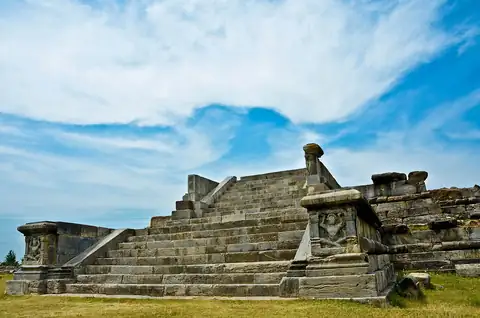 Ruined / monument
Parihaspora
The ruins of the capital built by the Karkota king Lalitaditya Muktapida in the 8th century. The Rajatarangini describes great Vishnu temples here, with images in silver and gold, alongside a large Buddhist stupa, chaitya and monastery.
Parimala Ranganatha Temple, Thiruindalur
One of the five Pancharanga shrines of reclining Ranganatha along the Kaveri, at Mayiladuthurai, where the Moon worshipped Vishnu.
Parshuram Kund
A sacred pool on the Lohit river where Parashurama is said to have washed away the sin of killing his mother. Its Makar Sankranti fair draws pilgrims from across India and Nepal.
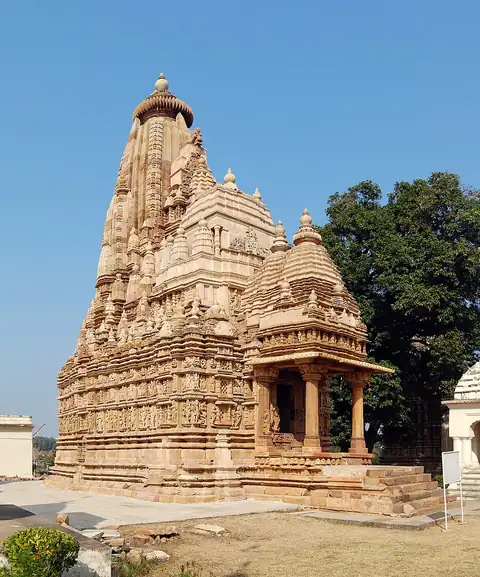 Living temple
Parshvanatha Temple, Khajuraho
The largest Jain temple at Khajuraho, built in the mid-10th century and noted for some of the finest sculpture of the site. It was first dedicated to Adinatha; the present Parshvanatha image was installed in 1860.
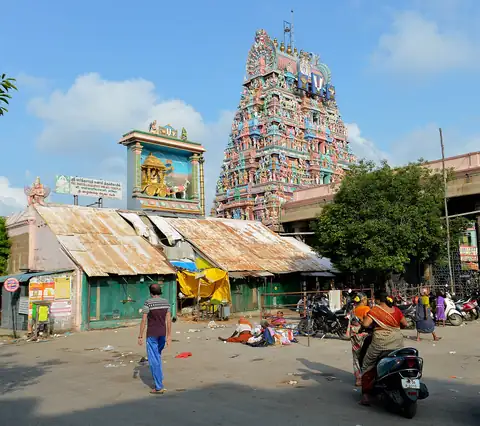 Living temple
Parthasarathy Temple, Triplicane
One of the oldest temples in Chennai, where Vishnu is worshipped as Krishna the charioteer of Arjuna, with a moustache and the marks of Bhishma's arrows on his face. It holds shrines to five forms of Vishnu and was sung by three Alvars.
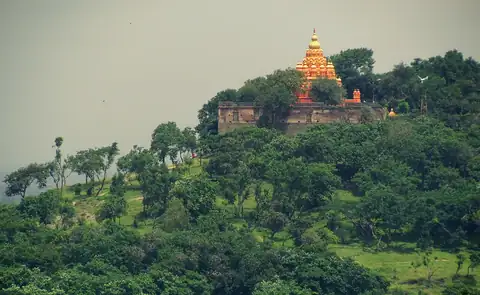 Living temple
Parvati Hill Temples, Pune
A group of temples on Parvati hill in Pune, built by the Peshwas in the 18th century. The main Devdeveshwar temple, completed in 1749, holds silver images of Shiva with Parvati and Ganesha.
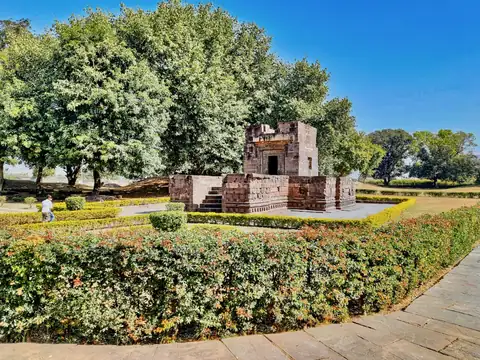 Ruined / monument
Parvati Temple, Nachna
One of the oldest surviving stone temples in India, built in the Gupta period at Nachna. It has a flat-roofed sanctum inside a covered walkway, with a small upper room, and doorways carved with river goddesses.
Pashupatinath Temple, Mandsaur
A temple on the Shivna river holding a rare eight-faced linga, found in the river in 1940 and consecrated in a new temple in 1961.
Patal Bhuvaneshwar
A limestone cave near Gangolihat, about 160 metres long and reached by a narrow passage 30 metres underground. Its rock formations are worshipped as Shiva, Ganesha, Shesha and many other gods.
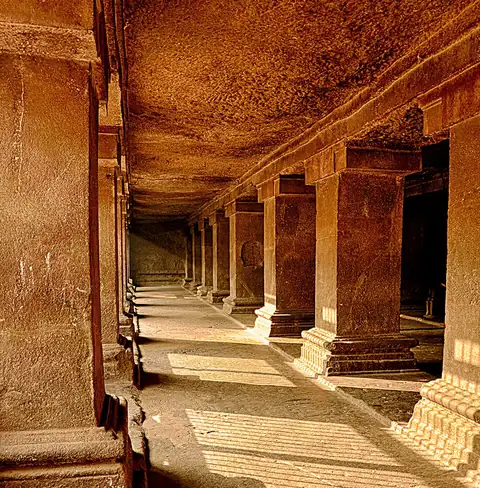 Unfinished
Pataleshwar Cave Temple, Pune
A rock-cut Shiva cave of about the 8th century in the middle of Pune, with a round Nandi pavilion cut from the same rock in front. Parts of the cave were never finished.
Pataleshwar Kedar Temple, Malhar
A Kalachuri-period temple of Shiva at Malhar, an ancient town south of Bilaspur. Its sunken linga is shaped like the mouth of a cow (gomukhi), and water offered on it is said to drain into the earth.
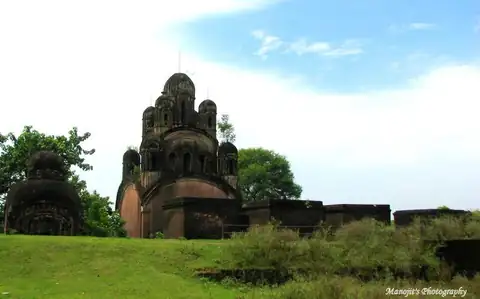 Ruined / monument
Pathra Temples
A village on the Kansai river with dozens of 18th- and 19th-century terracotta temples, built by the local Majumdar family. Many were saved from ruin by a campaign started by a local Muslim, Md Yasin Pathan.
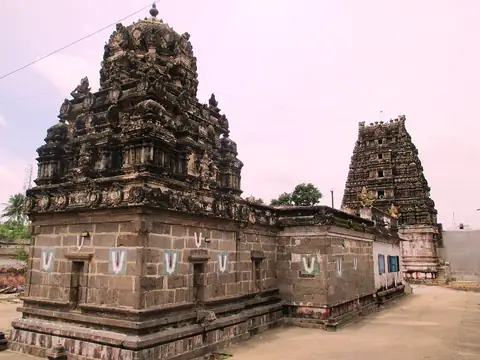 Living temple
Pavalavannar Temple, Kanchipuram
A Kanchipuram Divya Desam of Vishnu 'the colour of coral'. Facing it is the shrine of Pachai Vannar, Vishnu 'the colour of emerald', and pilgrims visit both.
Payar Temple
A small, complete Shiva temple at Payar in Pulwama district, built from only a few large stones. Its doorways carry carvings of Shiva, including the teacher Lakulisha.
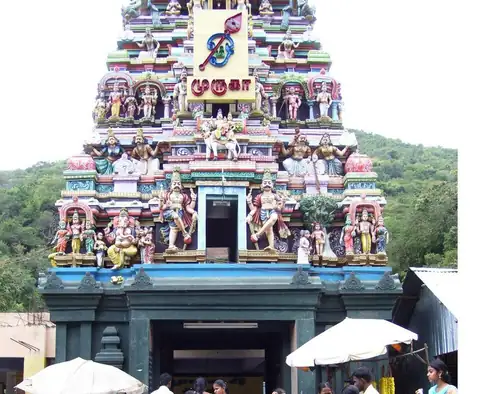 Living temple
Pazhamudircholai Murugan Temple
One of the six abodes of Murugan, in the forested Alagar hills above the Kallalagar temple near Madurai. It is linked with the poet Avvaiyar and her encounter with Murugan in disguise.
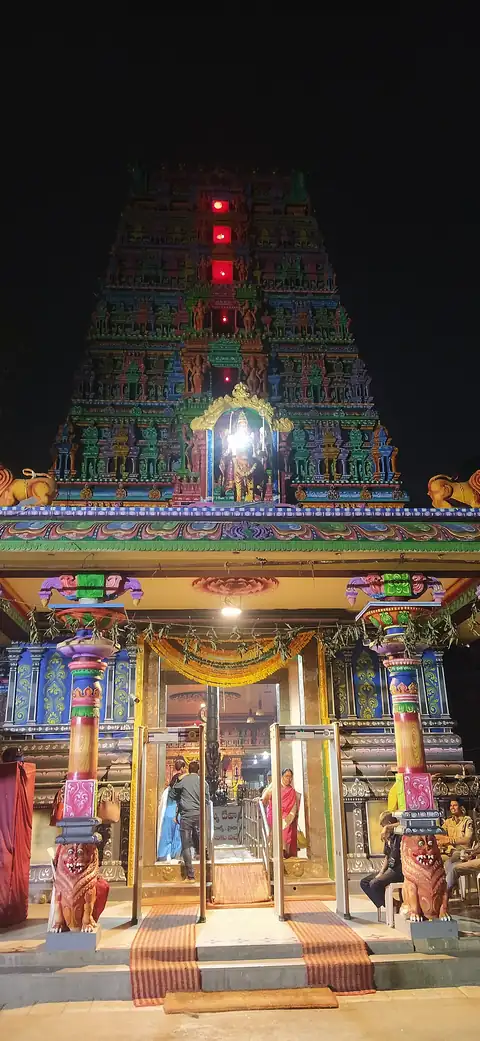 Living temple
Peddamma Temple, Jubilee Hills
A temple of Peddamma, the 'great mother' and village goddess, in Jubilee Hills, Hyderabad. It is one of the main centres of the Bonalu festival.
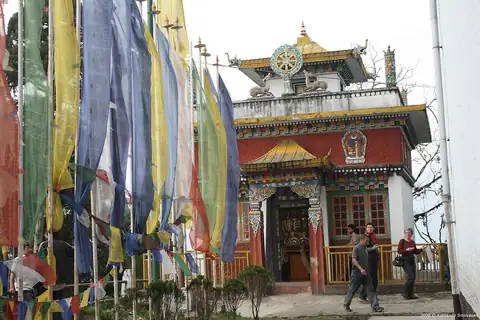 Living temple
Pemayangtse Monastery
One of the oldest and most important monasteries of Sikkim, of the Nyingma order, founded by Lhatsun Chenpo in the 17th century. It is known for a large carved wooden model of Padmasambhava's heavenly palace.
Perarulalan Temple, Thirunangur
One of the eleven Divya Desams of Thirunangur near Sirkazhi. The god's name means 'the one of great grace'; Rama is said to have worshipped here.
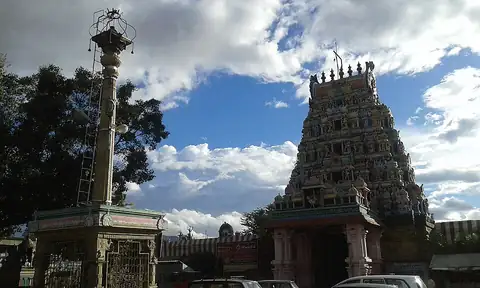 Living temple
Perur Patteeswarar Temple
A Shiva temple at Perur on the outskirts of Coimbatore, known for the Kanaka Sabha, a hall of Nataraja with finely carved pillars built under the Nayaks of Madurai.
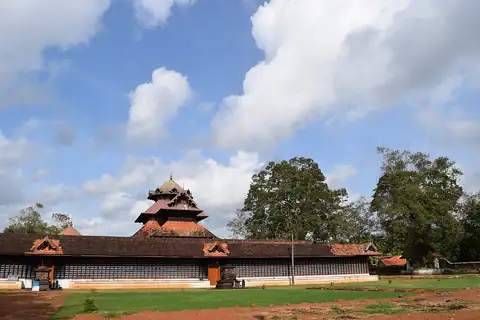 Living temple
Peruvanam Mahadeva Temple
An old Shiva temple near Cherpu in Thrissur district, known for its unusually tall square shrine and for the Peruvanam Pooram, one of the oldest temple festivals of Kerala.
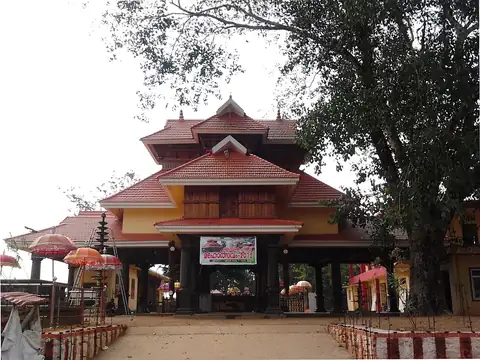 Living temple
Peruviruthy Malanada Temple, Poruvazhy
A rare shrine where Duryodhana, the Kaurava prince of the Mahabharata, is worshipped. There is no image or sanctum; devotees pray to a raised platform, and the priests come from the Kurava community.
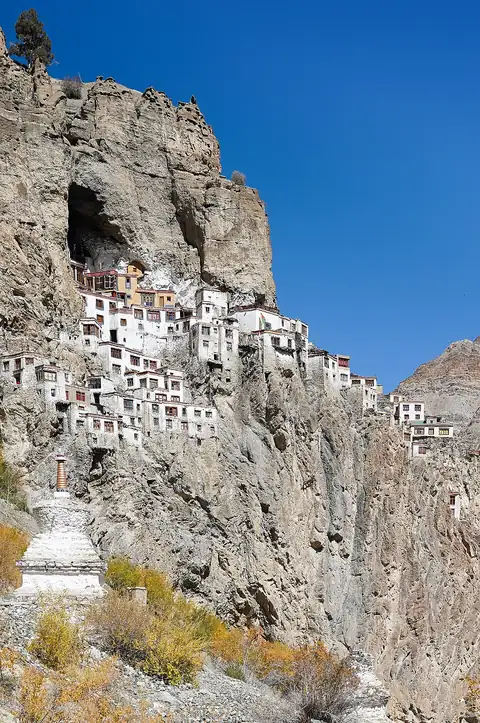 Living temple
Phugtal Monastery
A monastery built into the mouth of a cave high on a cliff in Zanskar, reached only on foot. Its buildings spread down the cliff face like a honeycomb.
Pitambara Peeth, Datia
A Shakti peeth of the goddess Bagalamukhi, called Pitambara because she wears yellow, founded in 1935 by an ascetic known as Swami ji Maharaj. It also has a rare shrine of Dhumavati, the widow goddess.
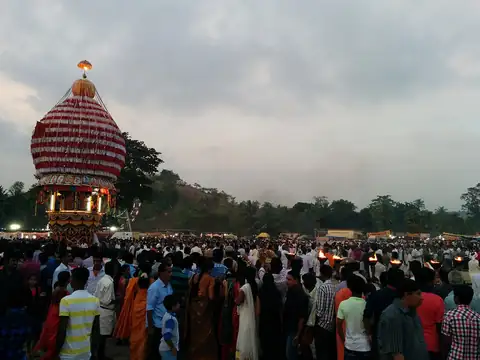 Living temple
Polali Rajarajeshwari Temple
A goddess temple at Polali near Mangaluru, known for its large image of Rajarajeshwari made of clay mixed with medicinal herbs. The image is renewed from time to time in a grand ceremony.
Prachin Bhairon Mandir, Purana Qila
Twin shrines of Bhairava beside the walls of the Purana Qila. Tradition says Bhima, the Pandava, installed the deity when the Pandavas founded Indraprastha. One shrine is known for offerings of liquor, the other for milk.
Prachin Hanuman Mandir, Connaught Place
An old Hanuman temple near Connaught Place, said to have been built by Maharaja Jai Singh II of Amber, who also built the Jantar Mantar nearby. The chant 'Shri Ram, Jai Ram, Jai Jai Ram' is said to have been sung here without a break since 1964.
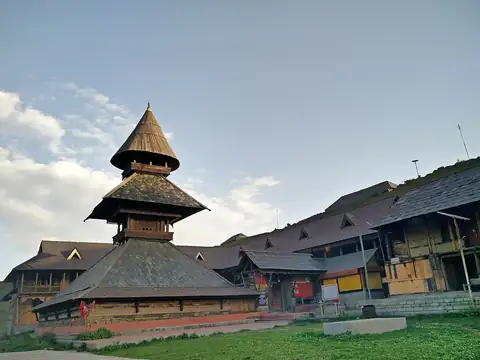 Living temple
Prashar Rishi Temple, Prashar Lake
A three-tiered pagoda temple of the sage Parashara beside Prashar Lake, at about 2,700 metres in Mandi district. A floating island of turf drifts in the lake.
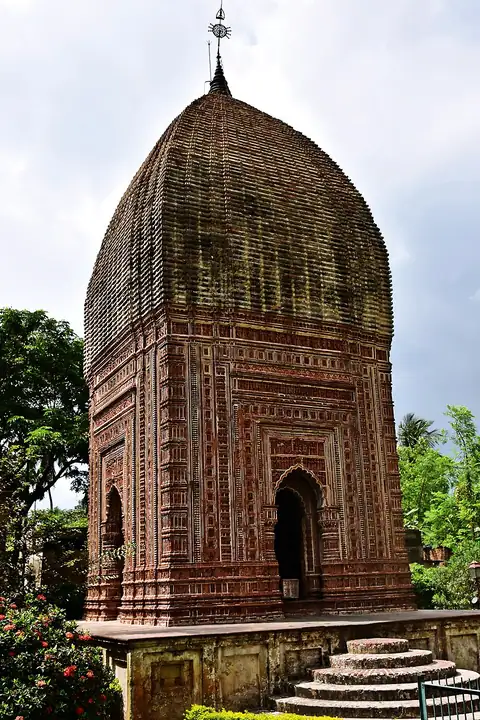 Living temple
Pratapeswar Temple, Kalna
A small rekha-style Shiva temple of 1849 in the Kalna Rajbari complex, built by Rani Pyari Kumari in memory of her husband Pratapchand. Its terracotta is among the finest of the 19th century.
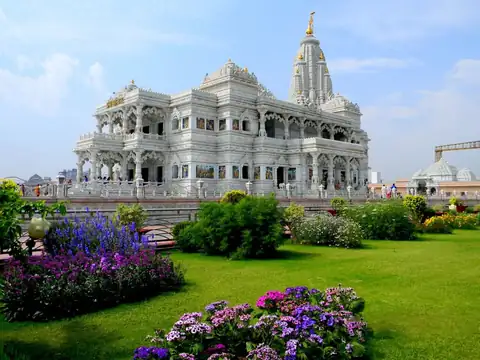 Living temple
Prem Mandir, Vrindavan
A large white marble temple of Radha-Krishna and Sita-Rama opened in 2012 by Jagadguru Kripalu Parishat. Its walls carry scenes of Krishna's life, and in the evening it is lit in changing colours.
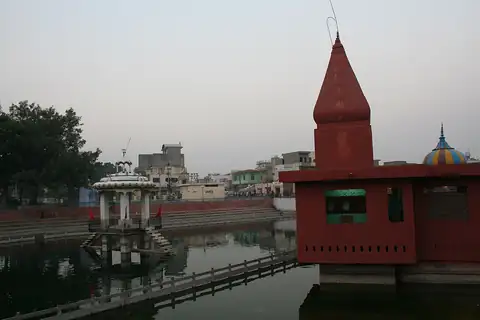 Living temple
Prithudak Tirtha, Pehowa
An ancient pilgrimage town on the Saraswati river, where Hindus perform rites for the dead. A 9th-century inscription found here records temples built in the reign of the Pratihara king Mahendrapala.
Punaura Dham, Sitamarhi
The site near Sitamarhi held to be where Sita was found by King Janaka in a furrow while ploughing. A temple of Sita and a sacred tank mark the spot.
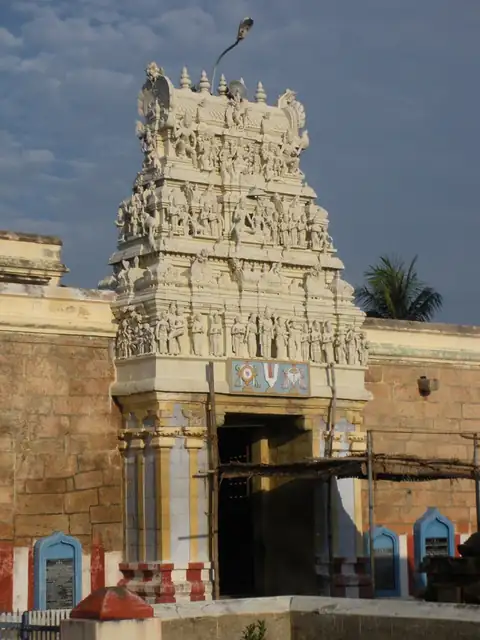 Living temple
Pundarikakshan Perumal Temple, Thiruvellarai
A hill temple on a white rock, believed to be older than Srirangam. It has two entrances used in alternate halves of the year, and a Pallava-era stepped well shaped like a swastika.
Purmandal Temples
A temple town on the Devika river near Jammu, called Chhota Kashi for its many Shiva temples. Its Mahashivaratri fair is the largest in the Jammu region.
Purnagiri Temple
A hilltop temple of the goddess near Tanakpur on the Nepal border, counted a Shakti Peetha where Sati's navel is said to have fallen. Its Chaitra Navaratri fair draws lakhs of pilgrims.
Puruhutika Devi Temple, Pithapuram
The shrine of Puruhutika Devi inside the Kukkuteswara Shiva temple at Pithapuram, where Shiva is worshipped as a rooster-shaped linga. The town is one of the 18 Maha Shakti Peethas, the Pada Gaya of the three Gaya sites, and the birthplace of Sripada Sri Vallabha.
Purushottama Perumal Temple, Thirunangur
One of the eleven Divya Desams of Thirunangur near Sirkazhi. Vishnu here is the supreme person, Purushottama.
Radha Raman Temple, Vrindavan
A temple of Krishna as Radha Raman, whose small image is said to have emerged from a shalagrama stone worshipped by the Gaudiya saint Gopal Bhatta Goswami in 1542. It is one of the original seven temples of the Gaudiya Vaishnavas in Vrindavan, and its image has never left the town.
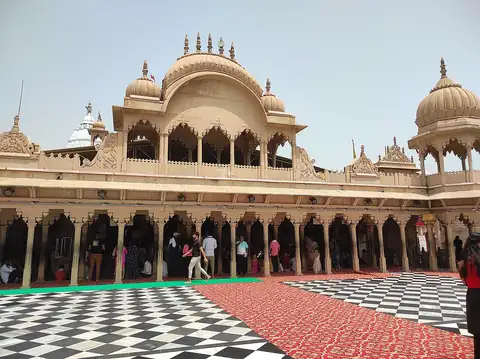 Living temple
Radha Rani Temple, Barsana
The hilltop temple of Radha at Barsana, her home village in Braj. It is famous for the Lathmar Holi, when the women of Barsana playfully beat the men of Nandgaon with sticks.
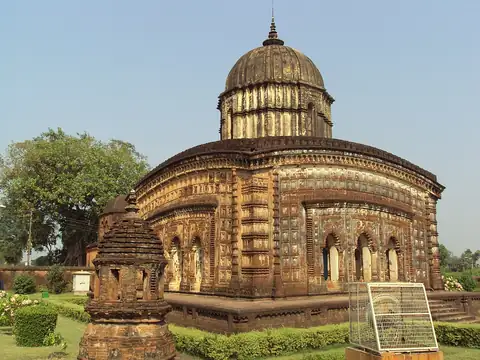 Living temple
Radha Shyam Temple, Bishnupur
A laterite ekaratna temple built in 1758 by the Malla king Chaitanya Singha, with a domed spire and stucco carving. Worship of Radha Shyam still continues inside its walled compound.
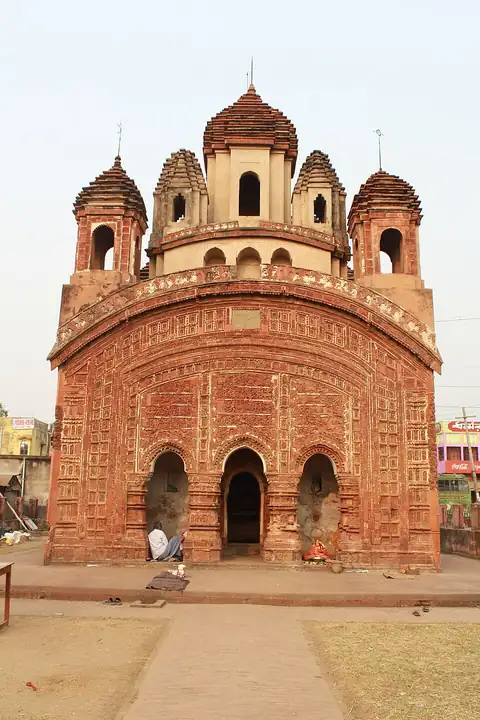 Living temple
Radhabinod Temple, Joydev Kenduli
A terracotta temple of Krishna at Joydev Kenduli, traditionally the birthplace of the poet Jayadeva, who wrote the Gita Govinda in the 12th century. A great fair of Baul singers is held here each January.
Radhagovindajiu Temple, Antpur
An eight-roofed (aatchala) brick temple of Krishna at Antpur, built in 1786 by Krishnaram Mitra and covered with terracotta panels. Antpur is also remembered as the place where Ramakrishna's young disciples resolved to become monks in 1886.
Raghunath Temple, Devaprayag
The Rama temple above the confluence at Devaprayag, where the Alaknanda and Bhagirathi meet to become the Ganga. Periyalvar sang of it as Kandam, the city on the Ganga.
Raghunath Temple, Jammu
A large temple complex of Rama in the heart of Jammu, begun by Maharaja Gulab Singh in 1835 and completed by his son Ranbir Singh in 1860. Its gilded spires and many shrines made Jammu known as the City of Temples.
Raghunath Temple, Kullu
The temple of Rama as Raghunath, chief deity of the Kullu valley, whose image was brought from Ayodhya in the 1650s by order of Raja Jagat Singh. The famous Kullu Dussehra centres on Raghunath's chariot.
Raghunath Temple, Manikaran
A temple of Rama at Manikaran in the Parvati valley, said to have been built by Raja Jagat Singh of Kullu in the 17th century. The town is known for its hot springs, where pilgrims cook rice in the boiling water.
Raja Rajeshwara Temple, Vemulawada
A Shiva temple known as Rajanna, where devotees offer bull calves (kode mokku) in fulfilment of vows. A Sufi dargah stands inside the temple complex, and devotees of both faiths visit it.
Rajagopalaswamy Temple, Mannargudi
A large Krishna temple in Mannargudi, called Dakshina Dwaraka, the Dwaraka of the south. Krishna is worshipped as a cowherd, and the Thanjavur Nayaks enlarged the temple with tall gopurams and the vast Haridra Nadhi tank.
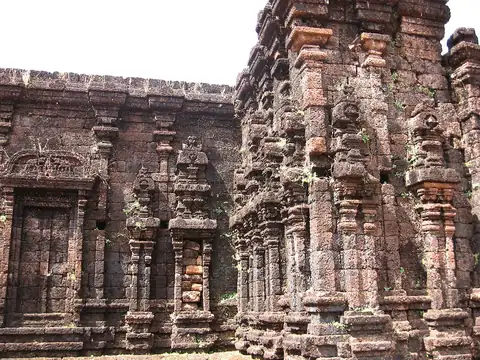 Living temple
Rajarajeshwara Temple, Taliparamba
A major Shiva temple of north Kerala at Taliparamba, counted among the 108 Shiva temples of Kerala. Its offering of a golden pot (ponnumkudam) for divination is well known.
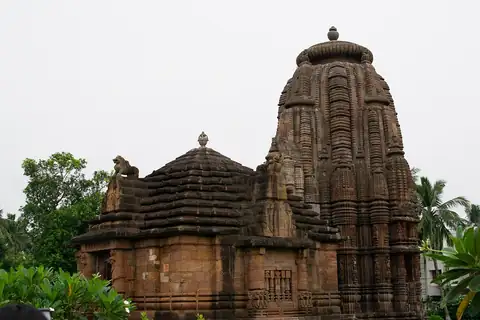 Ruined / monument
Rajarani Temple, Bhubaneswar
An 11th-century temple with no deity in its sanctum, famous for its tower of clustered miniature spires and its graceful sculptures of women and the guardians of the eight directions. It is named after the red-gold sandstone, locally called rajarania.
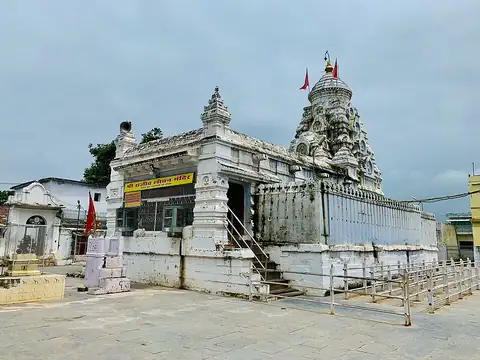 Living temple
Rajiv Lochan Temple, Rajim
A Vishnu temple of about the 7th-8th century at Rajim, called the Prayag of Chhattisgarh because of the meeting of three rivers. The Rajim Kumbh (Maghi Punni Mela) is held here every year.
Ram Mandir, Ramtek
A fortified hill temple of Rama near Nagpur, on the Ramgiri of Kalidasa's Meghaduta. Vakataka temples of the 5th century stand on the same hill, and the present Rama temple was rebuilt by the Bhosales of Nagpur.
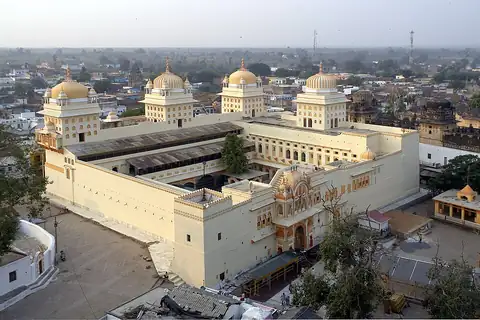 Living temple
Ram Raja Temple, Orchha
The only temple where Rama is worshipped as a king, with a guard of honour from the state police every day. By tradition the image was brought from Ayodhya by Queen Ganesh Kunwari and would not leave the palace where it was first placed.
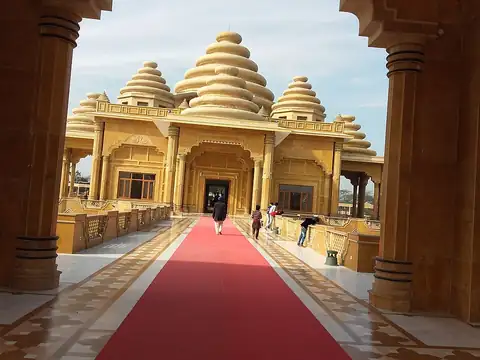 Living temple
Ram Tirath, Amritsar
A pilgrimage site west of Amritsar held to be the hermitage of the sage Valmiki, where Sita lived in exile and gave birth to Lava and Kusha. A large temple complex with a golden statue of Valmiki opened in 2016.
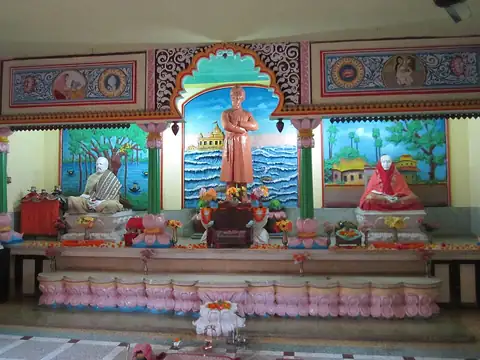 Living temple
Ramakrishna Temple, Kamarpukur
The birthplace of Sri Ramakrishna (1836-1886), with a temple of the Ramakrishna Math built over the site of the hut where he was born.
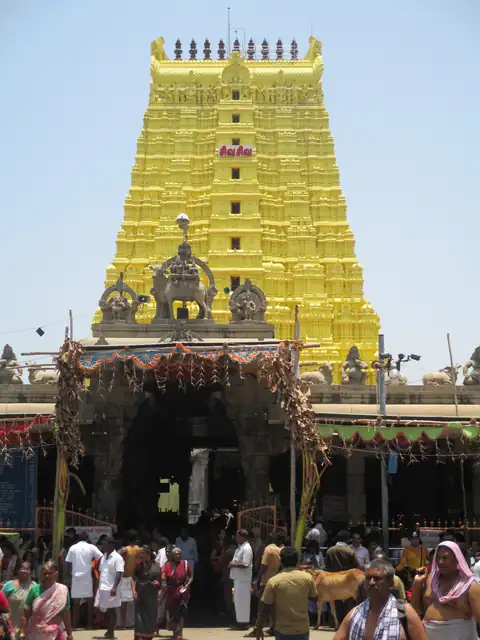 Living temple
Ramanathaswamy Temple
A Jyotirlinga temple on Pamban Island, where tradition says Rama worshipped Shiva. It is one of the Char Dham and is famous for its pillared corridors, the longest of any Hindu temple in India, and its 22 holy wells (theerthams).
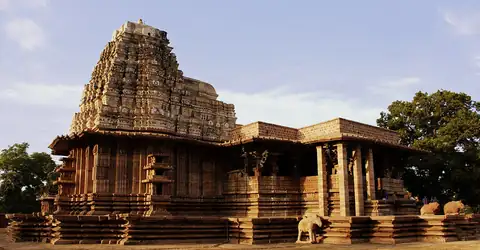 Living temple
Ramappa Temple
A Kakatiya Shiva temple of 1213 CE, built by the general Recharla Rudra and known by the name of its sculptor, Ramappa. Its shikhara uses light, porous bricks, and its dancer brackets are celebrated. It became a UNESCO World Heritage Site in 2021.
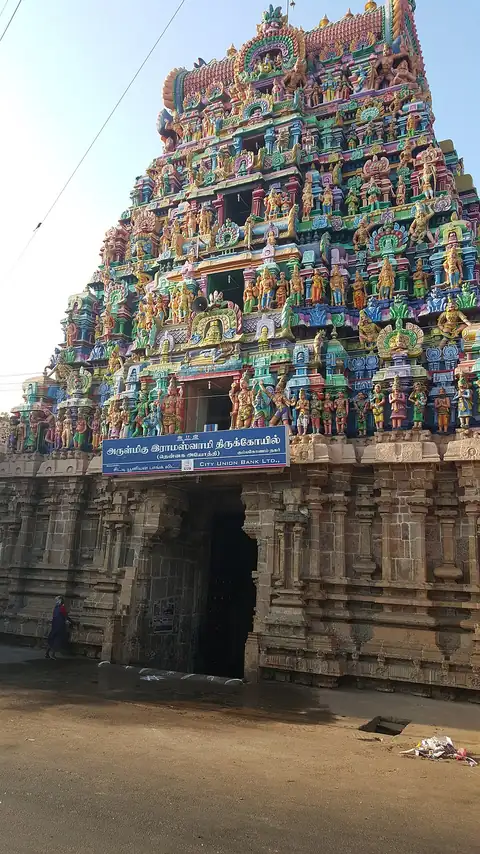 Living temple
Ramaswamy Temple, Kumbakonam
A Rama temple in Kumbakonam built under the Thanjavur Nayaks, famous for its painted Ramayana murals around the inner court and its carved pillared hall. Rama is shown with Sita in a wedding pose, and Hanuman plays a veena.
Ramateertham, Vizianagaram
A Rama temple at Ramateertham near Vizianagaram, with a hill shrine on Bodikonda and the remains of a Buddhist monastery on the nearby Gurubhaktulakonda hill.
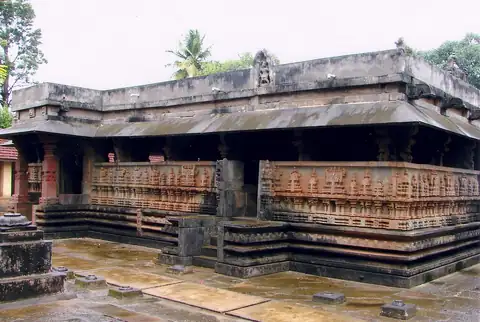 Living temple
Rameshwara Temple, Keladi
A Shiva temple at Keladi, the first capital of the Keladi Nayakas, with shrines of Rameshwara, Veerabhadra and Parvati. The ceiling of the Veerabhadra shrine carries a famous carving of the Gandabherunda, the two-headed eagle.
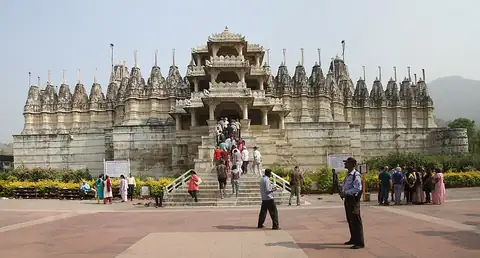 Living temple
Ranakpur Jain Temple
A great four-faced Jain temple of Adinatha built from 1437 by the merchant Dharna Shah, with land granted by Rana Kumbha of Mewar. Its 1,444 carved marble pillars, no two alike, make it one of the most celebrated buildings in India.
Ranbireshwar Temple, Jammu
A large Shiva temple in Jammu built in 1883 by the Dogra Maharaja Ranbir Singh. It is known for its tall linga and its many crystal lingas.
Ranchhodrai Temple, Dakor
The temple of Krishna as Ranchhodrai, 'the one who left the battlefield', whose image is said to have been brought from Dwarka by a devotee. It is the chief Krishna temple of central Gujarat and is crowded on full-moon days.
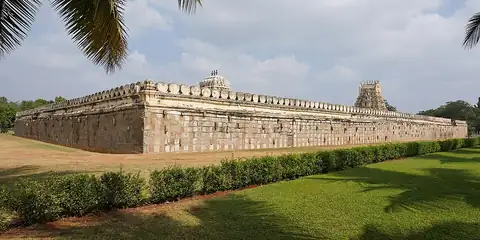 Living temple
Ranganathaswamy Temple, Srirangapatna
A temple of Vishnu reclining on the serpent Adishesha, on an island in the Kaveri. It is the first of the three Ranga shrines along the river, and the town later became Tipu Sultan's capital.
Rangji Temple, Pushkar
A temple of Vishnu as Ranganatha in Pushkar, built in 1823 by the Hyderabad merchant Seth Puran Mal Ganeri. It mixes a South Indian gopuram with Rajput and Mughal details.
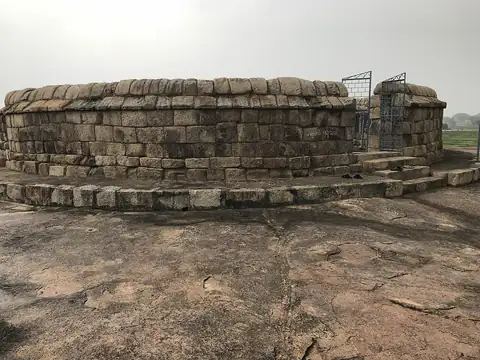 Ruined / monument
Ranipur-Jharial Temples and Chausathi Yogini
A group of early temples on a bare rock plain in western Odisha, with a roofless circular Chausathi Yogini temple at its heart. Brick and stone shrines of Shiva, Vishnu and the goddesses stand around it.
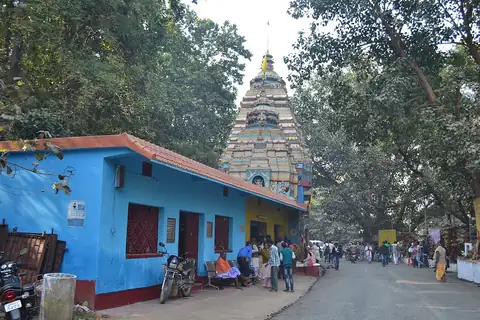 Living temple
Rankini Temple, Jadugora
A shrine of the goddess Rankini, worshipped in the form of a rock, near Jadugora in East Singhbhum. She is a guardian goddess of the local Bhumij and other communities.
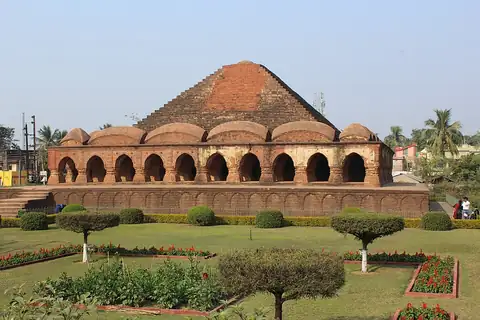 Ruined / monument
Rasmancha, Bishnupur
A brick platform temple built about 1600 by the Malla king Bir Hambir, where the images of Krishna from all the town's temples were brought for display during the Ras festival. Its stepped pyramid roof is unlike any other temple in Bengal.
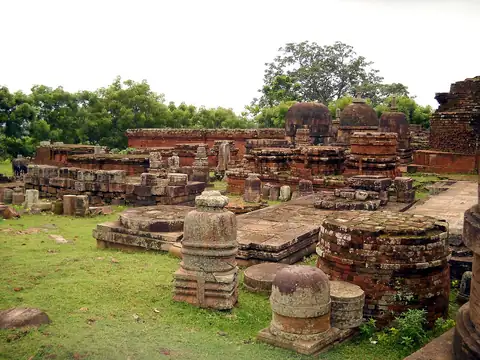 Ruined / monument
Ratnagiri Buddhist Monasteries
The largest excavated Buddhist site in Odisha, on a hill above the Birupa valley. Two large monasteries, a great stupa and hundreds of small votive stupas were used from about the 5th to the 13th century, when the site was an important centre of Vajrayana Buddhism.
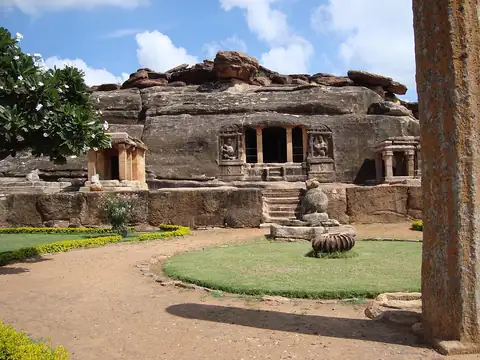 Ruined / monument
Ravana Phadi Cave, Aihole
A rock-cut Shiva cave temple at Aihole, from about the 6th century. Its walls hold large reliefs of Shiva dancing, Ardhanarishvara, Shiva receiving the Ganga, and the Saptamatrikas.
Renuka Devi Temple, Mahur
A hilltop temple at Mahur where Renuka, mother of Parashurama, is worshipped as Ekaveera. Only her head is enshrined. Mahur is one of Maharashtra's 'three and a half' Shakti Peethas and is also sacred to Dattatreya.
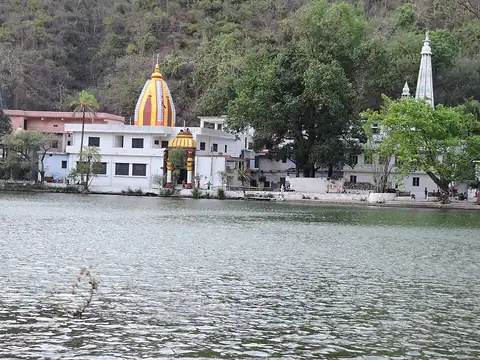 Living temple
Renuka Ji Temple, Renuka Lake
Temples of Renuka and her son Parashurama at Renuka Lake in Sirmaur, the largest natural lake of Himachal, whose outline is said to look like a sleeping woman.
Renuka Yellamma Temple, Saundatti
A hill temple of Renuka, the mother of Parashurama, worshipped as Yellamma, 'mother of all'. Its full-moon fairs draw lakhs of pilgrims from Karnataka and Maharashtra; the old practice of dedicating girls as devadasis here is banned by law.
 Living temple
Rewalsar Lake (Tso Pema)
A small sacred lake in Mandi district honoured by Buddhists, Hindus and Sikhs. Buddhists call it Tso Pema, the lotus lake, and hold that Padmasambhava appeared here on a lotus; a 37-metre statue of him looks over the lake.
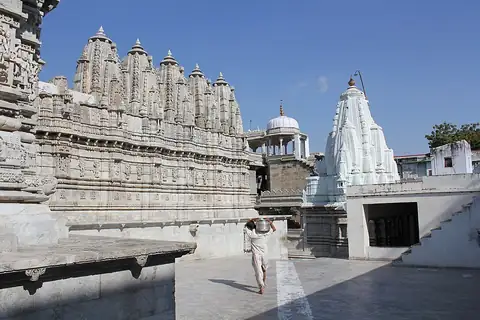 Living temple
Rishabhdeo Temple, Dhulev
A Jain temple of Rishabhanatha at Dhulev south of Udaipur, worshipped by Jains, Hindus and the Bhil people alike. The black image is offered so much saffron that it is called Kesariyaji, and the Bhils know it as Kaliaji, 'the black lord'.
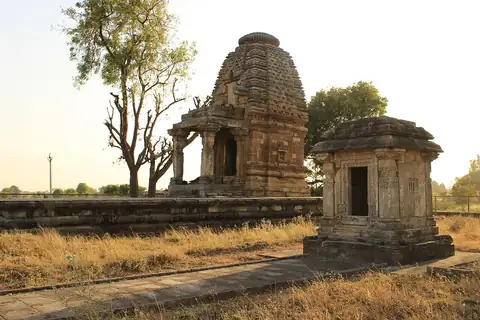 Ruined / monument
Roda Temples
A group of seven small stone temples of the 7th-8th century near Himmatnagar, among the earliest surviving temples of Gujarat. They show the early form of the Nagara spire before the Maru-Gurjara style developed.
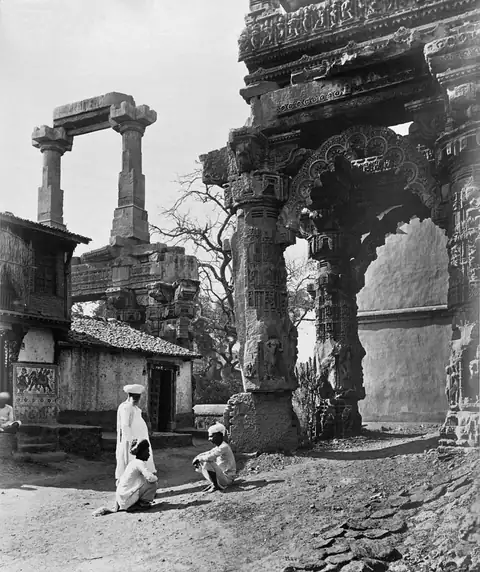 Ruined / monument
Rudra Mahalaya, Siddhpur
The ruins of a great Shiva temple complex begun by Mularaja, founder of the Chaulukya dynasty, and completed by Siddharaja Jayasimha in the 12th century. It was destroyed by the army of Alauddin Khalji, and part of it was later turned into a mosque.
Rudranath Temple
A natural rock temple where Shiva's face is worshipped, one of the Panch Kedar. It is the hardest of the five to reach, a trek of about 20 km.
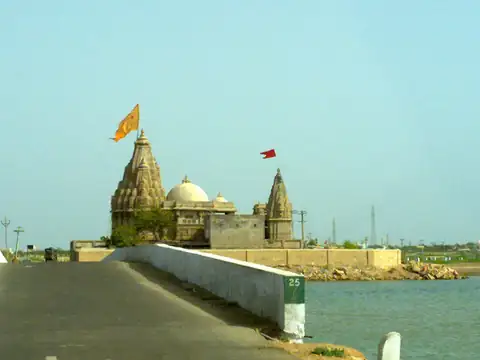 Living temple
Rukmini Devi Temple, Dwarka
A small, richly carved temple of Rukmini, Krishna's chief queen, standing alone outside Dwarka town. A legend explains why she lives apart from her husband.
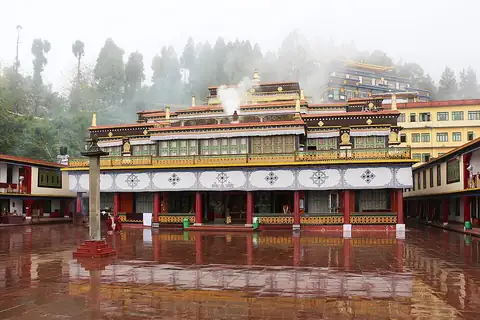 Living temple
Rumtek Monastery
The seat in exile of the Karma Kagyu school of Tibetan Buddhism, built in 1961-66 by the 16th Karmapa after he left Tibet. It is modelled on the Karmapa's monastery at Tsurphu.
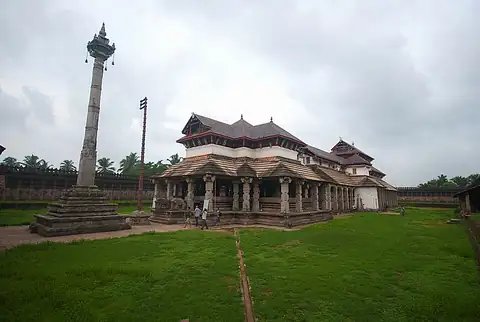 Living temple
Saavira Kambada Basadi, Moodbidri
The largest of the eighteen Jain temples of Moodbidri, known as the 'thousand-pillar temple'. Built about 1430, it enshrines Chandranatha (Chandraprabha) and every pillar is carved differently.
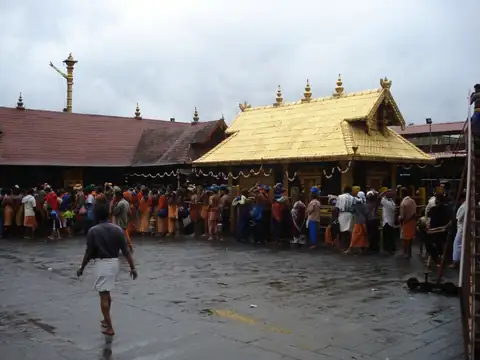 Living temple
Sabarimala Sree Dharma Sastha Temple
A hill shrine of Ayyappa in the Western Ghats, open only in set seasons. Pilgrims keep a 41-day vow, carry the irumudi bundle and climb the 18 sacred steps. Its peak attendance in the Mandala-Makaravilakku season is counted in millions.
Sachiya Mata Temple, Osian
A hilltop temple of the goddess Sachiya Mata at Osian, the ancient temple town in the Thar desert. She is the family goddess of the Oswal community and of many other castes.
Sai Baba Samadhi Mandir, Shirdi
The tomb shrine of Sai Baba of Shirdi (died 1918), a saint revered by Hindus and Muslims alike. It is one of the most visited pilgrimage places in India, with a rich trust that runs hospitals and free meals.
Sakshigopal Temple
A temple of Krishna as Sakshigopal, 'Gopal the witness', on the road to Puri. Pilgrims say a visit to Jagannath is incomplete until they have visited this god to bear witness to it.
Salasar Balaji Temple
A temple of Hanuman (Balaji) whose image, with beard and moustache, is said to have been found by a farmer while ploughing in 1754. It is one of the most visited temples of Rajasthan, especially on Hanuman Jayanti and at the Chaitra and Ashvin fairs.
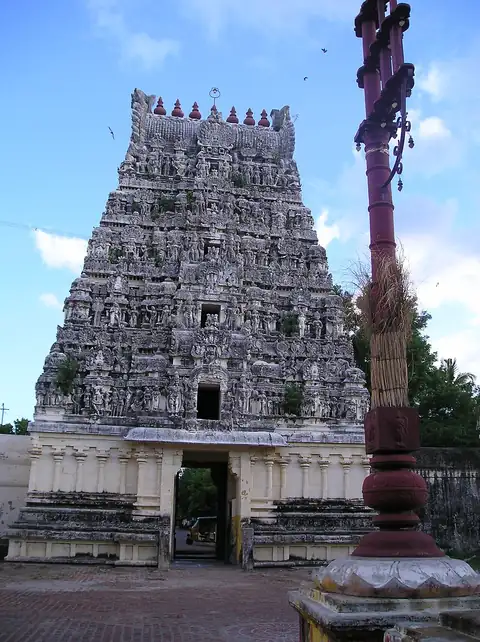 Living temple
Salasayana Perumal Temple, Thirusirupuliyur
A Divya Desam where Vishnu reclines in a small form, revealed to the tiger-footed sage Vyaghrapada.
Samaleswari Temple, Sambalpur
The temple of Samaleswari, presiding goddess of Sambalpur and of western Odisha, on the bank of the Mahanadi. The town is said to take its name from her, and she is at the heart of the region's Sambalpuri identity.
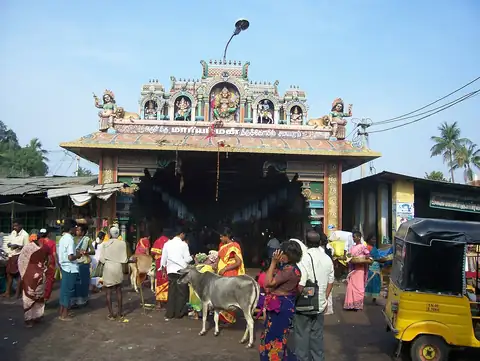 Living temple
Samayapuram Mariamman Temple
One of the most popular goddess temples of Tamil Nadu, home of Mariamman, the goddess of rain, health and protection from disease. It is among the richest temples in the state by offerings.
Sammakka Saralamma Shrine, Medaram
A forest shrine of the Koya tribal goddesses Sammakka and her daughter Saralamma, who are said to have fought the Kakatiya army. The biennial Medaram Jatara draws over a crore of people, one of the largest tribal gatherings in the world.
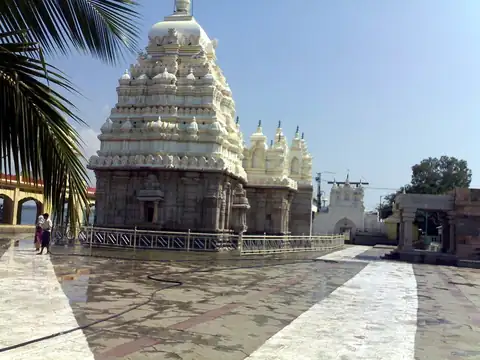 Living temple
Sangameshwara Temple, Kudalasangama
A Shiva temple at the confluence of the Krishna and Malaprabha, where the 12th-century reformer Basavanna studied and where his samadhi (aikya mantapa) lies. It is the holiest place of the Lingayat tradition.
Sangameswara Temple (relocated)
A Chalukya-era Shiva temple that stood at Kudaveli, where the Tungabhadra meets the Krishna. When the Srisailam dam reservoir was to flood the site, it was taken apart stone by stone and rebuilt near Alampur, which is also home to the Jogulamba Shakti Peetha and the Navabrahma temples.
Sangameswara Temple, Sangameswaram
A Shiva temple at the confluence of the Krishna, the Tungabhadra and five other streams, now submerged by the Srisailam reservoir for most of the year. It comes out of the water for a few months each summer, when pilgrims return to worship.
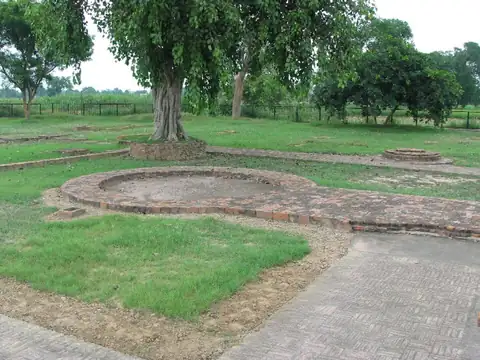 Ruined / monument
Sanghol Buddhist Stupa
The remains of a Buddhist stupa and monastery at Sanghol in Fatehgarh Sahib district, of the Kushan period. In 1985 excavators found more than a hundred carved stone railing pillars of the Mathura school here, among the finest Kushan sculptures found in Punjab.
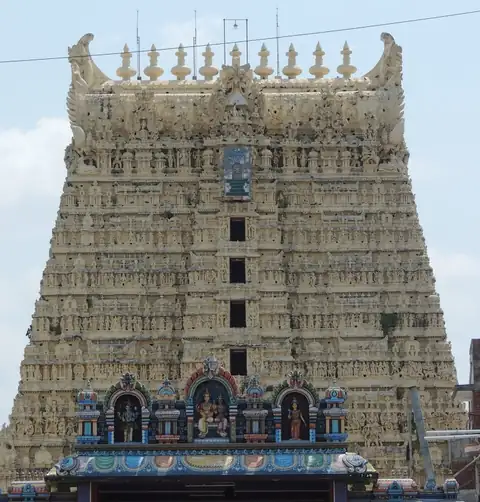 Living temple
Sankaranarayanar Temple, Sankarankovil
A temple in southern Tamil Nadu with three shrines: Shiva as Sankaralingam, the goddess Gomathi Amman, and Sankaranarayanar, a single image that is half Shiva and half Vishnu.
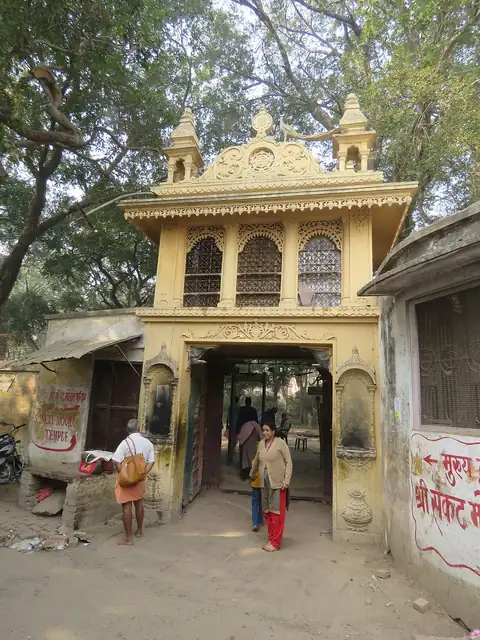 Living temple
Sankat Mochan Hanuman Temple, Varanasi
A temple of Hanuman as 'reliever of troubles', founded according to tradition by Tulsidas, author of the Ramcharitmanas. A bomb attack in 2006 killed several worshippers, and its music festival each April is one of India's leading classical music events.
Sannihit Sarovar, Thanesar
A large sacred tank at Thanesar, believed to be where seven streams of the Saraswati meet. Bathing here on new-moon days and especially at a solar eclipse is believed to bring great merit, and lakhs gather on such days.
Sant Dnyaneshwar Samadhi Mandir, Alandi
The shrine where the Marathi saint-poet Dnyaneshwar entered living samadhi in 1296 at the age of about 21. It is where the Wari to Pandharpur begins with his palanquin.
Sant Tukaram Temple, Dehu
The village of the poet-saint Tukaram on the Indrayani river, with the Vitthal temple built by his family and shrines marking his life. Each year his palkhi sets out from Dehu on the walk to Pandharpur.
Sanwaliya Seth Temple, Mandaphiya
A Krishna temple at Mandaphiya near Chittorgarh, whose deity Sanwaliya Seth is treated by many traders as a business partner. Its offering boxes are among the richest of any temple in Rajasthan.
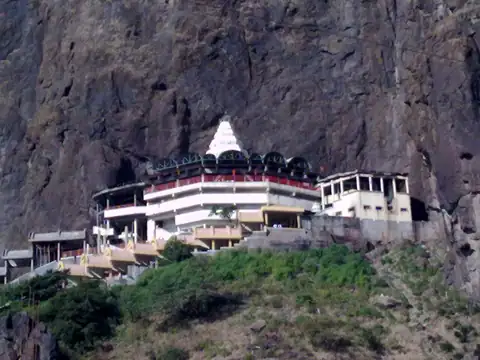 Living temple
Saptashrungi Devi Temple, Vani
A shrine of an eighteen-armed goddess carved in the cliff of a hill with seven peaks in the Sahyadris near Nashik. It is the 'half' of the three and a half Shakti Peethas of Maharashtra.
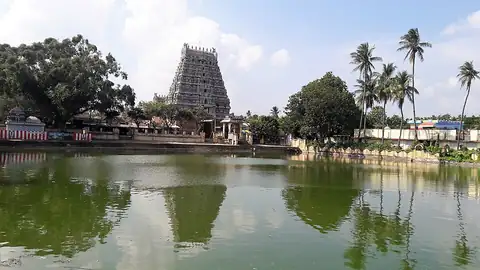 Living temple
Saranatha Perumal Temple, Thirucherai
A Divya Desam near Kumbakonam where the river goddess Kaveri is said to have worshipped Vishnu. It is called the Panchasara Kshetram, 'place of the five essences'.
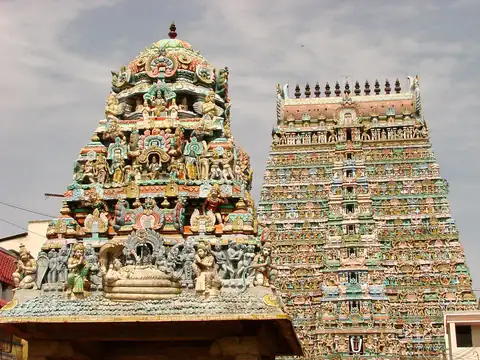 Living temple
Sarangapani Temple, Kumbakonam
The largest Vishnu temple in the temple town of Kumbakonam, where Vishnu reclines as Sarangapani, 'holder of the bow Saranga'. Its inner shrine is built as a chariot drawn by horses and elephants, and its eleven-tiered tower is about 50 m high.
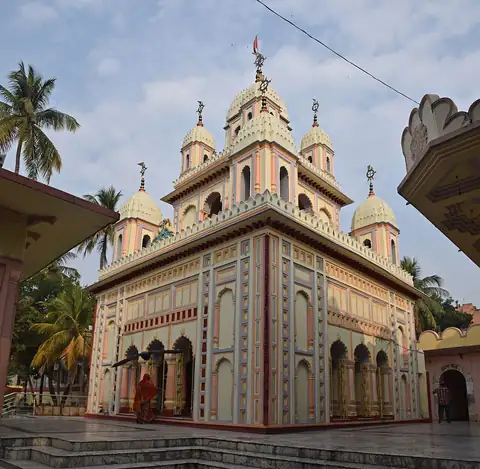 Living temple
Sarbamangala Temple, Bardhaman
The main goddess temple of Bardhaman, built by the Bardhaman royal family in 1702. Its small black-stone image of Durga as Mahishamardini is said to have been found in a pond by fishermen.
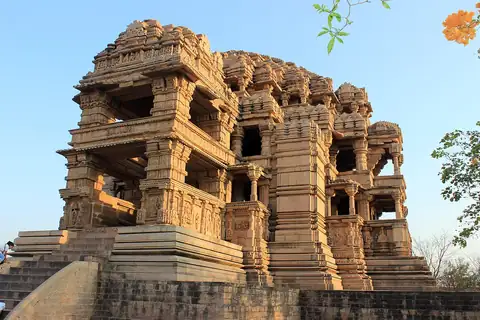 Ruined / monument
Sas-Bahu Temples, Gwalior
A pair of temples of Vishnu in Gwalior fort, built in 1093 by the Kachchhapaghata king Mahipala. The popular name Sas-Bahu ('mother-in-law and daughter-in-law') is a corruption of Sahastrabahu, 'the thousand-armed', a name of Vishnu.
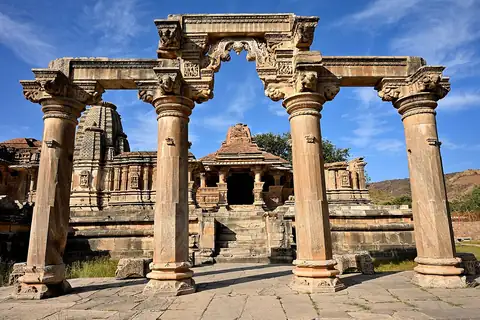 Ruined / monument
Sas-Bahu Temples, Nagda
A pair of richly carved Vishnu temples at Nagda near Udaipur, built in about the 10th century. Their popular name Sas-Bahu, 'mother-in-law and daughter-in-law', comes from Sahastrabahu, the thousand-armed Vishnu.
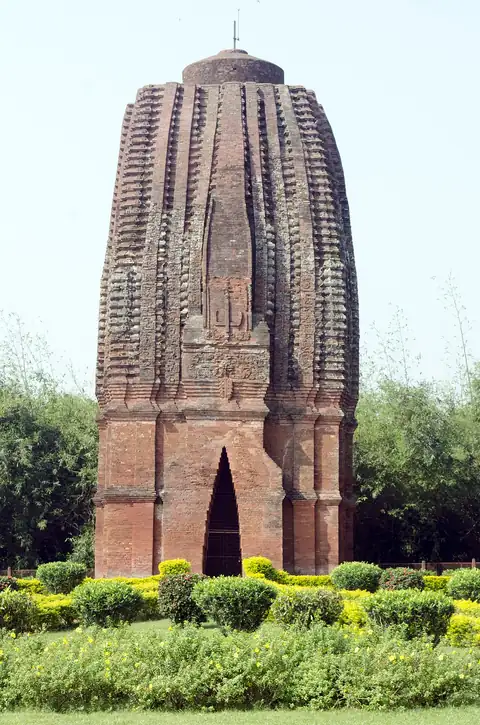 Ruined / monument
Sat Deul
A brick rekha deul of the late Pala period in Purba Bardhaman, with richly moulded brickwork. Its name may come from 'seven temples' that once stood here, of which one survives.
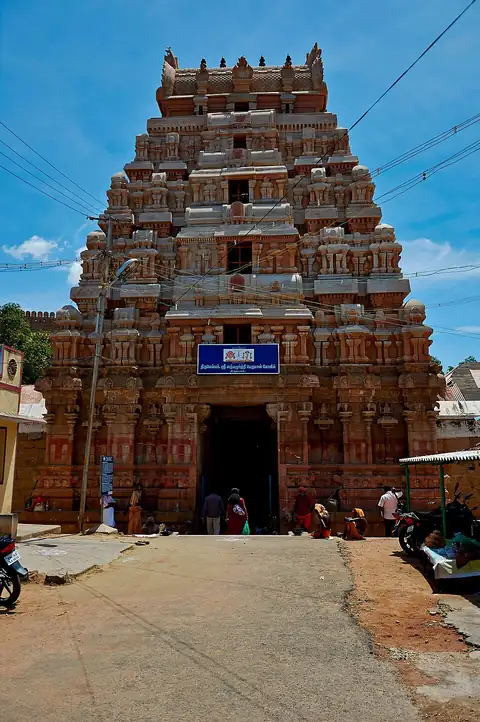 Living temple
Sathyamurthy Perumal Temple, Thirumayam
A Divya Desam at the foot of Thirumayam fort with one of the largest rock-cut reclining Vishnu images in India, carved into the living rock around the 8th century.
Savitri Mata Temple, Pushkar
A temple of Savitri, Brahma's first wife, on Ratnagiri hill above Pushkar. Pilgrims climb the steps or take the ropeway for the view over the lake and the town.
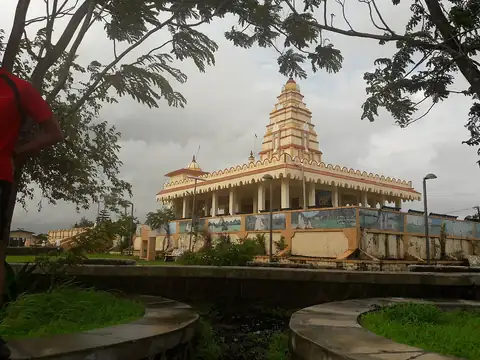 Living temple
Shabari Dham, Subir
A temple in the forests of the Dang where, by tradition, Rama and Lakshmana met the tribal devotee Shabari and ate the berries she had tasted for them.
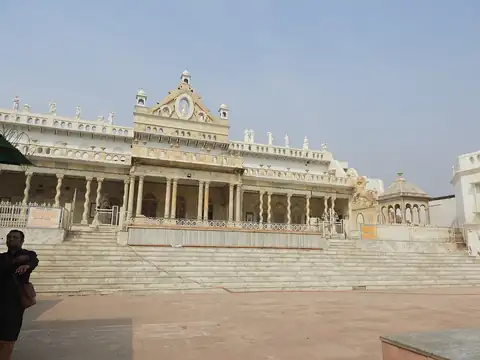 Living temple
Shahji Temple, Vrindavan
A white marble Krishna temple in Vrindavan built in 1876, known for its twisted spiral columns. Its Basanti Kamra, a hall of chandeliers and paintings, is opened only on a few days a year.
Shakumbhari Devi Temple, Saharanpur
A goddess temple in a seasonal river valley of the Shivalik hills, dedicated to Shakumbhari, the goddess who fed the world with vegetables during a famine. Pilgrims first worship Bhura Dev, her guardian, at a nearby shrine.
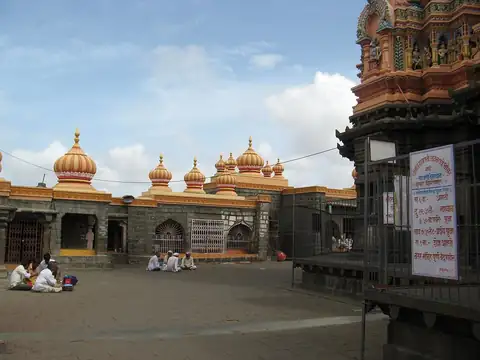 Living temple
Shambhu Mahadev Temple, Shikhar Shingnapur
A hilltop Shiva temple in the dry Man region of Satara, family shrine of the Bhosale family of Shivaji. On the Chaitra fair, pilgrims carry heavy kavads (pots of water) up the steep path to bathe the god.
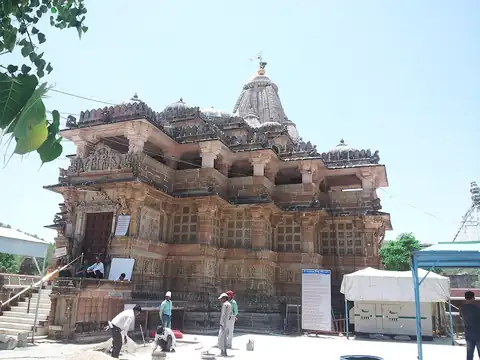 Living temple
Shamlaji Temple
A temple of Vishnu as Gadadhar, 'bearer of the mace', whose dark image gives the place the name Shamlaji. It is sacred both to Hindus of Gujarat and to the Bhil adivasis, who call the god Kaliya Dev, and holds a large fair at Kartik Purnima.
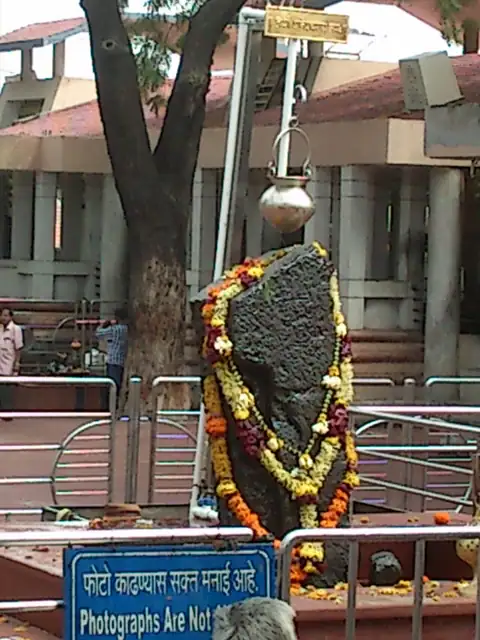 Living temple
Shani Temple, Shani Shingnapur
An open-air shrine of Shani, the planet Saturn, where a black stone slab stands on a platform with no roof. The village is famous for houses without doors, as the god is believed to punish thieves.
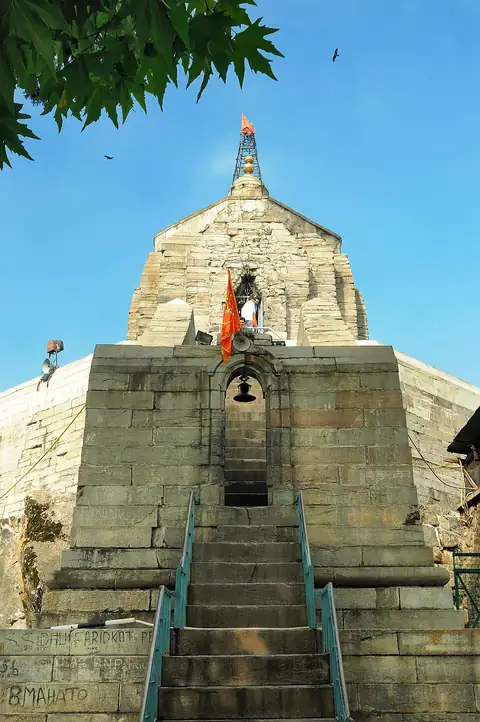 Living temple
Shankaracharya Temple, Srinagar
A stone Shiva temple on a hill about 300 m above Srinagar and Dal Lake. Tradition dates the shrine to very early times, while scholars date the present building to about the 9th century. It is named after Adi Shankara, who is said to have meditated here.
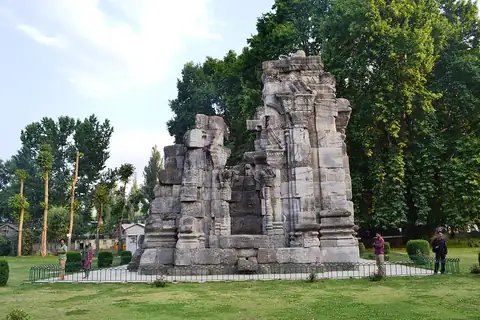 Ruined / monument
Shankaragaurishvara and Sugandhesha Temples, Pattan
Two ruined Shiva temples at Pattan, built by the Utpala king Shankaravarman and his queen Sugandha in the late 9th century, when Pattan was a royal town.
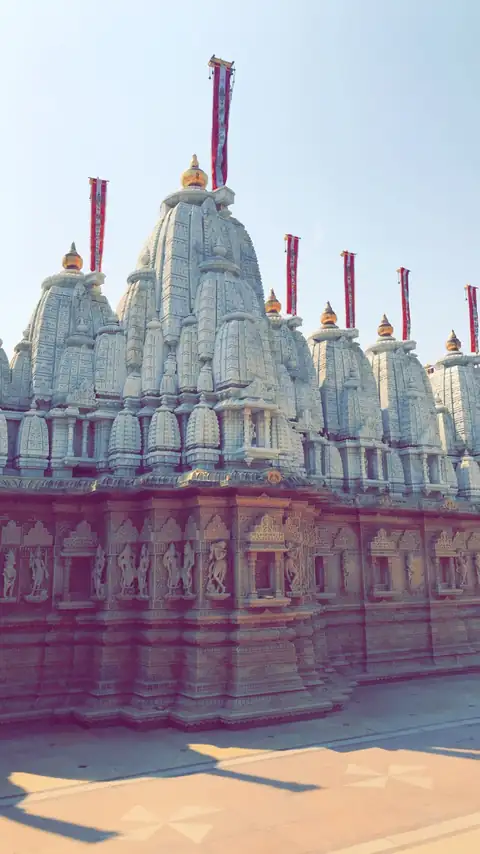 Living temple
Shankheshwar Parshvanath Temple
One of the most important Jain pilgrim places of Gujarat, with an image of Parshvanatha, the 23rd Tirthankara, believed to be extremely ancient and miraculous. The large white temple has 52 small shrines around it.
Sharada Peeth
The ruined temple of the goddess Sharada in the Neelum valley, once one of the great centres of learning in South Asia and the source of the Sharada script. Counted among the 18 Maha Shakti Peethas, it has been beyond reach of most Indian pilgrims since 1947.
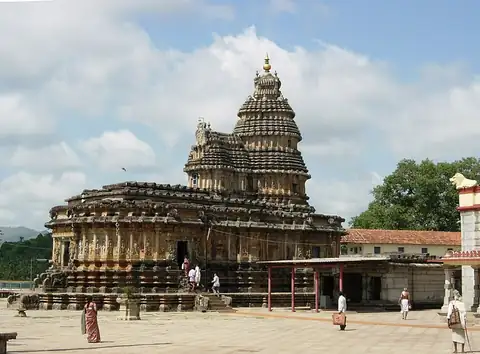 Rebuilt / restored for worship
Sharadamba Temple, Sringeri
The temple of the goddess Sharada at the first of the four monasteries that tradition credits to Adi Shankara. Beside it stands the 14th-century Vidyashankara temple, linked to the founding of the Vijayanagara empire.
Sharanabasaveshwara Temple, Kalaburagi
The temple of the Lingayat saint Sharanabasaveshwara (1746-1822), known for his free kitchen (dasoha). It stands over his tomb and is the main temple of Kalaburagi.
Sharda Mata Temple, Maihar
A hilltop temple of the goddess Sharda on Trikuta hill, reached by 1,063 steps or a ropeway. The name Maihar is said to come from 'Mai ka haar', the mother's necklace, which fell here.
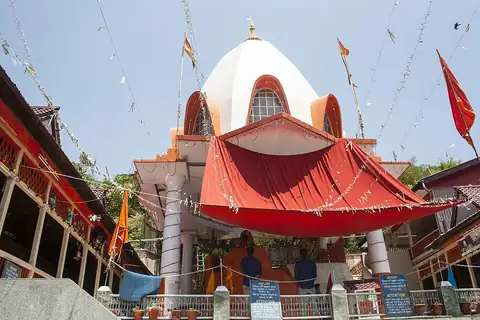 Living temple
Sharika Devi Temple, Hari Parbat
The shrine of the goddess Sharika, the presiding goddess of Srinagar, on Hari Parbat hill. She is worshipped as a rock face marked with a Shri Chakra, not as an image.
Shatrunjaya Temples, Palitana
A sacred hill crowned by more than 850 Jain temples, the holiest pilgrimage site of the Shvetambara Jains. The chief temple is of Adinatha (Rishabhanatha), the first Tirthankara, who is said to have preached here.
Sheetla Mata Temple, Gurugram
A popular goddess temple in Gurugram, where families bring children for their first haircut. Local tradition links the goddess with Kripi, wife of Dronacharya, the teacher of the Pandavas.
Shila Devi Temple, Amer
The temple of Shila Devi, family goddess of the Kachwaha rulers, inside Amer Fort. Raja Man Singh I is said to have brought the stone image from Jessore in Bengal after his campaign there. Amer is part of the Hill Forts of Rajasthan World Heritage Site.
Shiv Khori Cave Shrine
A natural limestone cave in Reasi district with a self-formed Shiva lingam and many rock formations seen as gods. A shrine board runs the pilgrimage, which peaks at Mahashivaratri.
Shiv Mandir, Shriman Tilla, Aizawl
A Shiva temple of Aizawl's Gorkha community, said to have been started in 1920 and to have served as the town's main Hindu place of worship until 1947. It has moved twice and now stands at Shriman Tilla in Zotlang.
Shiva Temple, Bhumara
A ruined Gupta-period Shiva temple at Bhumara, of which the sanctum survives with a fine ekamukha (one-faced) linga and a richly carved doorway.
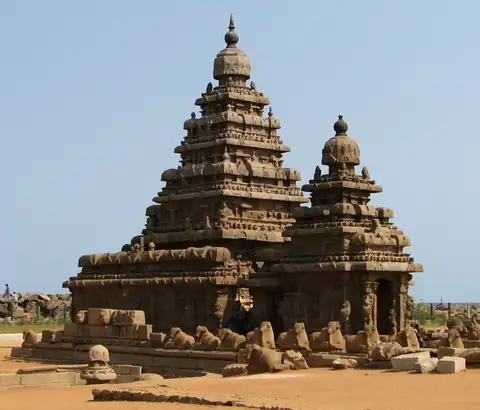 Ruined / monument
Shore Temple
One of the earliest structural (built, not rock-cut) stone temples of South India, standing on the Bay of Bengal. It holds two Shiva shrines and a reclining Vishnu between them, and is part of the Group of Monuments at Mahabalipuram (UNESCO).
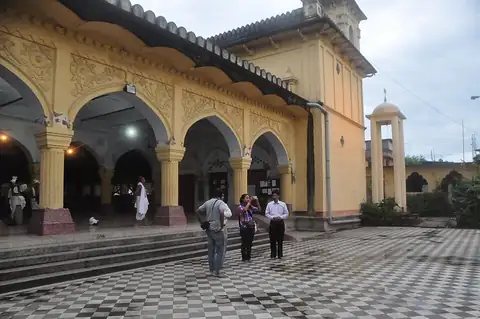 Living temple
Shree Govindajee Temple, Imphal
The royal Vaishnava temple of Manipur beside the old palace in Imphal, dedicated to Krishna as Govindajee. It is the centre of Manipuri Raslila, the dance-drama created under Maharaja Bhagyachandra.
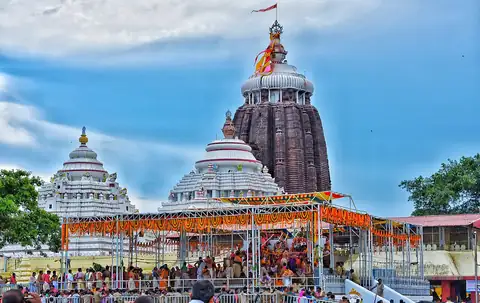 Living temple
Shree Jagannath Temple
The temple of Jagannath, 'lord of the universe', with his siblings Balabhadra and Subhadra, all in wooden form, on the coast at Puri. One of the Char Dham, it is famous for the Rath Yatra and for its kitchen, which feeds tens of thousands daily with Mahaprasad.
Shree Shiva Kshethram, Kavaratti
A small Shiva temple on Kavaratti, the capital island of Lakshadweep, where most people are Muslim. It is reported to be the island's only Hindu temple, and its Vinayaka image was carved and given by a Muslim former soldier.
Shri Bhagavati Temple, Pernem
A temple of the goddess Bhagavati in Pernem, North Goa, guarded by two life-size stone elephants at its entrance. The goddess has eight arms and stands in the form of Mahishasuramardini.
Shri Chandreshwar Bhutnath Temple, Paroda
A Shiva temple on the top of Chandranath hill near Paroda, about 350 m high. It is linked with the early Bhoja kings of Goa, whose capital Chandrapura lay nearby. The linga is cut in the living rock and is said to ooze water when the light of the full moon falls on it.
Shri Damodar Temple, Zambaulim
A Shiva temple at Zambaulim on the Kushavati river, where Shiva is worshipped as Damodar. The deity is said to have been moved here from Margao about 1565, after the Portuguese destroyed his temple there. Its Gulal festival at Shigmo is one of the most colourful in Goa.
Shri Devikoop Bhadrakali Temple, Kurukshetra
A Shakti Peetha at Thanesar in Kurukshetra, where Sati's right ankle is believed to have fallen into a well (devikoop). Pilgrims offer clay or metal horses here.
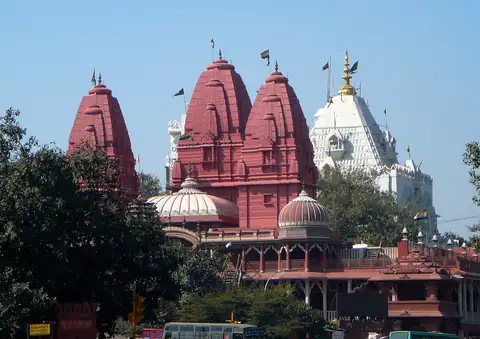 Living temple
Shri Digambar Jain Lal Mandir
The oldest Jain temple in Delhi, in red sandstone opposite the Red Fort. It was founded in the mid-17th century for Jain merchants and officers of the Mughal city. A charitable hospital for birds runs in its premises.
Shri Kamakshi Temple, Shiroda
A goddess temple at Shiroda in Ponda taluka, home of the goddess Kamakshi. Her image is said to have been carried here from Raia in Salcete in the 16th century, when the Portuguese were destroying temples in the lands they ruled.
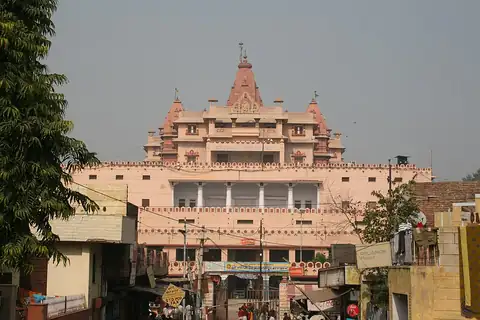 Living temple
Shri Krishna Janmasthan, Mathura
The shrine at the place in Mathura where Krishna is believed to have been born in Kamsa's prison. Its temples were destroyed and rebuilt several times, and the site beside the Shahi Idgah is the subject of pending court cases.
Shri Mahalakshmi Temple, Bandora
A temple of the goddess Mahalakshmi at Bandora near Ponda. She is said to have been brought here from Colva in Salcete when the Portuguese destroyed temples in the 16th century.
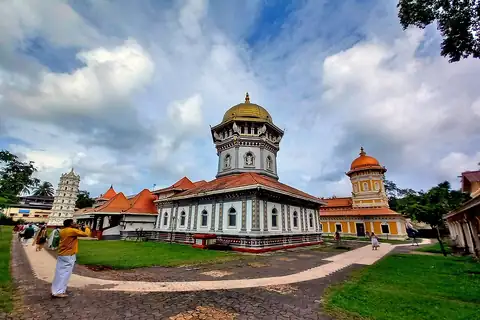 Living temple
Shri Mahalasa Narayani Temple, Mardol
The temple of Mahalasa Narayani, worshipped as Mohini, the female form of Vishnu, and as a form of the goddess. The deity was moved from Verna in the 1560s to escape Portuguese temple destruction.
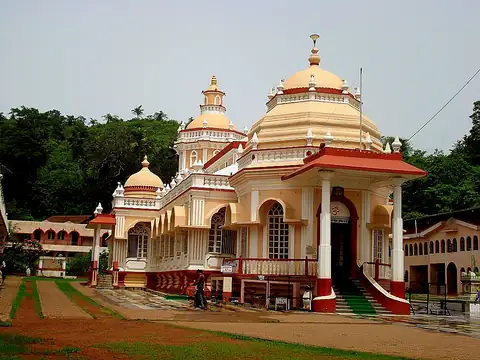 Relocated
Shri Mangueshi Temple
The family deity of many Gaud Saraswat Brahmins, Mangesh (Shiva) was moved in the 1560s from Kushasthali (Cortalim) in Portuguese-ruled Salcete to Mangeshi in Ponda, beyond Portuguese control, when temples were being destroyed. The present temple, with its seven-storey lamp tower, dates from the 18th century.
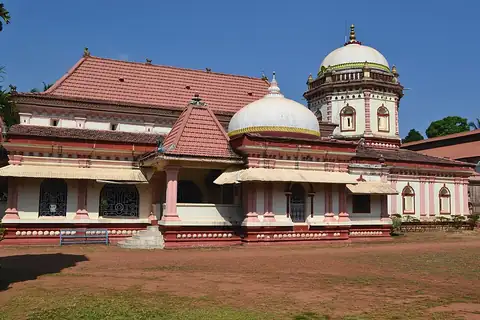 Living temple
Shri Nagesh Temple, Bandora
A Shiva temple at Bandora, one of the few Goan temples that stayed in place through Portuguese rule. An inscription of 1413, from the time of Vijayanagara rule, records gifts to it.
Shri Ram Janmabhoomi Mandir
A new temple to Rama at the site held by Hindus to be his birthplace, built after the Supreme Court's 2019 judgment in the Ayodhya title dispute. The site had held the Babri Masjid (1528) until its demolition in 1992. The Nagara-style temple was designed by the Sompura family and consecrated in January 2024.
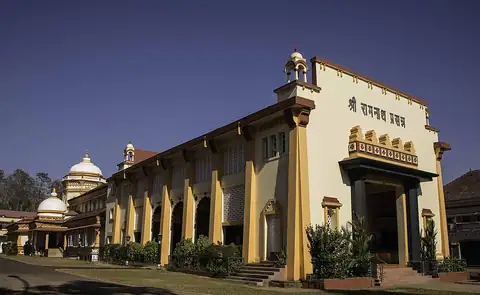 Living temple
Shri Ramnath Temple, Ramnathi
A Shiva temple at Ramnathi, whose lingam is said to have been worshipped by Rama. It was moved from Loutolim in Salcete in the 1560s, when Portuguese rule led to the destruction of temples there.
Shri Sammed Shikharji
The holiest Jain pilgrimage, a hill where 20 of the 24 Tirthankaras are believed to have attained liberation. Pilgrims walk about 27 km barefoot to visit the shrines (tonks) on the summit ridge in a single day.
Shri Sankat Mochan Dham, Jhandewalan
A temple at Jhandewalan crowned by a 108-foot statue of Hanuman, one of the best-known sights of Delhi from the Metro. The entrance is through the mouth of a demon figure.
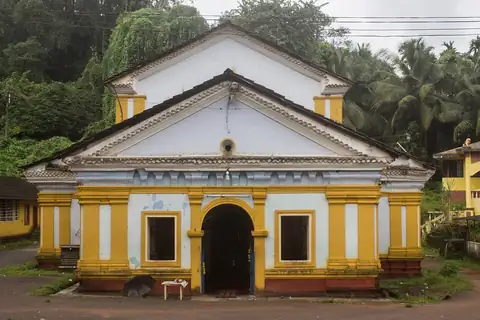 Rebuilt / restored for worship
Shri Saptakoteshwar Temple, Narve
The temple of Saptakoteshwar, family deity of the Kadambas of Goa. Its original temple on Divar island was destroyed by the Portuguese, and the present temple at Narve was rebuilt by Chhatrapati Shivaji in 1668.
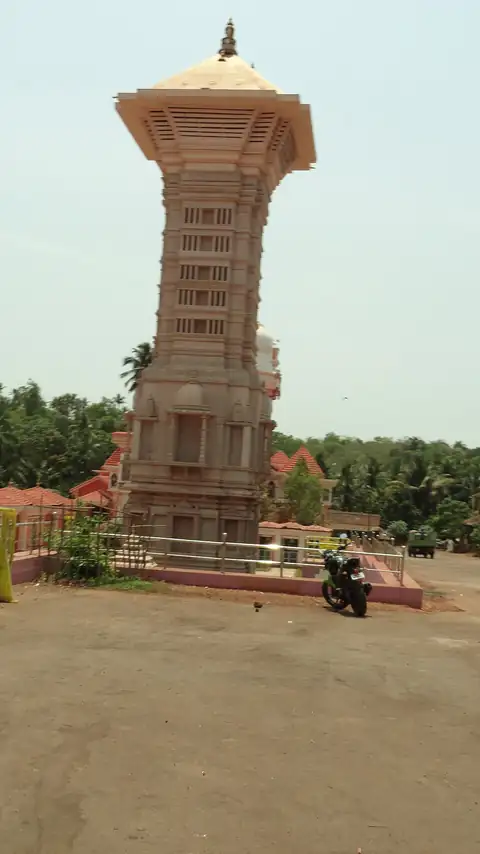 Relocated
Shri Shantadurga Kunkalikarin, Fatorpa
A temple of the goddess Shantadurga at Fatorpa, where she was carried from Cuncolim after the Portuguese destroyed the temples there in the 1580s. Her yearly Zatra is one of the largest temple festivals in South Goa.
Shri Shantadurga Temple, Kavlem
The temple of Shantadurga, the peaceful Durga, family goddess of many Goan families. The goddess was moved from Quelossim in Salcete in the 1560s to escape Portuguese temple destruction, and the present temple was built in 1738 with the help of a Maratha minister.
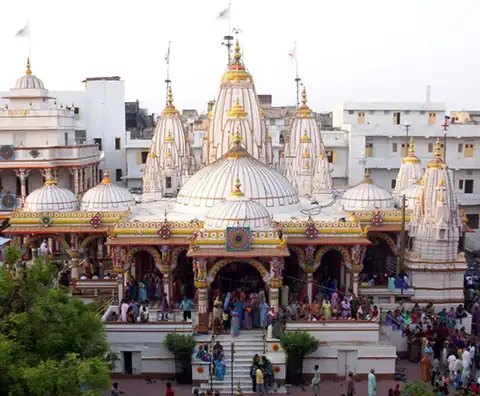 Living temple
Shri Swaminarayan Mandir, Kalupur
The first temple of the Swaminarayan sampradaya, built at the wish of its founder Sahajanand Swami in 1822. Its carved Burmese teak and colourful brackets make it one of the most ornate wooden temples of Gujarat.
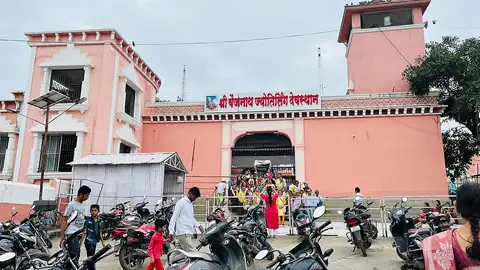 Living temple
Shri Vaijnath Temple, Parli
A Hemadpanti-style Shiva temple at Parli in Beed district, which many in Maharashtra regard as the true Vaidyanath Jyotirlinga, a claim shared with Deoghar in Jharkhand. Its spire rises about 75-80 feet above a brass-plated eastern door.
Shri Vishwanath Mandir, BHU
A large white marble Shiva temple on the campus of Banaras Hindu University, planned by the university's founder Madan Mohan Malaviya and built with support from the Birla family. Its spire is among the tallest of any temple in India, and it was open to people of every caste from the start.
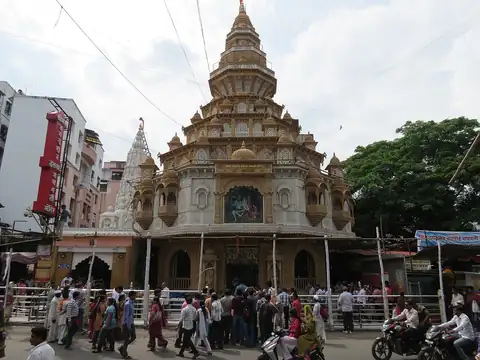 Living temple
Shrimant Dagdusheth Halwai Ganapati, Pune
Pune's most famous Ganesha temple, founded in 1893 by the sweet-maker Dagdusheth Halwai and his wife Lakshmibai. During Ganeshotsav its decorated pandal draws lakhs of visitors.
Shrinathji Temple, Nathdwara
The chief shrine of the Pushti Marg, where the image of Krishna as Shrinathji, lifting Govardhan hill, was brought from Braj in 1672. The temple is built as a haveli (mansion) rather than a temple, and its famous painted cloths (pichwais) are an art form of their own.
Shyam Rai Temple, Bishnupur
A five-towered (pancha-ratna) brick temple of 1643, built by the Malla king Raghunath Singh, with some of the richest terracotta work in Bengal.
Shyama Mai Temple, Darbhanga
A Kali temple in Darbhanga built in 1933 over the cremation site of Maharaja Rameshwar Singh of the Darbhanga Raj. It is one of the few temples in India built over a funeral pyre, and weddings are held here despite the setting.
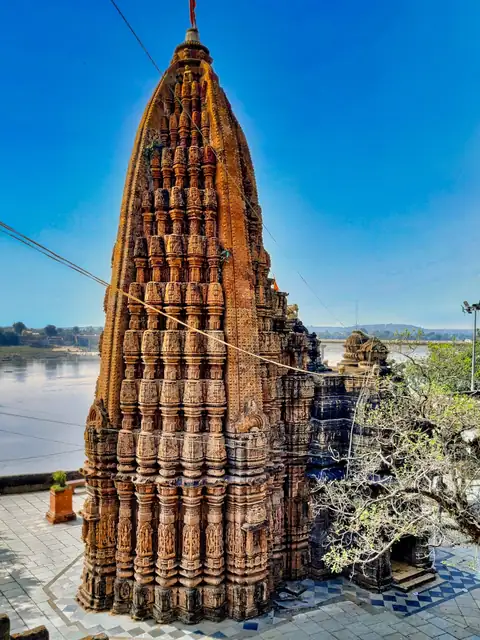 Living temple
Siddheshwar Temple, Nemawar
A finely carved early medieval Shiva temple on the bank of the Narmada at Nemawar, built under the Paramaras. Nemawar is held to be the navel (nabhi) of the Narmada.
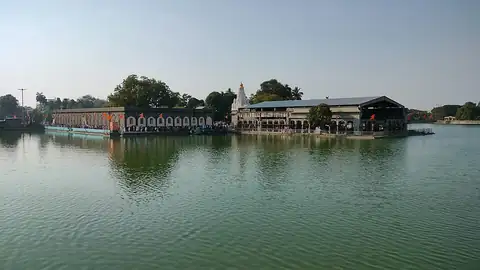 Living temple
Siddheshwar Temple, Solapur
A Shiva temple on an island in a lake in Solapur, dedicated to the 12th-century Lingayat saint Siddharama, who is worshipped here with Shiva. Its Makar Sankranti fair, with tall decorated poles (nandidhwaj), is famous.
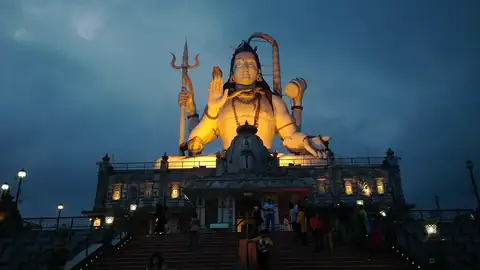 Living temple
Siddhesvara Dham, Namchi
A modern pilgrimage complex on Solophok hill at Namchi, with a giant seated statue of Shiva, about 108 feet tall, and replicas of the four Char Dham shrines and the twelve Jyotirlingas.
Siddheswar Nath Temple, Ziro
A shrine in the Kardo forest near Ziro where a tall natural rock, about 25 feet high, is worshipped as a Shiva linga. It was found by a woodcutter in 2004.
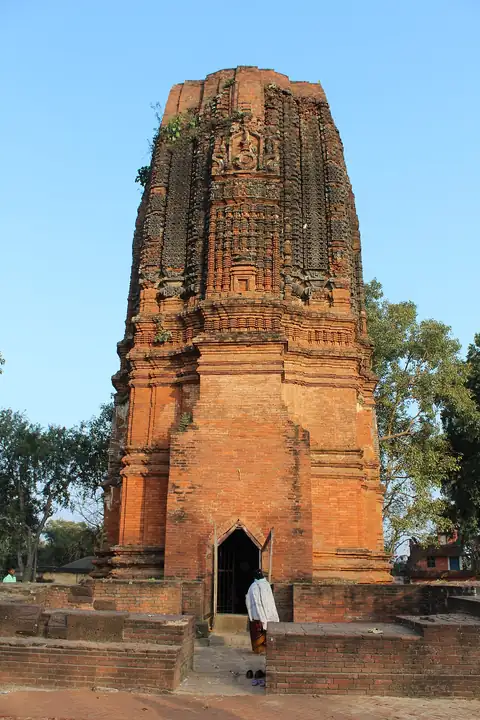 Living temple
Siddheswara Temple, Bahulara
A tall brick temple of Shiva from about the 11th century, one of the finest early brick towers (rekha deul) in Bengal. Its walls are decorated with carved brick and stucco.
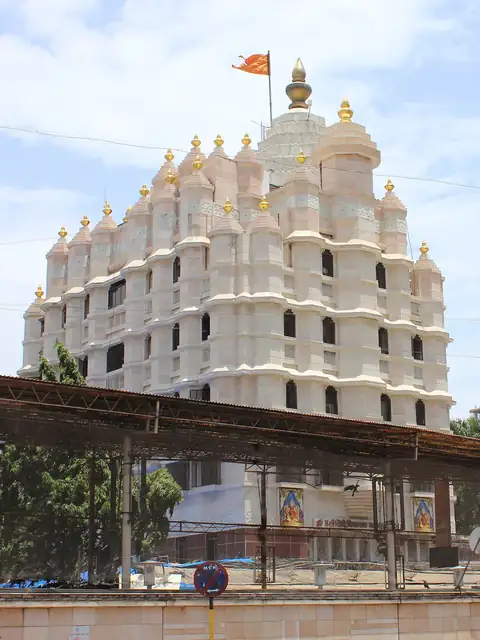 Rebuilt / restored for worship
Siddhivinayak Temple, Mumbai
Mumbai's most famous Ganesha temple, founded in 1801 by a childless woman so that other women's wishes might be granted. The image has its trunk turned to the right, a form believed to be powerful and demanding.
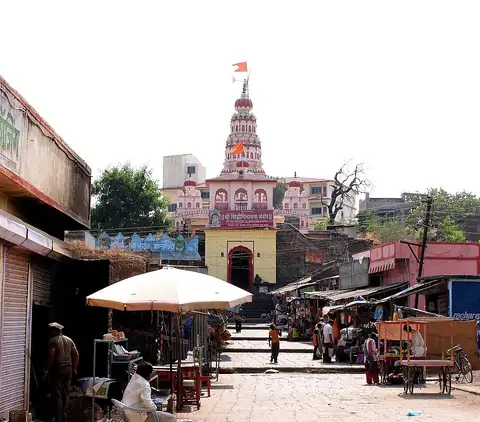 Living temple
Siddhivinayak Temple, Siddhatek
The only Ashtavinayak shrine whose Ganesha has his trunk turned to the right, worshipped as Siddhivinayak on a hillock by the Bhima. Vishnu is said to have prayed to Ganesha here before slaying the demons Madhu and Kaitabha.
Sita Ramachandra Swamy Temple, Bhadrachalam
A Rama temple on the Godavari built by the saint-poet Bhakta Ramadasu, who was jailed for spending tax money on it. Its Sri Rama Navami wedding festival, with pearls and silk sent by the state government, is the best known in the Telugu lands.
Sita Samahit Sthal, Sitamarhi
A modern temple on the Ganga at Sitamarhi, held to be the place where Sita returned to the earth. A very tall image of Hanuman stands in the complex.
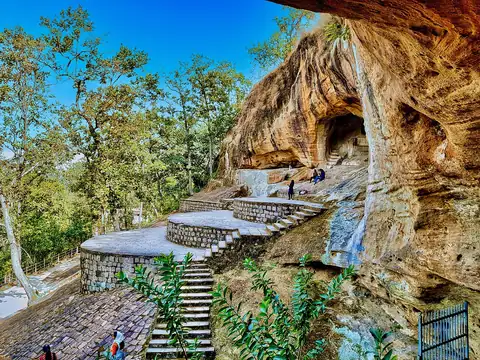 Ruined / monument
Sitabengra and Jogimara Caves, Ramgarh
Two rock-cut caves on Ramgarh hill in Surguja. Sitabengra is thought to be one of the oldest theatres in India, with rock-cut seating, and Jogimara has early paintings and a Brahmi inscription. Local tradition links the hill with Rama and Sita.
Sittanavasal Cave (Arivar Koil)
A Jain cave temple near Pudukkottai famous for its paintings of a lotus pond with fish, elephants and bathers, some of the oldest surviving paintings in South India. Ancient Jain stone beds on the hill above go back to the early centuries BCE.
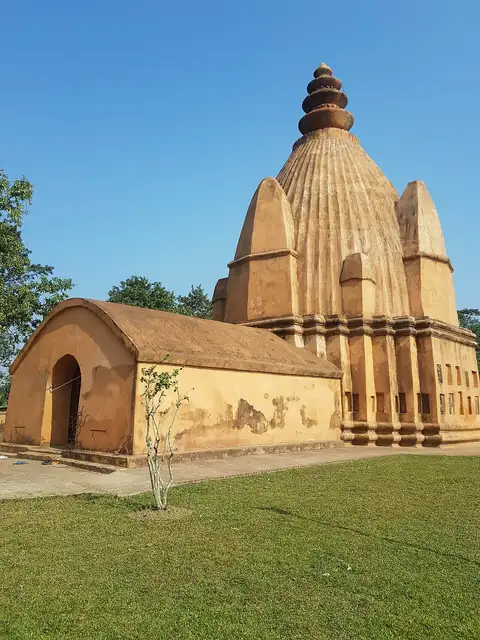 Living temple
Sivadol, Sivasagar
A tall Shiva temple of 1734 built by the Ahom queen Ambika beside the great Sivasagar tank, one of the tallest Hindu temples in India at about 32 m. It stands with the Vishnudol and Devidol.
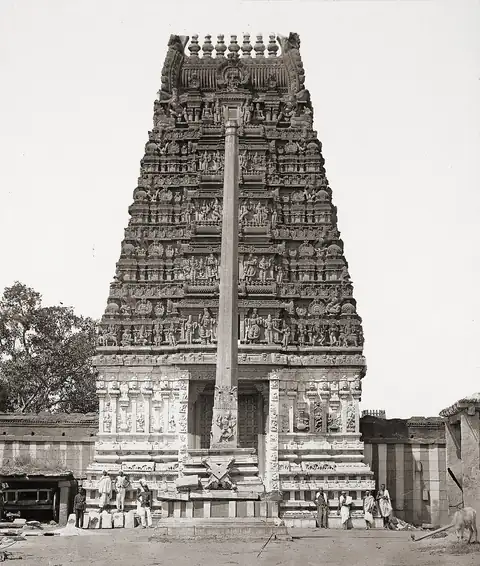 Living temple
Someshwara Temple, Halasuru
One of the oldest temples of Bengaluru, enlarged in the Vijayanagara style under Kempe Gowda, the city's founder, in the 16th century. Its tall gateway tower and pillared halls are a landmark of old Bengaluru.
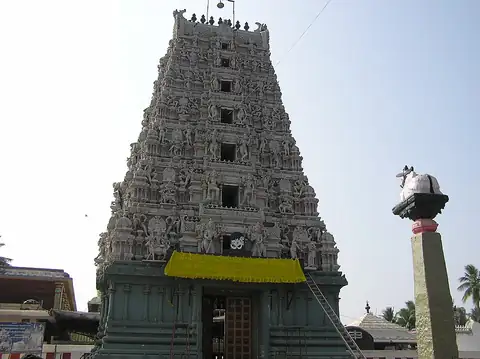 Living temple
Someswara Temple, Bhimavaram
One of the five Pancharama temples, where the linga is believed to change colour with the phases of the moon. The shrine has two storeys, with the goddess Annapurna above the Shiva sanctum.
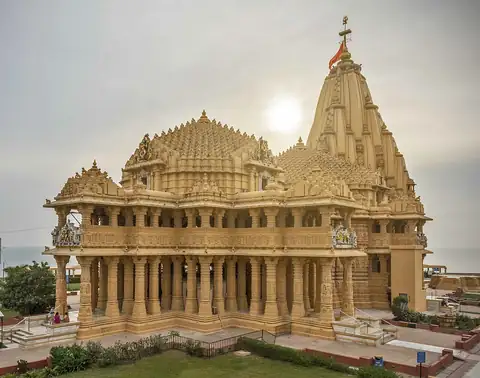 Rebuilt / restored for worship
Somnath Temple
The first of the twelve Jyotirlingas, on the Saurashtra coast. Sacked by Mahmud of Ghazni in 1026 and attacked repeatedly afterwards, it was rebuilt each time; the present temple was raised after Independence on the initiative of Sardar Vallabhbhai Patel and consecrated in 1951.
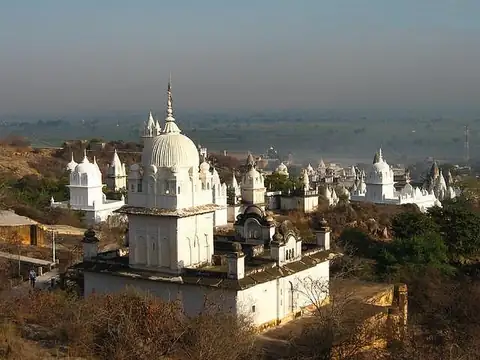 Living temple
Sonagiri Jain Temples
A hill covered with about a hundred white Digambar Jain temples, sacred as a place where many monks are believed to have attained liberation. The main temple is of Chandraprabha, the eighth Tirthankara.
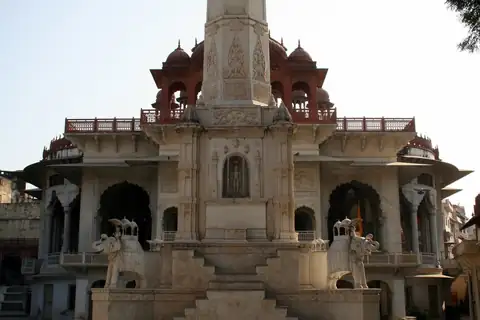 Living temple
Soniji ki Nasiyan, Ajmer
A red sandstone Digambar Jain temple in Ajmer built by Seth Moolchand Soni in 1864-65. Its Swarna Nagari hall holds a vast gilded model of Jain cosmology and the city of Ayodhya.
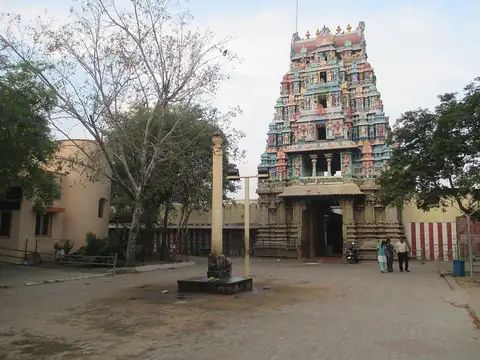 Living temple
Soundararaja Perumal Temple, Nagapattinam
The Divya Desam of the old port of Nagapattinam, where Vishnu is called the beautiful king. The serpent Adishesha and the child-devotee Dhruva are said to have worshipped here.
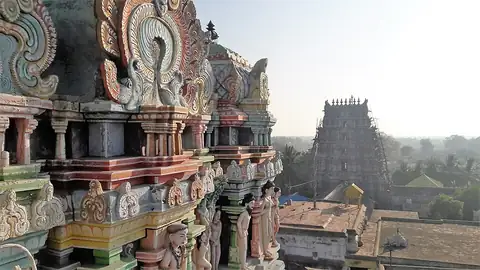 Living temple
Sowmya Narayana Perumal Temple, Thirukoshtiyur
The temple from whose tower Ramanuja is said to have proclaimed the sacred mantra to everyone, after his teacher had taught it to him under a vow of secrecy. Its multi-storey vimana shows Vishnu in four postures.
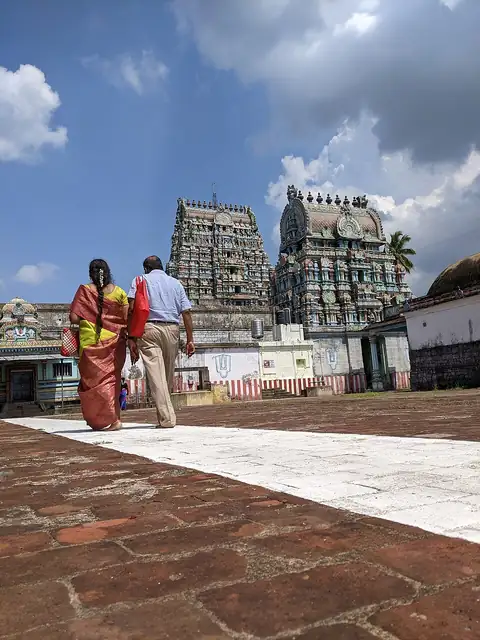 Living temple
Sowriraja Perumal Temple, Thirukannapuram
One of the five Pancha Krishna shrines, praised by five Alvars. The god's name, Sowriraja, recalls a legend in which Vishnu grew a lock of hair to save a priest's honour.
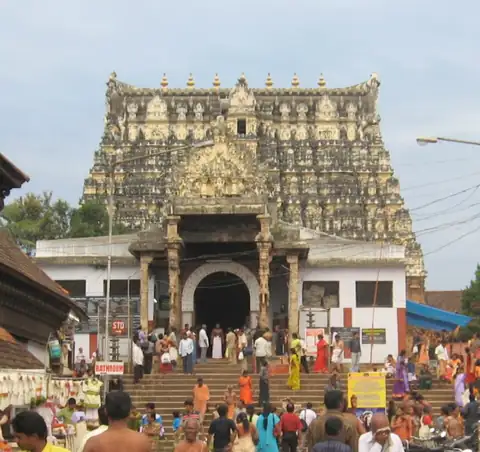 Living temple
Sree Padmanabhaswamy Temple
The temple of Vishnu as Padmanabha, reclining on the serpent Ananta, gives Thiruvananthapuram (city of Ananta) its name. It blends Kerala and Tamil Dravida styles, and was the state temple of Travancore. The opening of its vaults in 2011 revealed one of the largest known temple treasures.
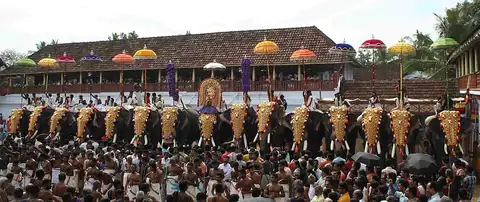 Living temple
Sree Poornathrayeesa Temple, Tripunithura
The royal temple of the Cochin kings at Tripunithura, dedicated to Vishnu seated on the serpent Ananta. Its Vrischikolsavam is the first big temple festival of the Kerala year.
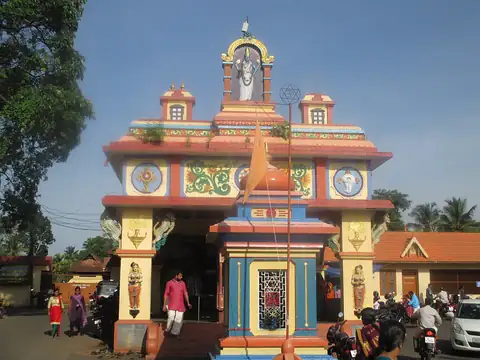 Living temple
Sreevallabha Temple, Thiruvalla
One of the oldest and largest temples of central Kerala, where Kathakali is performed almost every night as an offering to the god.
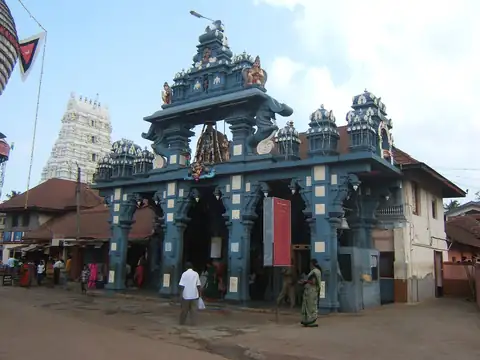 Living temple
Sri Krishna Matha, Udupi
The Krishna shrine founded by Madhvacharya, the teacher of Dvaita Vedanta, and served in turn by the eight Ashta Mathas of Udupi. Devotees see the child Krishna through a small window, the Kanakana Kindi, named after the poet-saint Kanaka Dasa.
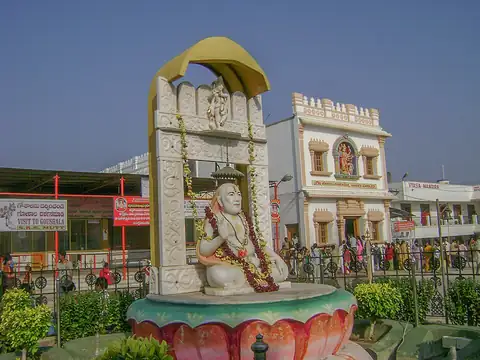 Living temple
Sri Raghavendra Swamy Matha, Mantralayam
The resting place (brindavana) of the Madhva saint Raghavendra Tirtha (1595-1671) on the bank of the Tungabhadra. It is one of the most visited pilgrimages of the Madhva tradition.
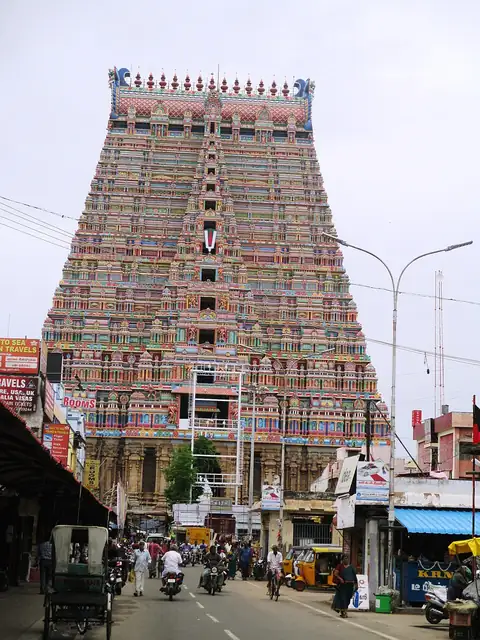 Living temple
Sri Ranganathaswamy Temple
On an island between the Kaveri and Kollidam rivers, this temple of the reclining Vishnu, Ranganatha, is the first of the 108 Divya Desams and among the largest functioning Hindu temple complexes in the world, with seven concentric enclosures. It was the home of the philosopher Ramanuja.
Sri Rangji Temple, Vrindavan
A large temple of Ranganatha in Vrindavan built in the South Indian style, with gopurams, a gold-plated pillar and walled courts. It follows the Sri Vaishnava tradition of Ramanuja.
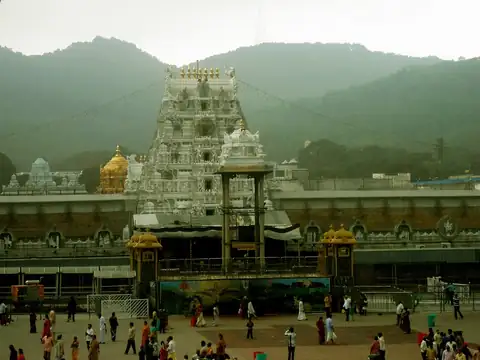 Living temple
Sri Venkateswara Temple, Tirumala
The hill temple of Venkateswara on the seventh of the Seshachalam hills is one of the most visited religious sites in the world. It is run by Tirumala Tirupati Devasthanams (TTD), known for its hair-tonsure offerings, hundi and the Tirupati laddu.
Sri Vetrimalai Murugan Temple
A Dravidian-style Murugan temple in Sri Vijaya Puram (Port Blair). It began as a shrine on Ross Island, the old British headquarters of the islands, and was moved to Port Blair after independence.
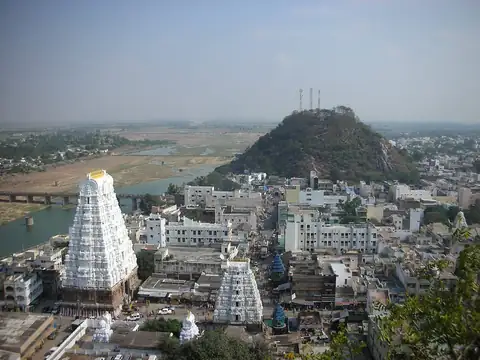 Living temple
Srikalahasteeswara Temple, Srikalahasti
The Shiva temple of the wind (Vayu) among the five element shrines of the south, named after a spider (sri), a snake (kala) and an elephant (hasti) who worshipped here. It is famous for the hunter-saint Kannappa and for rites to ease the influence of Rahu and Ketu.
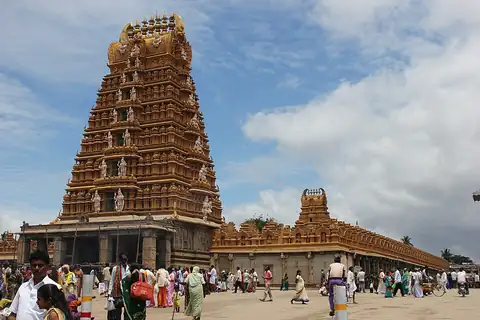 Living temple
Srikanteshwara Temple, Nanjangud
One of the largest temples in Karnataka, dedicated to Shiva as Nanjundeshwara, 'the god who swallowed poison'. It is known for healing, for the Wodeyars' patronage and for an emerald linga said to be a gift of Tipu Sultan.
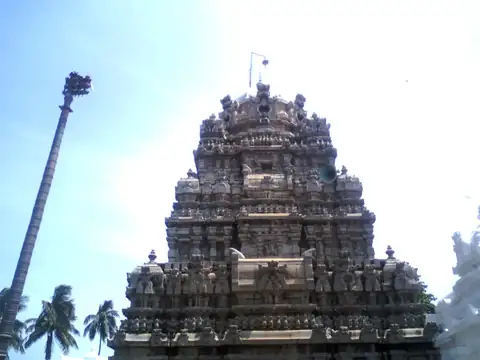 Living temple
Srikurmanatha Temple, Srikurmam
A rare temple of Vishnu in his tortoise (Kurma) form, near the coast of Srikakulam. It is linked to Ramanuja, who is said to have turned the shrine from Shaiva to Vaishnava worship, and it keeps a sanctuary for star tortoises.
Srinivasa Perumal Temple, Thiruvellakulam
One of the eleven Divya Desams of Thirunangur near Sirkazhi. The god is called Annan, the elder brother of Venkateswara of Tirumala, and the temple is the birthplace of Kumudavalli, wife of Thirumangai Alvar.
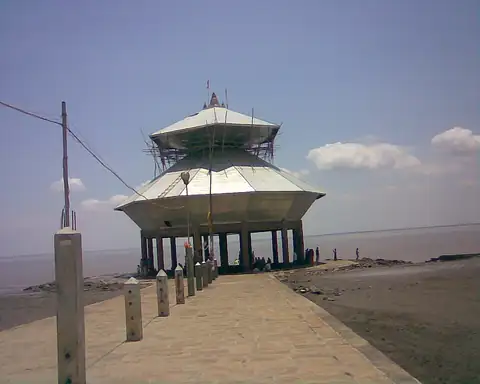 Living temple
Stambheshwar Mahadev Temple, Kavi Kamboi
A Shiva shrine on the shore of the Gulf of Khambhat that is swallowed by the sea at every high tide and reappears as the water goes out, so devotees must time their darshan by the tides.
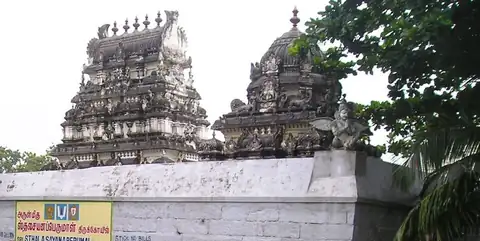 Living temple
Sthalasayana Perumal Temple, Mamallapuram
The Divya Desam of Mamallapuram, where Vishnu lies on the bare ground rather than on his serpent. Bhoothath Alvar, one of the first three Alvars, was born here.
Sthaneshwar Mahadev Temple, Thanesar
A Shiva temple at Thanesar, the old city of Sthanvishvara, which takes its name from Shiva as the Lord of the Place (Sthanu). Thanesar was the capital of King Harshavardhana in the 7th century and was sacked by Mahmud of Ghazni in 1014.
Subrahmanya Swamy Temple, Mopidevi
A temple of Subrahmanya in the form of a serpent, worshipped at an anthill in the Krishna delta. Couples come to pray for children, and people come for relief from naga dosha.
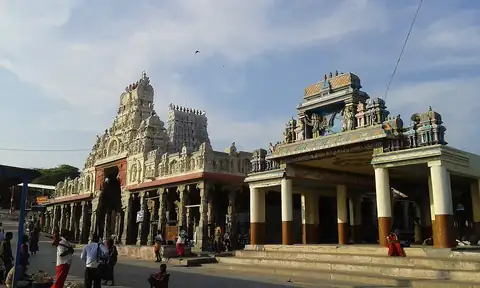 Living temple
Subramaniya Swamy Temple, Tiruchendur
The seashore temple of Murugan at Tiruchendur, the second of his six abodes, where he is said to have defeated the demon Surapadman. The Soorasamharam enacted on the beach during Kanda Sashti draws vast crowds.
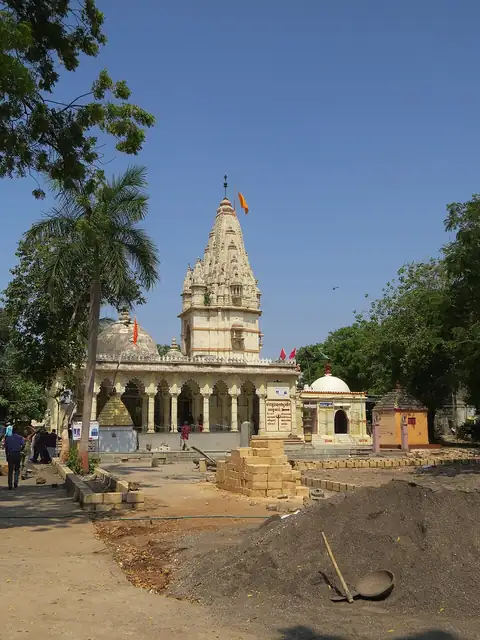 Living temple
Sudama Mandir, Porbandar
A temple in Porbandar dedicated to Sudama, Krishna's poor childhood friend, said to have been born here. It is one of the very few temples of Sudama in India.
Sudh Mahadev Temple
An old Shiva temple in the hills near Patnitop, where pieces of a large trident are kept that are said to be Shiva's own. A fair is held on Shravan Purnima, and nearby Mantalai is held to be where Shiva and Parvati married.
Sukreswar Temple, Guwahati
A Shiva temple on a hillock above the Brahmaputra, built in 1744 by the Ahom king Pramatta Singha. Its riverside ghat is a favoured place for funeral rites.
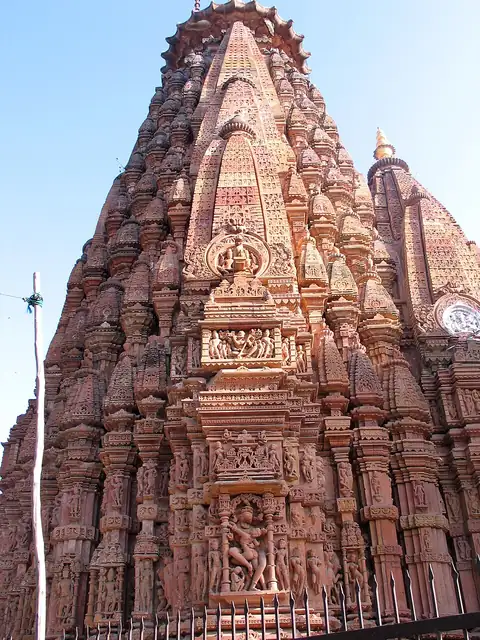 Living temple
Sun Temple, Jhalrapatan
A tall early medieval temple at Jhalrapatan, popularly called the Sun Temple for the images of Surya on its walls. The sanctum now holds Vishnu as Padmanabha.
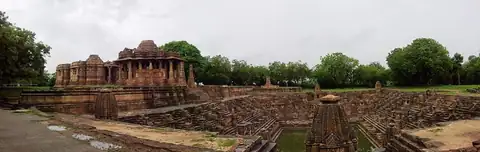 Ruined / monument
Sun Temple, Modhera
A Sun temple built under Bhima I of the Chaulukya (Solanki) dynasty in 1026-27 CE, just after Mahmud of Ghazni's raid on Gujarat. It has a sanctum hall, an assembly hall and a great stepped tank (Surya Kund). Its spire is lost and it is no longer in worship.
Sundha Mata Temple
A temple of the goddess Chamunda in a cave on Sundha hill near Bhinmal. An inscription of 1262 here, set up under the Chauhan ruler Chachigadeva, is an important record of the Chauhans of Jalore.
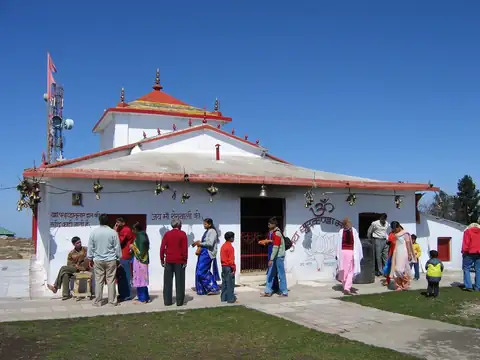 Living temple
Surkanda Devi Temple
A hilltop goddess temple at about 2,700 metres near Dhanaulti, with wide views of the high Himalaya. In local tradition the head of Sati fell here.
Surya Mandir, Bundu
A modern Sun temple near Bundu, built in the shape of Surya's chariot with 18 carved wheels and seven horses. It is a major centre of Chhath worship in the Ranchi region.
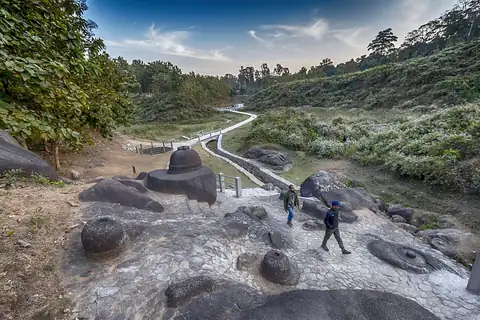 Ruined / monument
Surya Pahar
A hill near Goalpara with hundreds of rock-cut Shiva lingams, images of Hindu gods, Jain Tirthankaras and Buddhist stupas. A carved image of Surya gives the hill its name.
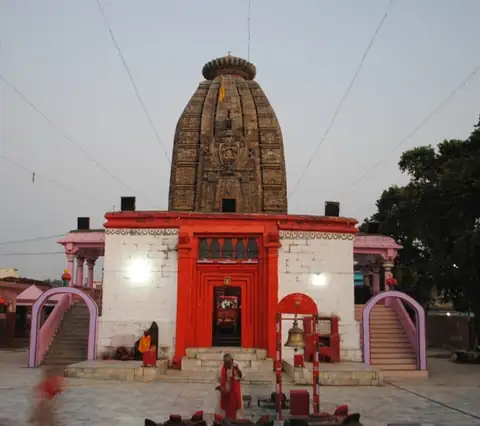 Living temple
Surya Temple, Deo
A stone sun temple at Deo, unusual in facing west, the centre of one of Bihar's largest Chhath celebrations.
Suryanar Kovil
A temple of Surya, the sun god, near Kumbakonam, built under the Chola king Kulottunga I. It is the chief of the nine Navagraha temples of the Kaveri delta and one of the very few temples in South India where Surya is the main deity.
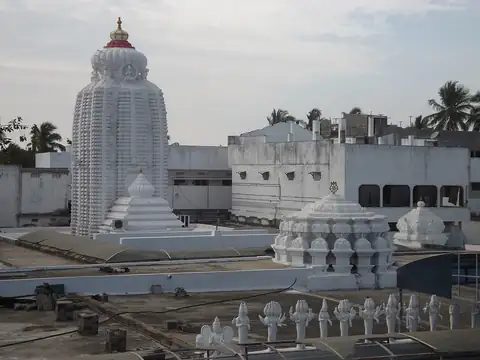 Living temple
Suryanarayana Temple, Arasavalli
One of the few temples in India where the Sun is worshipped in daily puja. Twice a year the rising sun shines through the gate straight onto the feet of the image.
Swami Samarth Math, Akkalkot
The shrines of the saint Swami Samarth of Akkalkot, honoured as an incarnation of Dattatreya, who lived here until 1878. Devotees worship at the banyan tree where he sat and at his samadhi.
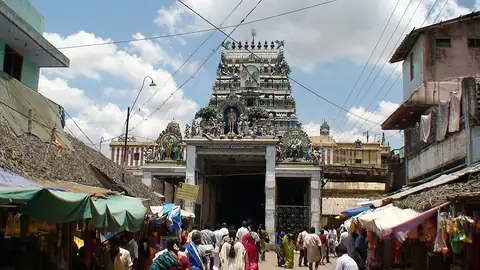 Living temple
Swamimalai Swaminatha Swamy Temple
One of the six abodes of Murugan, on a built-up mound near Kumbakonam. Here Murugan is said to have explained the meaning of Om to his father Shiva, and is worshipped as Swaminatha, 'the teacher of the lord'.
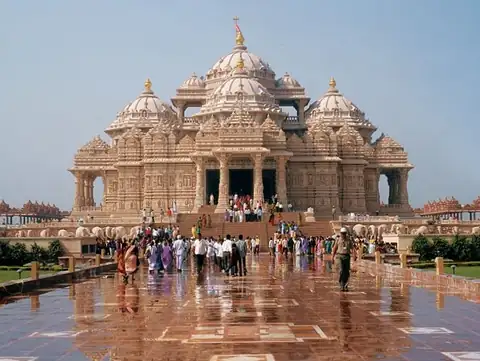 Living temple
Swaminarayan Akshardham, Delhi
A vast temple complex on the Yamuna, opened in 2005 by the BAPS Swaminarayan Sanstha. Its central monument of pink sandstone and white marble is carved with thousands of figures, and the complex includes exhibitions, a boat ride through Indian history and a musical fountain.
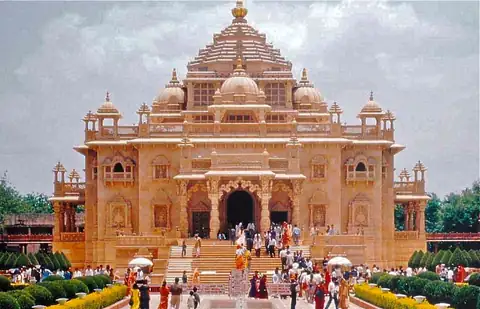 Living temple
Swaminarayan Akshardham, Gandhinagar
A large pink sandstone temple of the BAPS Swaminarayan organisation, opened in 1992, with a gold-leafed image of Swaminarayan and exhibition halls on Indian culture. In 2002 it was the target of a terrorist attack in which more than 30 people died.
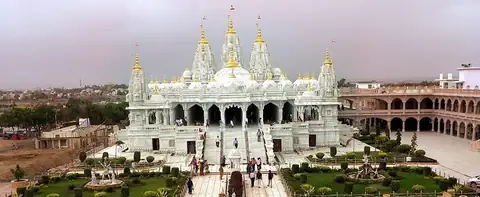 Rebuilt / restored for worship
Swaminarayan Temple, Bhuj
One of the six temples built under Swaminarayan himself, first opened in 1823 at Bhuj. The old temple was destroyed in the 2001 Kutch earthquake and replaced by a large white marble temple opened in 2010.
Swaminarayan Temple, Junagadh
One of the six temples built under Swaminarayan, opened in 1828 at Junagadh at the foot of Girnar. Its construction was overseen by Brahmanand Swami, the poet-saint of the sampraday.
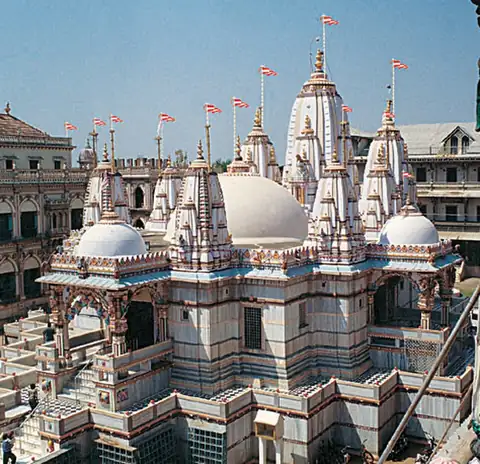 Living temple
Swaminarayan Temple, Vadtal
The seat of the Lakshmi Narayan Dev diocese of the Swaminarayan Sampradaya, with images installed by Swaminarayan himself in 1824. The temple has nine domes and is one of the most important in the tradition.
Swayambhu Ganapati Temple, Ganpatipule
A beach temple of a self-formed Ganesha in a hillock on the Konkan coast. Pilgrims walk around the whole hill, which is taken to be the god's body, and the temple faces west to the sea.
Swetharanyeswarar Temple, Thiruvenkadu
A large Shiva temple near Poompuhar that is the Navagraha shrine of Budha (Mercury). It is a Paadal Petra Sthalam, and fine Chola bronzes, including a celebrated Ardhanarishvara, were found in the village.
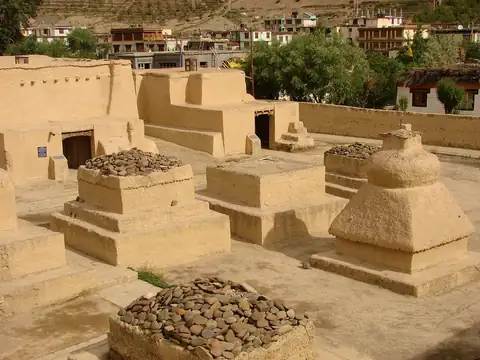 Living temple
Tabo Monastery
A Buddhist monastery in the Spiti valley, founded in 996 by the translator Rinchen Zangpo for the Guge king Yeshe-O. Its mud-walled halls keep some of the oldest surviving murals and clay images of Tibetan Buddhism.
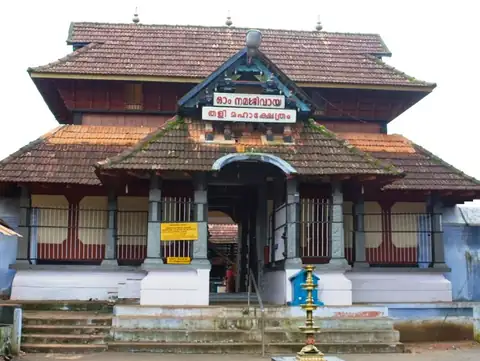 Living temple
Tali Shiva Temple, Kozhikode
The chief temple of the Zamorins of Calicut, in the heart of Kozhikode. It hosted the Revathi Pattathanam, an annual assembly where scholars were honoured by the Zamorin.
Talpagiri Ranganatha Swamy Temple, Nellore
A Vishnu temple on the bank of the Pennar in Nellore, with Ranganatha reclining. Its tall gopuram is a landmark of the city.
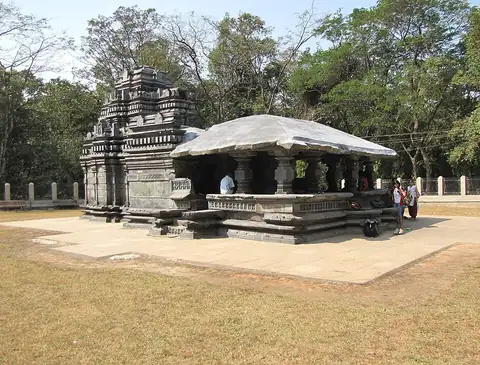 Living temple
Tambdi Surla Mahadev Temple
A small basalt Shiva temple of the 12th-13th century, hidden in the forest at the foot of the Western Ghats. It is the oldest surviving temple in Goa, having escaped destruction because of its remote location.
Tamreswari Temple ruins
The ruins of a goddess temple of the Chutiya kingdom, known as the Copper Temple from its copper roof. The goddess Kesaikhaiti, linked with Tamreswari, was a fierce deity, and human sacrifice is recorded at her shrine. The site is usually identified with ruins near Paya in Lohit district.
Tanginath Dham
A hilltop site in Gumla district with many old Shiva lingams, sculptures and a large iron trident standing in the open that is said never to rust. Local people link the trident with the axe of Parashurama.
Tanot Mata Temple
A goddess temple near the India-Pakistan border in the Thar desert, famous because Pakistani shells that fell around it in the 1965 war are said not to have exploded. The Border Security Force runs the temple.
Tapovan, Deoghar
A rocky hill with caves near Deoghar, where sages are said to have done penance. A temple of Shiva as Taponath Mahadev stands at its foot, and a cave on the hill is linked with the 20th-century saint Balananda Brahmachari.
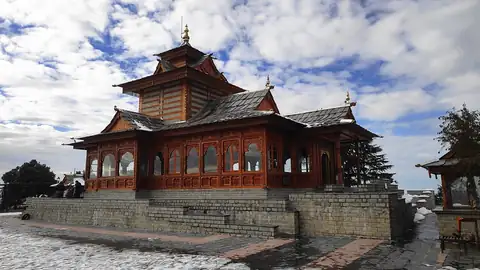 Living temple
Tara Devi Temple, Shimla
A hilltop temple of the goddess Tara about 11 km from Shimla, said to have been founded by the Sen rulers of Keonthal, who brought her worship from Bengal.
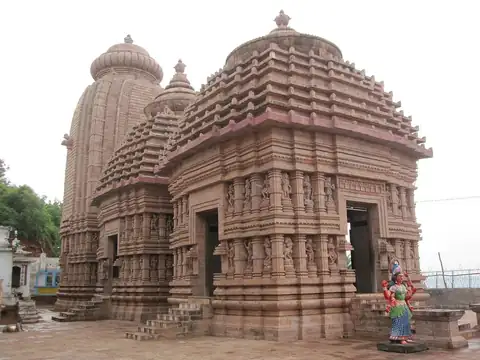 Living temple
Tara Tarini Temple, Ganjam
A hilltop temple of the twin goddesses Tara and Tarini above the Rushikulya river, counted in Odisha among the four chief (Adi) Shakti Peethas. It is a favourite place for children's first haircut, and Tuesdays in Chaitra draw huge crowds.
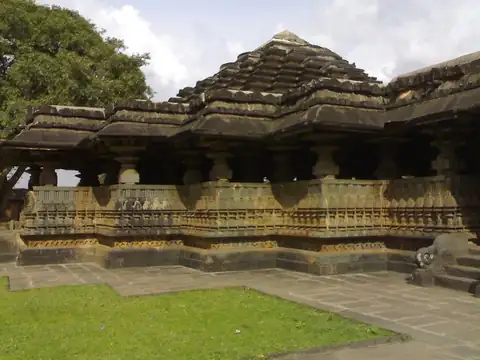 Living temple
Tarakeshwara Temple, Hangal
A large 12th-century Shiva temple at Hangal, built under the Kadambas of Hangal, who ruled as vassals of the Western Chalukyas. It is famous for the huge carved ceiling of its hall, one of the largest of its kind.
Tarakeswar Temple
A Shiva temple of 1729 with a self-manifested linga, the goal of a great pilgrimage in the month of Shravan, when devotees carry Ganga water on foot from Baidyabati.
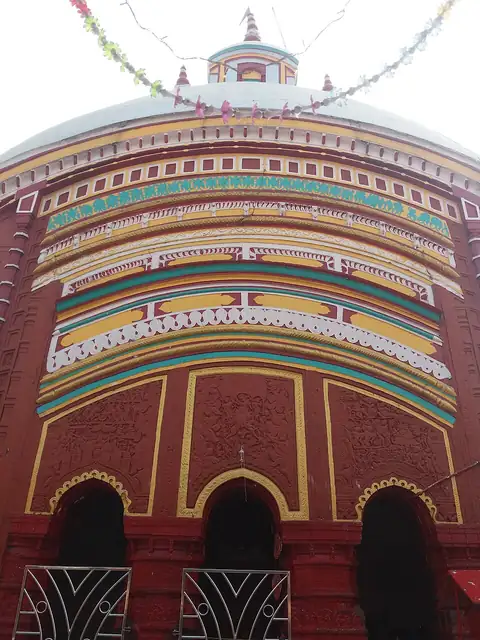 Living temple
Tarapith Temple
A temple of the goddess Tara, one of the ten Mahavidyas, beside a cremation ground in Birbhum. It is famous as a seat of tantric practice and for the 19th-century saint Bamakhepa. Some traditions count it a Shakti Peetha.
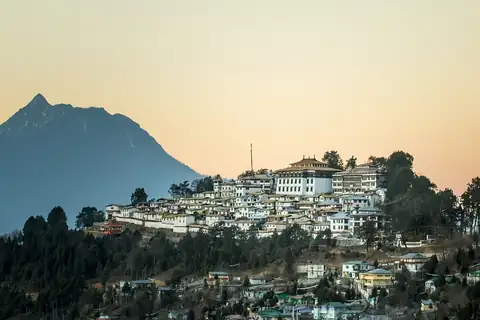 Living temple
Tawang Monastery
The largest Buddhist monastery in India, founded in 1680-81 by Merak Lama Lodre Gyatso at the wish of the fifth Dalai Lama. It belongs to the Gelug school.
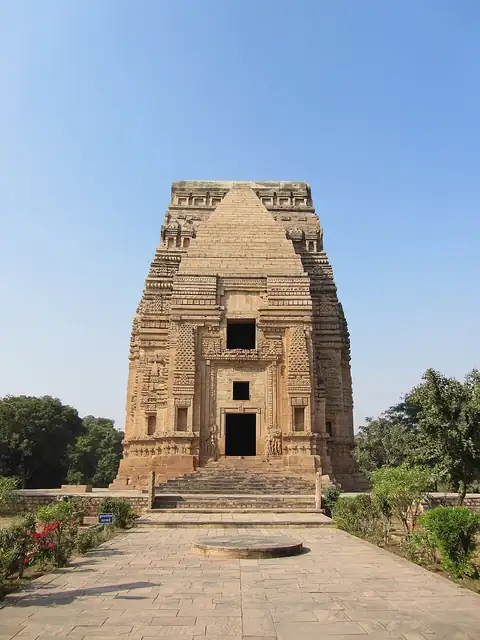 Ruined / monument
Teli ka Mandir, Gwalior
The tallest building in Gwalior fort, a temple of the 8th-9th century about 30 m high, with an unusual wagon-vault roof of the kind seen in south India. It is now empty and protected as a monument.
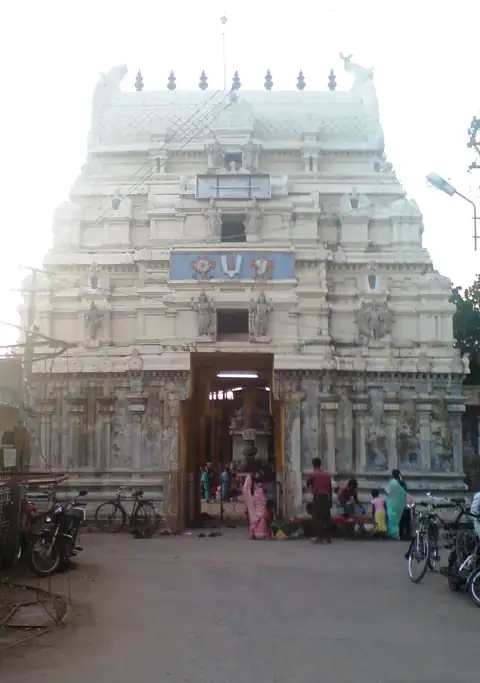 Living temple
Thadalan Temple, Sirkazhi
A Divya Desam in Sirkazhi, where Vishnu is shown as Trivikrama measuring the worlds. It is remembered for the meeting of Thirumangai Alvar and the Shaiva saint Sambandar.
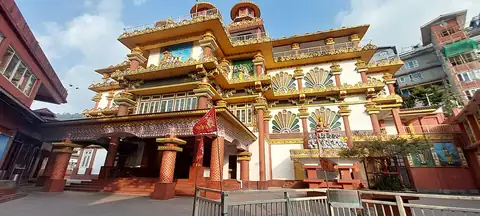 Living temple
Thakurbari Temple, Gangtok
The oldest Hindu temple in Gangtok, in the heart of the city, built in the 1930s on land given by the Chogyal of Sikkim. It houses images of many deities.
Thamaraiyal Kelvan Temple, Thiruparthanpalli
One of the eleven Divya Desams of Thirunangur near Sirkazhi. Arjuna (Partha) is said to have worshipped here, giving the place its name.
Thanjai Mamani Kovil, Thanjavur
A group of three Vishnu shrines on the Vennar river at Thanjavur, counted together as one Divya Desam. Here Vishnu as Narasimha is said to have killed the demon Thanjan, who gave the city its name.
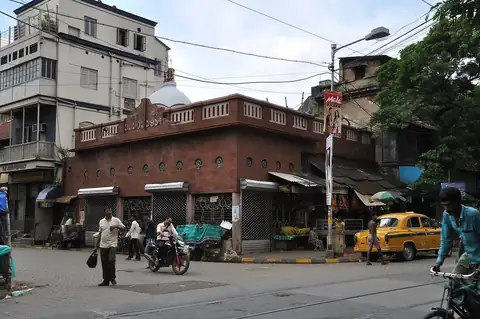 Living temple
Thanthania Kalibari, Kolkata
A small and old Kali temple of north Kolkata, said to have been founded in 1703, where the goddess is worshipped as Siddheshwari. Ramakrishna is said to have sung here.
Thanumalayan Temple, Suchindram
A temple at Suchindram where Shiva (Sthanu), Vishnu (Mal) and Brahma (Ayan) are worshipped together in one linga. It has an 18-foot Hanuman, musical pillars, and a seven-storey gopuram.
Thawe Durga Temple
A goddess temple in Gopalganj district, famous for the story of the devotee Rahshu Bhagat, for whom the goddess is said to have appeared.
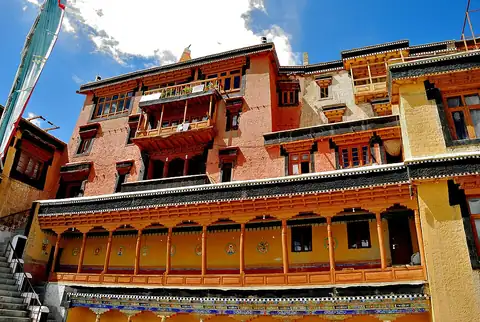 Living temple
Thiksey Monastery
A Gelug monastery of the 15th century rising in tiers up a hill in the Indus valley, often compared to the Potala Palace in Lhasa. Its Maitreya temple, with a statue about 15 m high, was built to mark the Dalai Lama's visit in 1970.
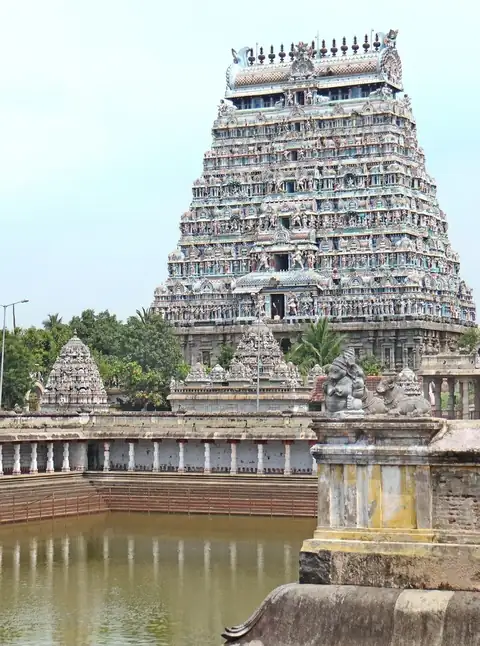 Living temple
Thillai Nataraja Temple
The temple of Shiva as Nataraja, the cosmic dancer, and one of the Pancha Bhoota Sthalams, representing space (akasha). Its gopurams carry the 108 karanas, dance poses of the Natya Shastra. It also houses the Vaishnava Govindaraja shrine.
Thirukameswarar Temple, Villianur
A large Shiva temple at Villianur, near Puducherry, with Shiva as Thirukameswarar and the goddess as Gokilambal. It is said to date from the Chola period, and its chariot festival is the largest in Puducherry.
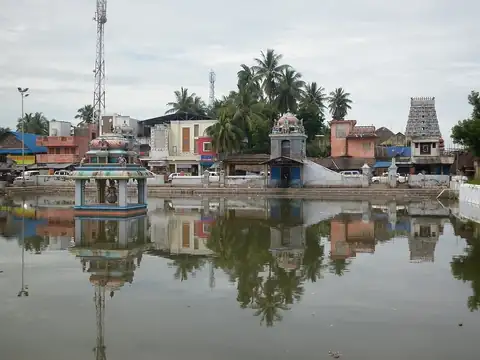 Living temple
Thirunallar Dharbaranyeswarar Temple
A Shiva temple at Thirunallar near Karaikal, praised in the Tevaram hymns and best known for its shrine of Saneeswaran (Saturn). Lakhs of devotees come here to bathe in the Nala Theertham, especially when Saturn changes signs.
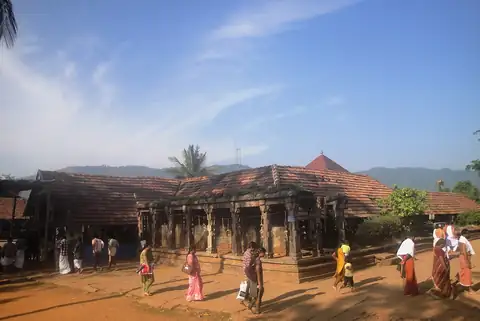 Living temple
Thirunelli Maha Vishnu Temple
A forest temple of Vishnu in the Brahmagiri hills of Wayanad, about 900 m above sea level. Water reaches it through a stone aqueduct, and pilgrims come to perform rites for their ancestors in the Papanasini stream, which has earned it the name Kashi of the South.
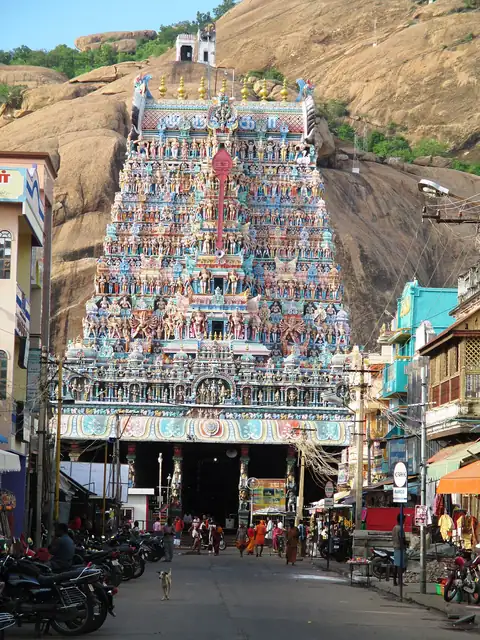 Living temple
Thiruparankundram Murugan Temple
The first of the six abodes (Arupadai Veedu) of Murugan, cut into the side of a rocky hill near Madurai. Murugan is said to have married Deivanai, daughter of Indra, here.
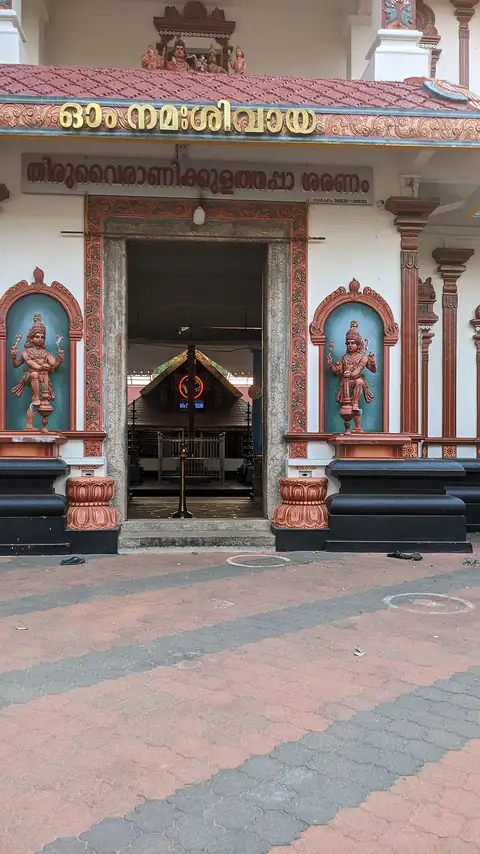 Living temple
Thiruvairanikulam Mahadeva Temple
A temple of Shiva and Parvati on the Periyar near Aluva. The shrine of Parvati is opened for only twelve days a year, around Thiruvathira in Dhanu (December-January), when lakhs of devotees come.
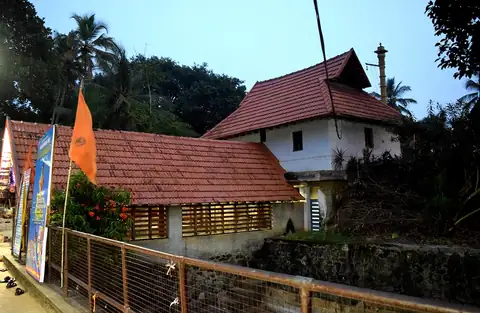 Living temple
Thiruvallam Sree Parasurama Temple
The only major temple of Parashurama in Kerala, on the bank of the Karamana river at Thiruvallam. Parashurama is said to have created the land of Kerala, and the temple is a centre of rites for the ancestors.
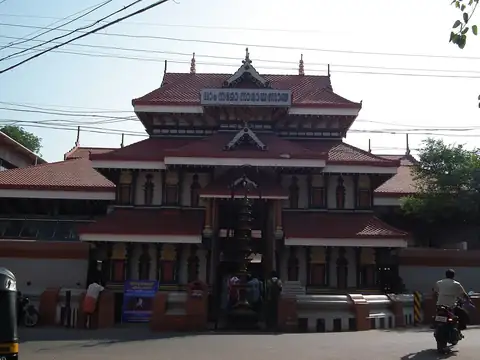 Living temple
Thiruvambady Sri Krishna Temple
A Krishna temple in Thrissur, one of the two main temples that take part in the Thrissur Pooram. Its procession and fireworks compete each year with those of the Paramekkavu temple.
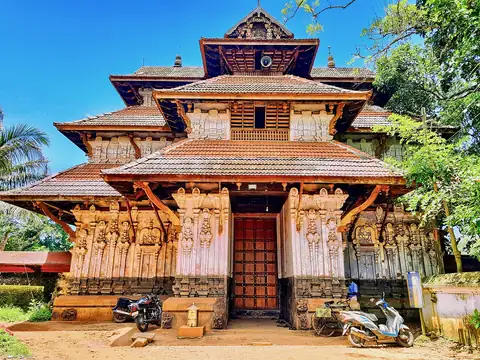 Living temple
Thiruvanchikulam Mahadeva Temple
A Shiva temple near Kodungallur, the old Chera capital, and the only temple in Kerala praised in the Tamil Tevaram hymns. The saint Sundarar and his friend, the Chera king Cheraman Perumal, are said to have left for Kailasa from here.
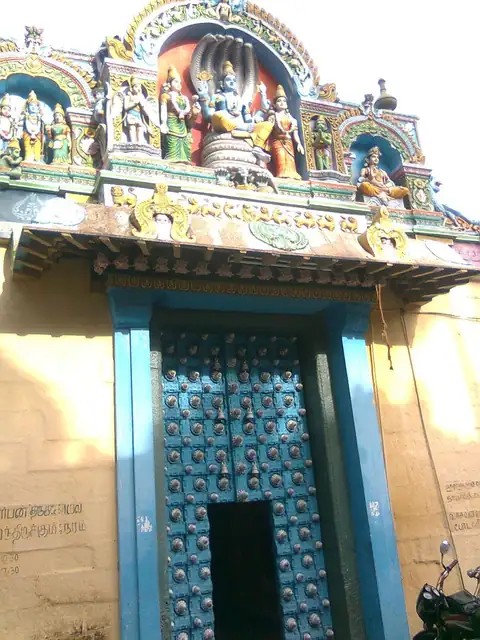 Living temple
Thiruvazhmarban Temple, Thiruppathisaram
A Divya Desam near Nagercoil in the Kerala style, connected with Nammalvar's mother, who was born here.
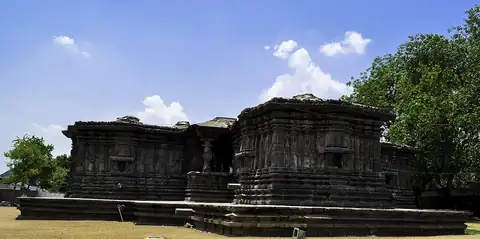 Living temple
Thousand Pillar Temple, Hanamkonda
A star-shaped triple temple of the Kakatiya king Rudradeva, with shrines to Shiva, Vishnu and Surya and a richly carved pillared hall. Its connecting dance hall was dismantled for restoration in 2004 and rebuilt by 2022.
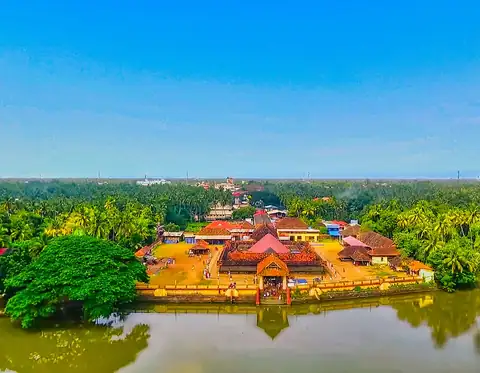 Living temple
Thriprayar Sree Rama Temple
A temple of Rama with four arms on the bank of the Thriprayar river, first of the four Nalambalam temples of Rama and his brothers. Its deity, Thriprayar Thevar, leads the gathering of gods at the Arattupuzha Pooram.
Thyagarajaswamy Temple, Thiruvottriyur
An old Shiva temple in north Chennai, a Paadal Petra Sthalam rich in Chola inscriptions. Its linga, Adipureeswarar, is kept under a cover that is removed only for three days a year, and the goddess Vadivudai Amman is widely worshipped.
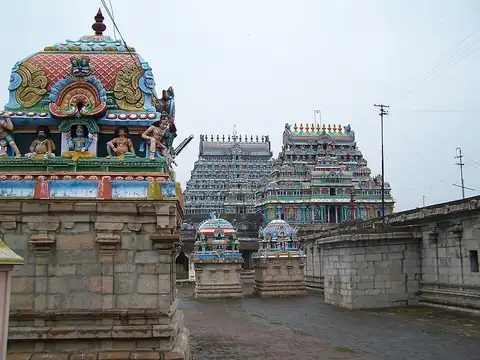 Living temple
Thyagarajaswamy Temple, Tiruvarur
A vast temple complex in the Kaveri delta, dedicated to Shiva as Thyagaraja, the form of Shiva seated with Uma and Skanda. Its chariot is the largest in Tamil Nadu, and the town was the birthplace of all three great composers of Carnatic music.
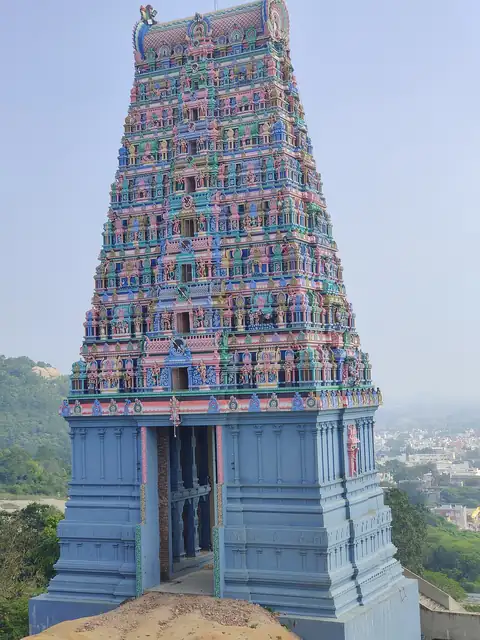 Living temple
Tiruttani Murugan Temple
One of the six abodes of Murugan, on a hill at Tiruttani in the north of Tamil Nadu. Murugan is said to have rested here, his anger calmed, after defeating the demons, and to have married Valli, the tribal girl.
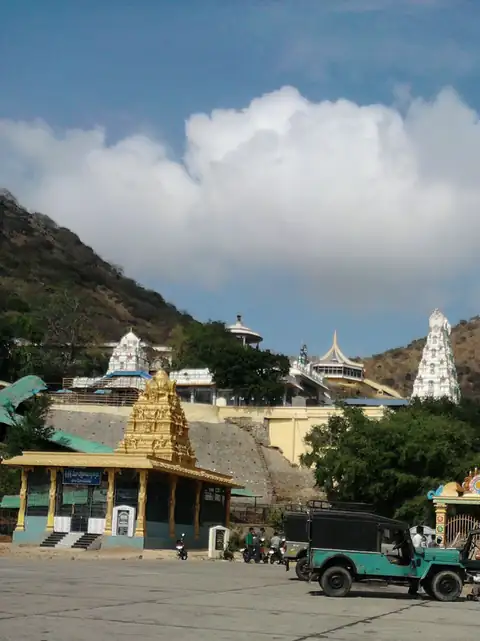 Living temple
Trikoteswara Swamy Temple, Kotappakonda
A Shiva temple on a hill with three peaks near Narasaraopet. Shiva is worshipped here as Dakshinamurthy, the young teacher, and its Shivaratri festival is known for its huge decorated towers (prabhalu) brought by villages.
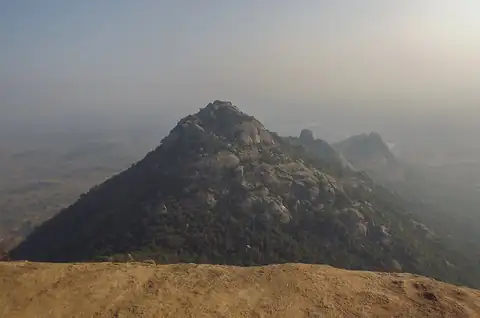 Living temple
Trikut Parvat, Deoghar
A three-peaked hill near Deoghar with a temple of Shiva as Trikuteshwar at its foot. It is part of the Deoghar pilgrimage, and a ropeway once carried visitors to the top.
Trilokinath Temple, Tunde
A stone temple in the Pattan valley of Lahaul, where a six-armed marble image is worshipped by Buddhists as Avalokiteshvara and by Hindus as Shiva, lord of the three worlds.
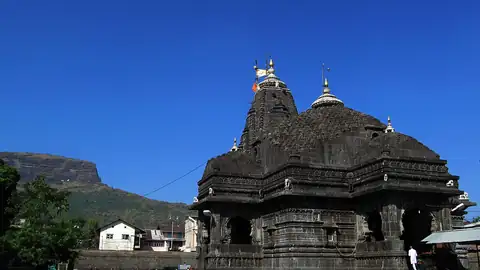 Rebuilt / restored for worship
Trimbakeshwar Temple
A Jyotirlinga temple near the source of the Godavari, whose linga has three small faces for Brahma, Vishnu and Shiva. The earlier temple was destroyed under Aurangzeb, and the present black-basalt temple was built by Peshwa Balaji Baji Rao in the 18th century.
Trinetra Ganesh Temple, Ranthambore
A temple of the three-eyed Ganesha inside Ranthambore Fort, in the middle of the tiger reserve. Devotees post letters and wedding invitations to Ganesha here. The fort is part of the Hill Forts of Rajasthan World Heritage Site.
Tripura Sundari Temple
A Shakti Peetha at Udaipur in Tripura, built in 1501 by Maharaja Dhanya Manikya, where Sati's right foot is said to have fallen. The hill's shape is likened to a tortoise, so the site is called Kurma Peetha.
Tripura Sundari Temple, Talwara
A temple of the goddess Tripura Sundari near Talwara in Banswara, with an eighteen-armed black stone image. It is the most important goddess shrine of southern Rajasthan.
Triyuginarayan Temple
A Vishnu temple where Shiva and Parvati are believed to have married, with Vishnu giving the bride away. A fire that has burned since their wedding, through three yugas, is kept alive in front of the temple.
Tsuglagkhang Complex, McLeod Ganj
The main temple of the Tibetan community in exile at McLeod Ganj, beside the residence of the Dalai Lama. It houses images of the Buddha, Avalokiteshvara and Padmasambhava, and the Namgyal monastery.
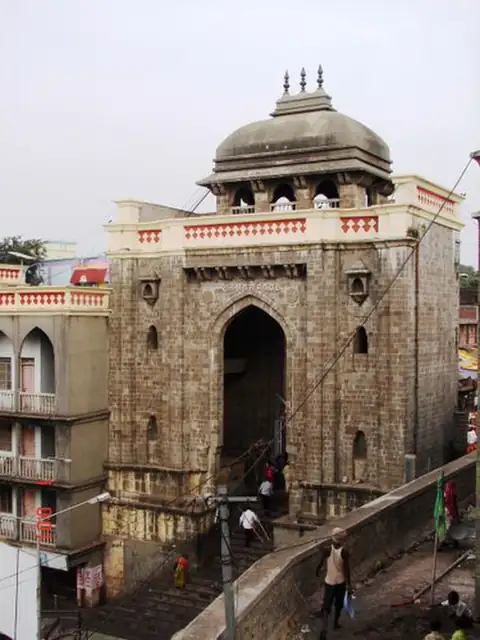 Living temple
Tulja Bhavani Temple, Tuljapur
The temple of Bhavani, family goddess of Chhatrapati Shivaji and of many Maratha and other families. Counted among the 'three and a half' Shakti Peethas of Maharashtra, it is the most important goddess temple of the Marathwada region.
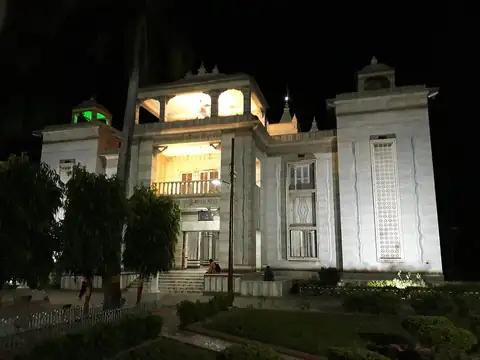 Living temple
Tulsi Manas Mandir, Varanasi
A white marble temple of Rama in Varanasi, built in 1964 at the place where Tulsidas is said to have written the Ramcharitmanas. Verses of the Ramcharitmanas are carved on its walls.
Tulsi Mandir (Vrinda Devi), Jalandhar
A temple in Jalandhar dedicated to Vrinda, the faithful wife of the demon king Jalandhar after whom the city is said to be named. Vrinda is worshipped in the form of the tulsi plant.
Tulsishyam Temple, Gir
A Krishna temple in the Gir forest, beside hot springs. A temple of Rukmini stands on a hill above it, and the place is known for its forest setting among the Asiatic lions.
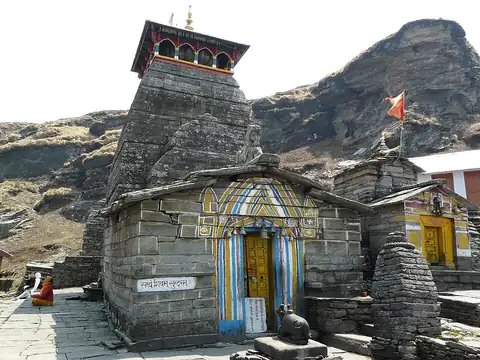 Living temple
Tungnath Temple
The highest Shiva temple in the world, at about 3,680 m, one of the Panch Kedar, where Shiva's arms are said to have appeared. It is reached by a short trek from Chopta.
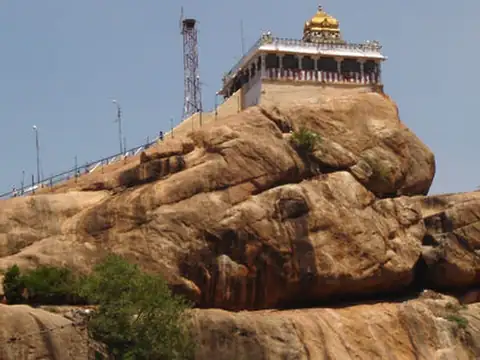 Living temple
Uchi Pillayar Temple, Rockfort
A small Ganesha shrine on the top of the Rockfort, an 83-metre rock in the middle of Tiruchirappalli. The rock also holds the Thayumanavar Shiva temple and Pallava cave temples.
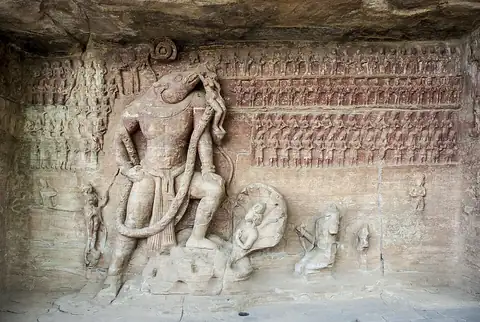 Ruined / monument
Udayagiri Caves, Vidisha
Some 20 rock-cut caves of the early 5th century, with an inscription of 401 from the reign of Chandragupta II. Their great relief of Vishnu as Varaha rescuing the earth is one of the most famous works of Gupta art.
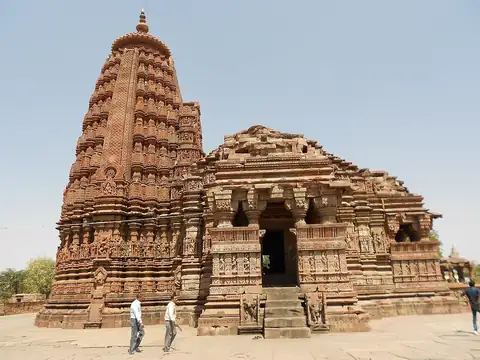 Living temple
Udayeshwara Temple, Udaipur (Vidisha)
A Shiva temple at Udaipur in Vidisha district, built under the Paramara king Udayaditya in the 11th century. It is one of the finest surviving temples in the Bhumija style, with a spire of rows of miniature spires.
Ugratara Nagar Mandir, Chandwa
A goddess temple in Nagar village near Chandwa in Latehar district, where Ugratara is worshipped along with Lakshmi. It is linked with the old rulers of the Tori estate and draws large crowds at Navaratri.
Ugratara Temple, Guwahati
A temple of the goddess Ugratara in Guwahati, built in 1725 by the Ahom king Siva Singha beside the Jor Pukhuri tanks. There is no image; the goddess is worshipped in a small pit filled with water.
Ugratara Temple, Mahishi
A temple of the goddess Ugratara at Mahishi in Mithila, held by local tradition to be a Shakti Peetha and linked with the scholar Mandana Mishra.
Ujjaini Mahankali Temple, Secunderabad
A goddess temple in Secunderabad founded in 1815 by a soldier who prayed to Mahakali of Ujjain during a cholera epidemic. It is a centre of the Bonalu festival, when women carry pots of food to the goddess.
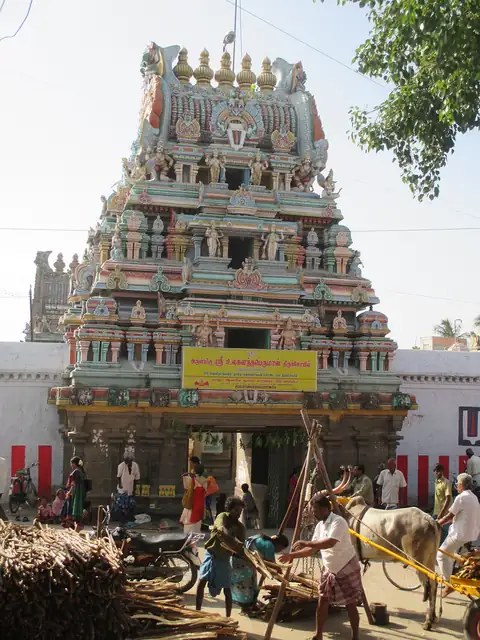 Living temple
Ulagalantha Perumal Temple, Kanchipuram
A Kanchipuram temple that holds four Divya Desams in one compound: Thiruooragam, Thiruneeragam, Thirukaragam and Thirukarvaanam. Its huge image of Trivikrama, measuring the worlds, is one of the largest Vishnu images in Tamil Nadu.
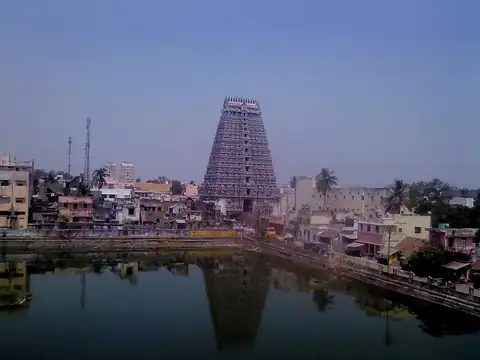 Living temple
Ulagalantha Perumal Temple, Tirukkovilur
The temple of Vishnu as Trivikrama, measuring the worlds with his leg raised high. Here, tradition says, the first three Alvars met on a rainy night in a narrow passage and began the hymns of the Divya Prabandham.
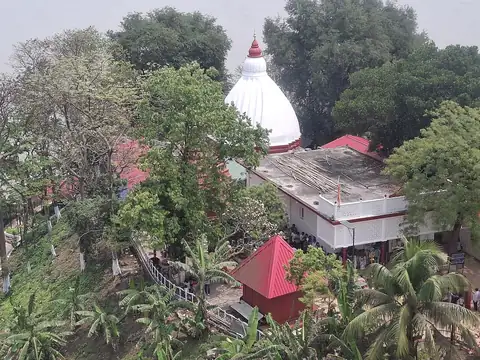 Living temple
Umananda Temple
A Shiva temple on Peacock Island, one of the smallest inhabited river islands in the world, in the Brahmaputra at Guwahati. It was built in 1694 by order of the Ahom king Gadadhar Singha and rebuilt after the 1897 earthquake.
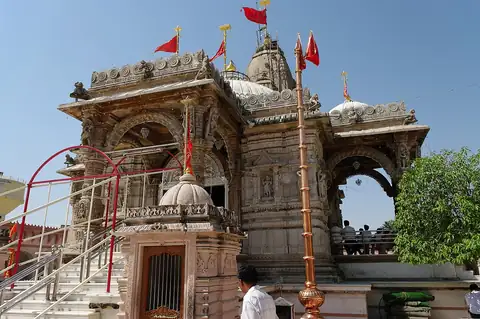 Living temple
Umiya Mata Temple, Unjha
The temple of Umiya Mata, family goddess (kuldevi) of the Kadva Patidar community, at Unjha in north Gujarat. Patidar families from across the world come here, and it is the community's main shrine.
Unai Mata Temple, Unai
A goddess temple at Unai in south Gujarat, beside hot springs that pilgrims bathe in. Tradition links the springs to Rama.
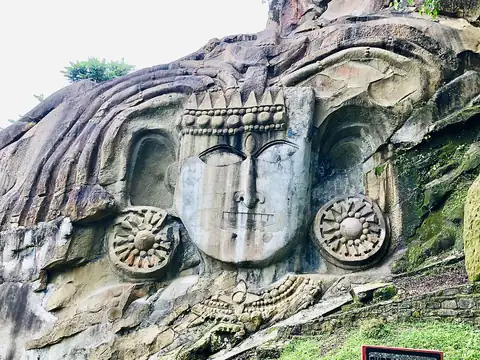 Living temple
Unakoti
A hillside of huge rock-cut reliefs of Shiva and other gods, carved in the 7th-9th centuries, including a Shiva head about 10 m high. Its name means 'one less than a crore'. Unakoti is on India's tentative list for World Heritage status.
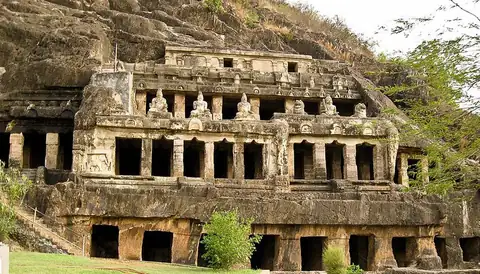 Ruined / monument
Undavalli Caves
A four-storey rock-cut cave temple on a hill above the Krishna, opposite Vijayawada. Its best-known image is a reclining Vishnu about five metres long, carved from one block of stone.
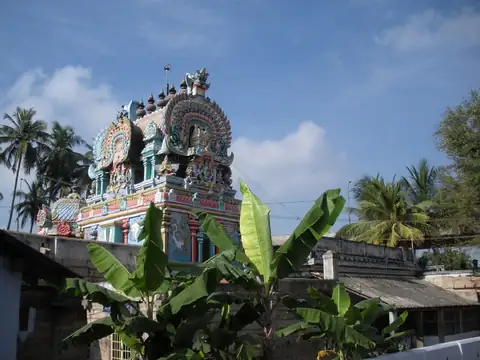 Living temple
Uthamar Kovil, Thirukarambanur
A rare temple where Vishnu, Shiva and Brahma are all worshipped with their consorts. Here Shiva is said to have been freed from the skull of Brahma that stuck to his hand.
Uttara Swami Malai Temple (Malai Mandir)
A temple of Murugan on a rocky hill in R.K. Puram, built in granite in the South Indian style by Delhi's Tamil community. It is called the 'Malai Mandir', the hill temple, and was consecrated in 1973.
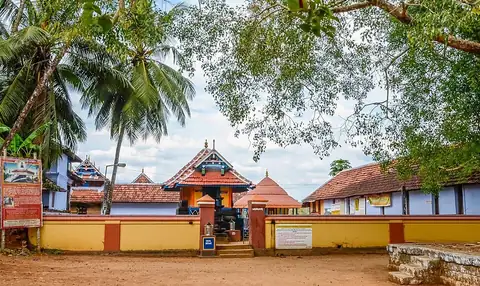 Living temple
Uyyavantha Perumal Temple, Thiruvithuvakodu
A Divya Desam on the Bharathapuzha in Palakkad district, sung by the Kerala king-saint Kulasekara Alvar. It holds five images of Vishnu said to have been installed by the Pandavas.
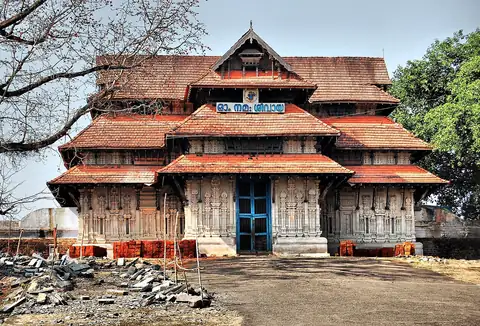 Living temple
Vadakkunnathan Temple, Thrissur
A walled temple complex of about nine acres on the hillock at the heart of Thrissur, with shrines to Shiva, Shankaranarayana and Rama. Its Shiva linga lies hidden under a mound of ghee built up over centuries of offerings, and the Thrissur Pooram is held around it. It is a protected national monument and won a UNESCO Asia-Pacific conservation award in 2015.
Vadapalani Murugan Temple, Chennai
A popular Murugan temple in Chennai that began as a thatched shrine set up by a devotee in the 19th century. It is one of the city's busiest temples and a favoured place for weddings.
Vadivazhagiya Nambi Temple, Anbil
A Divya Desam on the Kollidam river near Lalgudi, where Vishnu is called 'the handsome lord'. The village is known for the 10th-century Anbil copper plates of the Chola king Sundara Chola.
Vaidyeshwara Temple, Talakadu
The main Shiva temple of Talakadu, a town on the Kaveri that was once the capital of the Western Gangas and is now half-buried in sand dunes. Every twelve years or so the Panchalinga Darshana festival honours its five Shiva temples together.
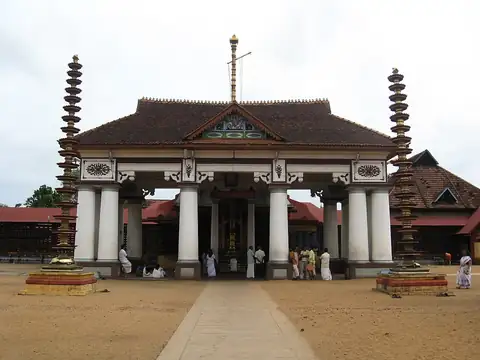 Living temple
Vaikom Mahadeva Temple
An ancient Shiva temple, worshipped as Dakshinamurthy in the morning, Kiratamurthy at noon and Shakti Panchakshari in the evening, with Kerala's only oval sanctum. The roads around it were the scene of the Vaikom Satyagraha of 1924-25, a landmark struggle against untouchability.
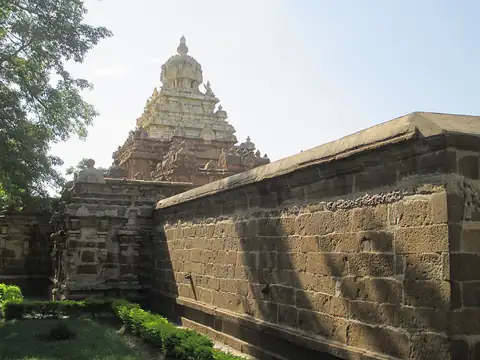 Living temple
Vaikunta Perumal Temple, Kanchipuram
An 8th-century Pallava temple built by Nandivarman II, with three shrines stacked one above another. Its cloister walls carry sculpted panels of Pallava royal history, a rare record in stone.
Vaikuntanatha Perumal Temple, Thirunangur
One of the eleven Divya Desams of Thirunangur near Sirkazhi. Vishnu here is seated as the lord of Vaikuntha, his heaven.
Vaikuntanathan Temple, Srivaikuntam
One of the Nava Tirupati, nine Vishnu temples on the Thamirabarani river, linked with the Sun.
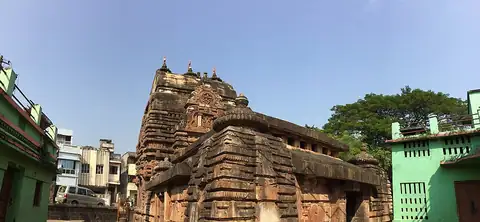 Living temple
Vaital Deul, Bhubaneswar
An 8th-century temple of the fierce goddess Chamunda, with an unusual barrel-vaulted roof (the khakhara style) like a South Indian gopura. Its dark sanctum and its images of skulls and corpses link it to tantric worship.
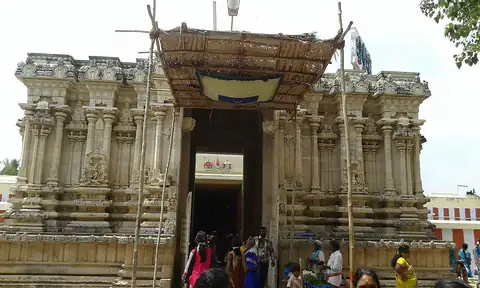 Living temple
Vaithamanidhi Perumal Temple, Thirukolur
One of the Nava Tirupati, nine Vishnu temples on the Thamirabarani river, linked with Mars (Sevvai).
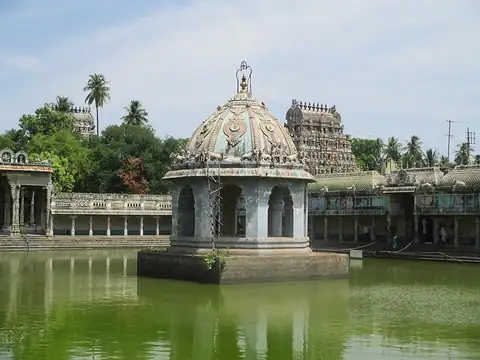 Living temple
Vaitheeswaran Koil
A Shiva temple where Shiva is worshipped as Vaidyanatha, the divine healer. It is the Navagraha temple of Angaraka (Mars), and the town is famous for its palm-leaf Nadi astrologers.
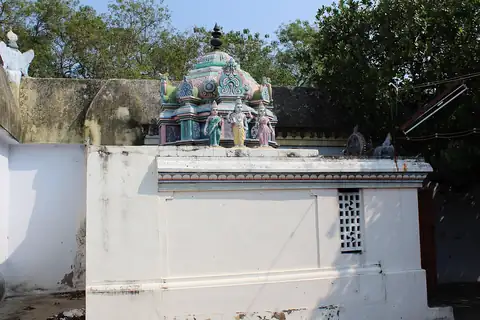 Living temple
Valvil Ramar Temple, Thirupullabhoothangudi
A rare temple where Rama is shown reclining, after performing the funeral rites of the vulture Jatayu who died defending Sita.
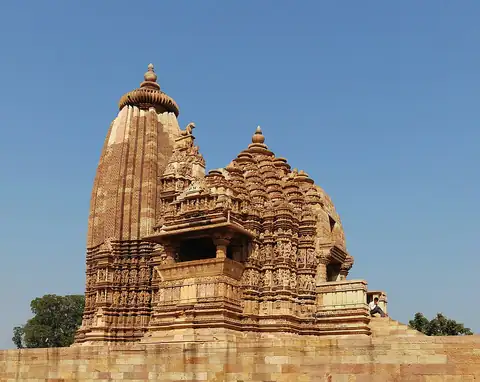 Ruined / monument
Vamana Temple, Khajuraho
A Chandela temple of about 1050-1075 in the Eastern group at Khajuraho, dedicated to Vamana, the dwarf avatar of Vishnu. Its tall single spire has no cluster of smaller spires, unusual at Khajuraho.
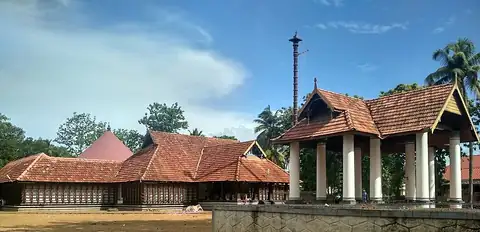 Living temple
Vamanamoorthy Temple, Thrikkakara
The Vamana temple near Kochi that is the traditional home of Onam. Here, it is said, Vishnu as the dwarf Vamana sent the beloved king Mahabali to the underworld, and Mahabali returns each year at Onam to visit his people.
Vanamamalai Perumal Temple, Nanguneri
A Divya Desam at Nanguneri where the god is anointed daily with oil that is stored in a well and taken by devotees as medicine. It is the seat of the Vanamamalai Mutt, one of the main Sri Vaishnava monasteries.
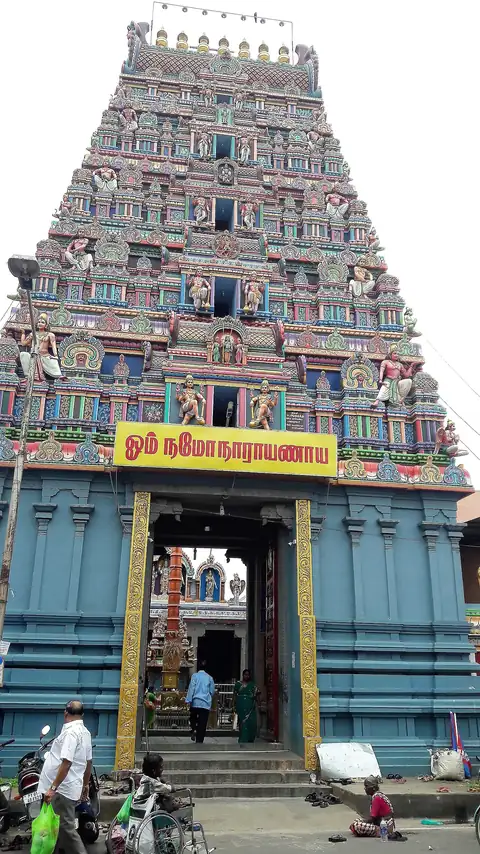 Living temple
Varadaraja Perumal Temple, Puducherry
One of the oldest Vishnu temples in Puducherry town, in the Tamil quarter on Mission Street. It survived the colonial period, when several of the town's temples were damaged.
Varadaraja Perumal Temple, Thirubhuvanai
A Chola temple of Vishnu at Thirubhuvanai, protected by the Archaeological Survey of India. An inscription of the Chola period records a Vedic college at the village, then called Tribhuvana-mahadevi-chaturvedimangalam.
Varadaraja Perumal Temple, Thirumanikoodam
One of the eleven Divya Desams of Thirunangur near Sirkazhi. The Moon is also said to have worshipped here.
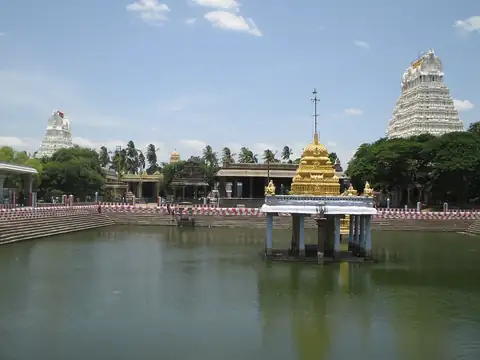 Living temple
Varadharaja Perumal Temple, Kanchipuram
The great Vishnu temple of Kanchipuram, where Vishnu is worshipped as Varadaraja, 'king of boon-givers'. An ancient image of fig wood, the Athi Varadar, lies under the temple tank and is brought out for worship only once in 40 years. With Srirangam and Tirumala it is one of the three holiest Sri Vaishnava shrines.
Varadvinayak Temple, Mahad
An Ashtavinayak shrine where devotees may enter the sanctum and touch the image themselves. An oil lamp here is said to have burned without stopping since 1892.
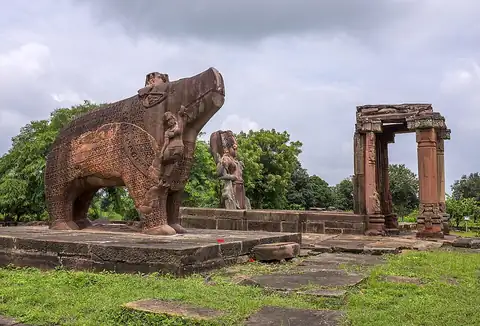 Ruined / monument
Varaha and Vishnu Temples, Eran
A Gupta-period site on the Bina river with a colossal Varaha (boar avatar of Vishnu) carved with rows of sages, a ruined Vishnu temple and a tall pillar. An inscription on the Varaha dates it to the first year of the Huna king Toramana.
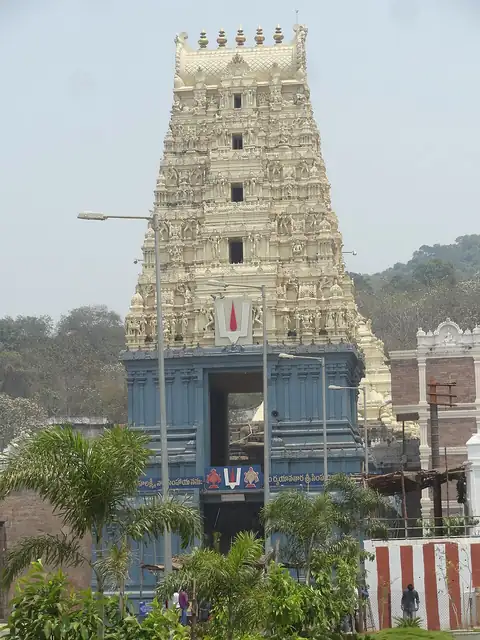 Living temple
Varaha Lakshmi Narasimha Temple, Simhachalam
A hill temple of Vishnu combining the boar (Varaha) and man-lion (Narasimha) forms. The image is kept covered in sandalwood paste all year and is revealed only once, on Akshaya Tritiya, in the Chandanotsavam festival.
Varaha Temple, Kadwar
A small early temple at Kadwar near Prabhas Patan with a large image of Varaha, the boar incarnation of Vishnu, dating from about the 10th century.
Varaha Temple, Pushkar
One of Pushkar's oldest shrines, dedicated to Varaha, the boar avatar of Vishnu. The old temple was destroyed in the 17th century and the present one was rebuilt in the 18th.
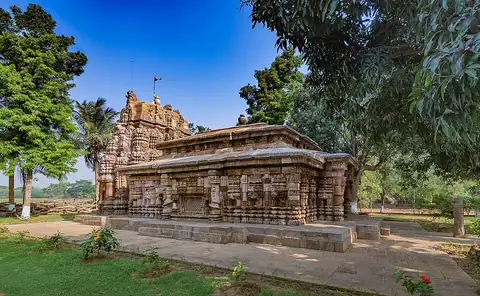 Living temple
Varahi Deula, Chaurasi
A 10th-century temple of the goddess Varahi, the boar-faced mother, near the Prachi river. It is one of the finest khakhara temples, with a long vaulted roof, and the goddess holds a fish and a skull cup.
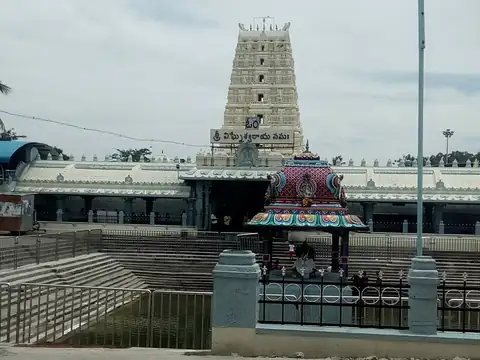 Living temple
Varasiddhi Vinayaka Temple, Kanipakam
A temple of a self-manifested Ganesha who rises from a well and is believed to keep growing. Disputes are settled and oaths sworn before him, as he is held to punish false witnesses.
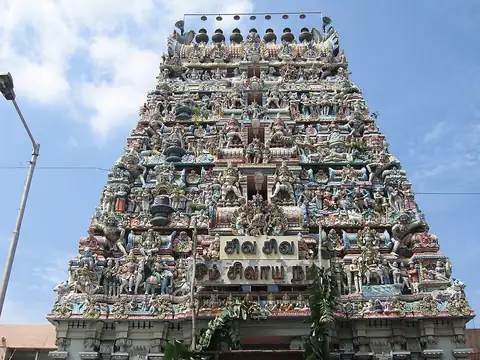 Rebuilt / restored for worship
Vedapureeswarar Temple, Puducherry
A Shiva temple in Puducherry town that replaced an older temple destroyed by the French in 1748. The destruction was recorded at the time in the diary of Ananda Ranga Pillai, the chief Indian agent of the French.
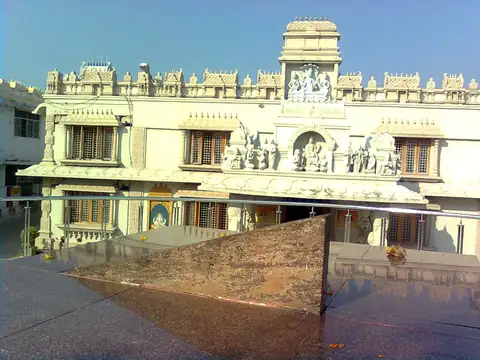 Living temple
Veera Venkata Satyanarayana Temple, Annavaram
A hill temple of Satyanarayana, the form of Vishnu worshipped in the household Satyanarayana Vratam. Couples come in great numbers to perform the vratam here, especially after weddings.
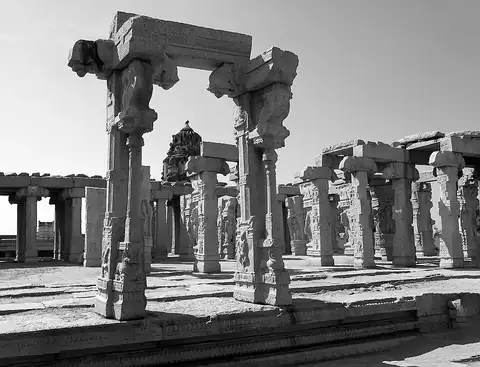 Living temple
Veerabhadra Temple, Lepakshi
A Vijayanagara temple famous for its painted ceilings, a pillar that does not touch the floor, a giant monolithic Nandi and a seven-hooded serpent sheltering a linga. Tradition links the place to the bird Jatayu of the Ramayana.
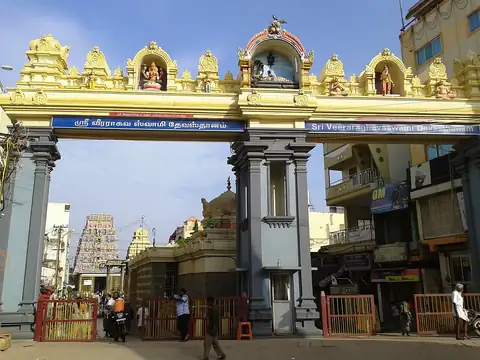 Living temple
Veeraraghava Perumal Temple, Tiruvallur
The temple that gave Tiruvallur its name, where Vishnu asked his host 'Where shall I lie down?' (evvul?). Pilgrims come on new-moon days to bathe in its tank and pray for healing.
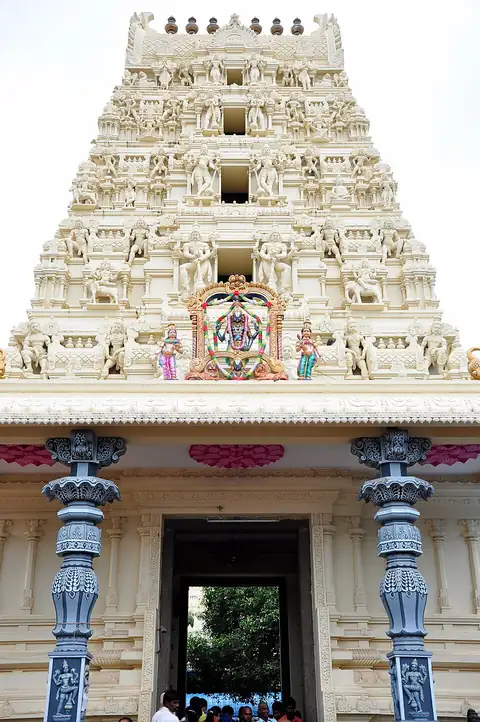 Living temple
Venkateswara Temple, Dwaraka Tirumala
A hill temple of Venkateswara known as 'Chinna Tirupati', little Tirupati. The self-manifested image shows only the upper half of the god; the feet are said to be worshipped at Tirumala.
Venkateswara Temple, Vadapalli
A popular Venkateswara temple on the bank of the Godavari, called 'Konaseema Tirupati'. Its image is said to have been found floating in the river.
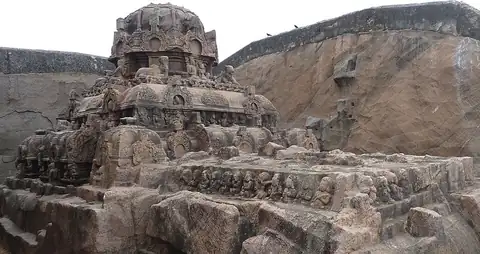 Unfinished
Vettuvan Koil, Kalugumalai
An unfinished temple carved downward out of a single rock at Kalugumalai, by the Pandyas in the 8th century. Only the upper part, the tower, was finished, and its sculptures are among the finest of the Pandya period. Jain beds and reliefs are on the same hill.
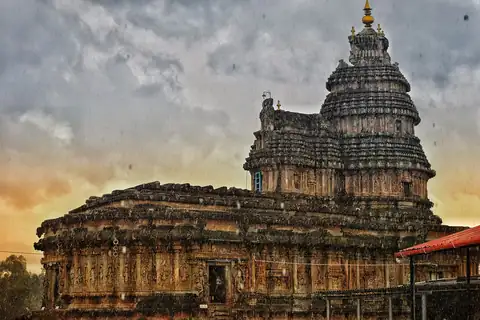 Living temple
Vidyashankara Temple, Sringeri
A stone temple at Sringeri built in 1338 over the memorial of the sage Vidyashankara Tirtha, a pontiff of the Sringeri Sharada Peetham. Its twelve hall pillars are carved with the signs of the zodiac, and the sun's rays are said to fall on each one in its month.
Vighnahar Temple, Ozar
An Ashtavinayak shrine of Ganesha as Vighnahar, 'remover of obstacles', who defeated the demon of obstacles, Vighnasura. Its golden dome and fortified walls stand on the bank of the Kukadi.
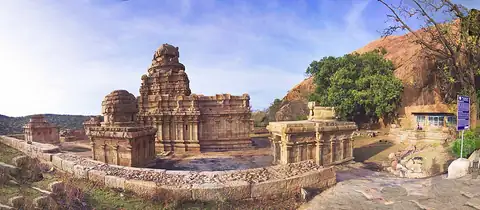 Ruined / monument
Vijayalaya Cholisvaram, Narthamalai
One of the earliest stone temples of the Chola period, on a hill at Narthamalai near Pudukkottai. It has a rare circular sanctum inside a square base, and is named after Vijayalaya, founder of the imperial Chola line.
Vijayaraghava Perumal Temple, Thiruputkuzhi
A Divya Desam near Kanchipuram where Rama is said to have performed the funeral rites of the vulture Jatayu. The young Ramanuja studied here under his first teacher, Yadavaprakasa.
Vijayasan Devi Temple, Salkanpur
A hilltop temple of Vijayasan Devi, reached by about 1,000 steps or a ropeway, near Bhopal. Its Navaratri fairs draw lakhs of pilgrims.
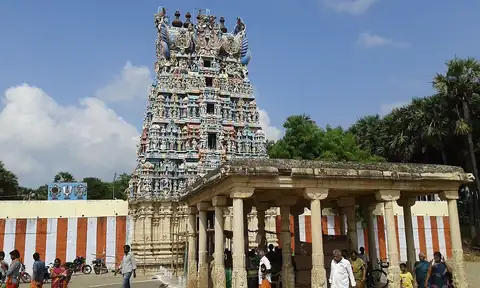 Living temple
Vijayasana Perumal Temple, Thiruvaragunamangai
One of the Nava Tirupati, nine Vishnu temples on the Thamirabarani river, linked with the Moon.
Vindhyavasini Devi Temple, Vindhyachal
The temple of Vindhyavasini, 'she who dwells in the Vindhyas', on the bank of the Ganga near Mirzapur. She is identified with Yogamaya, the goddess born to Yashoda who escaped from Kamsa, and pilgrims make a triangular circuit to her and to the shrines of Kali and Ashtabhuja.
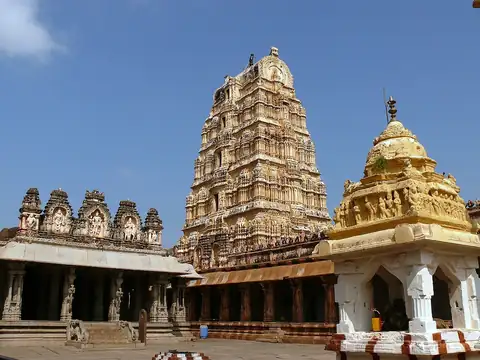 Living temple
Virupaksha Temple, Hampi
A living Shiva temple in the middle of the ruined Vijayanagara capital. It kept its worship after the city was sacked in 1565 and is the focus of the Hampi UNESCO World Heritage Site.
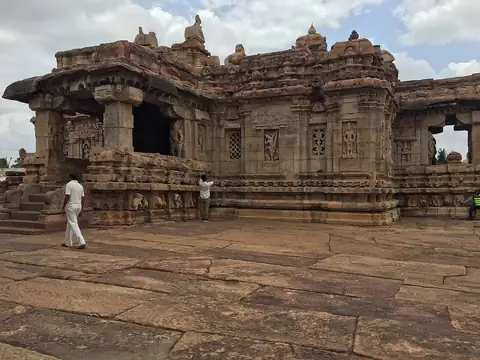 Living temple
Virupaksha Temple, Pattadakal
The largest temple at Pattadakal, built by Queen Lokamahadevi to celebrate her husband Vikramaditya II's victory over the Pallavas at Kanchipuram. It is a key monument of the UNESCO site where northern and southern temple styles stand side by side.
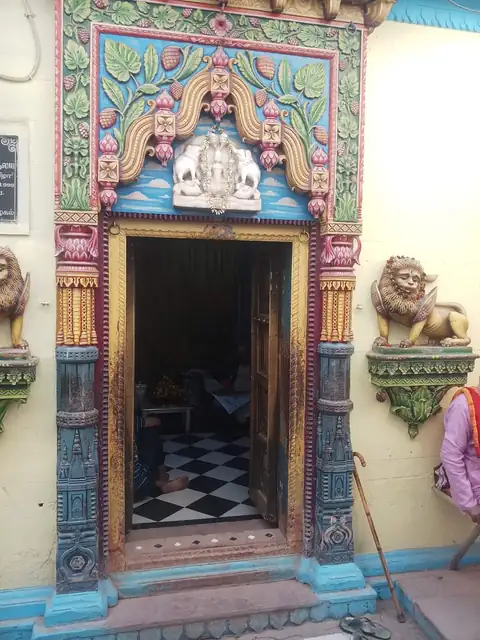 Living temple
Vishalakshi Temple, Varanasi
The goddess temple at Mir Ghat in Varanasi, near Kashi Vishwanath, regarded as the Shakti Peetha where Sati's earring fell. The present temple, with a small Dravidian gateway and Tamil inscriptions, was completed in 1893 by the Nattukottai Nagarathars of Tamil Nadu.
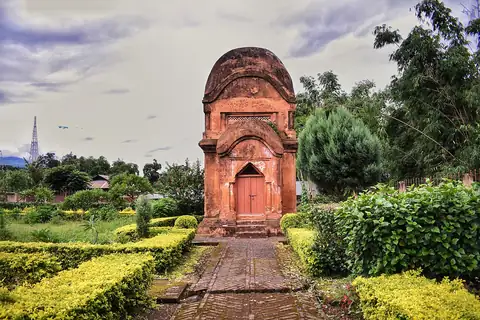 Living temple
Vishnu Temple, Bishnupur
A small brick temple at Bishnupur, the oldest surviving Hindu temple in Manipur. It was built in 1467 under King Kyamba to house an image of Vishnu said to have been given to him by a Shan king, and the town took its name from it.
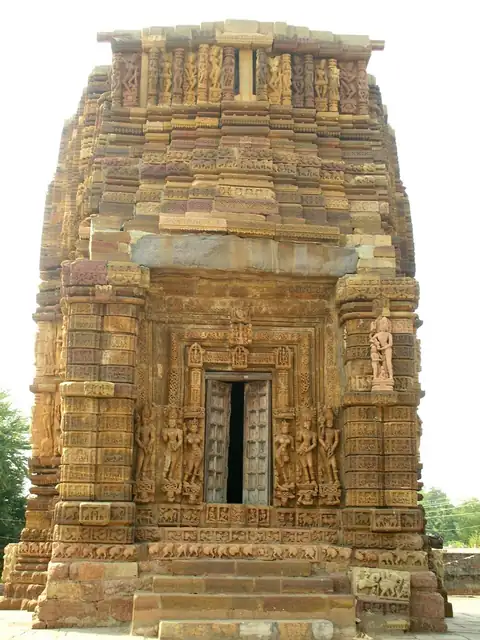 Unfinished
Vishnu Temple, Janjgir
A richly carved 12th-century temple of Vishnu at Janjgir that was never finished: its tower was never built, so it stands without a top and is called the Nakta (noseless) temple.
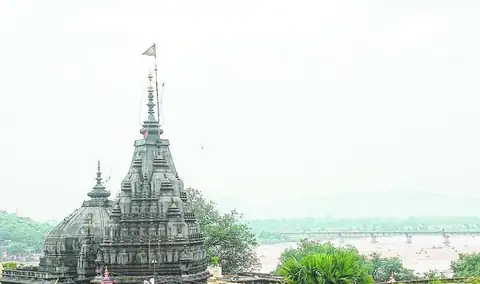 Living temple
Vishnupad Temple, Gaya
A temple built around a footprint of Vishnu set in rock on the bank of the Phalgu river at Gaya. Gaya is the most important place in India for rites for the dead (shraddha), and the present temple was built by Ahilyabai Holkar in 1787.
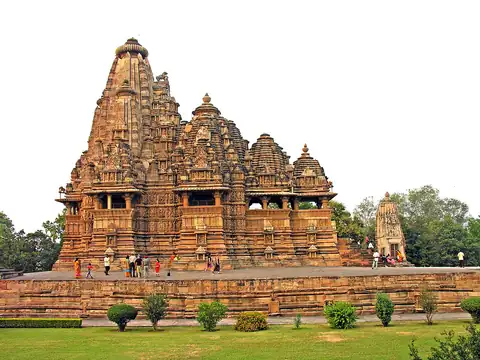 Living temple
Vishvanatha Temple, Khajuraho
A great Shiva temple in the Western Group at Khajuraho, completed under the Chandela king Dhanga in about 1002. A shrine of Nandi faces it across the platform.
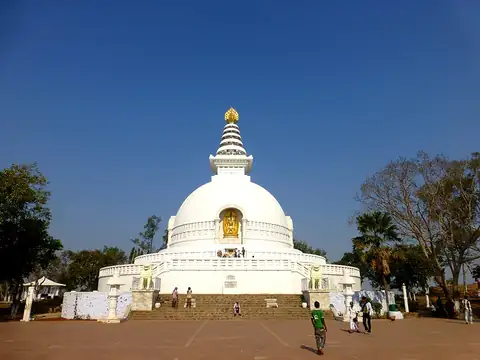 Living temple
Vishwa Shanti Stupa, Rajgir
A white peace pagoda on Ratnagiri hill at Rajgir, built in 1969 by the Japanese Buddhist order Nipponzan Myohoji, reached by an aerial ropeway. Nearby Gridhrakuta (Vulture Peak) is where the Buddha gave many sermons.
Vishwanath Temple, Guptkashi
A Shiva temple at Guptkashi, the 'hidden Kashi', on the road to Kedarnath. Shiva is said to have hidden here from the Pandavas, who were seeking his forgiveness.
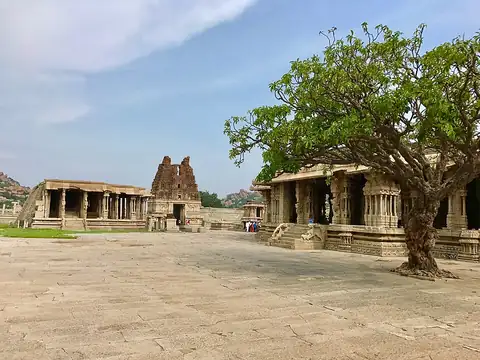 Ruined / monument
Vittala Temple, Hampi
The most ornate temple of the ruined Vijayanagara capital, dedicated to Vittala, a form of Vishnu. It is famous for its stone chariot and the 'musical pillars' of its great hall, and stands empty since the city was sacked in 1565.
 Living temple
Vitthal Rukmini Temple, Pandharpur
The temple of Vitthal (Vithoba), a standing form of Krishna, and his consort Rukmini on the Chandrabhaga river. It is the goal of the Wari, the walking pilgrimage of the Varkari saints' palanquins, which brings lakhs of people on Ashadhi Ekadashi.
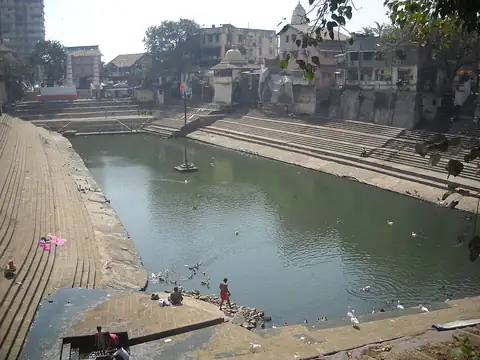 Rebuilt / restored for worship
Walkeshwar Temple and Banganga Tank, Mumbai
A Shiva temple and sacred tank on Malabar Hill, among the oldest surviving holy places in Mumbai. Rama is said to have made the sand linga here and drawn water from the earth with an arrow.
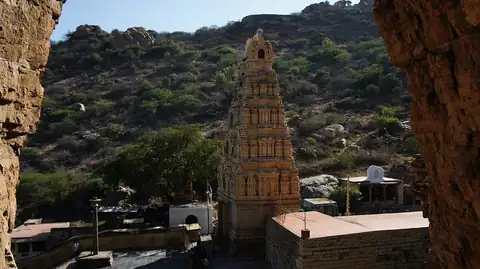 Living temple
Yaganti Uma Maheswara Temple
A temple in a ravine of the Erramala hills where Shiva and Parvati are worshipped together in one stone image. The temple's large Nandi is believed by devotees to be slowly growing.
Yamunotri Temple
The temple of the goddess Yamuna near the river's source, the first shrine of the Chota Char Dham. Pilgrims cook rice and potatoes in the hot spring of Surya Kund beside it as an offering.
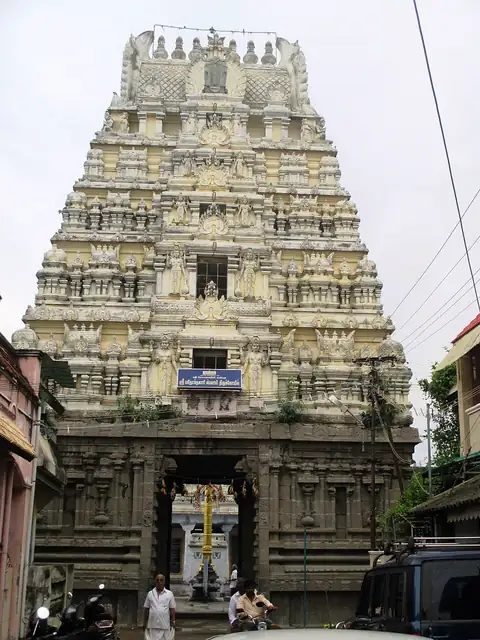 Living temple
Yathothkari Perumal Temple, Thiruvekka
A Kanchipuram Divya Desam where Vishnu is called 'the lord who did as he was told', after he rolled up his serpent bed and followed his devotee out of the city. Poigai Alvar, the first Alvar, is said to have been born in its tank.
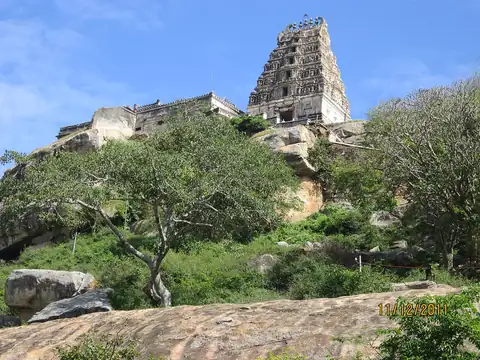 Living temple
Yoga Narasimha Temple, Melukote
A hilltop temple of Narasimha in meditation (yoga) at Melukote, the Sri Vaishnava centre where Ramanuja lived for about twelve years. It looks down over the town and the Cheluvanarayana temple.
Yoga Narasimha Temple, Sholinghur
A hilltop temple of Narasimha seated in yoga, reached by more than 1,300 steps. Tradition says that staying here for one ghatika, about 24 minutes, is enough to win liberation.
Yogmaya Temple, Mehrauli
A temple of the goddess Yogmaya, Krishna's sister, in Mehrauli near the Qutb Minar. The site is held to be very old, and the present temple was built in the early 19th century. It is the Hindu centre of the Phool Walon Ki Sair festival.