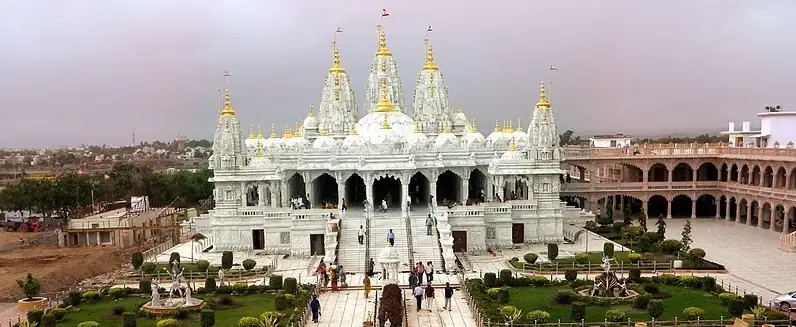

One of the six temples built under Swaminarayan himself, first opened in 1823 at Bhuj. The old temple was destroyed in the 2001 Kutch earthquake and replaced by a large white marble temple opened in 2010.
HistoryDocumented history
Swaminarayan sent his senior disciples to build the temple at the request of Kutchi devotees and installed Nar Narayan Dev here. After the 2001 earthquake, the community built a much larger temple of carved marble and gold on a new site nearby, while the old images were moved there.
Sthala PuranaTradition
No ancient purana is recorded.
Aitihyas and storiesTradition and folklore
No local story is recorded.
PhilosophyInterpretation
Rebuilding in marble after the earthquake shows a community's faith that what falls can rise again.
Meaning todayInterpretation
The temple is one of the main landmarks of Bhuj and a centre for the large Kutchi Swaminarayan community, including those abroad.
स्वयं स्वामिनारायण के समय बने छह मंदिरों में एक, जो पहली बार 1823 में भुज में खुला। पुराना मंदिर 2001 के कच्छ भूकंप में नष्ट हो गया और उसकी जगह 2010 में सफ़ेद संगमरमर का बड़ा मंदिर खुला।
इतिहासDocumented history
कच्छी भक्तों के अनुरोध पर स्वामिनारायण ने अपने वरिष्ठ शिष्यों को मंदिर बनाने भेजा और यहाँ नर नारायण देव की स्थापना की। 2001 के भूकंप के बाद समुदाय ने पास ही नए स्थान पर नक्काशीदार संगमरमर और सोने का कहीं बड़ा मंदिर बनाया, और पुरानी प्रतिमाएँ वहाँ ले जाई गईं।
स्थल पुराणTradition
पुराण में कोई प्राचीन कथा दर्ज नहीं है।
ऐतिह्य और कथाएँTradition and folklore
कोई स्थानीय कथा दर्ज नहीं है।
दर्शनInterpretation
भूकंप के बाद संगमरमर में फिर से बनाना समुदाय के इस विश्वास को दिखाता है कि जो गिरता है वह फिर उठ सकता है।
आज का अर्थInterpretation
मंदिर भुज की प्रमुख पहचानों में है और विदेश में बसे लोगों सहित बड़े कच्छी स्वामिनारायण समुदाय का केंद्र है।
यह अनुवाद एक प्रारंभिक मसौदा है और मूल भाषी द्वारा समीक्षा की प्रतीक्षा में है।
સ્વયં સ્વામિનારાયણના સમયમાં બંધાયેલાં છ મંદિરોમાંનું એક, જે પહેલી વાર 1823માં ભુજમાં ખૂલ્યું. જૂનું મંદિર 2001ના કચ્છ ભૂકંપમાં નષ્ટ થયું અને તેની જગ્યાએ 2010માં સફેદ આરસનું મોટું મંદિર ખૂલ્યું.
ઇતિહાસDocumented history
કચ્છી ભક્તોની વિનંતીથી સ્વામિનારાયણે પોતાના વરિષ્ઠ સંતોને મંદિર બાંધવા મોકલ્યા અને અહીં નર નારાયણ દેવની સ્થાપના કરી. 2001ના ભૂકંપ પછી સમુદાયે નજીકમાં નવા સ્થળે કોતરણીવાળા આરસ અને સોનાનું ઘણું મોટું મંદિર બાંધ્યું, અને જૂની પ્રતિમાઓ ત્યાં લઈ જવાઈ.
સ્થળ પુરાણTradition
કોઈ પ્રાચીન પુરાણ નોંધાયેલું નથી.
ઐતિહ્ય અને કથાઓTradition and folklore
કોઈ સ્થાનિક કથા નોંધાયેલી નથી.
તત્ત્વજ્ઞાનInterpretation
ભૂકંપ પછી આરસમાં ફરી બાંધવું સમુદાયની એ શ્રદ્ધા બતાવે છે કે જે પડે છે તે ફરી ઊભું થઈ શકે છે.
આજનો અર્થInterpretation
મંદિર ભુજની મુખ્ય ઓળખોમાંનું એક છે અને વિદેશમાં વસેલા લોકો સહિત મોટા કચ્છી સ્વામિનારાયણ સમુદાયનું કેન્દ્ર છે.
આ અનુવાદ પ્રાથમિક મુસદ્દો છે અને ગુજરાતી ભાષીની સમીક્ષાની રાહ જુએ છે.
Timeline
- 1823constructeddocumentedSwaminarayanThe first temple is built and its images installed under Swaminarayan.
- 2001destroyeddocumentedThe 2001 Kutch earthquake destroys the old temple.
- 2010rebuiltdocumentedA new marble temple is opened.
Videos
No videos have been curated for this temple yet.
Sources
- Wikipedia: Swaminarayan Mandir, Bhujtertiary
- Photo: swaminarayan.info, CC BY-SA 3.0, via Wikimedia Commons
This entry is a draft. Traditional stories are presented as tradition, not as historical fact.
Suggest an edit
Spotted a mistake or know more about this temple? Tell us, with a source if you have one.