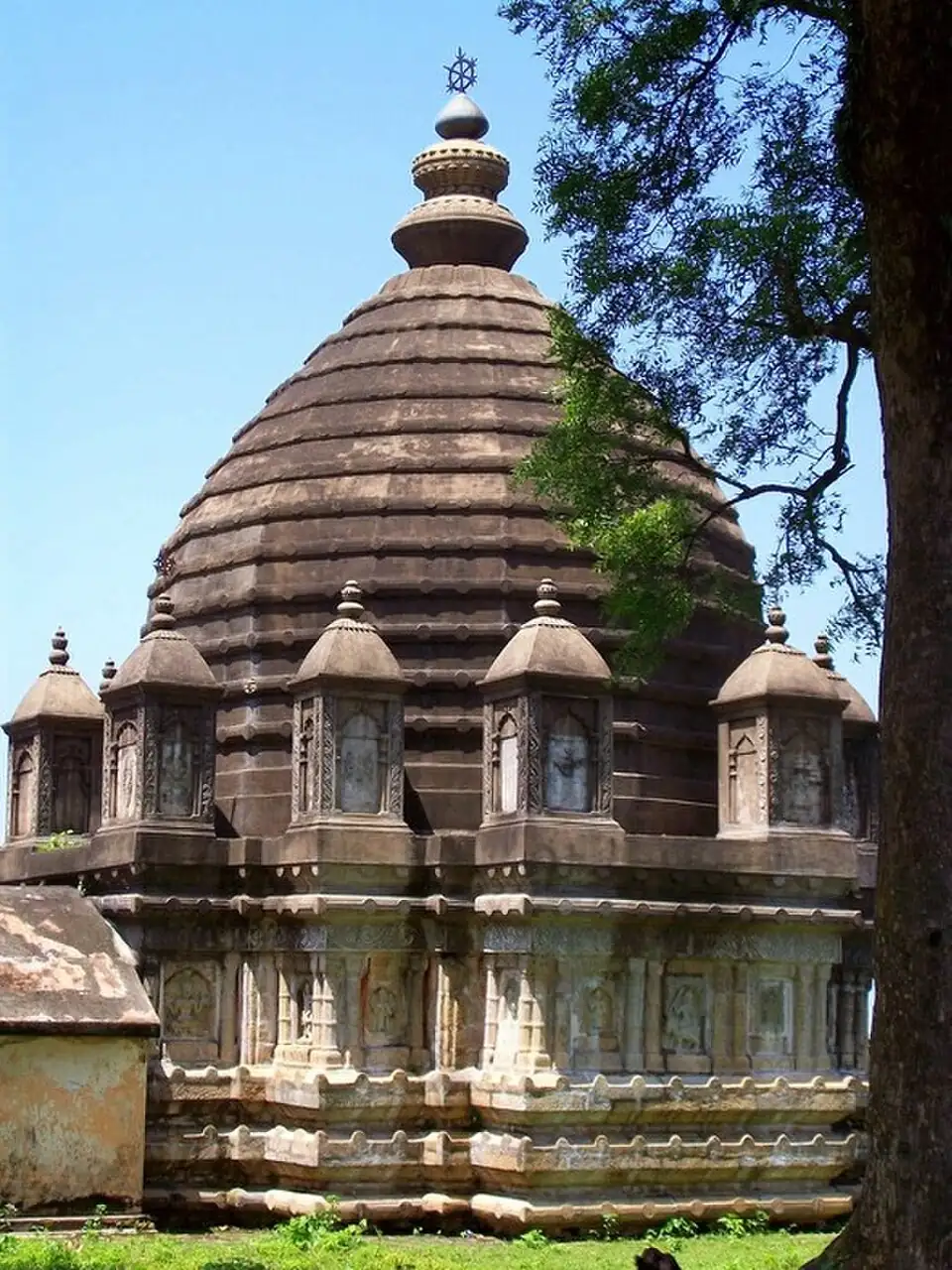

A Vishnu temple on the north bank of the Brahmaputra facing Guwahati, built by the Ahom king Siva Singha in 1720. It has two shrines, of Vishnu as Anantashayi (reclining on the serpent) and as Kurma-Janardana.
HistoryDocumented history
The temple stands on a rock by the river, reached by steps from the bank. The Anantashayi image, carved in stone, is admired as one of the finest sculptures of Assam and is older than the building.
Sthala PuranaTradition
Krishna came to Pragjyotishapura to kill Narakasura. His horses were tired (ashva klanta) when they reached this spot, and the place took its name from them.
Aitihyas and storiesTradition and folklore
No local story is recorded.
PhilosophyInterpretation
Even the god's horses grow tired, and the place where they rested became holy: the story honours rest as well as action.
Meaning todayInterpretation
Aswaklanta is often visited together with Doul Govinda on the north bank, reached by ferry from Guwahati.
गुवाहाटी के सामने ब्रह्मपुत्र के उत्तरी तट पर विष्णु का मंदिर, जिसे अहोम राजा शिव सिंह ने 1720 में बनवाया। इसमें दो मंदिर हैं: शेषशायी अनंतशायी विष्णु और कूर्म-जनार्दन के।
इतिहासDocumented history
मंदिर नदी किनारे एक चट्टान पर है, जहाँ तट से सीढ़ियाँ जाती हैं। पत्थर में तराशी गई अनंतशायी मूर्ति असम की श्रेष्ठ मूर्तियों में गिनी जाती है और भवन से पुरानी है।
स्थल पुराणTradition
कृष्ण नरकासुर को मारने प्रागज्योतिषपुर आए। यहाँ पहुँचकर उनके घोड़े थक गए (अश्व क्लांत), और स्थान का नाम उन्हीं से पड़ा।
ऐतिह्य और कथाएँTradition and folklore
कोई स्थानीय कथा दर्ज नहीं है।
दर्शनInterpretation
भगवान के घोड़े भी थकते हैं, और जहाँ उन्होंने विश्राम किया वह स्थान पवित्र हुआ: यह कथा कर्म के साथ विश्राम का भी सम्मान करती है।
आज का अर्थInterpretation
अश्वक्लांता को अक्सर उत्तरी तट के दौल गोविंद के साथ देखा जाता है, जहाँ गुवाहाटी से नाव से पहुँचते हैं।
यह अनुवाद एक प्रारंभिक मसौदा है और मूल भाषी द्वारा समीक्षा की प्रतीक्षा में है।
গুৱাহাটীৰ বিপৰীতে ব্ৰহ্মপুত্ৰৰ উত্তৰ পাৰত থকা বিষ্ণুৰ মন্দিৰ, যিটো আহোম ৰজা শিৱ সিংহই ১৭২০ চনত নিৰ্মাণ কৰাইছিল। ইয়াত দুটা মন্দিৰ আছে: অনন্তশায়ী বিষ্ণু আৰু কূৰ্ম-জনাৰ্দনৰ।
ইতিহাসDocumented history
মন্দিৰটো নদীৰ পাৰৰ এটা শিলৰ ওপৰত আছে, পাৰৰ পৰা খটখটীৰে উঠিব লাগে। শিলত কটা অনন্তশায়ী মূৰ্তিটো অসমৰ শ্ৰেষ্ঠ ভাস্কৰ্যৰ ভিতৰত গণ্য আৰু ই মন্দিৰৰ ঘৰতকৈ পুৰণি।
স্থল পুৰাণTradition
নৰকাসুৰক বধ কৰিবলৈ কৃষ্ণ প্ৰাগজ্যোতিষপুৰলৈ আহিছিল। এই ঠাইত পোৱাৰ সময়ত তেওঁৰ ঘোঁৰাবোৰ ভাগৰি পৰিছিল (অশ্ব ক্লান্ত), আৰু ঠাইখনৰ নাম তাৰ পৰাই হয়।
ঐতিহ্য আৰু কাহিনীTradition and folklore
কোনো স্থানীয় কাহিনী লিপিবদ্ধ হোৱা নাই।
দৰ্শনInterpretation
ভগৱানৰ ঘোঁৰাও ভাগৰে, আৰু য'ত সিহঁতে জিৰণি লৈছিল সেই ঠাই পবিত্ৰ হ'ল: এই কাহিনীয়ে কৰ্মৰ লগতে জিৰণিকো সন্মান কৰে।
আজিৰ অৰ্থInterpretation
অশ্বক্লান্তা প্ৰায়ে উত্তৰ পাৰৰ দৌল গোবিন্দৰ সৈতে দৰ্শন কৰা হয়, গুৱাহাটীৰ পৰা নাৱেৰে পাৰ হৈ।
এই অনুবাদ এটা প্ৰাৰম্ভিক খচৰা; অসমীয়া ভাষীৰ পৰীক্ষণৰ অপেক্ষাত আছে।
Timeline
- Legendary originfoundedtraditionKrishna's army is said to have camped here on the way to fight Narakasura, and his horses rested, tired.
- 1720constructedprobableSiva SinghaSiva Singha builds the temple.
- 1897damagedprobableThe great earthquake damages temples of the Guwahati area.
Videos
No videos have been curated for this temple yet.
Sources
- Wikipedia: Aswaklanta Templetertiary
- Photo: Bornav27may, CC BY-SA 3.0, via Wikimedia Commons
This entry is a draft. Traditional stories are presented as tradition, not as historical fact.
Suggest an edit
Spotted a mistake or know more about this temple? Tell us, with a source if you have one.