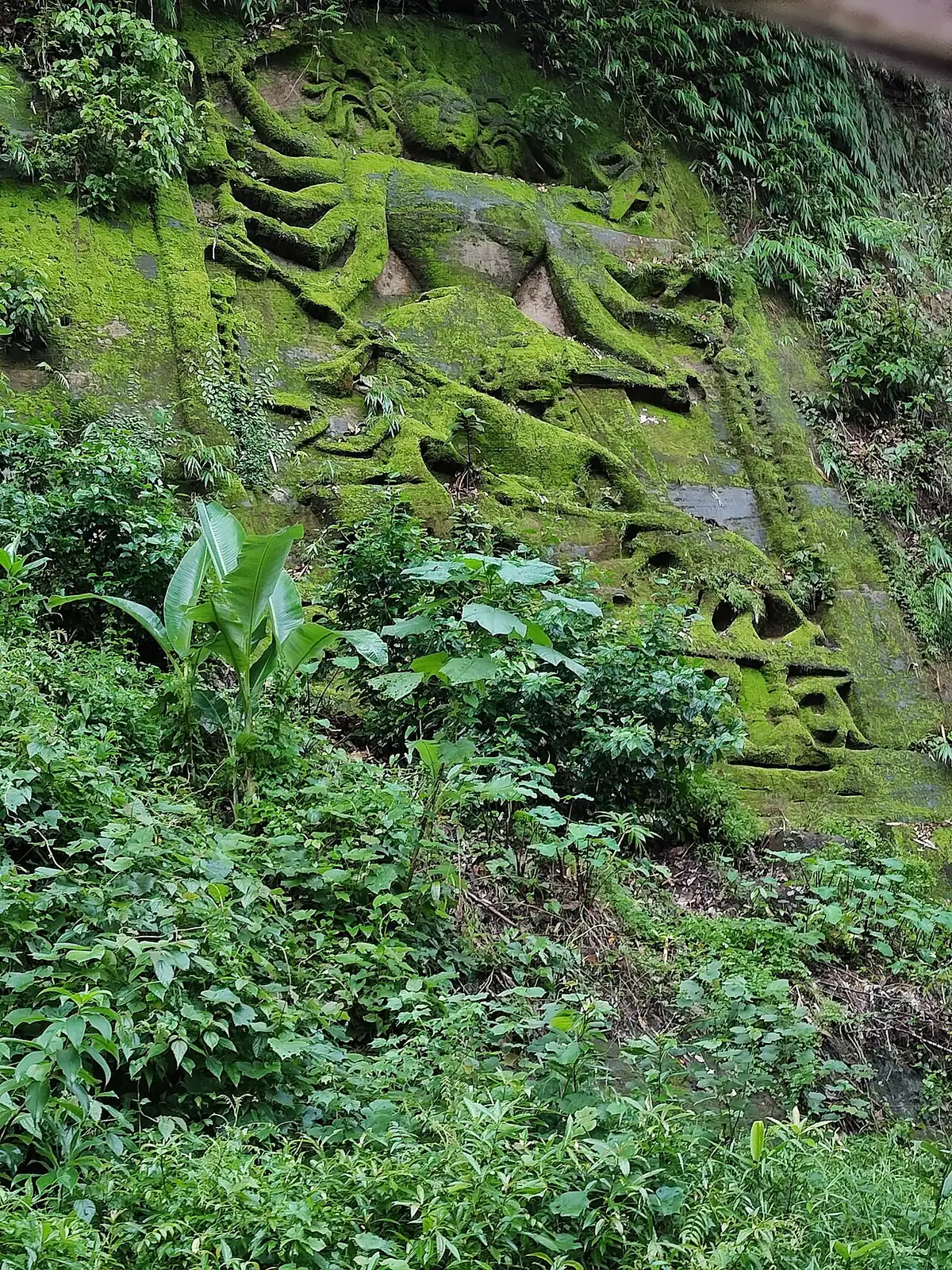

A series of large rock carvings of Hindu gods on the steep cliffs of the Gomati river in southern Tripura, reached only by boat. The best known is a tall figure of the goddess Durga, locally called Chakrak-ma.
HistoryDocumented history
The cliffs rise straight from the river through thick forest, and the carvings can only be seen from a boat. Some are several metres tall. Who carved them is not known; they are often linked with the Tripuri rulers or local tribal traditions.
Sthala PuranaTradition
No ancient purana is recorded.
Aitihyas and storiesTradition and folklore
No local story is recorded.
PhilosophyInterpretation
Gods carved into living rock above a river show how the land itself was seen as sacred.
Meaning todayInterpretation
Chhabimura is one of Tripura's main tourist sites, and like Unakoti it is a record of carving traditions in the hills.
दक्षिण त्रिपुरा में गोमती नदी की खड़ी चट्टानों पर हिंदू देवताओं की बड़ी शिला-नक्काशियों की शृंखला, जहाँ केवल नाव से पहुँचा जा सकता है। सबसे प्रसिद्ध देवी दुर्गा की ऊँची आकृति है, जिसे स्थानीय रूप से चाकराक-मा कहते हैं।
इतिहासDocumented history
चट्टानें घने जंगल के बीच नदी से सीधी उठती हैं, और नक्काशियाँ केवल नाव से दिखती हैं। कुछ कई मीटर ऊँची हैं। इन्हें किसने तराशा यह ज्ञात नहीं; इन्हें अक्सर त्रिपुरी शासकों या स्थानीय जनजातीय परंपराओं से जोड़ा जाता है।
स्थल पुराणTradition
पुराण में कोई प्राचीन कथा दर्ज नहीं है।
ऐतिह्य और कथाएँTradition and folklore
कोई स्थानीय कथा दर्ज नहीं है।
दर्शनInterpretation
नदी के ऊपर जीवित चट्टान में तराशे देवता दिखाते हैं कि भूमि को ही पवित्र माना जाता था।
आज का अर्थInterpretation
छबिमुड़ा त्रिपुरा के मुख्य पर्यटन स्थलों में है, और उनाकोटी की तरह पहाड़ों की शिल्प-परंपरा का प्रमाण है।
यह अनुवाद एक प्रारंभिक मसौदा है और मूल भाषी द्वारा समीक्षा की प्रतीक्षा में है।
দক্ষিণ ত্রিপুরায় গোমতী নদীর খাড়া পাহাড়ের গায়ে হিন্দু দেবদেবীর বিশাল শিলা-খোদাইয়ের সারি, যেখানে কেবল নৌকায় যাওয়া যায়। সবচেয়ে বিখ্যাত দেবী দুর্গার দীর্ঘ মূর্তি, যাকে স্থানীয়ভাবে চাকরাক-মা বলা হয়।
ইতিহাসDocumented history
পাহাড় ঘন জঙ্গলের মধ্যে নদী থেকে সোজা উঠে গেছে, এবং খোদাইগুলি কেবল নৌকা থেকে দেখা যায়। কিছু মূর্তি কয়েক মিটার উঁচু। কারা এগুলি খোদাই করেছিল তা জানা নেই; প্রায়ই এগুলিকে ত্রিপুরী রাজাদের বা স্থানীয় জনজাতীয় ঐতিহ্যের সঙ্গে যুক্ত করা হয়।
স্থল পুরাণTradition
পুরাণে কোনো প্রাচীন কাহিনি লিপিবদ্ধ নেই।
ঐতিহ্য ও কাহিনিTradition and folklore
কোনো স্থানীয় কাহিনি লিপিবদ্ধ নেই।
দর্শনInterpretation
নদীর ওপরে জীবন্ত পাথরে খোদাই করা দেবতারা দেখায় যে ভূমিকেই পবিত্র মনে করা হত।
আজকের অর্থInterpretation
ছবিমুড়া ত্রিপুরার প্রধান পর্যটনস্থলগুলির একটি, এবং ঊনকোটির মতো পাহাড়ি শিল্পধারার নিদর্শন।
এই অনুবাদটি একটি প্রাথমিক খসড়া; বাংলাভাষীর পর্যালোচনার অপেক্ষায় আছে।
Timeline
- About the 15th-16th c.; date uncertainconstructeddisputedThe carvings are cut into the cliffs.
Videos
No videos have been curated for this temple yet.
Sources
- Photo: Mvkraju4b1, CC BY 4.0, via Wikimedia Commons
This entry is a draft. Traditional stories are presented as tradition, not as historical fact.
Suggest an edit
Spotted a mistake or know more about this temple? Tell us, with a source if you have one.