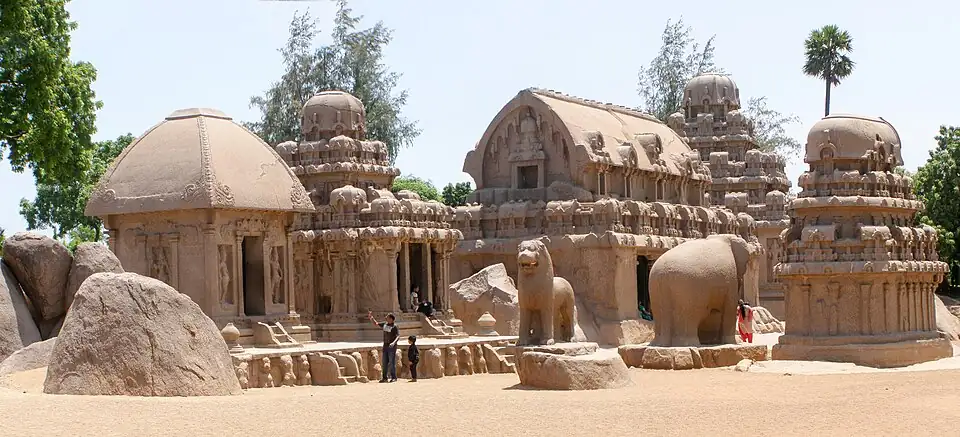

Five monolithic temples carved from single granite outcrops at Mamallapuram in the 7th century, each in a different shape. They were never consecrated, and are part of the Group of Monuments at Mahabalipuram, a UNESCO World Heritage Site.
HistoryDocumented history
The five rathas, wrongly named after the Pandavas and Draupadi, are models of different temple forms carved from rock: a thatched hut, square and apsidal shrines, and a long barrel-roofed hall. They show the early development of the Dravidian temple before stone temples were built from blocks. Life-size elephant, lion and Nandi figures stand beside them.
Sthala PuranaTradition
No ancient purana is recorded.
Aitihyas and storiesTradition and folklore
The names of the Pandavas were given to the rathas by local people much later; they have nothing to do with the Mahabharata.
PhilosophyInterpretation
Carving a temple out of living rock treats the hill itself as the god's dwelling.
Meaning todayInterpretation
The rathas are among the most visited monuments of south India and a key to the history of temple architecture.
सातवीं सदी में मामल्लपुरम में ग्रेनाइट की अखंड चट्टानों से तराशे गए पाँच मंदिर, जिनमें हर एक का आकार अलग है। इन्हें कभी प्रतिष्ठित नहीं किया गया, और ये यूनेस्को विश्व धरोहर स्थल महाबलीपुरम स्मारक समूह का हिस्सा हैं।
इतिहासDocumented history
पांडवों और द्रौपदी के नाम से गलत पुकारे जाने वाले ये पाँच रथ चट्टान से तराशे गए विभिन्न मंदिर रूपों के नमूने हैं: एक झोंपड़ी, चौकोर और अर्धवृत्ताकार मंदिर, और एक लंबा ढोलाकार छत वाला मंडप। ये पत्थर के खंडों से मंदिर बनने से पहले द्रविड़ मंदिर के प्रारंभिक विकास को दिखाते हैं। इनके पास आदमकद हाथी, सिंह और नंदी की आकृतियाँ हैं।
स्थल पुराणTradition
पुराण में कोई प्राचीन कथा दर्ज नहीं है।
ऐतिह्य और कथाएँTradition and folklore
पांडवों के नाम स्थानीय लोगों ने बहुत बाद में रथों को दिए; इनका महाभारत से कोई संबंध नहीं है।
दर्शनInterpretation
जीवित चट्टान से मंदिर तराशना पहाड़ी को ही देवता का निवास मानना है।
आज का अर्थInterpretation
ये रथ दक्षिण भारत के सबसे अधिक देखे जाने वाले स्मारकों में हैं और मंदिर स्थापत्य के इतिहास की कुंजी हैं।
यह अनुवाद एक प्रारंभिक मसौदा है और मूल भाषी द्वारा समीक्षा की प्रतीक्षा में है।
ஏழாம் நூற்றாண்டில் மாமல்லபுரத்தில் தனித்தனிக் கருங்கல் பாறைகளிலிருந்து குடையப்பட்ட ஐந்து ஒற்றைக்கல் கோயில்கள்; ஒவ்வொன்றும் வேறு வடிவம் கொண்டது. இவை ஒருபோதும் பிரதிஷ்டை செய்யப்படவில்லை; யுனெஸ்கோ உலகப் பாரம்பரியச் சின்னமான மாமல்லபுரச் சின்னங்கள் தொகுதியின் ஒரு பகுதி.
வரலாறுDocumented history
பாண்டவர், திரௌபதி பெயர்களால் தவறாக அழைக்கப்படும் இந்த ஐந்து ரதங்களும் பாறையில் குடையப்பட்ட வெவ்வேறு கோயில் வடிவங்களின் மாதிரிகள்: ஒரு குடில், சதுர மற்றும் அரைவட்டக் கோயில்கள், நீண்ட பீப்பாய்க் கூரை கொண்ட மண்டபம். கற்கட்டுமானக் கோயில்களுக்கு முன் திராவிடக் கோயிலின் தொடக்க வளர்ச்சியை இவை காட்டுகின்றன. அருகில் ஆளுயர யானை, சிங்கம், நந்தி உருவங்கள் உள்ளன.
தல புராணம்Tradition
பழங்காலப் புராணக் கதை எதுவும் பதிவாகவில்லை.
ஐதீகங்களும் கதைகளும்Tradition and folklore
பாண்டவர் பெயர்களை மிகப் பிற்காலத்தில் உள்ளூர் மக்களே ரதங்களுக்கு இட்டனர்; மகாபாரதத்துடன் இவற்றுக்குத் தொடர்பில்லை.
தத்துவம்Interpretation
உயிருள்ள பாறையிலிருந்து கோயிலைக் குடைவது மலையையே இறைவனின் இருப்பிடமாகக் கொள்வதாகும்.
இன்றைய பொருள்Interpretation
இந்த ரதங்கள் தென்னிந்தியாவில் மிக அதிகம் பார்வையிடப்படும் சின்னங்களில் ஒன்று; கோயில் கட்டடக் கலை வரலாற்றின் திறவுகோல்.
இந்த மொழிபெயர்ப்பு ஒரு முதல் வரைவு; தமிழ் அறிந்தவரின் சரிபார்ப்புக்குக் காத்திருக்கிறது.
Timeline
- Mid-7th c.constructedprobableNarasimhavarman IThe rathas are carved under the Pallava king Narasimhavarman I Mamalla.
- 1984listeddocumentedThe Group of Monuments at Mahabalipuram is inscribed as a UNESCO World Heritage Site.
Videos
No videos have been curated for this temple yet.
Sources
- UNESCO World Heritage List no. 249official
- Photo: BluesyPete, CC BY-SA 3.0, via Wikimedia Commons
This entry is a draft. Traditional stories are presented as tradition, not as historical fact.
Suggest an edit
Spotted a mistake or know more about this temple? Tell us, with a source if you have one.