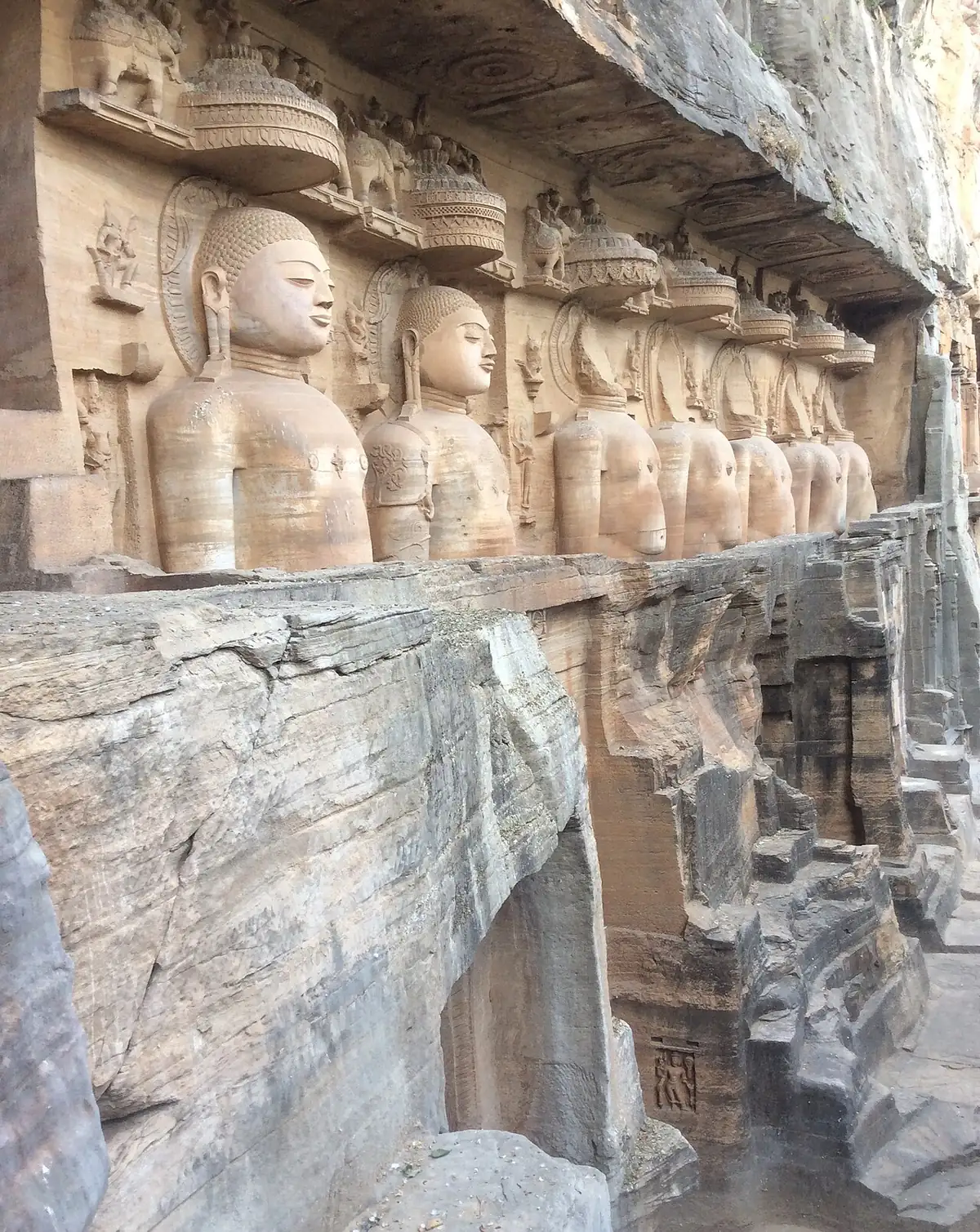

Groups of colossal Jain Tirthankara images carved into the cliffs of Gwalior Fort in the 15th century under the Tomara kings. The largest, a standing Rishabhanatha, is about 17 metres tall.
HistoryDocumented history
Babur wrote of the images in his memoirs. Many faces were later restored by the Jain community, and worship continues in several groups.
Sthala PuranaTradition
No Hindu purana; the images show the Tirthankaras in kayotsarga, the standing posture of meditation.
Aitihyas and storiesTradition and folklore
No local story is recorded.
PhilosophyInterpretation
The standing Tirthankaras, unmoved, show complete detachment from the body.
Meaning todayInterpretation
Gopachal is a living Jain pilgrimage and a landmark of Gwalior.
15वीं सदी में तोमर राजाओं के समय ग्वालियर किले की चट्टानों में उकेरी गई जैन तीर्थंकरों की विशाल मूर्तियों के समूह। सबसे बड़ी, ऋषभनाथ की खड़ी मूर्ति, लगभग 17 मीटर ऊँची है।
इतिहासDocumented history
बाबर ने अपने संस्मरणों में इन मूर्तियों के बारे में लिखा। अनेक मुख बाद में जैन समाज ने ठीक कराए, और कई समूहों में पूजा जारी है।
स्थल पुराणTradition
कोई हिंदू पुराण नहीं; मूर्तियाँ तीर्थंकरों को कायोत्सर्ग, ध्यान की खड़ी मुद्रा में दिखाती हैं।
ऐतिह्य और कथाएँTradition and folklore
कोई स्थानीय कथा दर्ज नहीं है।
दर्शनInterpretation
अडिग खड़े तीर्थंकर शरीर से पूर्ण वैराग्य दिखाते हैं।
आज का अर्थInterpretation
गोपाचल एक जीवंत जैन तीर्थ और ग्वालियर का प्रमुख स्थल है।
यह अनुवाद एक प्रारंभिक मसौदा है और मूल भाषी द्वारा समीक्षा की प्रतीक्षा में है।
Timeline
- 1440–1473constructedprobableThe images are carved under Dungar Singh and Kirti Singh Tomara.
- 1527damageddocumentedBaburBabur orders the faces of the images to be broken.
Videos
No videos have been curated for this temple yet.
Sources
- Wikipedia: Gopachal rock cut Jain monumentstertiary
- Photo: जैन, CC BY-SA 4.0, via Wikimedia Commons
This entry is a draft. Traditional stories are presented as tradition, not as historical fact.
Suggest an edit
Spotted a mistake or know more about this temple? Tell us, with a source if you have one.