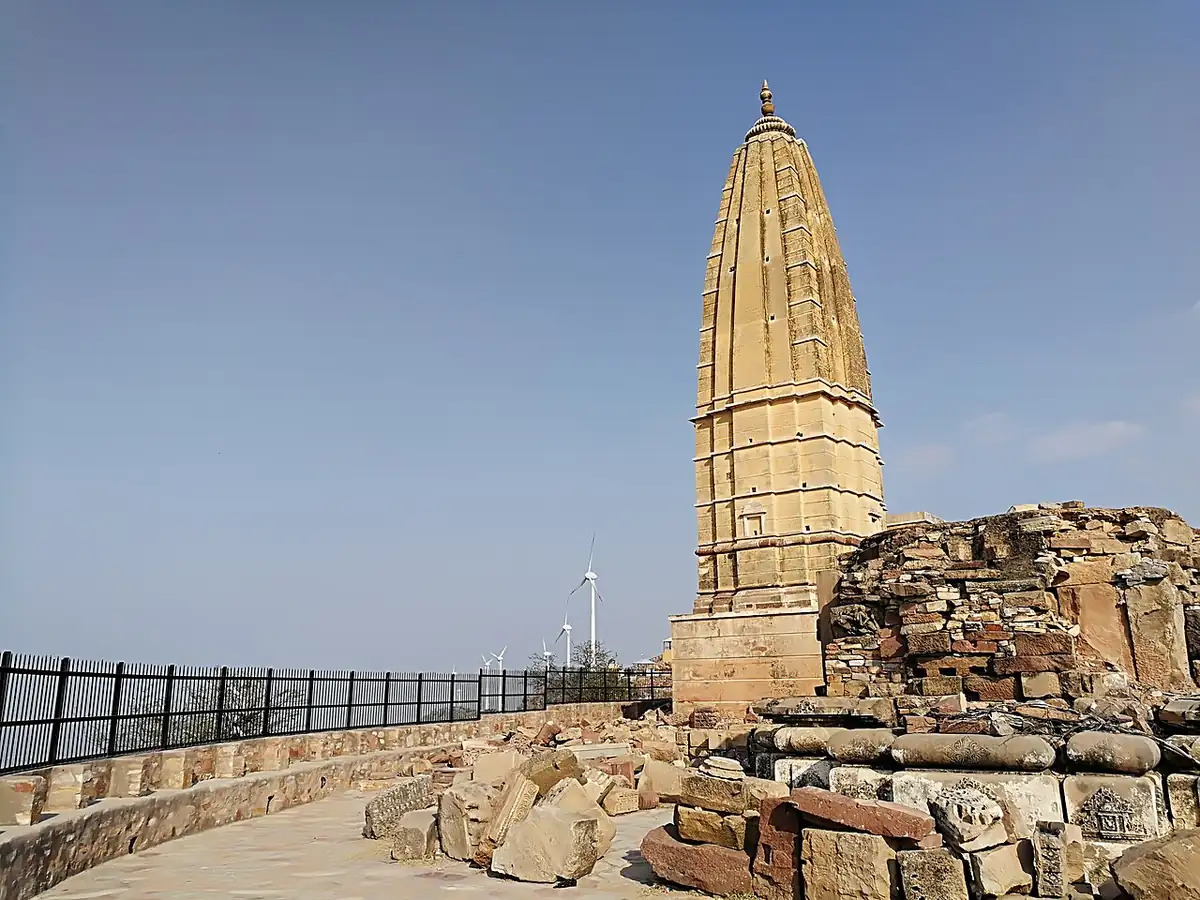

A hilltop Shiva temple near Sikar, built under the Chahamanas (Chauhans) of Shakambhari, with an inscription of 973. Much of the old temple lies in ruins, and a later temple beside it is still in worship.
HistoryDocumented history
Carved fragments of the old temple are scattered across the hilltop. The inscription is one of the main sources for early Chauhan history.
Sthala PuranaTradition
No ancient purana is recorded.
Aitihyas and storiesTradition and folklore
Shiva is said to have taken the name Harsha here after the gods rejoiced at his victory over a demon.
PhilosophyInterpretation
Ruins and a living shrine side by side show worship continuing through loss.
Meaning todayInterpretation
The hill is also a viewpoint and wind-farm site, visited by pilgrims and tourists.
सीकर के पास पहाड़ी पर शिव मंदिर, जो शाकंभरी के चाहमानों (चौहानों) के समय बना, और जिसका एक शिलालेख 973 का है। पुराने मंदिर का बड़ा भाग खंडहर है, और पास का एक बाद का मंदिर आज भी पूजा में है।
इतिहासDocumented history
पुराने मंदिर के नक्काशीदार टुकड़े पहाड़ी पर बिखरे हैं। शिलालेख प्रारंभिक चौहान इतिहास के मुख्य स्रोतों में है।
स्थल पुराणTradition
कोई प्राचीन पुराण दर्ज नहीं है।
ऐतिह्य और कथाएँTradition and folklore
कहा जाता है कि एक असुर पर शिव की विजय से देवता हर्षित हुए, इसलिए यहाँ शिव का नाम हर्ष पड़ा।
दर्शनInterpretation
खंडहर और जीवित मंदिर साथ-साथ दिखाते हैं कि हानि के बीच भी पूजा चलती रहती है।
आज का अर्थInterpretation
पहाड़ी एक दर्शनीय स्थल और पवन ऊर्जा क्षेत्र भी है, जहाँ तीर्थयात्री और पर्यटक आते हैं।
यह अनुवाद एक प्रारंभिक मसौदा है और मूल भाषी द्वारा समीक्षा की प्रतीक्षा में है।
Timeline
- 973constructeddocumentedThe temple is built and an inscription records its history.
- Late 17th c., during Aurangzeb's campaigns, by traditiondamagedprobableThe temple falls into ruin.
- 1718rebuiltprobableRaja Shiv Singh of Sikar builds a new temple beside the ruins.
Videos
No videos have been curated for this temple yet.
Sources
- Photo: Seervims, CC BY-SA 4.0, via Wikimedia Commons
This entry is a draft. Traditional stories are presented as tradition, not as historical fact.
Suggest an edit
Spotted a mistake or know more about this temple? Tell us, with a source if you have one.