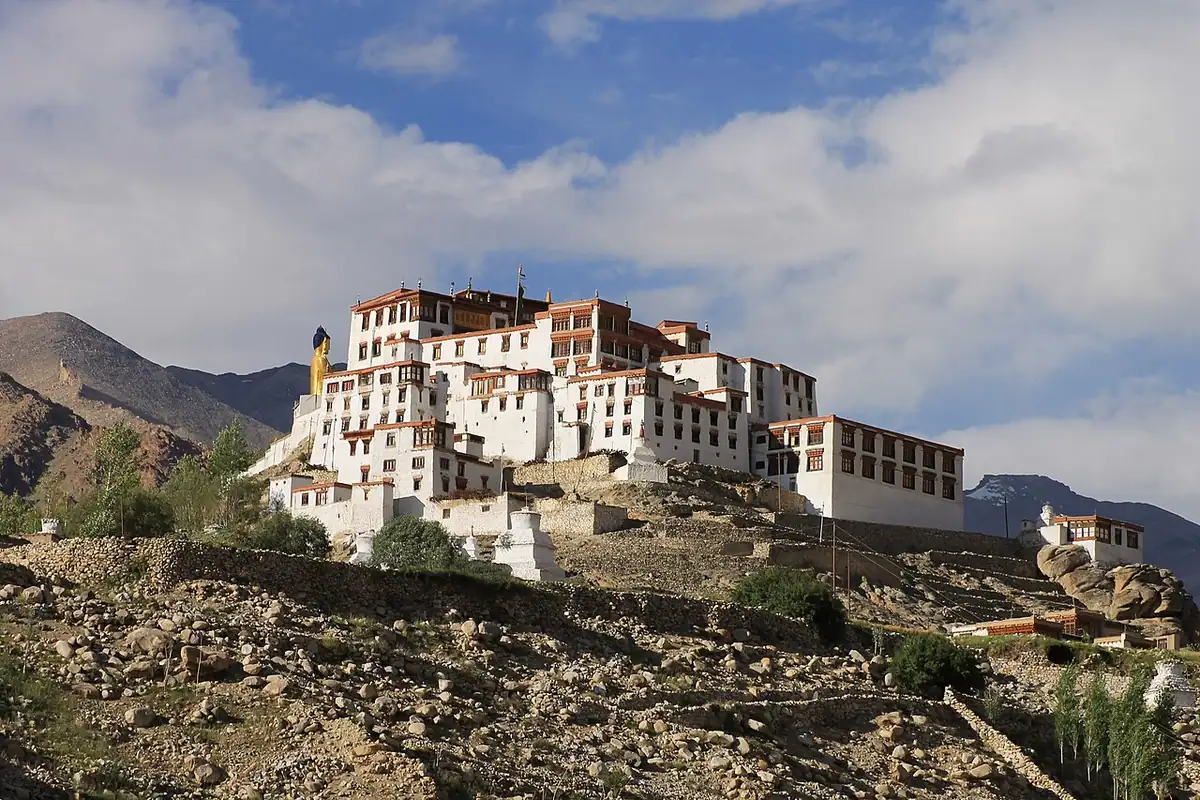

A Gelug monastery west of Leh, said to have been founded in 1065 under King Lhachen Gyalpo. A large gilded statue of Maitreya sits in its courtyard.
HistoryDocumented history
The name Likir is said to mean 'encircled by serpents', after the nagas believed to guard the hill. The monastery has a museum of thangkas and old manuscripts.
Sthala PuranaTradition
No ancient purana is recorded.
Aitihyas and storiesTradition and folklore
The hill is said to be encircled by the two great serpent spirits Nanda and Taksako, which gave the monastery its name.
PhilosophyInterpretation
A monastery guarded by serpent spirits shows old local beliefs woven into Buddhism.
Meaning todayInterpretation
Likir is on the trekking route to Alchi and draws many visitors from Leh.
लेह के पश्चिम में गेलुग मठ, जिसकी स्थापना 1065 में राजा ल्हाचेन ग्यालपो के समय हुई बताई जाती है। इसके आँगन में मैत्रेय की बड़ी स्वर्णमंडित प्रतिमा है।
इतिहासDocumented history
कहा जाता है कि लिकिर का अर्थ 'नागों से घिरा' है, उन नागों के कारण जो पहाड़ी की रक्षा करते माने जाते हैं। मठ में थंका और पुरानी पांडुलिपियों का संग्रहालय है।
स्थल पुराणTradition
पुराण में कोई प्राचीन कथा दर्ज नहीं है।
ऐतिह्य और कथाएँTradition and folklore
कहा जाता है कि पहाड़ी को दो महान नाग आत्माएँ नंद और तक्षक घेरे हुए हैं, जिनसे मठ का नाम पड़ा।
दर्शनInterpretation
नाग आत्माओं द्वारा रक्षित मठ दिखाता है कि पुरानी स्थानीय आस्थाएँ बौद्ध धर्म में बुनी गईं।
आज का अर्थInterpretation
लिकिर आलची के ट्रेकिंग मार्ग पर है और लेह से अनेक यात्रियों को आकर्षित करता है।
यह अनुवाद एक प्रारंभिक मसौदा है और मूल भाषी द्वारा समीक्षा की प्रतीक्षा में है।
Timeline
- 1065foundedtraditionDuwang ChosjeLama Duwang Chosje founds the monastery under King Lhachen Gyalpo.
- 15th c.otherprobableThe monastery passes to the Gelug school.
Videos
No videos have been curated for this temple yet.
Sources
- Wikipedia: Likir Monasterytertiary
- Photo: Meridius27, CC BY-SA 3.0, via Wikimedia Commons
This entry is a draft. Traditional stories are presented as tradition, not as historical fact.
Suggest an edit
Spotted a mistake or know more about this temple? Tell us, with a source if you have one.