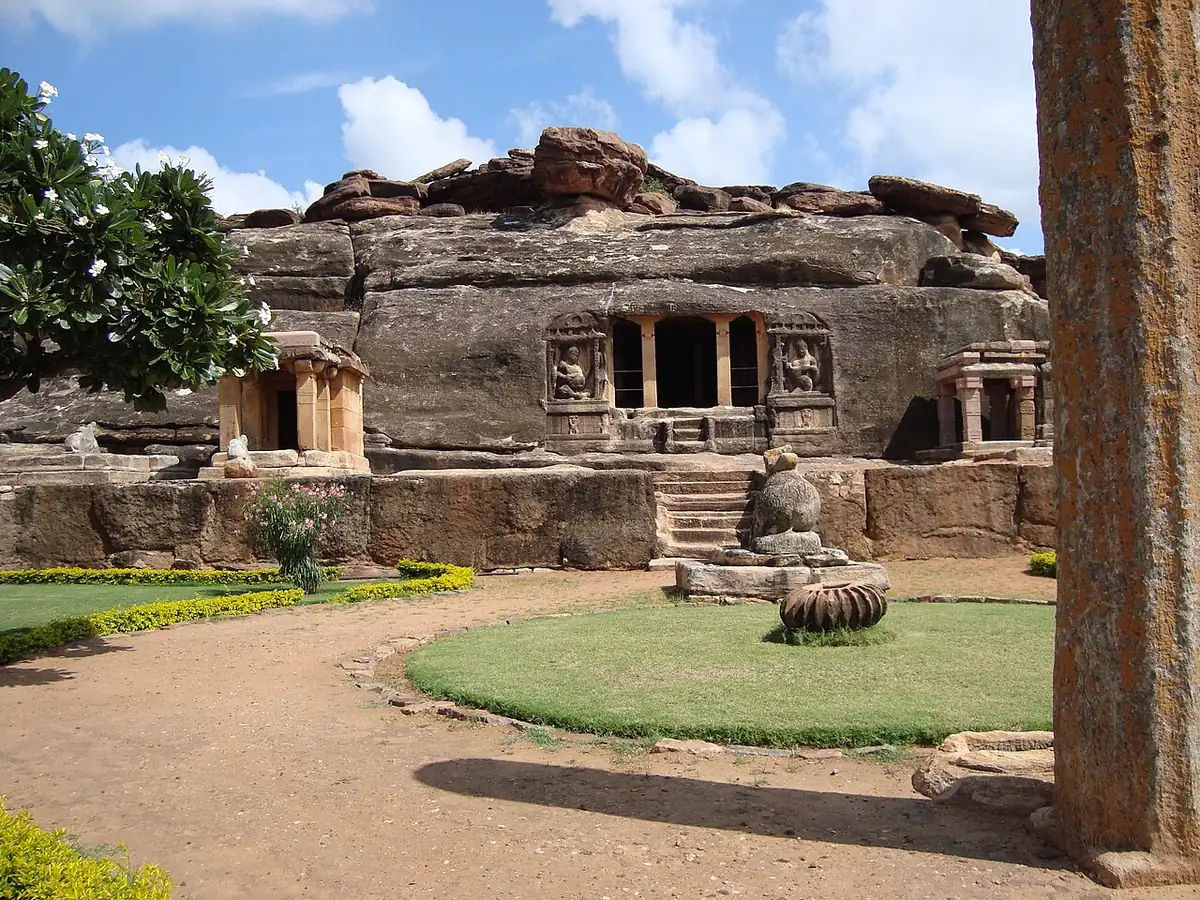

A rock-cut Shiva cave temple at Aihole, from about the 6th century. Its walls hold large reliefs of Shiva dancing, Ardhanarishvara, Shiva receiving the Ganga, and the Saptamatrikas.
HistoryDocumented history
Aihole was an early centre of Chalukya temple building, with over a hundred temples. Ravana Phadi is one of its earliest rock-cut shrines. The ten-armed dancing Shiva and the Gangadhara relief are among the finest early Chalukya sculptures.
Sthala PuranaTradition
No ancient purana is recorded.
Aitihyas and storiesTradition and folklore
No local story is recorded.
PhilosophyInterpretation
Shiva dancing, half-woman and bearer of the Ganga are three faces of one god, carved together in a single cave.
Meaning todayInterpretation
The cave is part of the Aihole group that, with Badami and Pattadakal, is the heart of Chalukya heritage.
ऐहोळे में शिव का शैल-कृत गुफा-मंदिर, लगभग 6वीं सदी का। इसकी दीवारों पर नृत्य करते शिव, अर्धनारीश्वर, गंगा को धारण करते शिव और सप्तमातृकाओं की बड़ी उभरी मूर्तियाँ हैं।
इतिहासDocumented history
ऐहोळे चालुक्य मंदिर-निर्माण का आरंभिक केंद्र था, जहाँ सौ से अधिक मंदिर हैं। रावण फड़ी इसके सबसे पुराने शैल-कृत मंदिरों में है। दस भुजाओं वाले नृत्य करते शिव और गंगाधर की मूर्ति आरंभिक चालुक्य मूर्तिकला की श्रेष्ठतम कृतियों में हैं।
स्थल पुराणTradition
पुराण में कोई प्राचीन कथा दर्ज नहीं है।
ऐतिह्य और कथाएँTradition and folklore
कोई स्थानीय कथा दर्ज नहीं है।
दर्शनInterpretation
नृत्य करते शिव, अर्धनारी और गंगाधर एक ही देवता के तीन रूप हैं, जो एक ही गुफा में साथ तराशे गए हैं।
आज का अर्थInterpretation
यह गुफा ऐहोळे समूह का हिस्सा है, जो बादामी और पट्टदकल के साथ चालुक्य धरोहर का हृदय है।
यह अनुवाद एक प्रारंभिक मसौदा है और मूल भाषी द्वारा समीक्षा की प्रतीक्षा में है।
ಐಹೊಳೆಯಲ್ಲಿರುವ ಶಿವನ ಶಿಲಾ ಗುಹಾ ದೇವಾಲಯ, ಸುಮಾರು 6ನೇ ಶತಮಾನದ್ದು. ಇದರ ಗೋಡೆಗಳಲ್ಲಿ ನೃತ್ಯ ಮಾಡುವ ಶಿವ, ಅರ್ಧನಾರೀಶ್ವರ, ಗಂಗೆಯನ್ನು ಧರಿಸುವ ಶಿವ ಮತ್ತು ಸಪ್ತಮಾತೃಕೆಯರ ದೊಡ್ಡ ಉಬ್ಬುಶಿಲ್ಪಗಳಿವೆ.
ಇತಿಹಾಸDocumented history
ನೂರಕ್ಕೂ ಹೆಚ್ಚು ದೇವಸ್ಥಾನಗಳಿರುವ ಐಹೊಳೆ ಚಾಲುಕ್ಯ ದೇವಾಲಯ ನಿರ್ಮಾಣದ ಆರಂಭಿಕ ಕೇಂದ್ರವಾಗಿತ್ತು. ರಾವಣ ಫಡಿ ಇಲ್ಲಿನ ಅತ್ಯಂತ ಪ್ರಾಚೀನ ಶಿಲಾ ಗುಡಿಗಳಲ್ಲಿ ಒಂದು. ಹತ್ತು ಕೈಗಳ ನರ್ತಿಸುವ ಶಿವ ಮತ್ತು ಗಂಗಾಧರ ಶಿಲ್ಪಗಳು ಆರಂಭಿಕ ಚಾಲುಕ್ಯ ಶಿಲ್ಪಕಲೆಯ ಅತ್ಯುತ್ತಮ ಕೃತಿಗಳಲ್ಲಿ ಸೇರಿವೆ.
ಸ್ಥಳ ಪುರಾಣTradition
ಯಾವುದೇ ಪ್ರಾಚೀನ ಪುರಾಣ ದಾಖಲಾಗಿಲ್ಲ.
ಐತಿಹ್ಯಗಳು ಮತ್ತು ಕಥೆಗಳುTradition and folklore
ಯಾವುದೇ ಸ್ಥಳೀಯ ಕಥೆ ದಾಖಲಾಗಿಲ್ಲ.
ತತ್ತ್ವInterpretation
ನರ್ತಿಸುವ ಶಿವ, ಅರ್ಧನಾರಿ ಮತ್ತು ಗಂಗಾಧರ ಒಬ್ಬನೇ ದೇವರ ಮೂರು ಮುಖಗಳು; ಒಂದೇ ಗುಹೆಯಲ್ಲಿ ಒಟ್ಟಿಗೆ ಕೆತ್ತಲ್ಪಟ್ಟಿವೆ.
ಇಂದಿನ ಅರ್ಥInterpretation
ಬಾದಾಮಿ ಮತ್ತು ಪಟ್ಟದಕಲ್ಲಿನೊಂದಿಗೆ ಚಾಲುಕ್ಯ ಪರಂಪರೆಯ ಹೃದಯವಾಗಿರುವ ಐಹೊಳೆ ಸಮೂಹದ ಭಾಗ ಈ ಗುಹೆ.
ಈ ಅನುವಾದ ಪ್ರಾಥಮಿಕ ಕರಡು; ಕನ್ನಡ ಭಾಷಿಕರ ಪರಿಶೀಲನೆಗಾಗಿ ಕಾಯುತ್ತಿದೆ.
Timeline
- About the 6th c.constructedprobableThe cave is cut into the rock.
Videos
No videos have been curated for this temple yet.
Sources
- Photo: Manjunath nikt, Public domain, via Wikimedia Commons
This entry is a draft. Traditional stories are presented as tradition, not as historical fact.
Suggest an edit
Spotted a mistake or know more about this temple? Tell us, with a source if you have one.